How to Keep Tulips Fresh — complete tulip care guide
Tulips keep growing and bend toward light in the vase. Use shallow cold water, the penny support trick, and firm up floppy tulips. 5-7 day vase life.
Tulips are the most alive of cut flowers. Unlike a rose, which holds its pose, a tulip keeps growing, turns toward the light, and rearranges itself a little every day. Understanding that movement is the whole secret to enjoying them rather than fighting them. Here is how we care for ours.
TL;DR. Tulips keep growing and bend toward light after cutting, so give them shallow cold water, no flower food, and turn the vase daily. To firm up floppy tulips, wrap the top half tightly in paper and stand them in deep cold water for about an hour. Tulips last 5-7 days.
The one thing to know: tulips keep growing
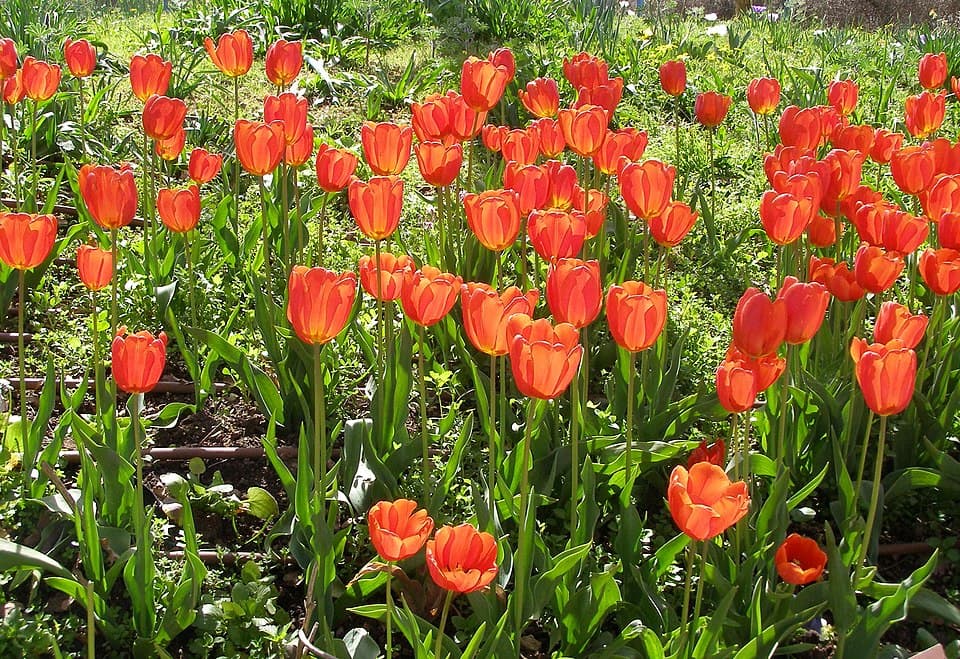
Most cut flowers are effectively frozen in time the moment they leave the plant. Tulips are not. A cut tulip stem can lengthen 2-5cm in the vase over several days, and the flower bends toward whatever light it can find. This is called phototropism, and it is why a tidy tulip arrangement on Monday can be a loose, reaching sculpture by Thursday.
None of this is a defect. It is the reason tulip lovers love tulips. But it changes how you care for them: you work with the movement rather than trying to lock them still.
- Turn the vase daily so the stems grow and lean evenly instead of all reaching one way.
- Keep them away from a single strong light source if you want them upright; move them toward the light if you like the dramatic bend.
- Arrange them a touch tighter than looks right on day one — they will open out and stretch into the space.
Conditioning tulips step by step
Tulips want the opposite of what roses want: cold, shallow, and plain.
- Use a clean vase with shallow, cold water. Tulip stems are soft and drink fast; deep water makes the submerged stem go soft and slimy. A few centimetres is plenty, topped up daily.
- Recut 1-2cm off each stem with a sharp knife or scissors. A straight or slightly angled cut is fine; the stems are soft, so do not crush them.
- Strip leaves below the waterline. As with any flower, submerged foliage rots and fouls the water.
- Skip the flower food. This is the tulip exception — plain cold water suits them better than sugary food, which pushes them to open and stretch too quickly.
- Keep them cold. A cool room, and a cold-water refresh each day, is the single biggest thing you can do for tulip vase life. Warmth is the enemy.
The generic principles behind clean water and sharp cuts live in our conditioning guide — this page is only about where tulips differ.

Why tulips flop — and how to firm them up
Floppy, drooping tulips are the most-searched tulip problem, and the fix is reassuringly simple because the cause is almost always dehydration, not death.
Our firming routine:
- Recut the stem ends by 1-2cm to open fresh drinking channels.
- Gather the tulips into a bunch and wrap the top half tightly in paper — newspaper or kraft paper — so the paper splints the soft stems straight.
- Stand the wrapped bunch in deep cold water for about an hour. Where the everyday advice is shallow water, this rescue step is the deliberate exception: the deep drink plus the paper splint straightens and firms the stems.
- Unwrap and re-arrange. The tulips should stand noticeably firmer.
Some people also add a copper penny or a splash of clear spirit to the water as a mild anti-bacterial "support trick." It is folk craft with inconsistent results — harmless, but no replacement for cold, shallow, frequently-changed water.
Tulip troubleshooting matrix
| Problem | Likely cause | Fix |
|---|---|---|
| Stems flopping / drooping | Dehydration, soft stems | Recut, wrap top half in paper, deep cold water ~1h |
| Tulips all leaning one way | Phototropism (growing to light) | Turn vase daily; move away from single light source |
| Arrangement gone loose | Normal stem growth of 2-5cm | Expected — recut and re-tie tighter if you want |
| Petals opening too fast | Too warm, or flower food added | Move somewhere cool; use plain cold water only |
| Slimy stem below water | Water too deep, foliage submerged | Shallower water, strip lower leaves, refresh daily |
| Water fouling quickly | Soft stems shedding, dirty vase | Clean vase, fresh cold water each day |
How long tulips last, and how to extend it
Expect 5-7 days of good life from tulips. To reach the top of that:
- Keep them cold. Tulips reward cool rooms more than almost any other flower; heat opens and ages them fast. In summer, an overnight spell somewhere cold works wonders.
- Refresh the cold water daily. Their soft stems foul water faster than woody stems do.
- Stay out of direct sun and away from radiators or vents.
- Keep them away from ripening fruit, whose ethylene shortens the life of tulips as it does most flowers.
Daffodils are common tulip companions but need a note of caution: freshly cut daffodil stems leak a sap that shortens tulip life, so condition daffodils separately for 24 hours before combining. More on mixed-bunch longevity in the vase life guide.

Choosing and substituting tulips
Tulips are a spring flower at their best and cheapest from late winter through spring; the seasonality calendar shows the window. If tulips are unavailable, the tulip substitute finder suggests the closest matches by form and season, and the full tulip encyclopedia entry covers the varieties, from single earlies to fringed and parrot types.
From the Lacy Bird studio. We teach floristry hands-on — from a first bouquet to running your own shop — at the Lacy Bird Academy, and we build tools for florists: Bouquet Builder for designing arrangements and Acanta for selling them. In the UAE, we also deliver flowers.
Related reading:
 Bouquet Builder — by Lacy Bird
Design the bouquet. See it as a photo.
Arrange real flowers on a canvas, then turn the layout into a photorealistic photo in one tap — with live pricing and a shopping list. 570+ varieties, free to start.
Free plan · no card needed