Installations flowers
90 flowers our studio reaches for in installations work — filtered from the Lacy Bird catalog by role, season and colour. Open any flower for its full data card.
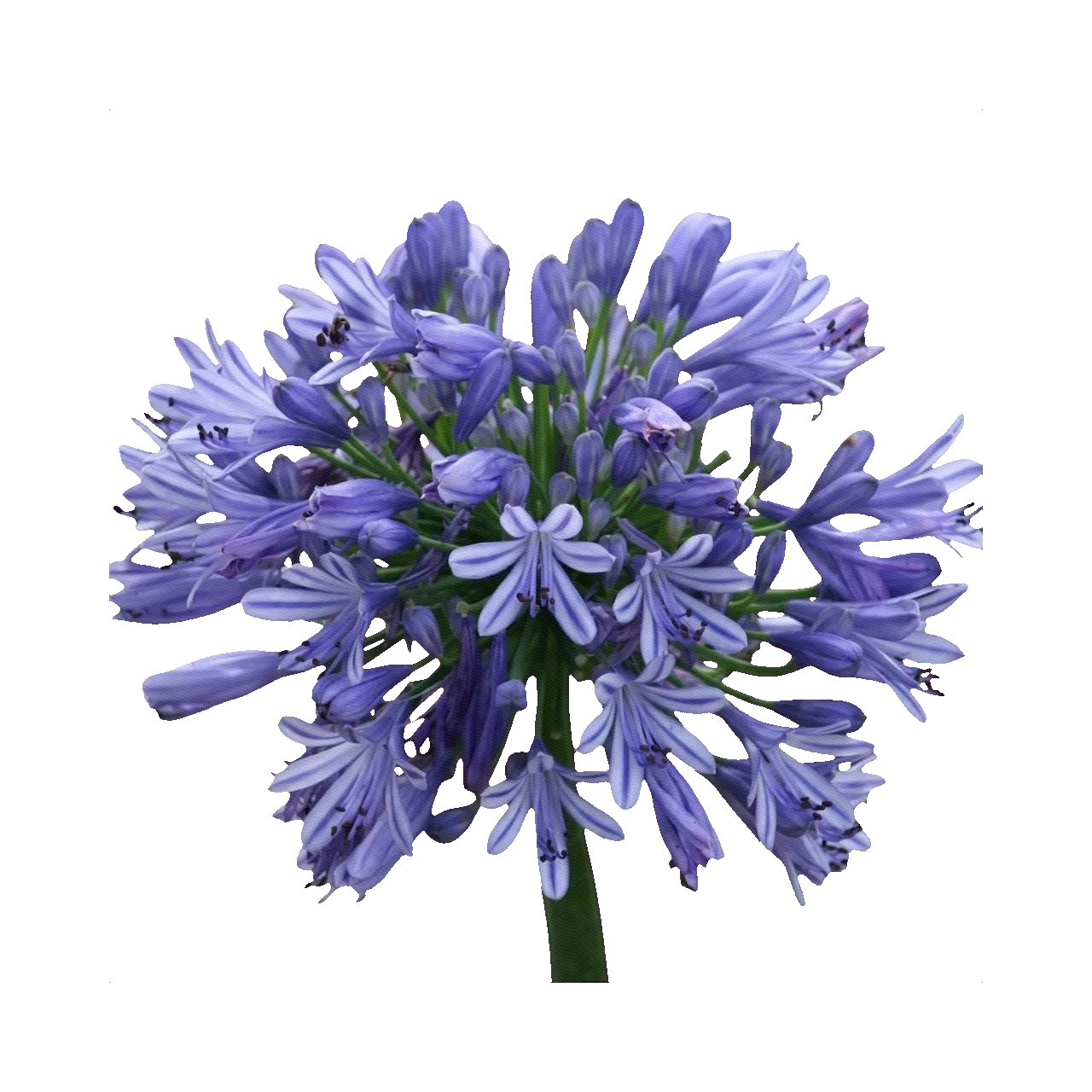
Agapanthus
Agapanthus africanus
Agapanthus lifts a bold, spherical head of blue or white trumpet florets on a tall, clean stem, giving arrangements instant height and a cool, contemporary silhouette. Native to South Africa and beloved in summer gardens, it reads as both architectural and airy, perfect for large-scale and pedestal designs. Florists use it for its striking scale and its rare, true-blue tones, which are hard to find in cut flowers. It shines in modern summer weddings, tall arrangements and statement corporate work.
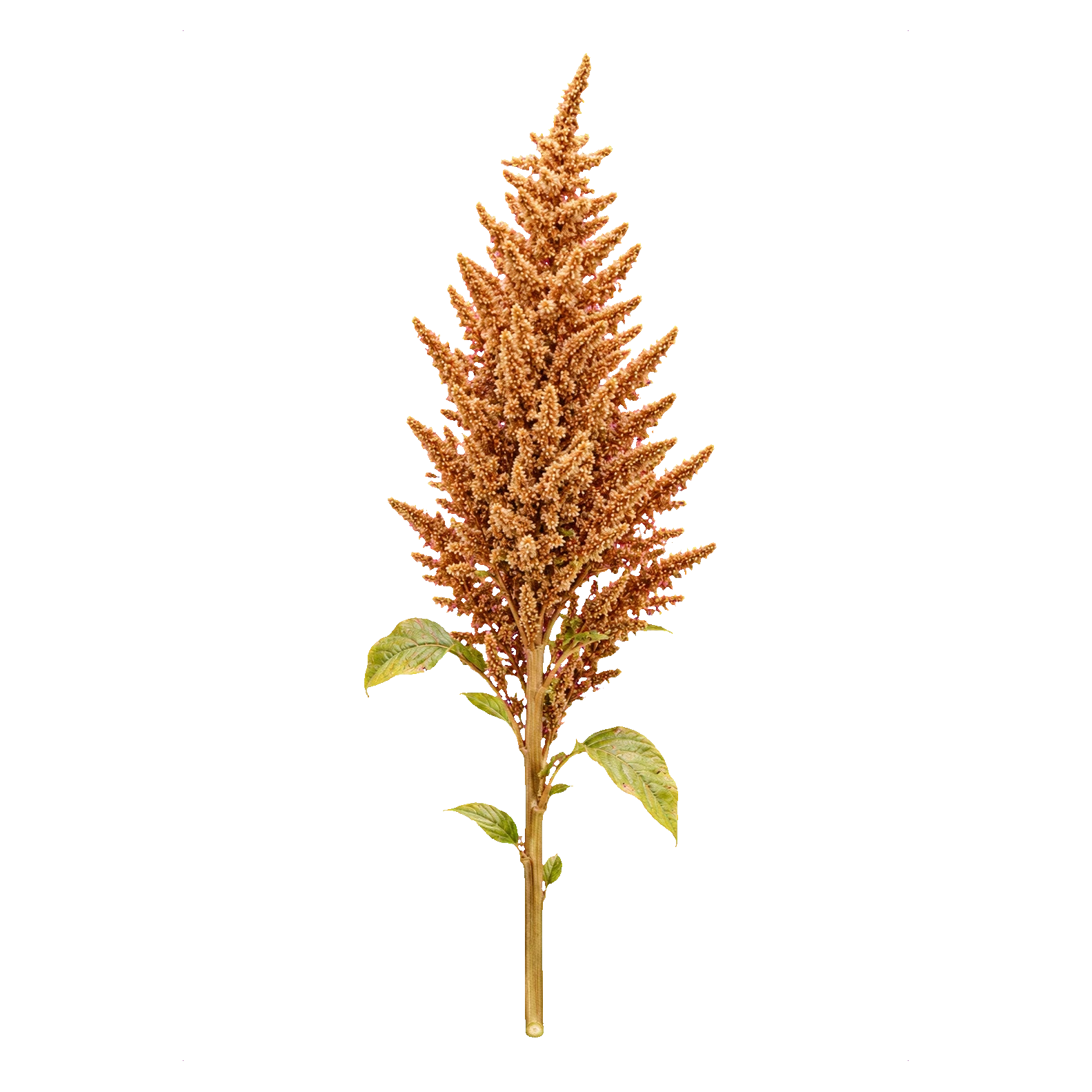
Amaranthus
Amaranthus caudatus
Amaranthus is prized for its long, velvety, rope-like tassels that cascade and drip from a bouquet with lush, tactile drama. The trailing form, love-lies-bleeding, spills in deep crimson or chartreuse green, while upright types add plush texture and height. Florists love it for boho and autumn weddings, cascading bridal bouquets and generous installations where movement and richness matter. It also dries exceptionally well, holding both colour and its distinctive draping shape.

Aspidistra
Aspidistra elatior
Aspidistra, the cast iron plant, supplies florists with broad, glossy, deep-green leaves on long slender stalks. Almost indestructible, it is a favourite for structural and contemporary designs where a single leaf can be looped, rolled, folded or stitched. Some cultivars carry cream stripes or speckles for extra interest. Its clean lines and remarkable vase life make it a staple of modern, architectural and ikebana-style work.
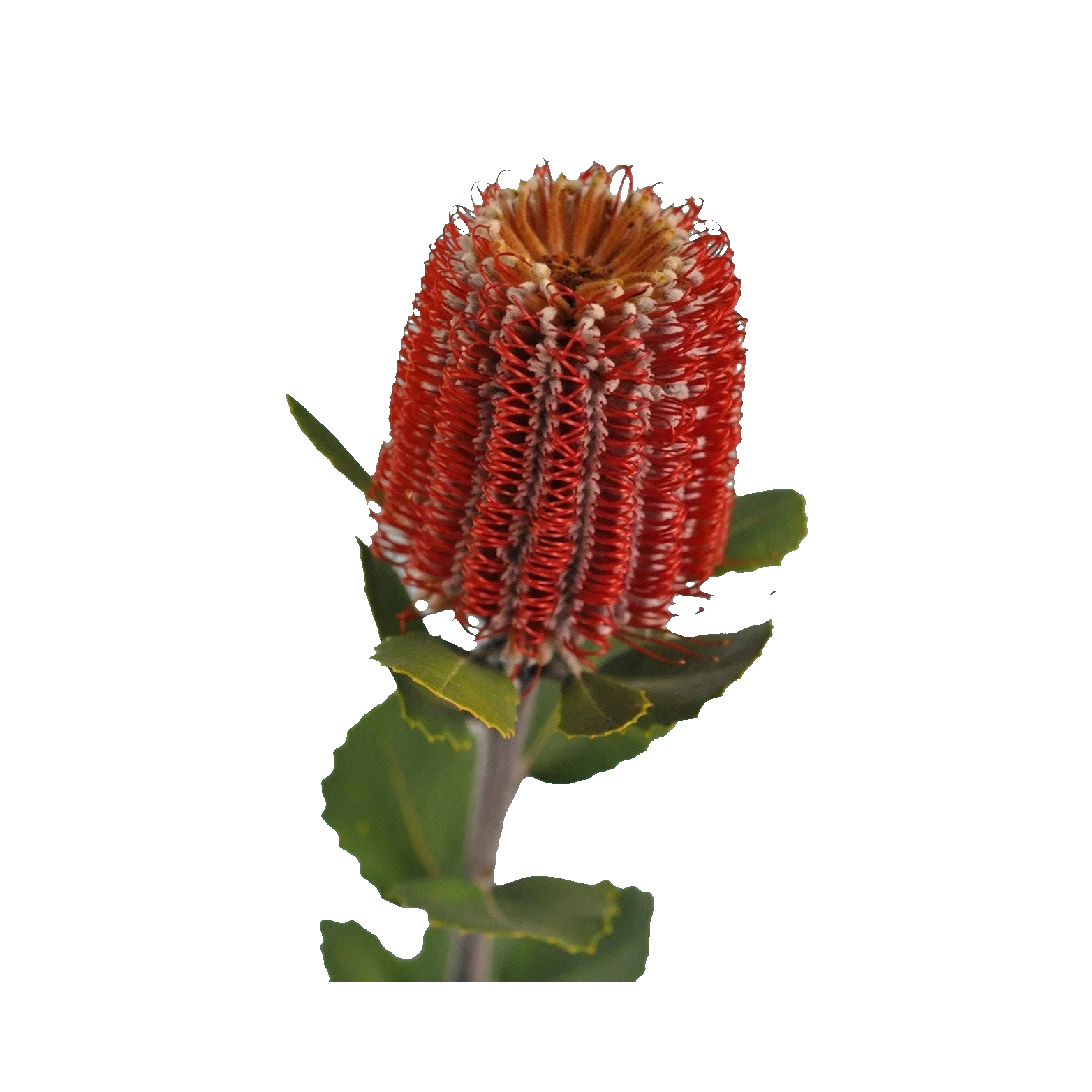
Banksia
Banksia
Banksia is an iconic Australian native whose flowers form dense, cylindrical spikes of hundreds of tiny blooms, framed by leathery, saw-toothed leaves. Florists reach for it as a rugged, sculptural focal that suits rustic, textural and autumnal designs. Its woody stems are remarkably long-lived in the vase and dry to keep their form and colour almost indefinitely. Shades range from soft yellow and orange to deep bronze and burgundy.
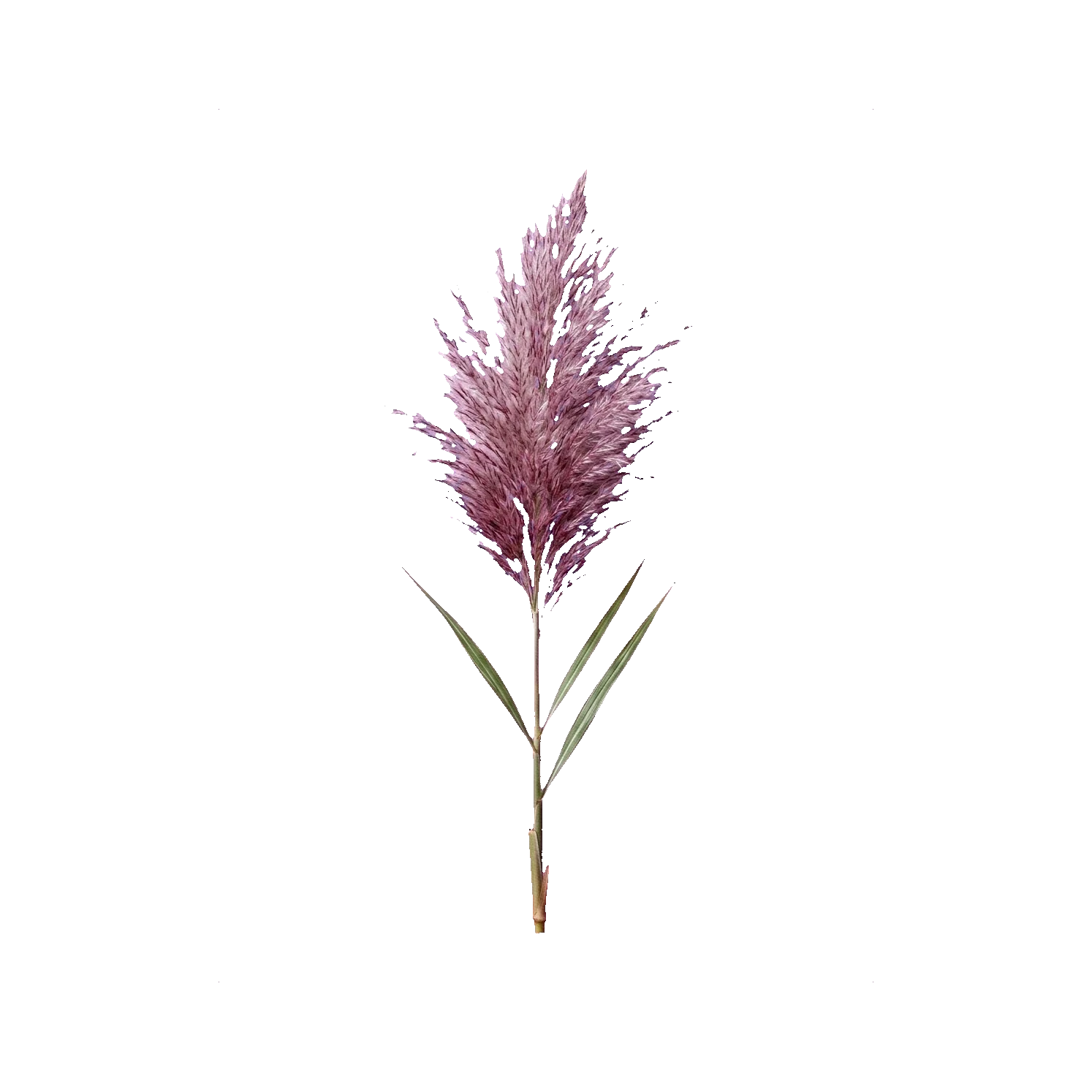
Chinese Silver Grass
Miscanthus sinensis
Miscanthus, Chinese silver grass, is a tall Asian ornamental grass prized for the silky, fan-shaped plumes it throws up in late summer and autumn. The feathery flower heads catch the light with a silvered, blush-pink sheen and mature to soft cream, giving florists a graceful, architectural line for tall arrangements and installations. Some forms carry finely variegated blades as a bonus. Fresh plumes are fleeting and shed, so miscanthus is most often used dried, when its elegant, wind-brushed form lasts indefinitely.
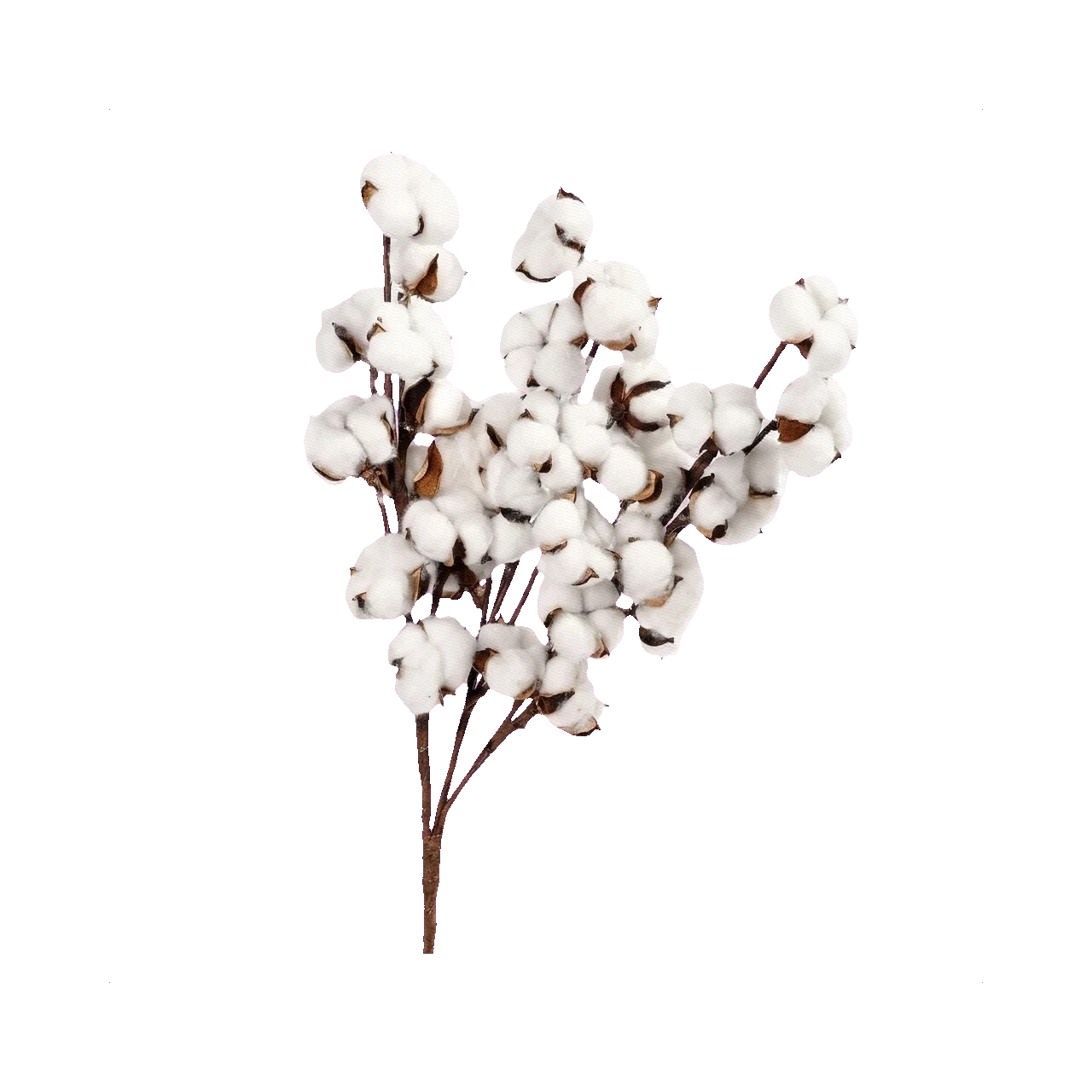
Cotton
Gossypium
Cotton branch — with open bolls exposing the soft white fibre — is the textural signature of rustic and autumn arrangement work. Sold pre-dried; adds volume at low weight and pairs beautifully with pampas, eucalyptus, and dried grasses. A staple for barn weddings and winter installations across North America.

Delphinium
Delphinium
One of the few flowers that delivers a true, saturated blue — the pigment is real, not dyed. Delphinium provides the vertical line in summer wedding arrangements, reaching 150 cm on strong stems. The Belladonna group (single-flowered) is more airy; the Elatum group (double-flowered spikes) is denser.

Dicranopteris fern
Dicranopteris linearis
The forked fern's architectural fronds have become a signature editorial foliage in modern floral design. Native to tropical Asia and Pacific rainforests, it holds shape for weeks once cut and provides a linear, gestural quality no other filler foliage matches. Best used sparingly for line work in luxury bouquets and hanging installations.
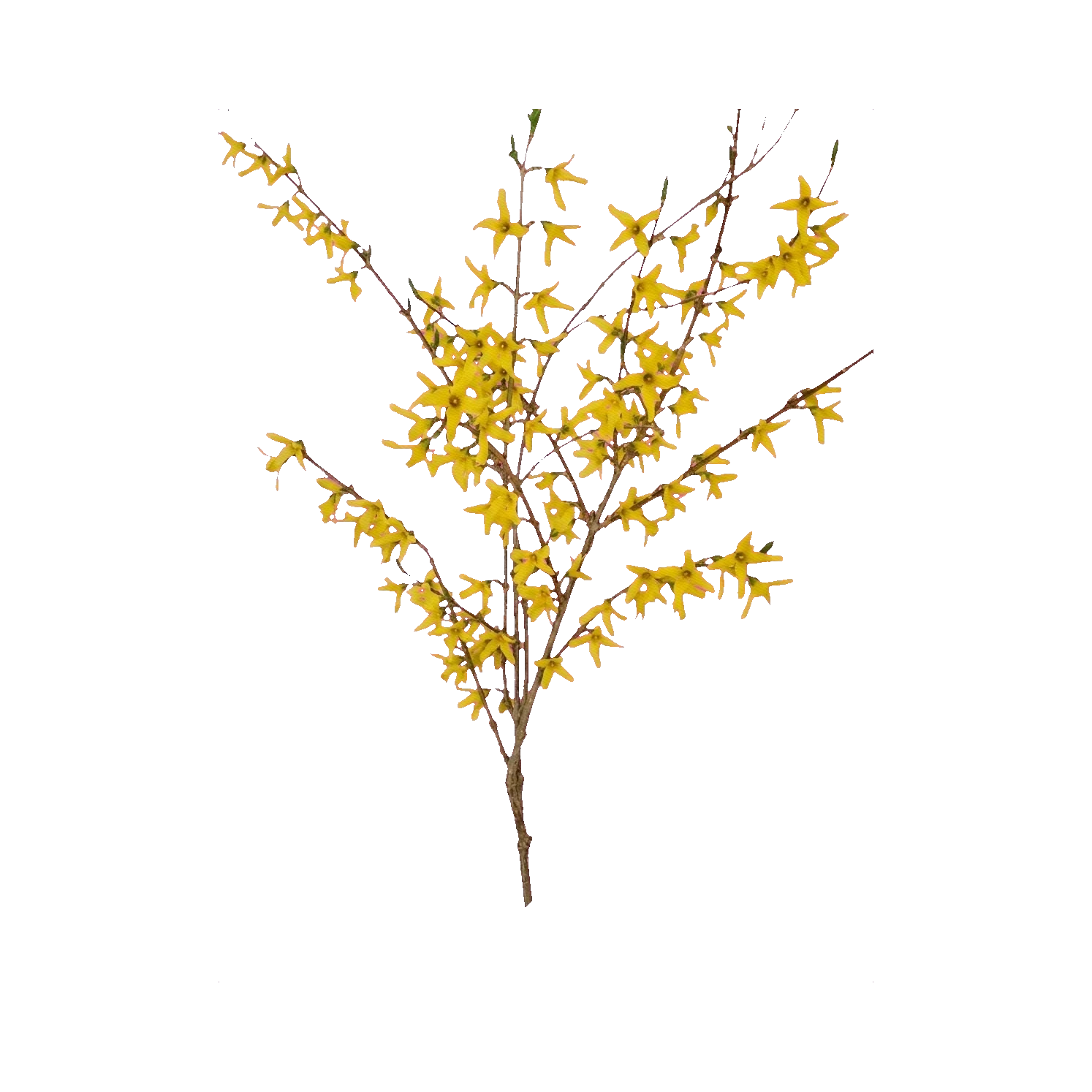
Forsythia
Forsythia × intermedia
Forsythia is one of the first heralds of spring — bare, arching branches that erupt in a haze of bright yellow, star-shaped flowers before any leaves appear. Florists use it as a graceful woody line, bringing airy height and vivid seasonal colour to large arrangements, branch installations and mantel displays. Cut while still in bud, it can be forced open indoors weeks ahead of the garden. Its zigzag, leafless form gives sculptural movement that few other flowers can match.
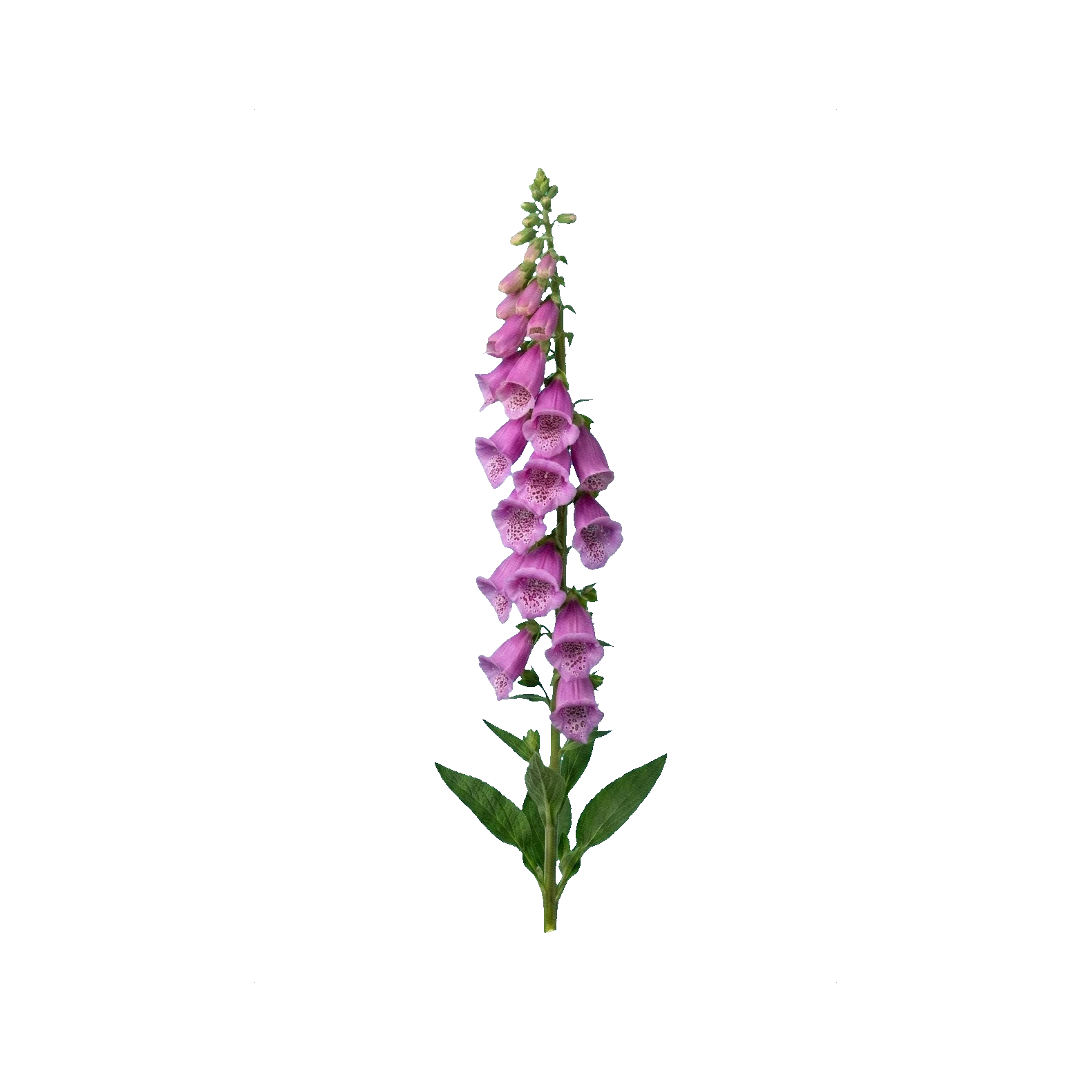
Foxglove
Digitalis purpurea
Foxglove is the quintessential cottage-garden spire, its tall stems hung with tubular, freckle-throated bells in soft pinks, purples, apricots and clean whites. Florists prize it for instant height and an English-garden romance that anchors editorial and garden-style weddings. Because the spikes bloom from the bottom up and are fleetingly seasonal, they read as luxurious and of-the-moment. Handle with care: every part of the plant is poisonous.
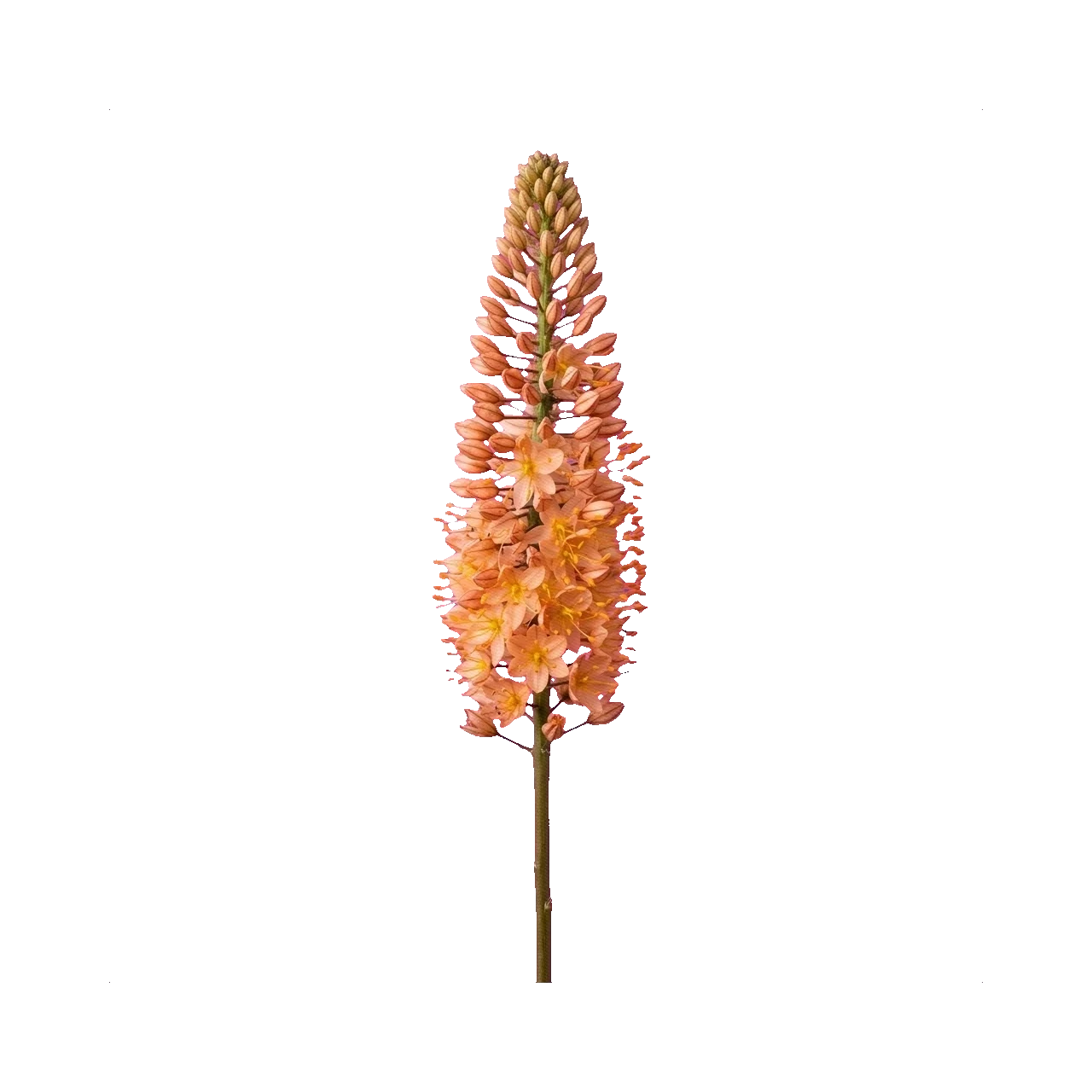
Foxtail Lily
Eremurus
Eremurus, the foxtail lily, sends up towering tapered spires studded with hundreds of tiny star-shaped florets that open from the base upward. Florists prize it as a dramatic line flower that brings height, movement and an airy, architectural quality to large-scale designs and tall arrangements. Available in warm sunset shades of yellow, orange, peach and apricot as well as soft white, it is a signature stem for luxury summer weddings and grand installations. Its bold vertical form reads beautifully from a distance, making it a favourite for statement pedestal work.
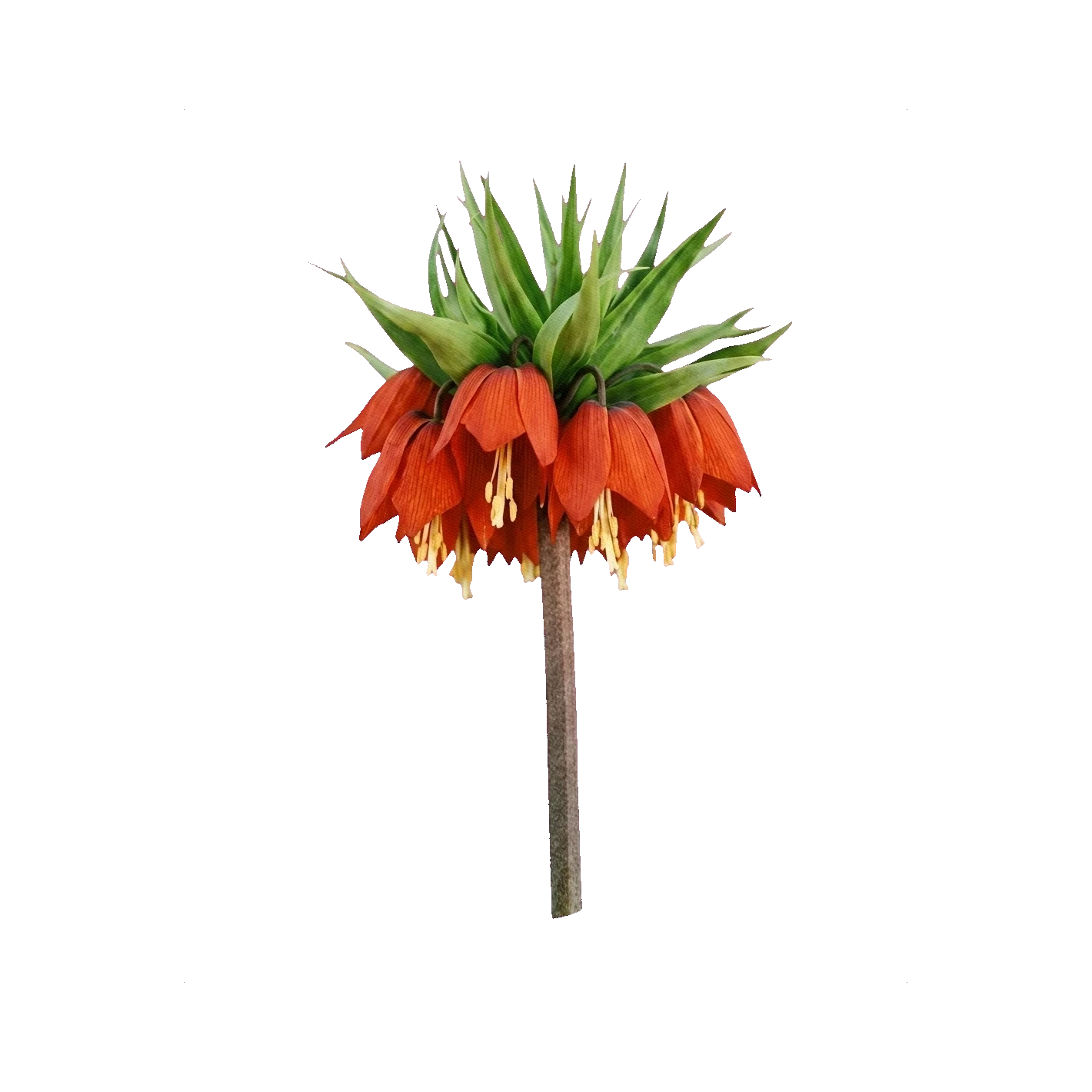
Fritillaria
Fritillaria imperialis
Fritillaria imperialis, the crown imperial, is one of spring's most theatrical bulb flowers, carrying a whorl of pendant bells beneath a topknot of leafy bracts on a tall, sturdy stem. Florists prize it for statement work, where its burnt-orange, gold or red bells add height and architecture to seasonal designs. Its unmistakable musky scent means it is best used with an editorial eye rather than in intimate bouquets. At its finest in April and May, it lends a regal, botanical drama to luxury spring arrangements and installations.
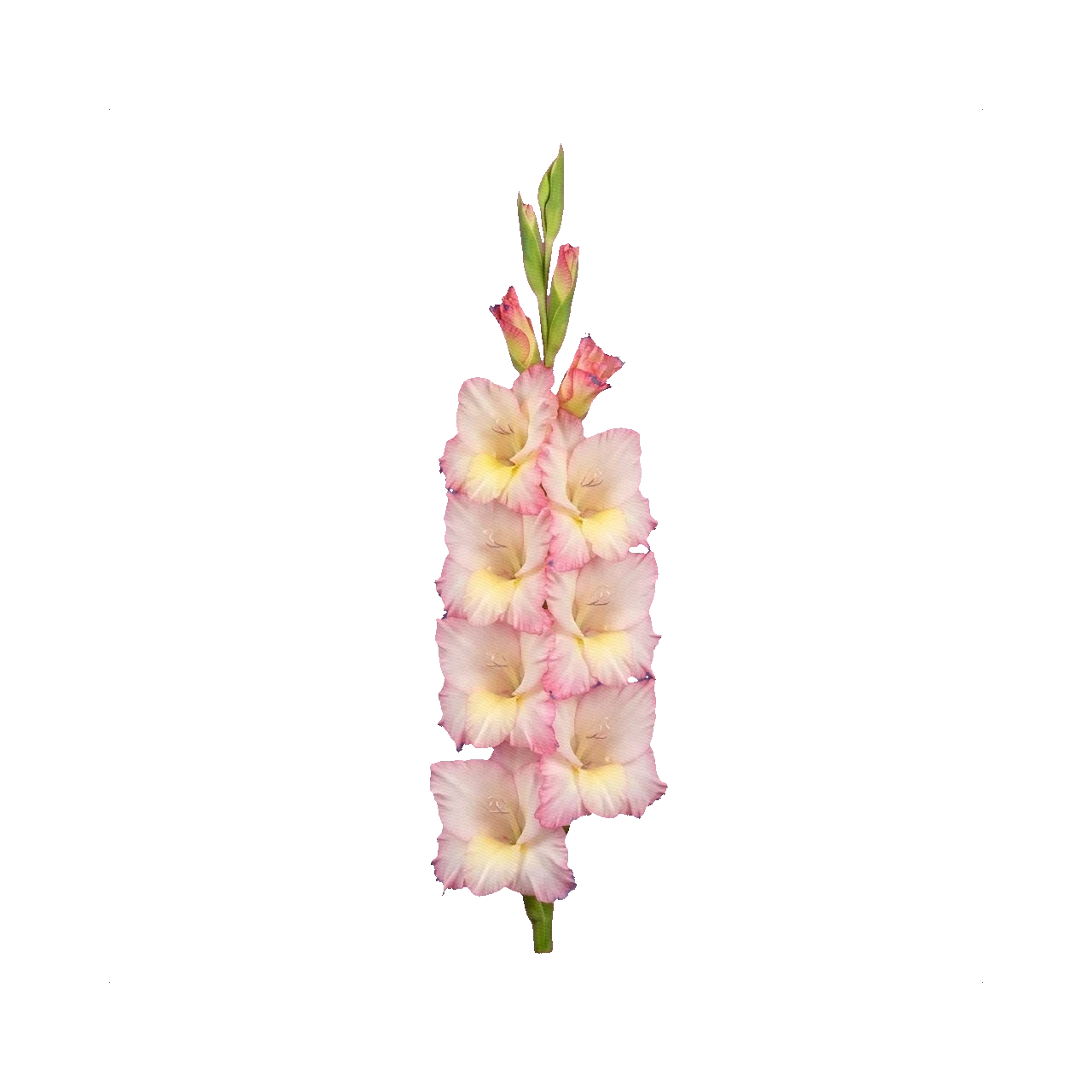
Gladiolus
Gladiolus
The gladiolus is the line flower of late summer — reaching 150 cm on strong stems with 8–15 florets that open bottom-up over ten days. Snap off the top 2–3 unopened buds at purchase; they'll never open properly and steal energy from lower florets. A funeral and sympathy staple in North America, an everyday flower elsewhere.
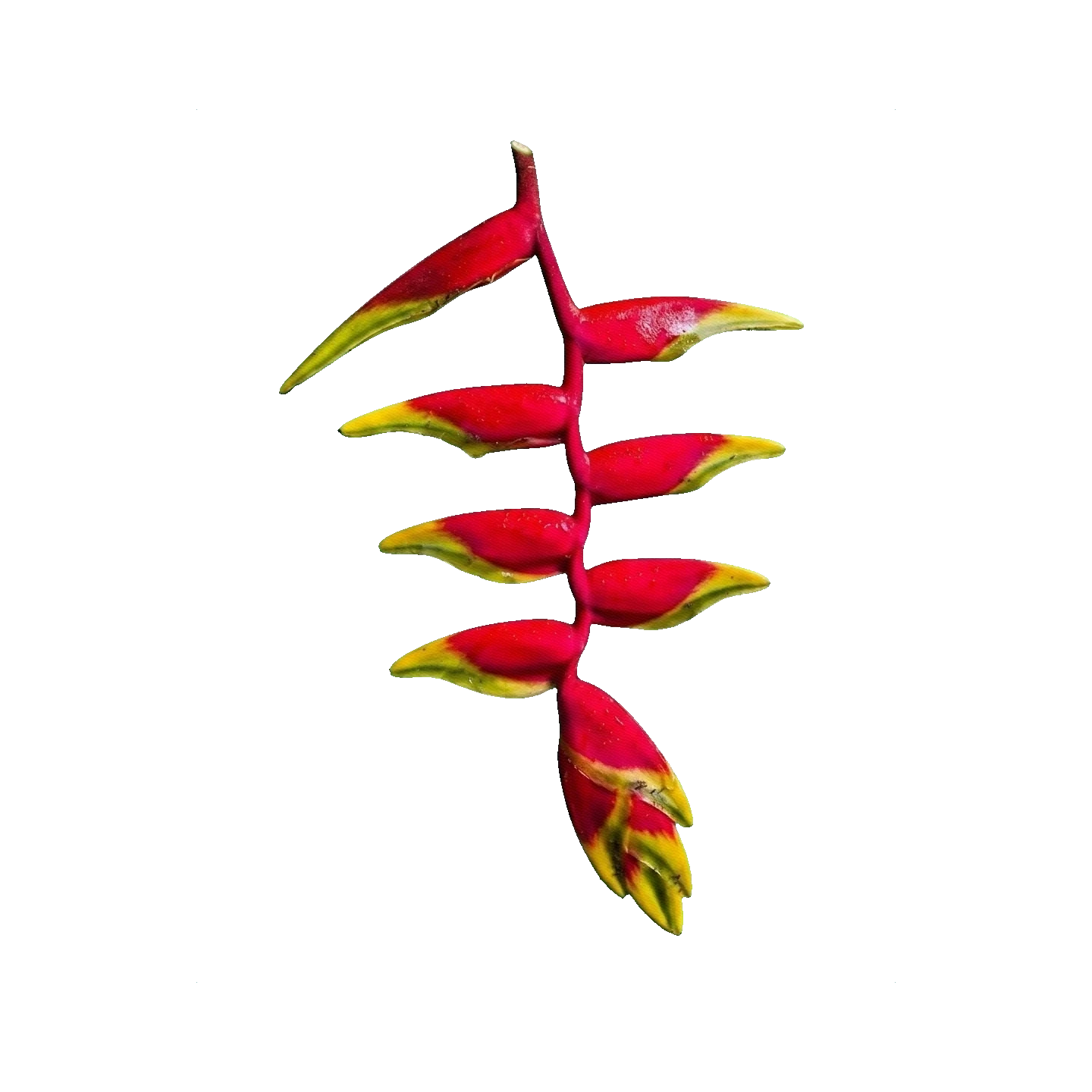
Heliconia
Heliconia
Heliconia, often called lobster claw or false bird-of-paradise, is a boldly architectural tropical whose waxy, boat-shaped bracts zig-zag up a tall stem in vivid red, orange and yellow. Native to the tropical Americas, it brings instant drama, scale and a sculptural line to large-scale and tropical designs. Its thick stems and long vase life make it a workhorse for installations, tall arrangements and event work. Few flowers deliver the same tropical impact from a single stem.
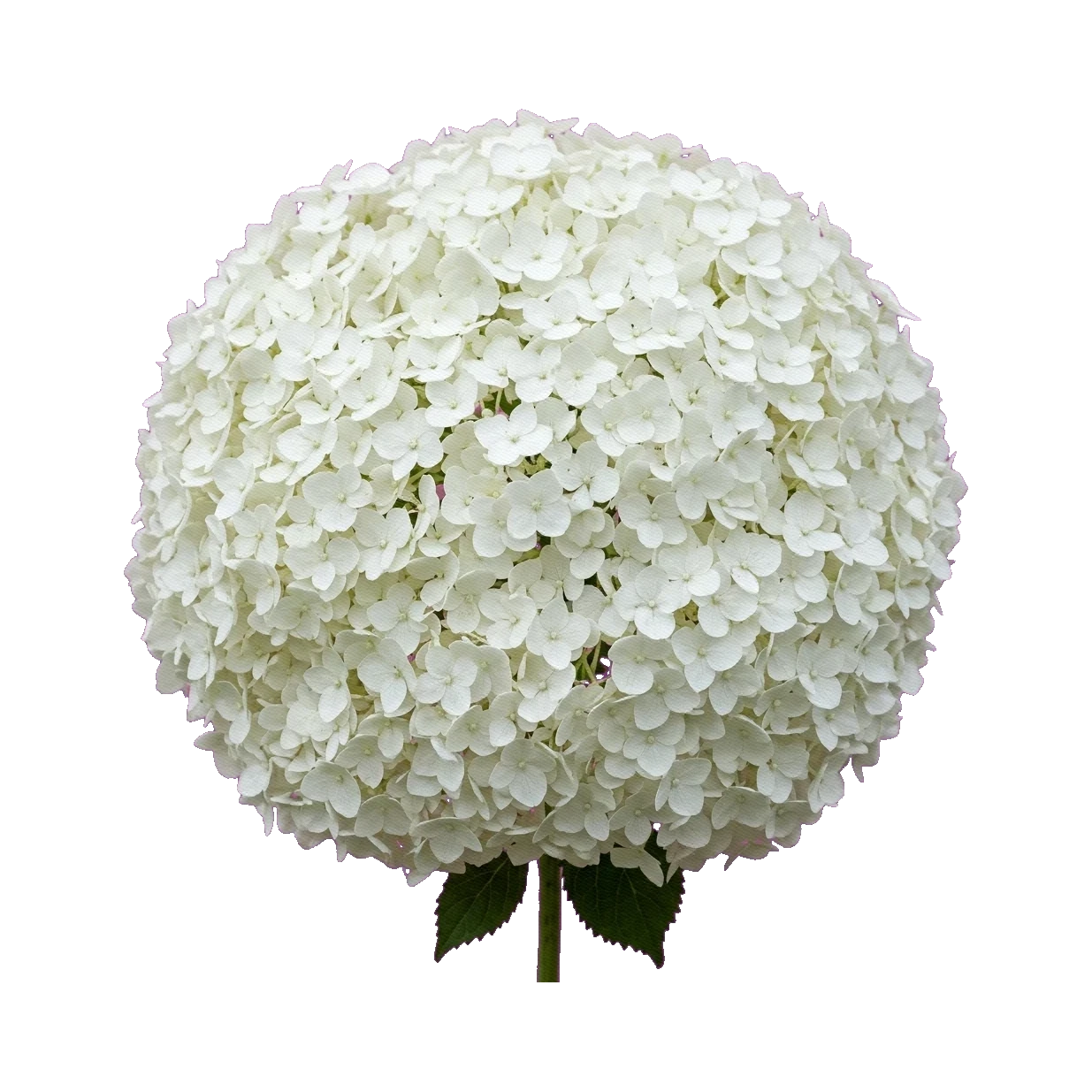
Hydrangea
Hydrangea macrophylla
One hydrangea head can carry a bouquet single-handedly — up to 20 cm of coverage per stem. Growers now offer 'antique' hydrangeas where the natural late-summer colour shift (blue → pink → green → burgundy) is preserved, creating a browsed, painterly effect that dominates editorial floristry. Fragile once cut — plan the timeline carefully.
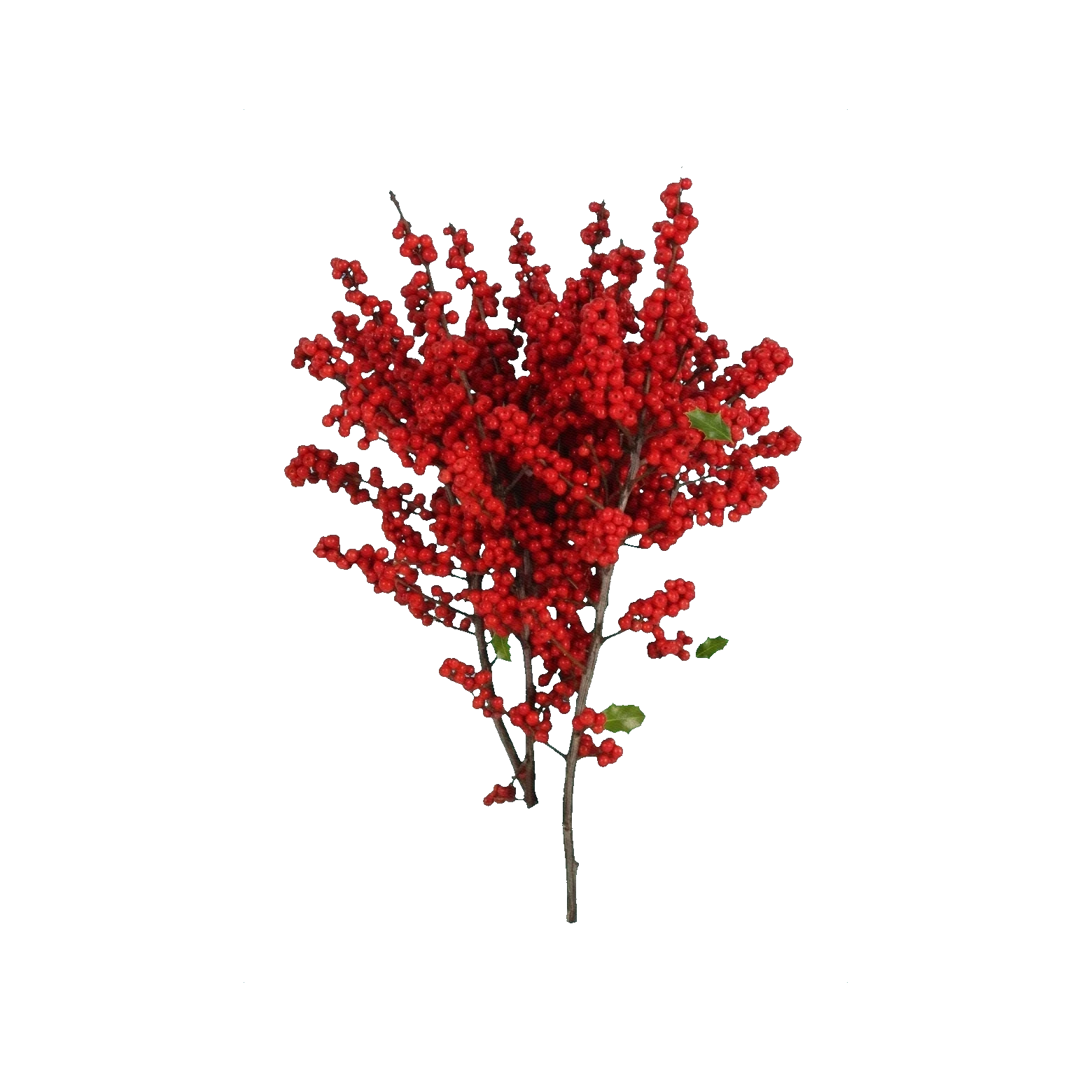
Ilex (winter berry)
Ilex verticillata
Ilex — the winterberry — is the definitive winter and holiday floral material. Dense red or golden berry clusters on bare branches provide graphic seasonal accent for wreaths, garlands, and installation work between November and February. Yellow-berry Ilex is prized by editorial designers for its rarer, more sculptural quality against the traditional red.

Ivy
Hedera helix
Ivy is the classical cascading greenery — trailing vines up to two metres, small leaves in deep green or variegated, exceptional vase life. A wedding bouquet staple for centuries, and now the go-to trailing element for modern bridal cascades and archway installations. Some varieties will even root in vase water — an old symbolic touch of fidelity.
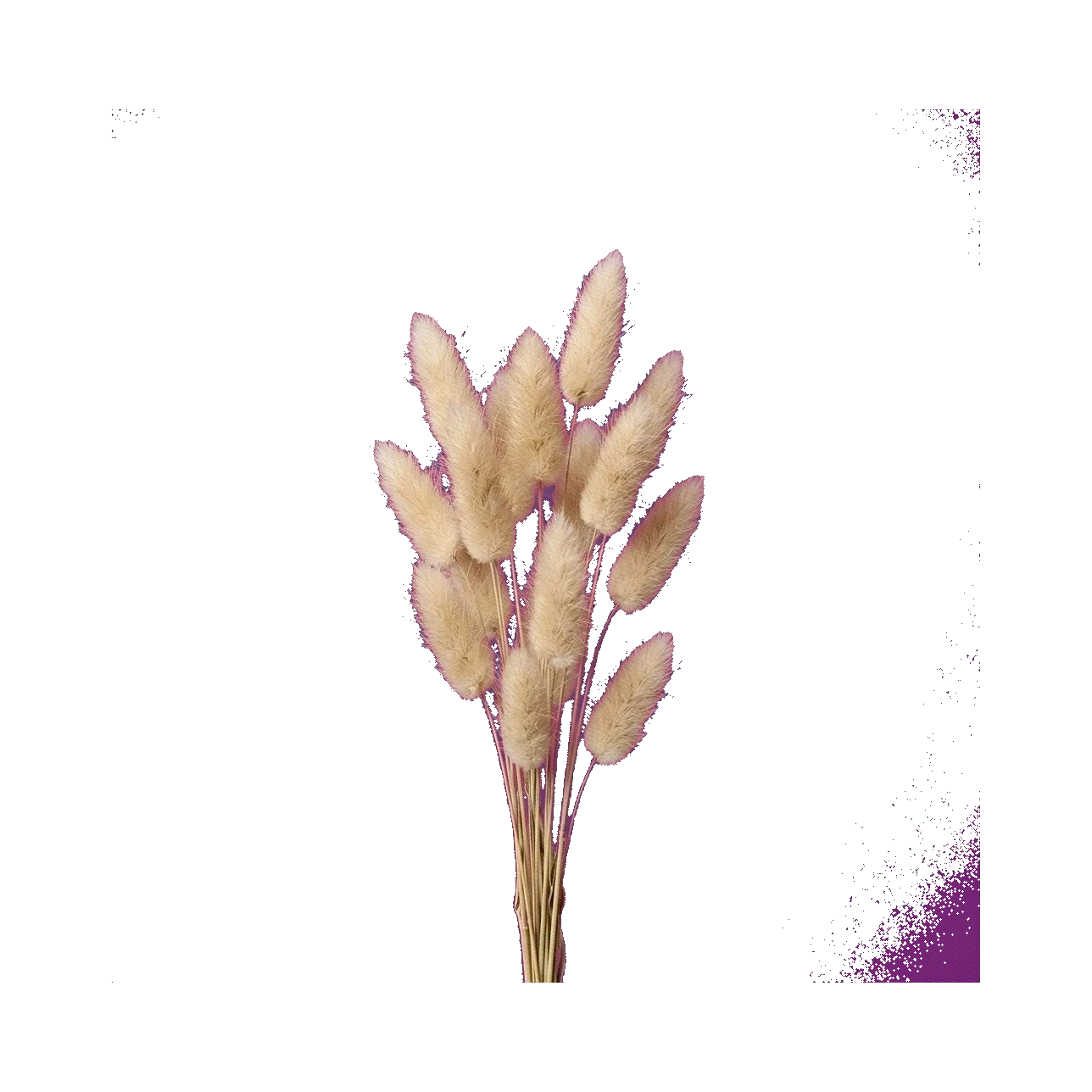
Lagurus (bunny tail grass)
Lagurus ovatus
Lagurus — the bunny tail grass — is the boho wedding designer's shortcut to instant texture and softness. Native Mediterranean grasslands but grown commercially worldwide, its fluffy tufted heads dry in place with no colour or shape loss. Available natural cream, dyed pastels, or (as in the academy library) dyed a saturated red for autumn palette work. One of the most affordable filler options per stem across all seasons.

Leucadendron
Leucadendron
Leucadendron — cousin of the protea from South Africa's Cape — is the modern editorial designer's autumn signature. The Sunset variety in particular provides warm burgundy-to-copper coloration that no other cut flower matches. Exceptional vase life (up to 4 weeks) makes it a favourite for luxury installation work where flowers need to hold across a multi-day event.
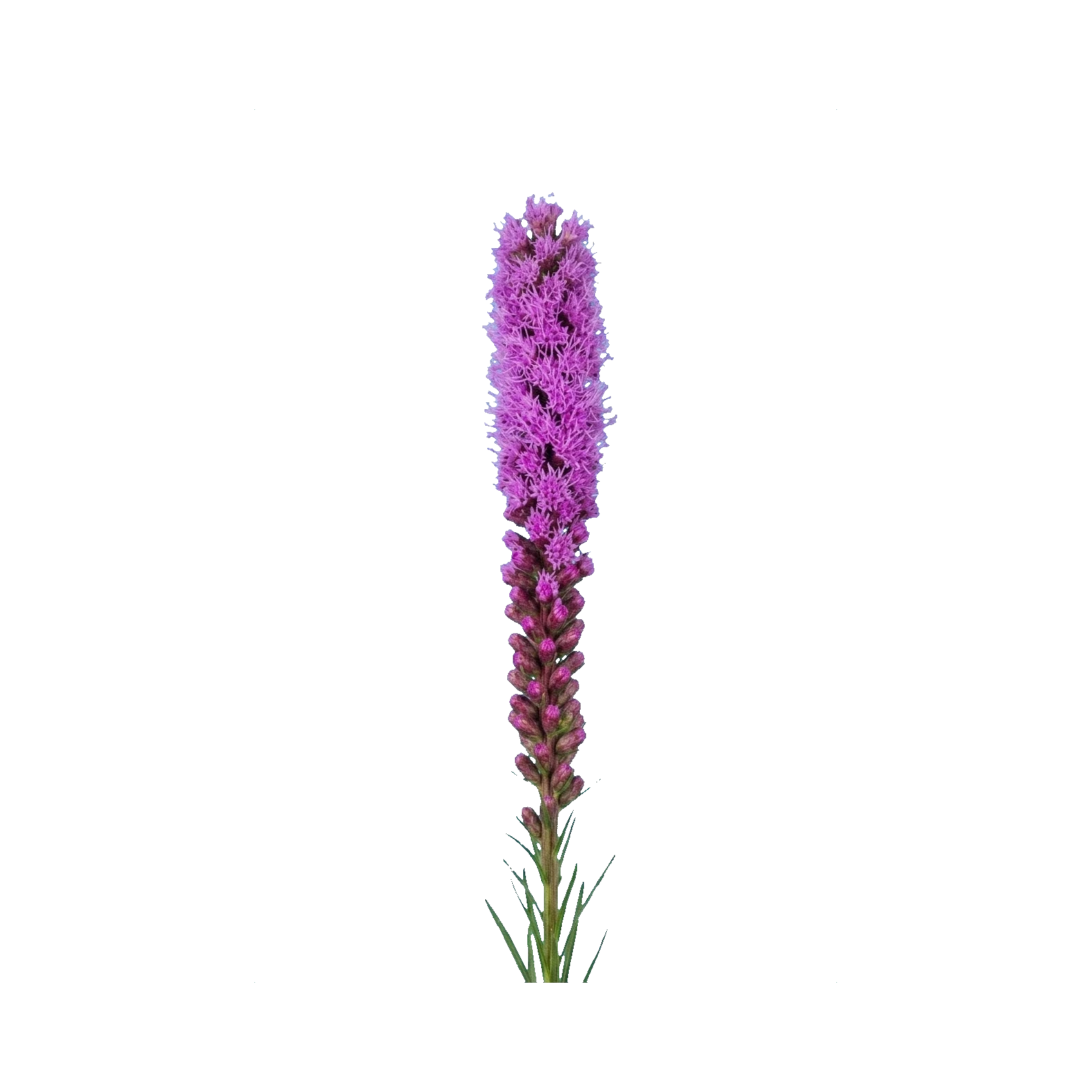
Liatris
Liatris spicata
Liatris is a slender, feathery flower spike prized for the vertical rhythm it brings to bouquets and tall arrangements. Its fuzzy, thistle-like florets open from the tip downward — the reverse of most spikes — giving a soft, plumed silhouette in purple, lavender or white. Florists love it as an affordable, hardy line flower that reads as both wildflower-natural and structured. It works beautifully in meadow-style summer designs, sympathy tributes and rustic bouquets.
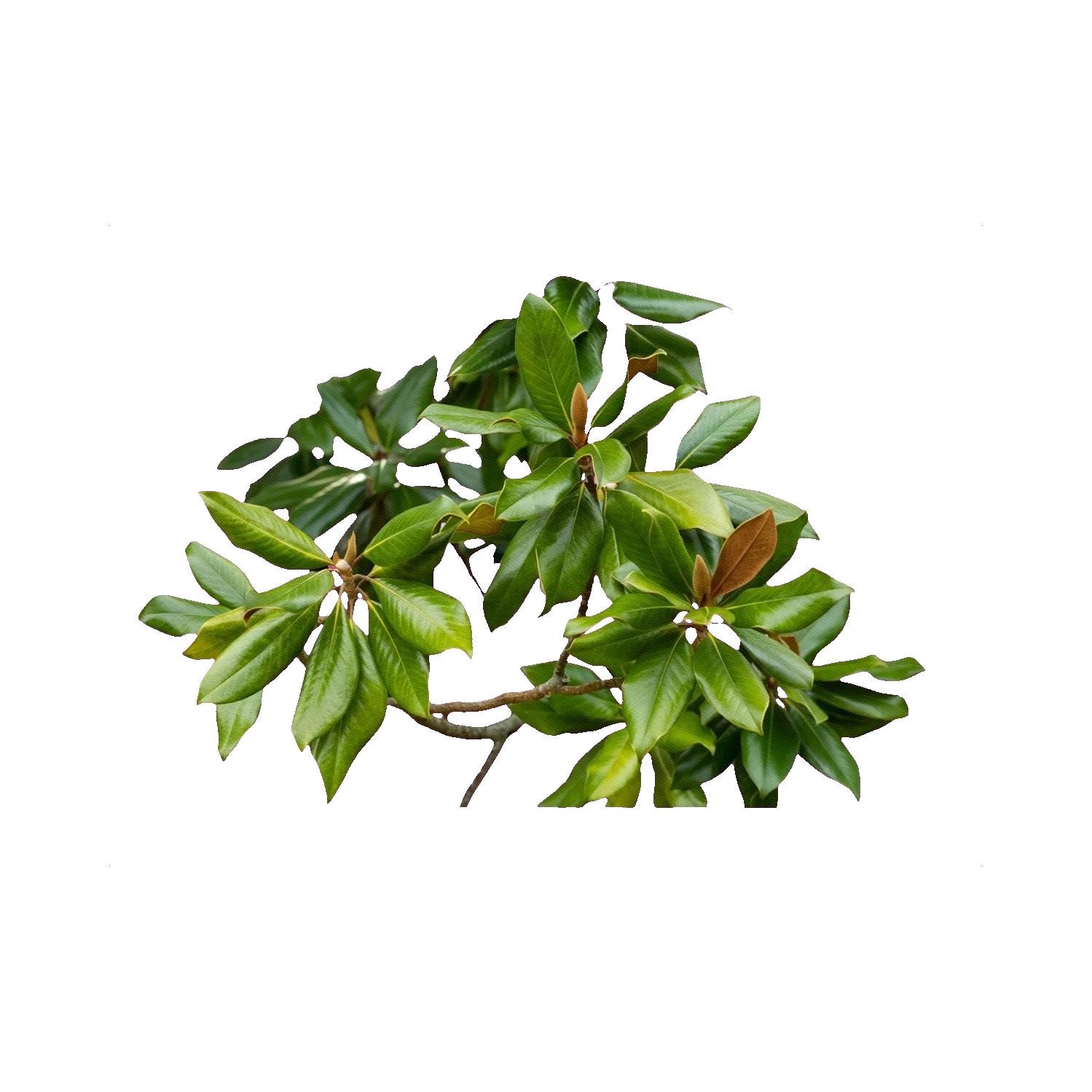
Magnolia Leaf
Magnolia grandiflora
Magnolia leaf (Magnolia grandiflora) is a bold, glossy evergreen foliage with large leathery leaves that are deep green above and a warm suede-brown beneath. Florists prize the two-tone effect, turning leaves to show the felted copper reverse in wreaths, garlands and grand arrangements. The stiff, architectural leaves are extremely long-lasting and dry without dropping, making them a Christmas and installation staple. Cut branches bring instant structure and a rich, Southern elegance.
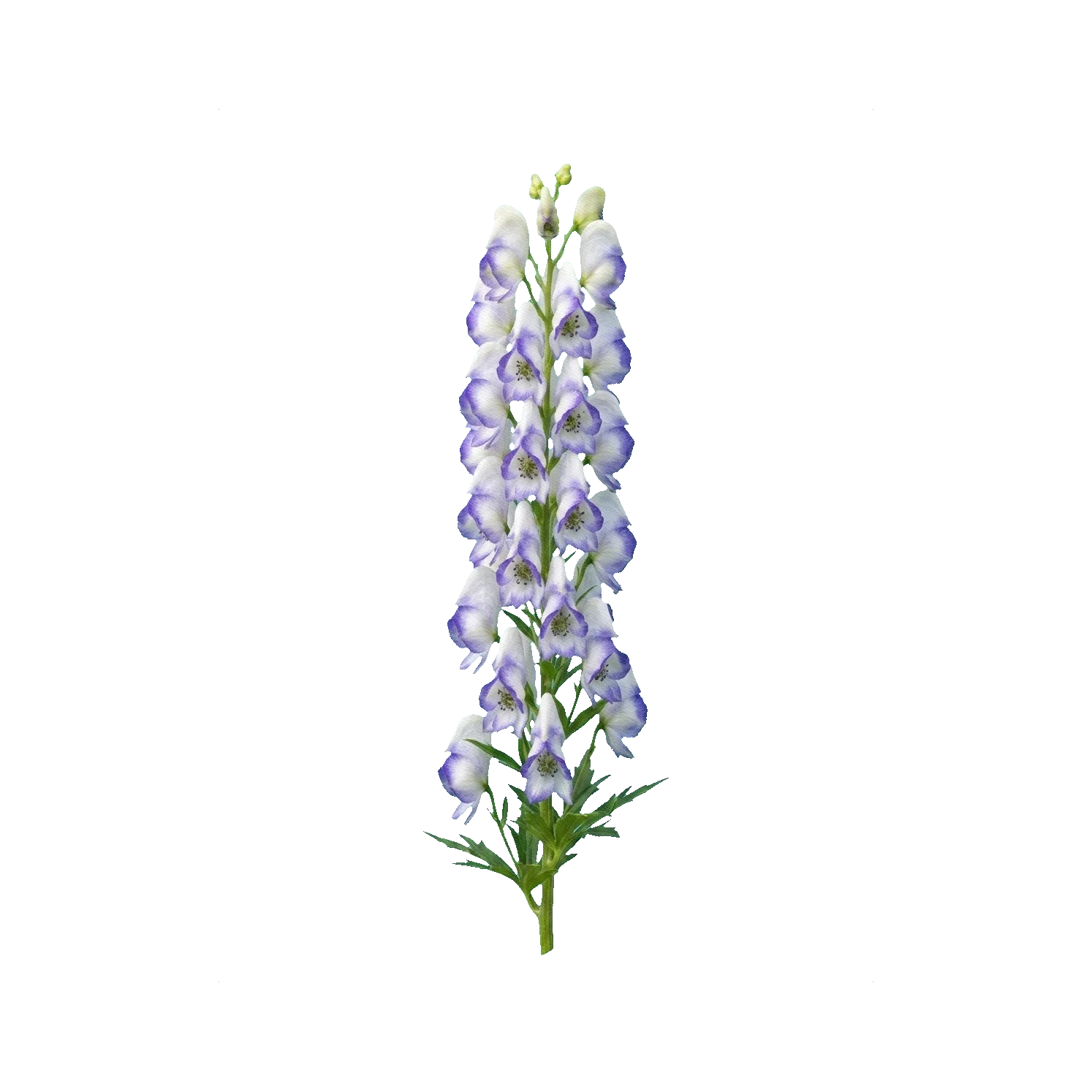
Monkshood
Aconitum napellus
Aconitum, known as monkshood, produces stately spires of hooded, helmet-shaped blooms in rich blues, purples and cool whites. Florists reach for it as a moody line flower that adds depth, height and an old-world garden character to autumn arrangements and editorial work. Every part of the plant is highly toxic, so it must be handled with gloves and kept well away from children, pets and food. Its deep sapphire tones are hard to find in other flowers, making it a treasured accent for dramatic, jewel-toned palettes.

Monstera Leaf
Monstera deliciosa
The monstera leaf, cut from Monstera deliciosa, is one of the most recognisable foliages in modern floristry — a large, glossy, deep-green blade slashed with natural holes and splits. Native to Central American rainforests, it brings bold scale, clean line and a lush tropical mood to arrangements and installations. Exceptionally long-lasting out of water and easy to handle, a single leaf can define a modern bouquet, backdrop or table runner. It is the signature green of tropical and contemporary design.
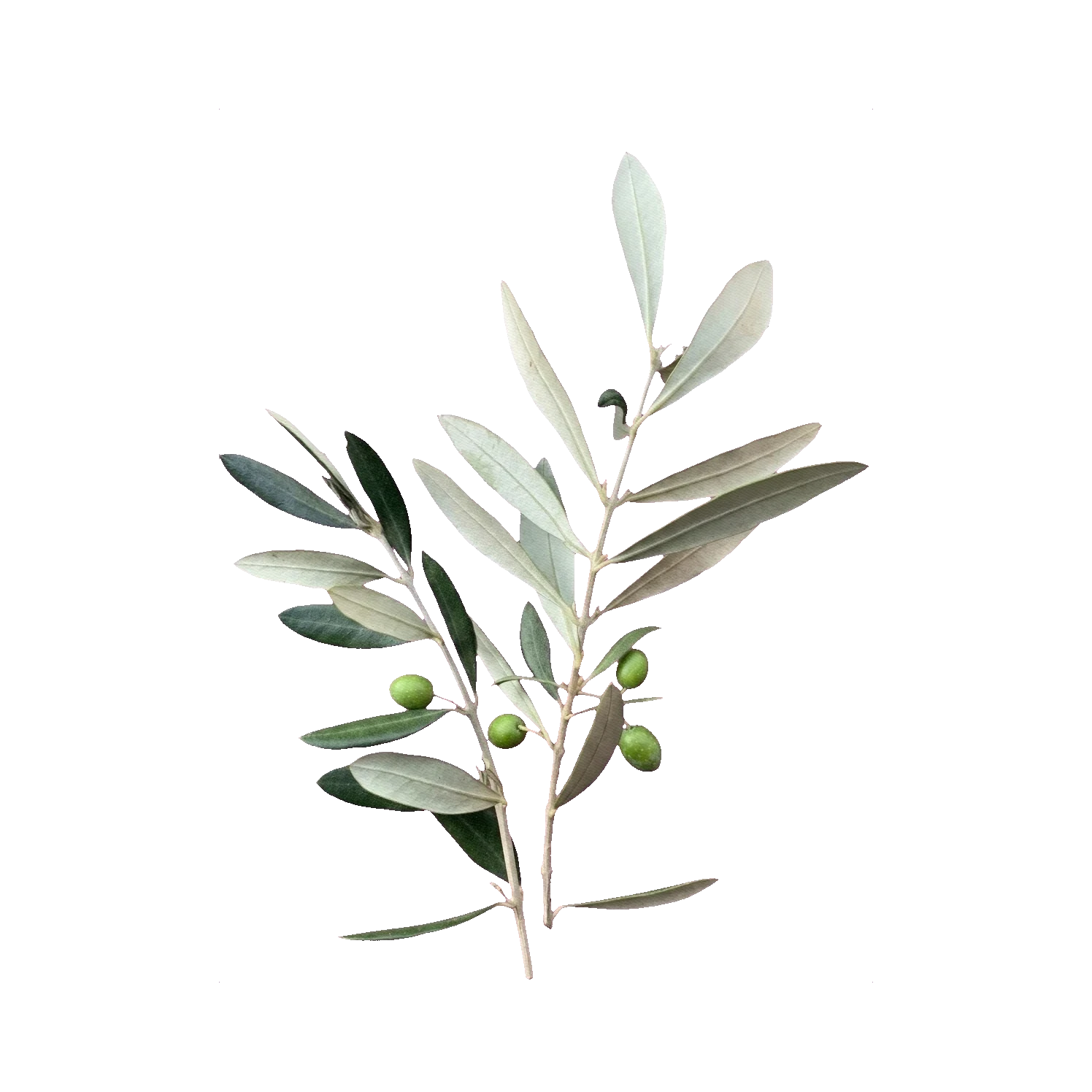
Olive Branch
Olea europaea
Olive (Olea europaea) branches bring a soft, silvery-green Mediterranean elegance that has become a signature of modern and garden-style weddings. The slender grey-green leaves catch the light beautifully and lend movement to arches, garlands and loose bouquets. Some branches carry small unripe olives, adding rustic charm. It has meaningful symbolism and a naturally airy, willowy form that softens any design.
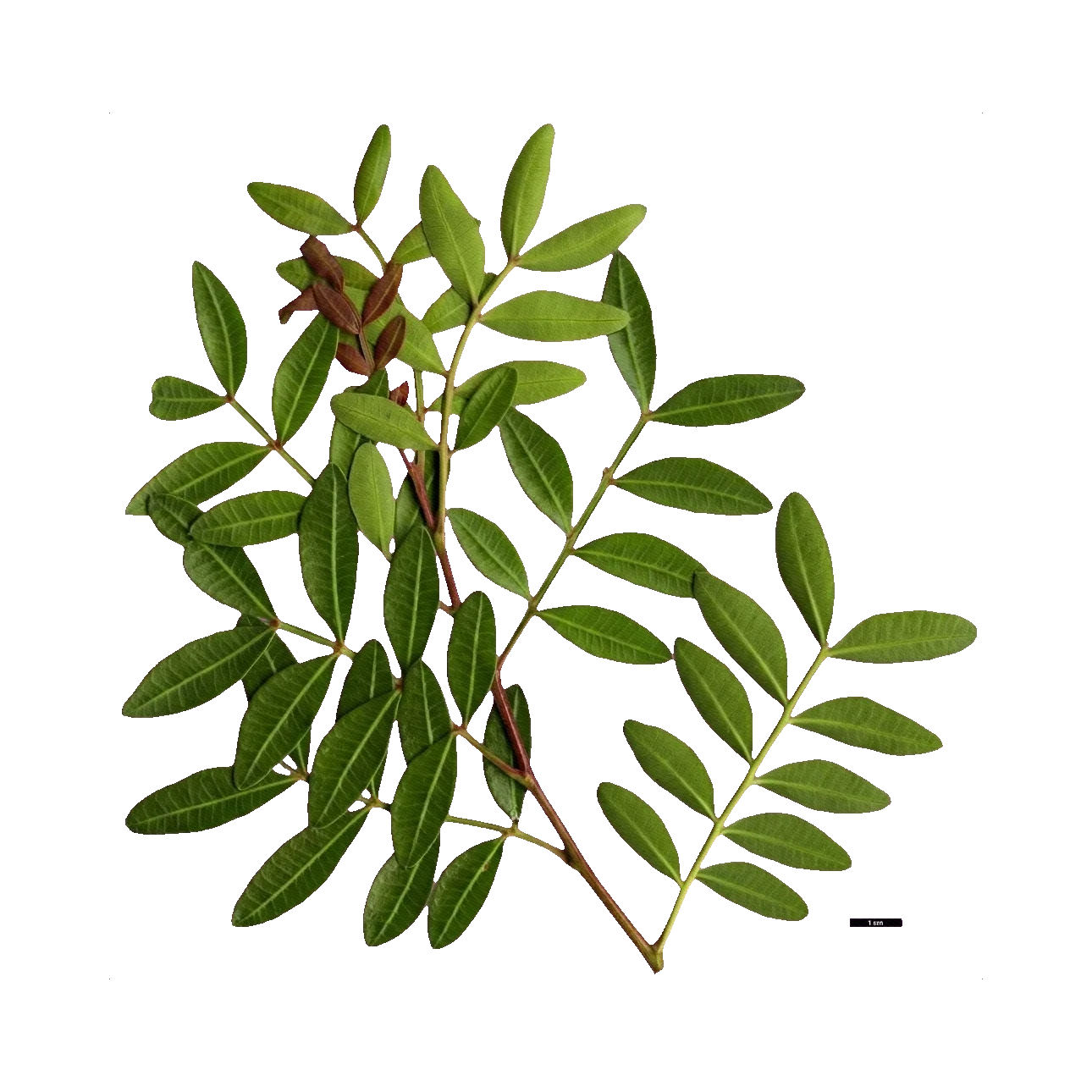
Pistacia
Pistacia lentiscus
Pistacia is the workhorse of commercial floristry — inexpensive Mediterranean greenery that creates volume inside a bouquet without ever being seen. Modern florists use pistacia as the structural skeleton of oversized bouquets, allowing focal flowers to sit airily on top. See our journal piece on [technical greenery](/journal/technique/technical-greenery/).
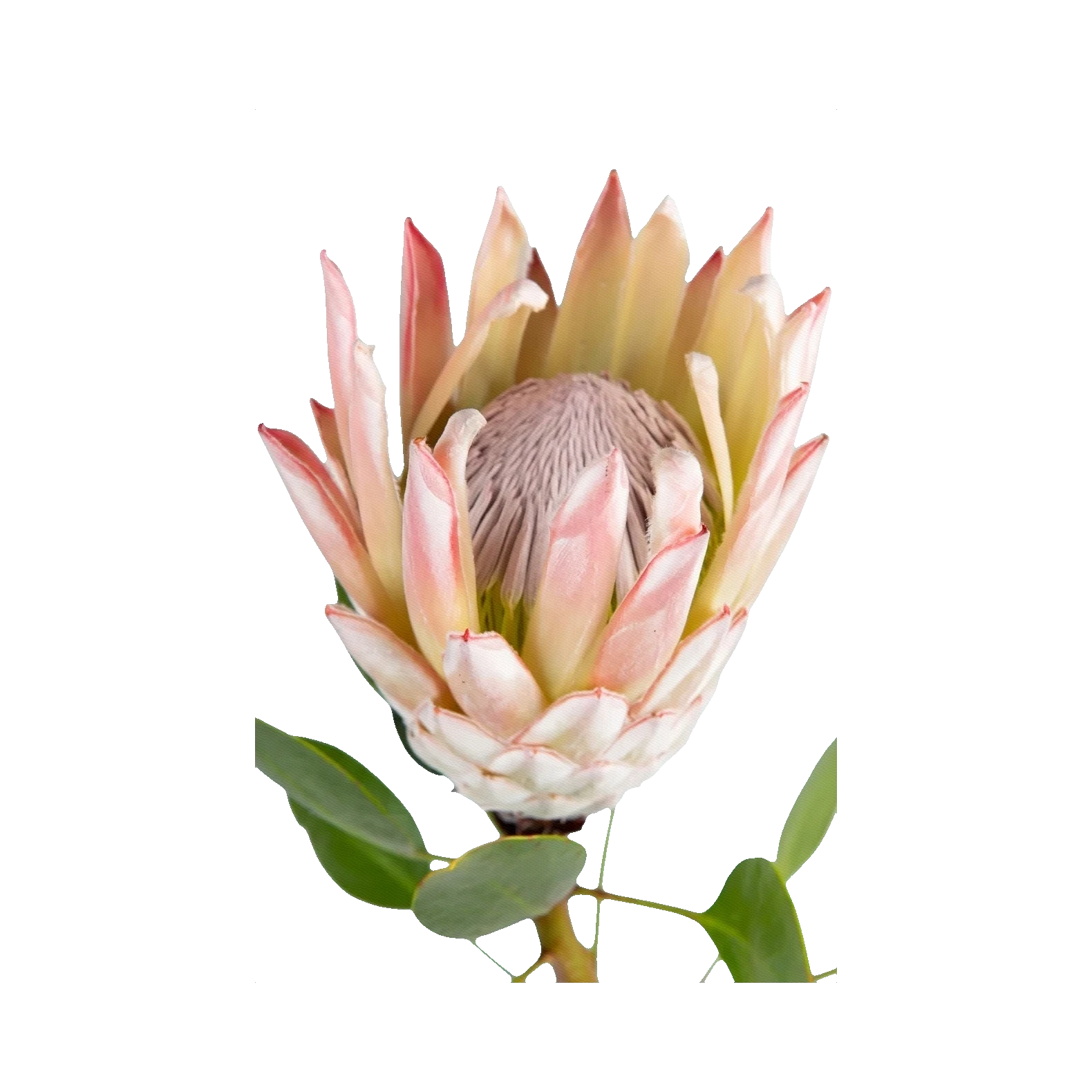
Protea
Protea
The protea is a flower with a personality — 300 million years of evolution, a South African native, and the design language of modern desert and tropical floristry. The king protea (P. cynaroides) reaches 25 cm across and functions as an entire arrangement in one stem. Dries perfectly; used widely in preserved wall art.
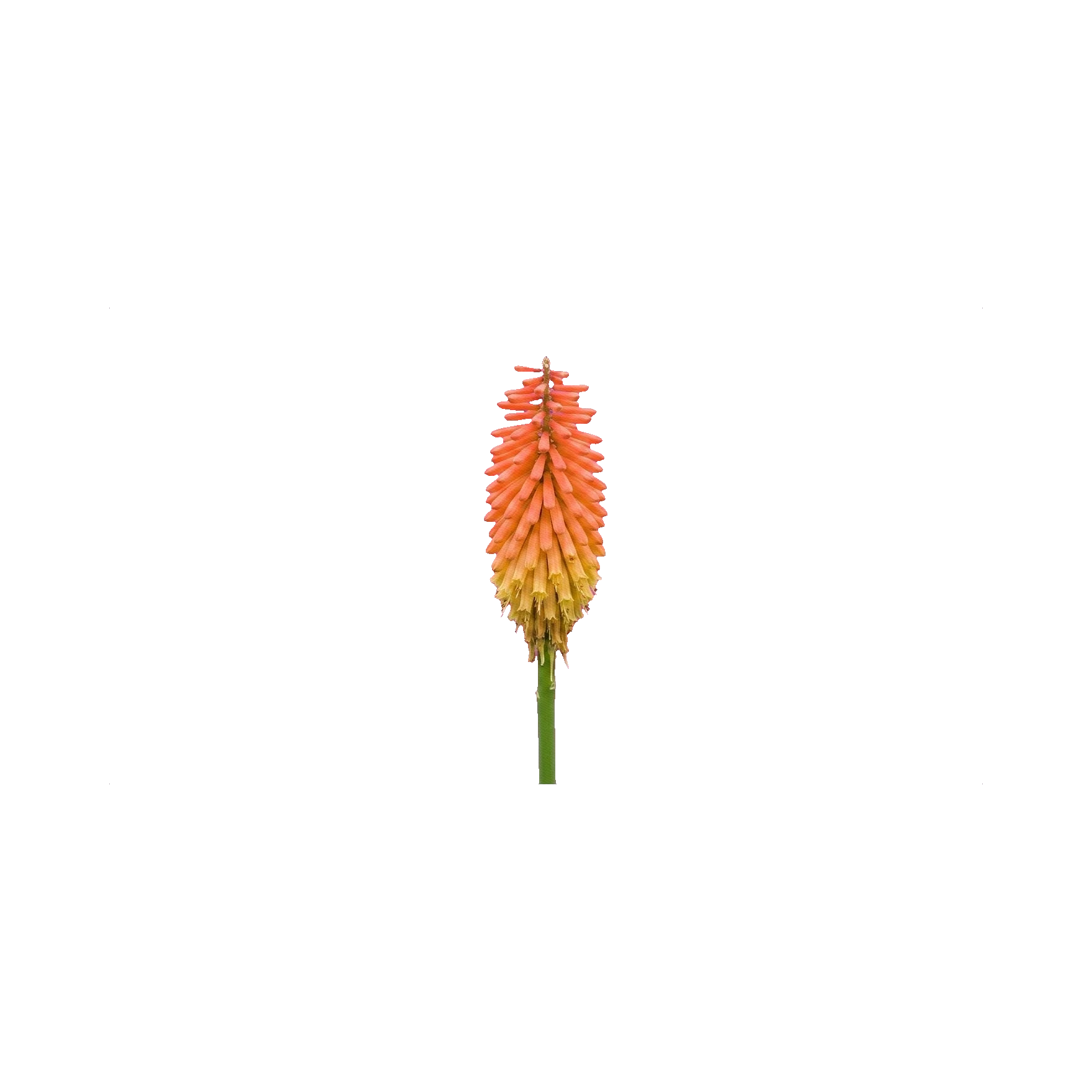
Red Hot Poker
Kniphofia uvaria
Kniphofia, the red hot poker, forms dense, torch-like spikes of tubular florets that blaze from fiery red through orange to yellow, often on a single ombre stem. Florists use it as a bold, architectural line flower that injects heat, height and tropical drama into summer and installation designs. Its sculptural form and vivid gradient make it an instant focal accent in large-scale work. Long, sturdy stems and striking colour give it real presence in modern and tropical arrangements.

Ruscus
Ruscus hypoglossum
Ruscus is the affordable line-greenery of modern floristry. Italian ruscus provides the long, drooping stems used in arch installations and cascading bouquets; Israeli ruscus is shorter and upright, used inside bouquets as filler. Both offer weeks of vase life at a fraction of the cost of specialty greenery.
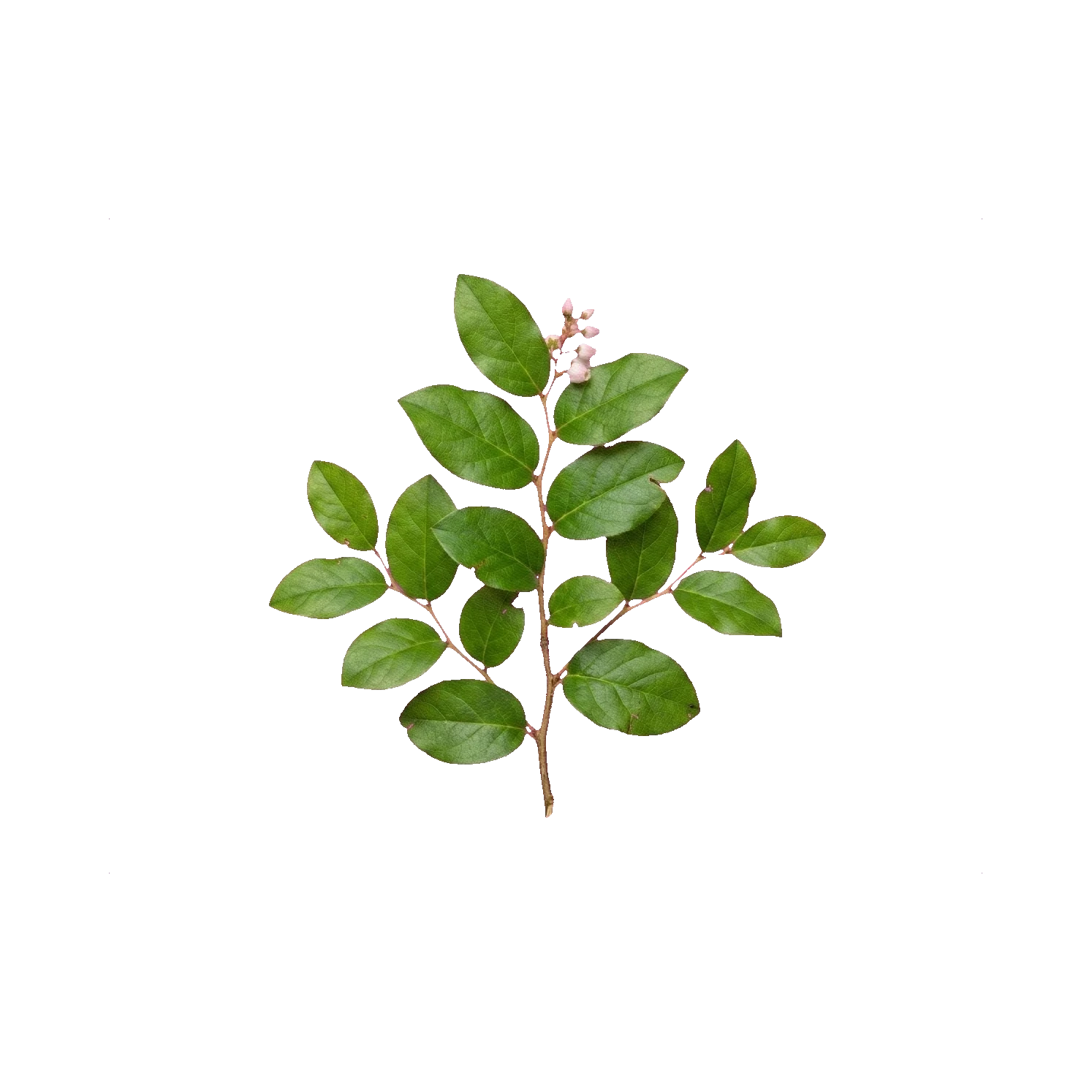
Salal
Gaultheria shallon
Salal (Gaultheria shallon) is a broadleaf evergreen from the Pacific Northwest, prized as one of the most reliable and inexpensive cut foliages in the trade. Its leathery, oval leaves grow densely along woody stems, giving an even backdrop of deep green that is slow to wilt. Florists reach for it constantly to green up bouquets, line arrangements and fill gaps behind focal blooms. It ships and stores exceptionally well, making it a workhorse for weddings and everyday work alike.
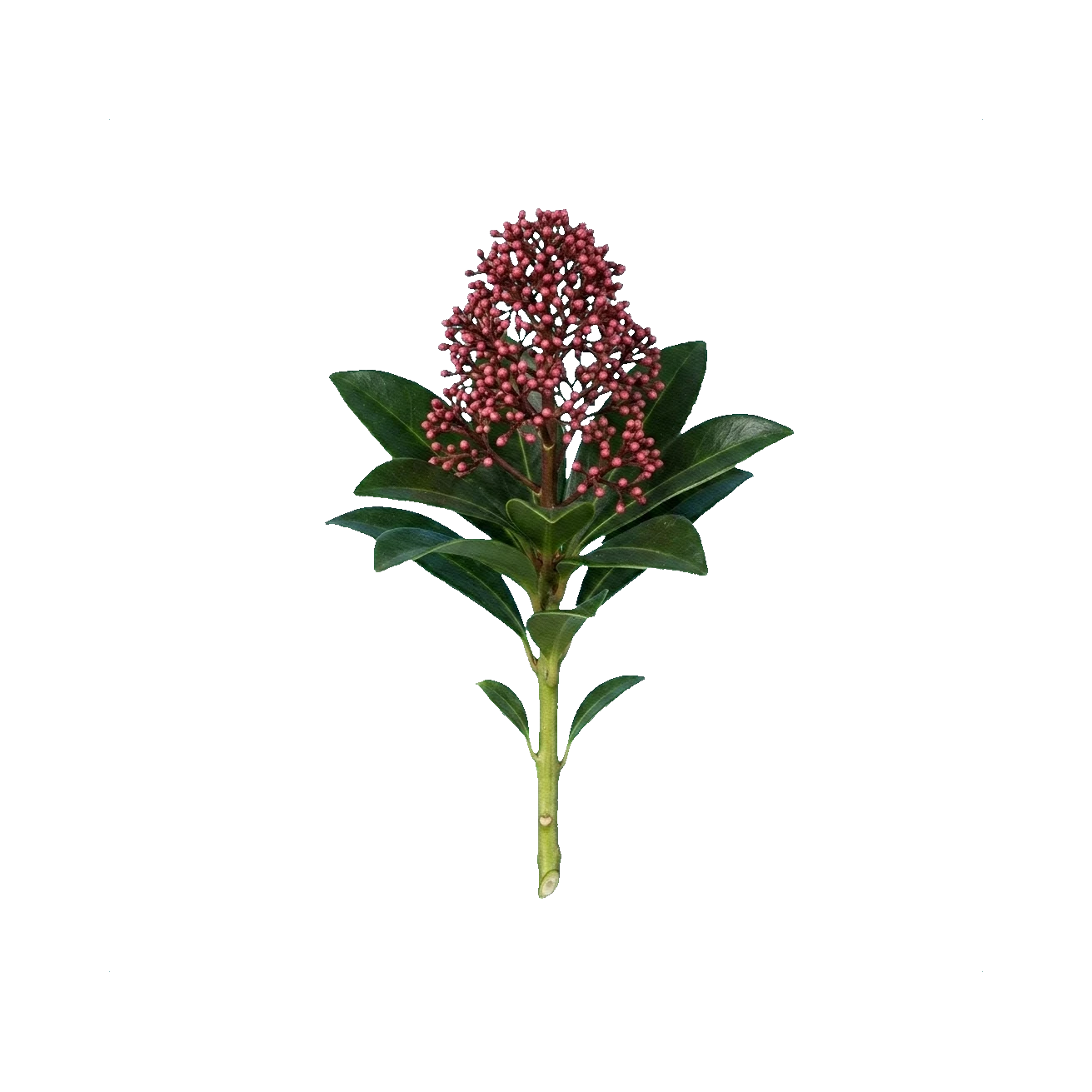
Skimmia
Skimmia japonica
Skimmia — the Japanese Rubella variety in particular — is a professional winter florist secret: clustered red or pink buds against glossy green leaves, holding for weeks in vase. Modern winter wedding designers combine it with white ranunculus, silver eucalyptus, and hellebore for a naturalistic Christmas-adjacent palette that avoids the traditional red-and-green cliche.
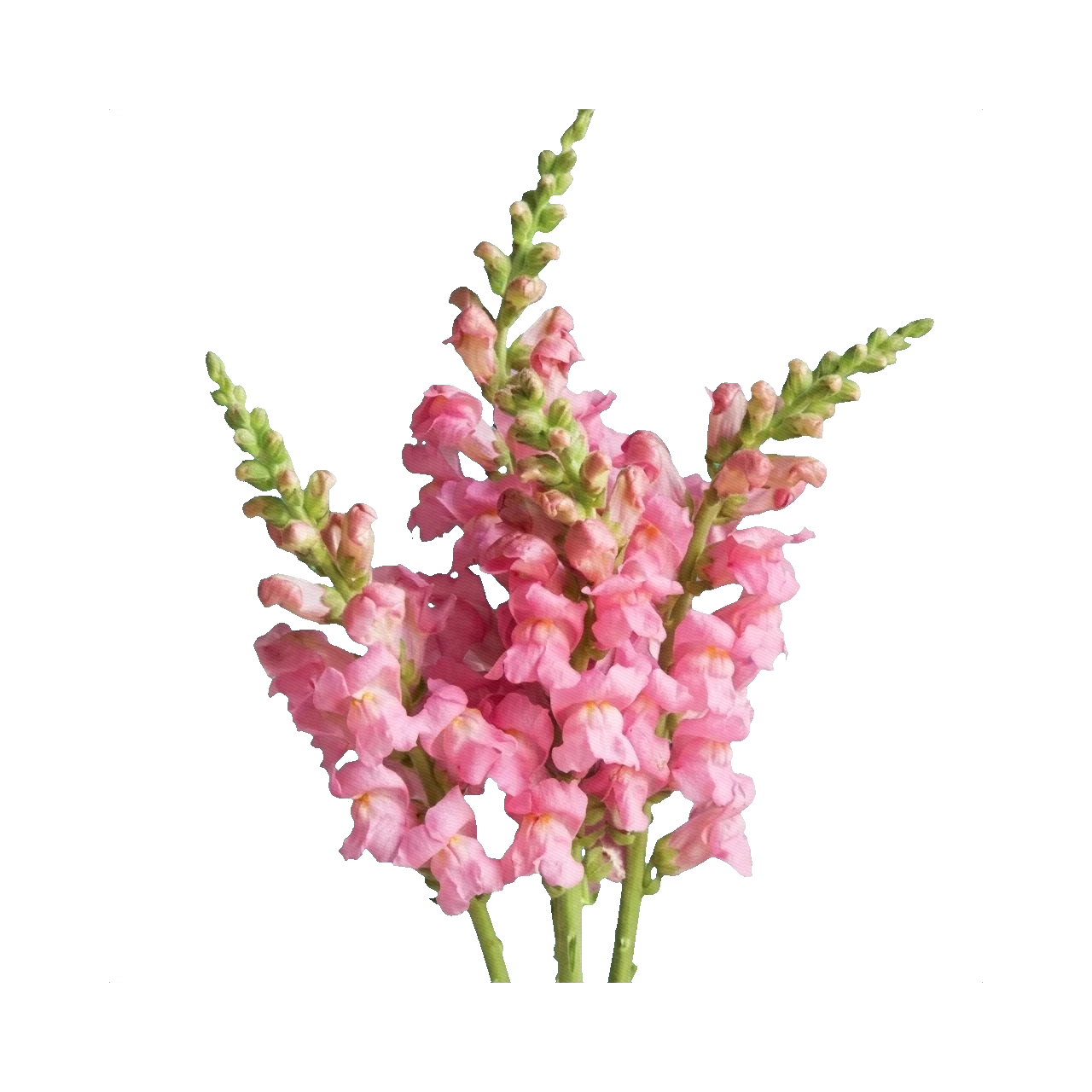
Snapdragon
Antirrhinum majus
The snapdragon delivers vertical line at a mid-range price — reaching 100 cm on strong Chantilly cultivars. Critical to know: snapdragons are geotropic. Store them upright between purchase and use, or the tips will curve back toward the ceiling within hours, creating unusable J-shaped stems.

Switch Grass
Panicum virgatum
Panicum, or switch grass, is a North American prairie grass whose delicate, cloud-like panicles bring a haze of fine texture to arrangements. Cut fresh, its shimmering green or wine-flushed sprays soften the edges of bouquets and lend an on-trend, meadowy looseness; dried, it holds a feathery, glinting form. Cultivars range from clean green to burgundy-tinted, so it slots into palettes from fresh spring to moody autumn. Airy and forgiving, it is a favourite filler for garden-style and installation work.
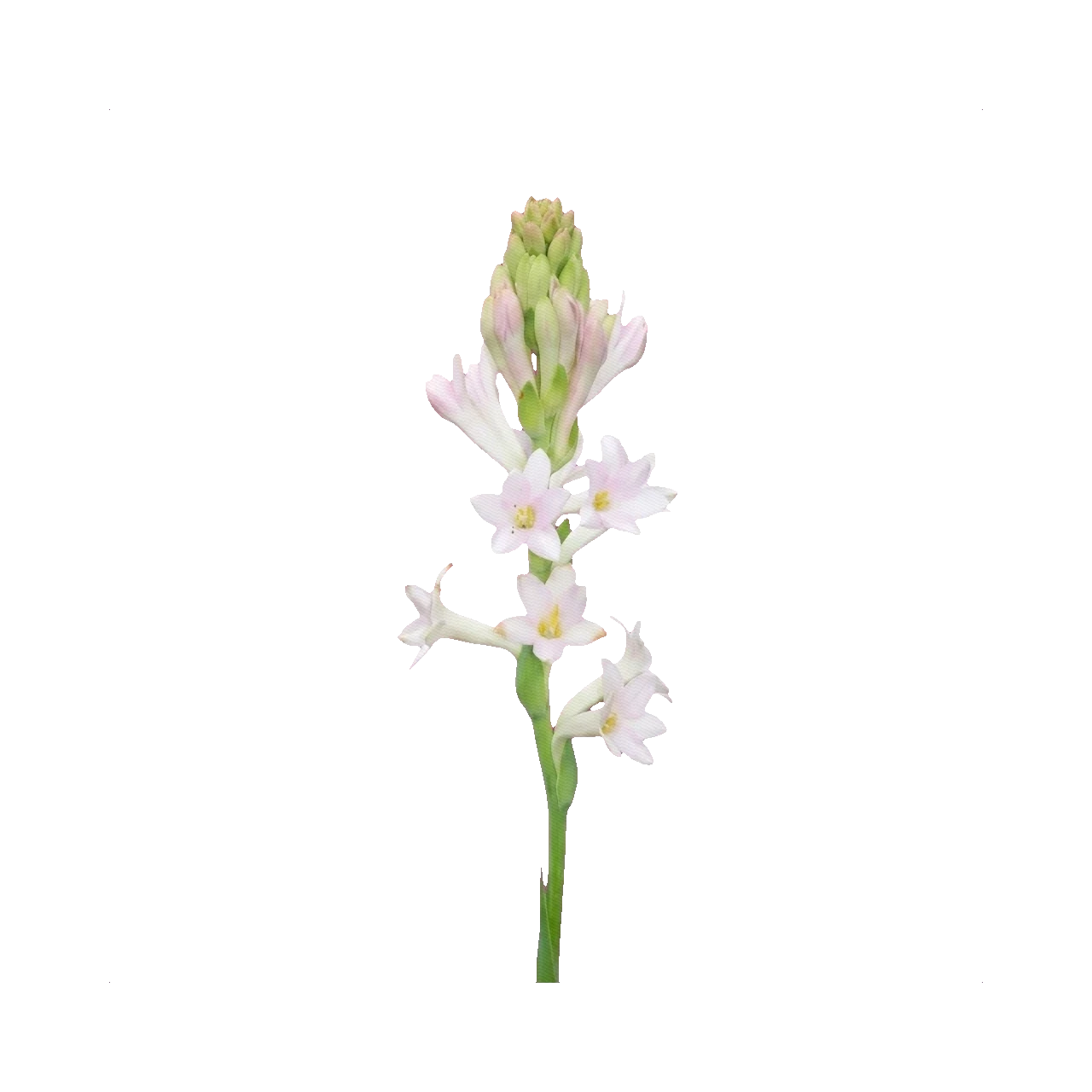
Tuberose
Polianthes tuberosa
Tuberose carries one of the most powerful fragrances in the flower world — a night-blooming, honey-jasmine scent that fills a room. Central to Indian wedding traditions (garlanded around the bride and groom); an editorial favourite in the West for evening events.
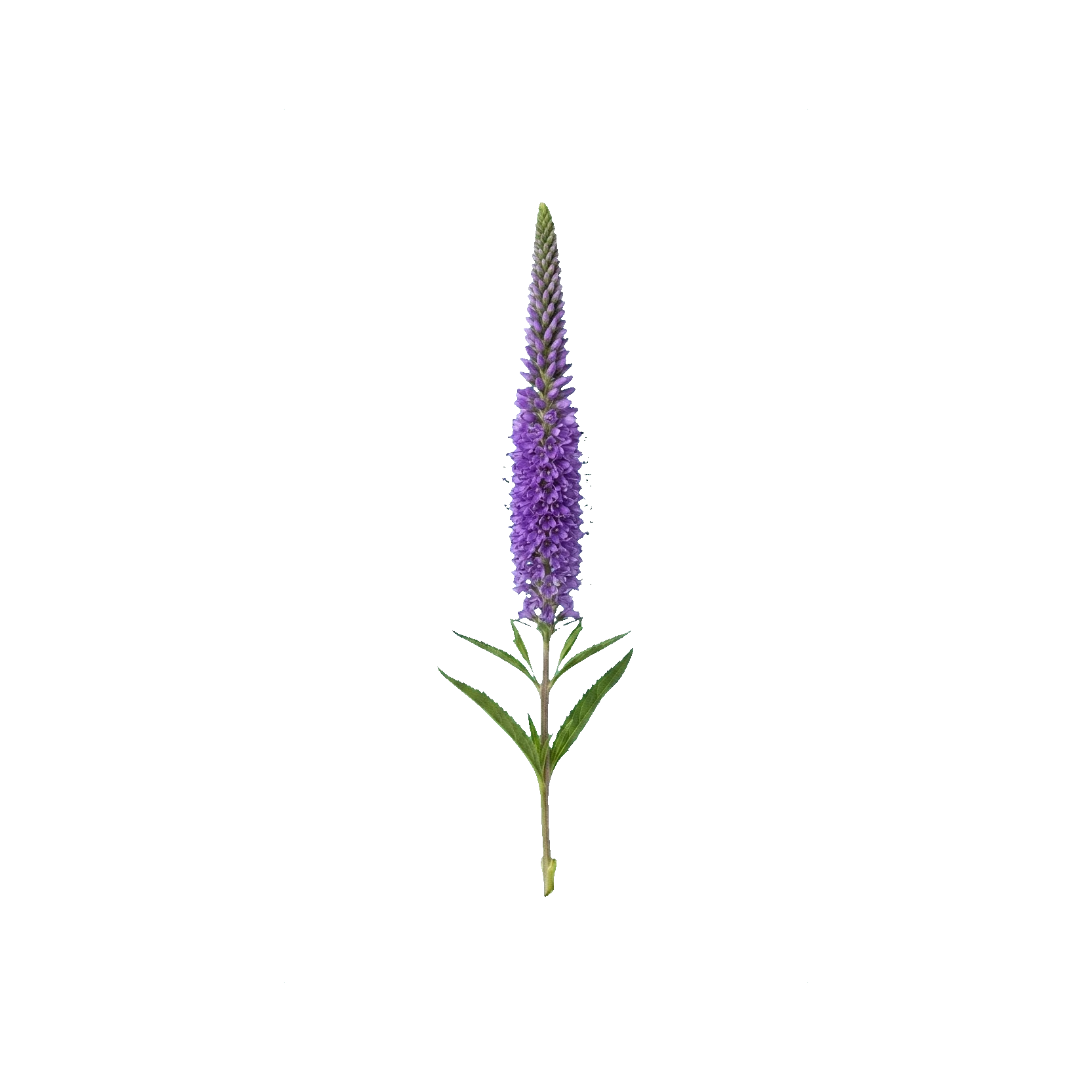
Veronica
Veronica spicata
Veronica, or speedwell, sends up slender, tapering spires densely packed with tiny star-shaped flowers in purple, blue, pink or white. Florists use these graceful spikes as a line-and-filler flower that adds vertical movement, colour and a natural, garden-grown feel. The blooms open gradually from the base upward, giving a long display and useful height. Airy yet structural, veronica is a summer favourite for loose, romantic arrangements.
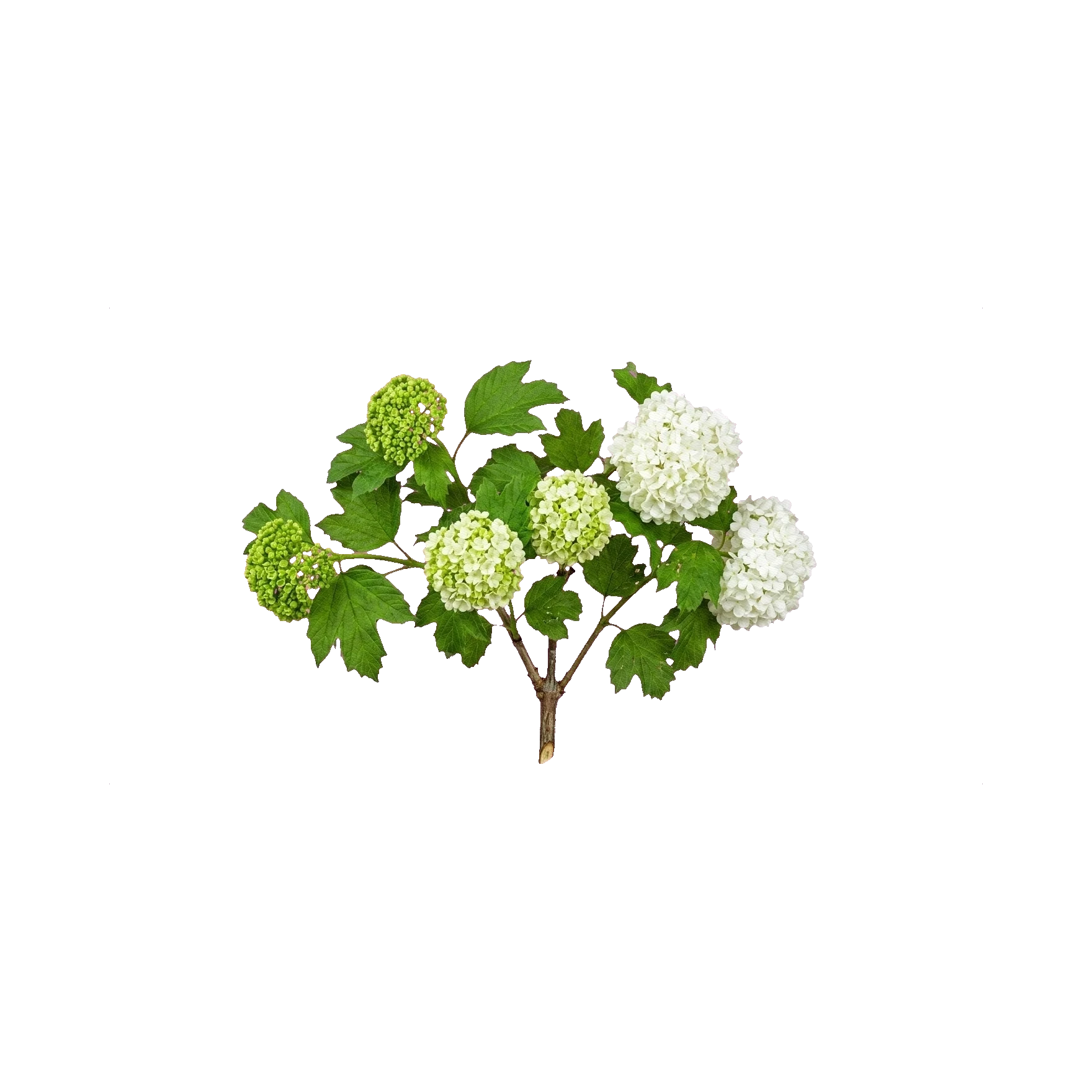
Viburnum
Viburnum opulus 'Roseum'
Viburnum opulus 'Roseum' — snowball viburnum — produces round bloom clusters that shift from acid green to pure white over the vase week. Long, strong stems make it a wedding-arch and installation favourite. One of the few pure-green cut flowers, and unmatched for the effect.
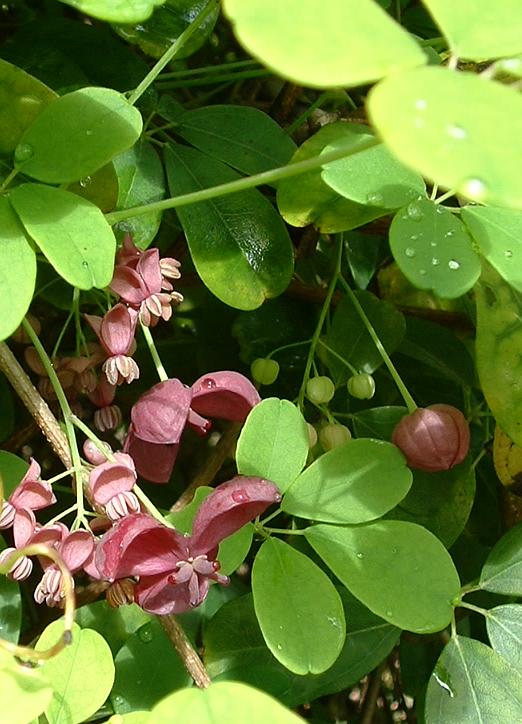
Akebia
Akebia quinata
Akebia quinata, the chocolate vine, is an East-Asian climber with elegant five-part leaves and unusual purple spring flowers that carry a soft chocolate-vanilla scent. Florists value its pliable stems and refined foliage for training into arcs and adding a quiet, garden-gathered elegance to installations. The curious flowers make it a coveted, premium seasonal material. Its flexible growth suits arches and cascading designs.
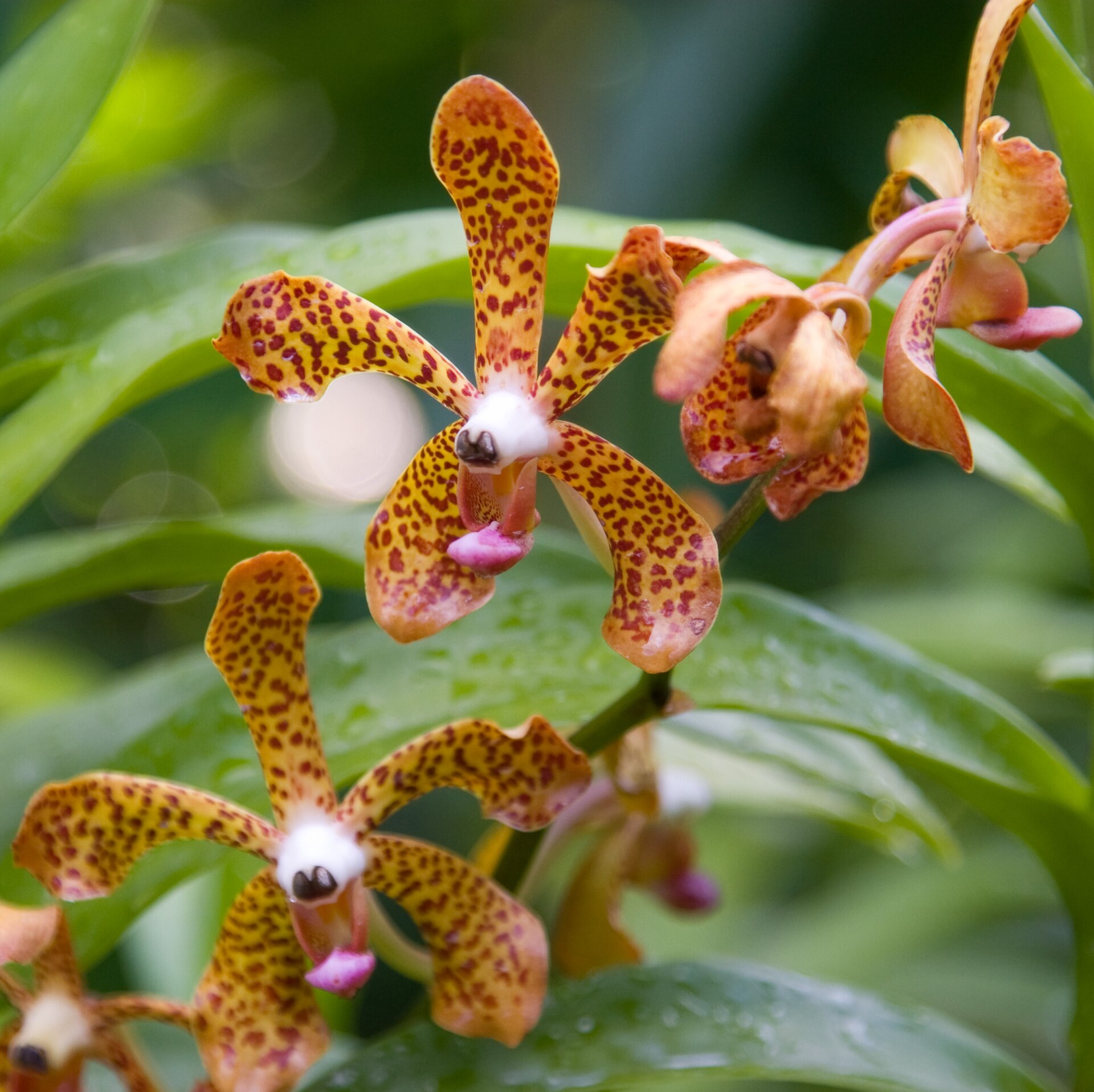
Aranda Orchid
Aranda (Arachnis × Vanda)
Aranda is a hardy hybrid orchid crossing Arachnis and Vanda, carrying rows of flat, often spotted or veined blooms along a tall, wiry spray — the reason it is nicknamed the scorpion orchid. Grown commercially in Singapore and Malaysia, it offers moody purples, blues and bronzed browns rarely found in cut flowers. Florists value it as a tropical line element that draws the eye upward in tall arrangements and modern event pieces. Robust and long-lasting for an orchid, it holds up to bolder, architectural designs.
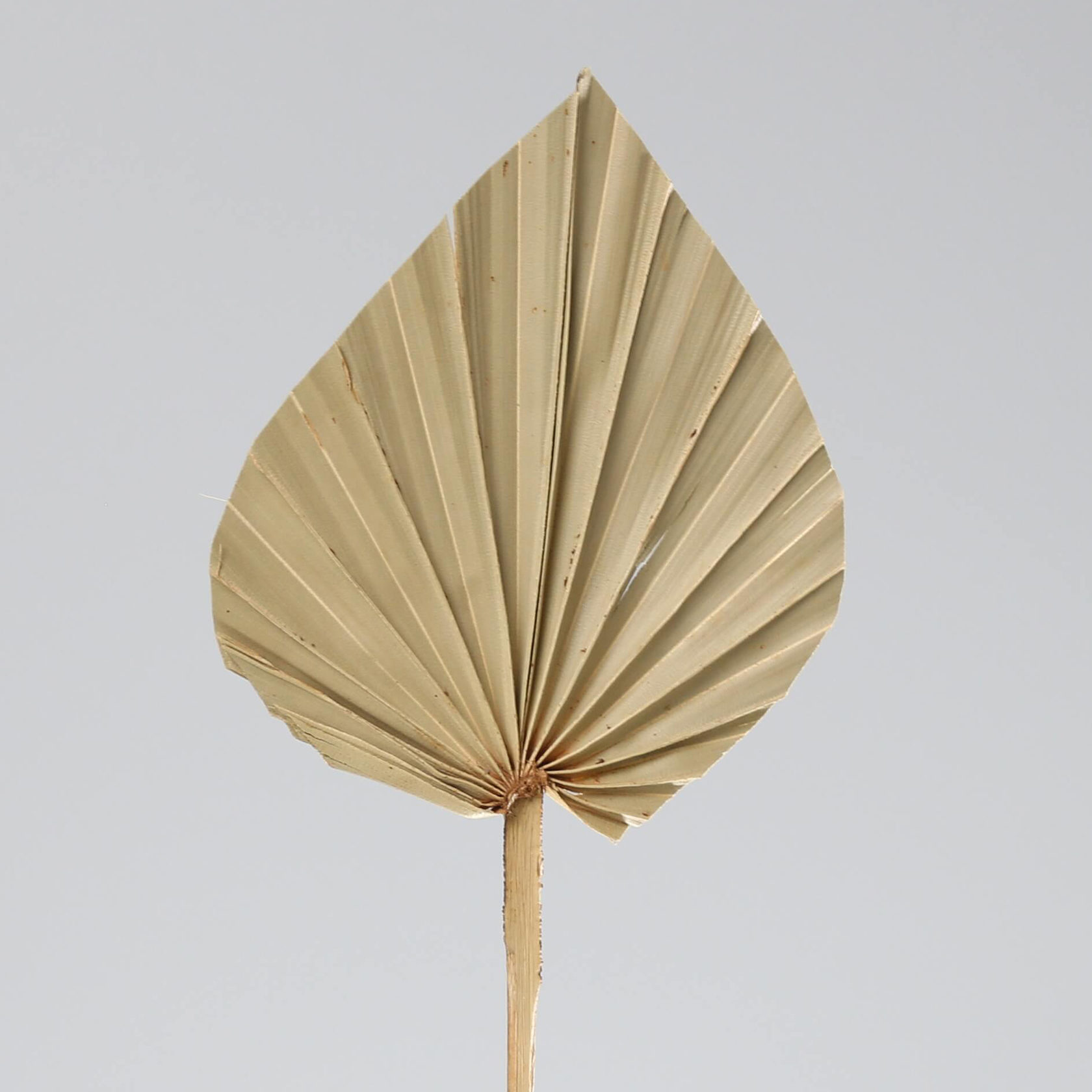
Areca palm frond
Dypsis lutescens
The Areca palm frond — cut foliage from Madagascar's golden cane palm — is the definitive tropical wedding and installation foliage. Its long feathered leaflets create instant tropical drama at destination weddings and beach events. Modern editorial designers also use it dry as a sculptural element in hotel and gallery installations.
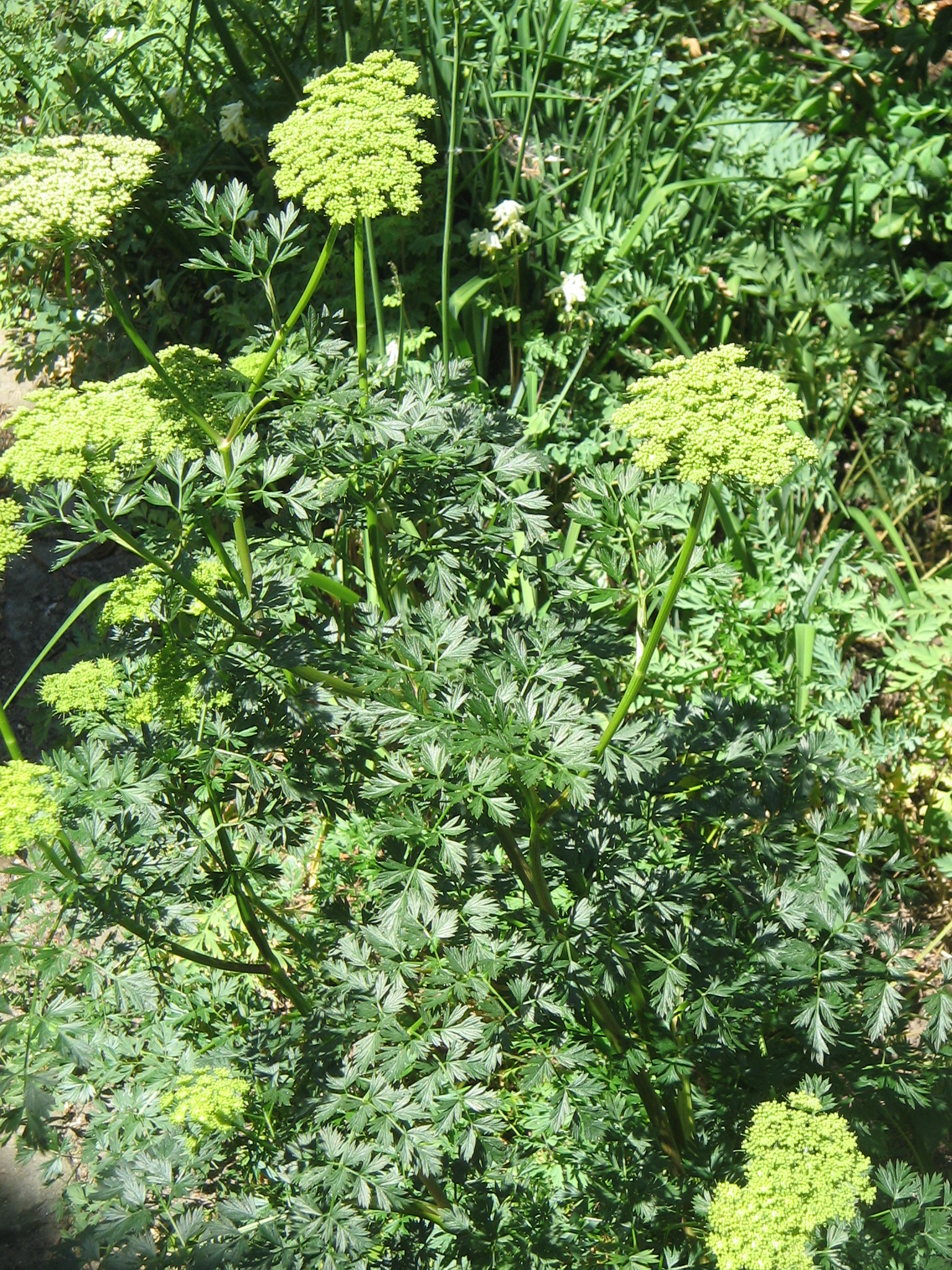
Baltic Parsley
Cenolophium denudatum
Cenolophium, or Baltic parsley, is a tall, elegant umbellifer prized in naturalistic floristry for its airy domes of tiny greenish-white flowers. Cleaner and more architectural than cow parsley, it lends height, movement and a fresh green haze to garden-style bouquets, arches and loose centrepieces. It mixes beautifully with roses, grasses and other umbels. Long-lasting and forgiving, it is a favourite of designers chasing a just-picked, meadow feel.
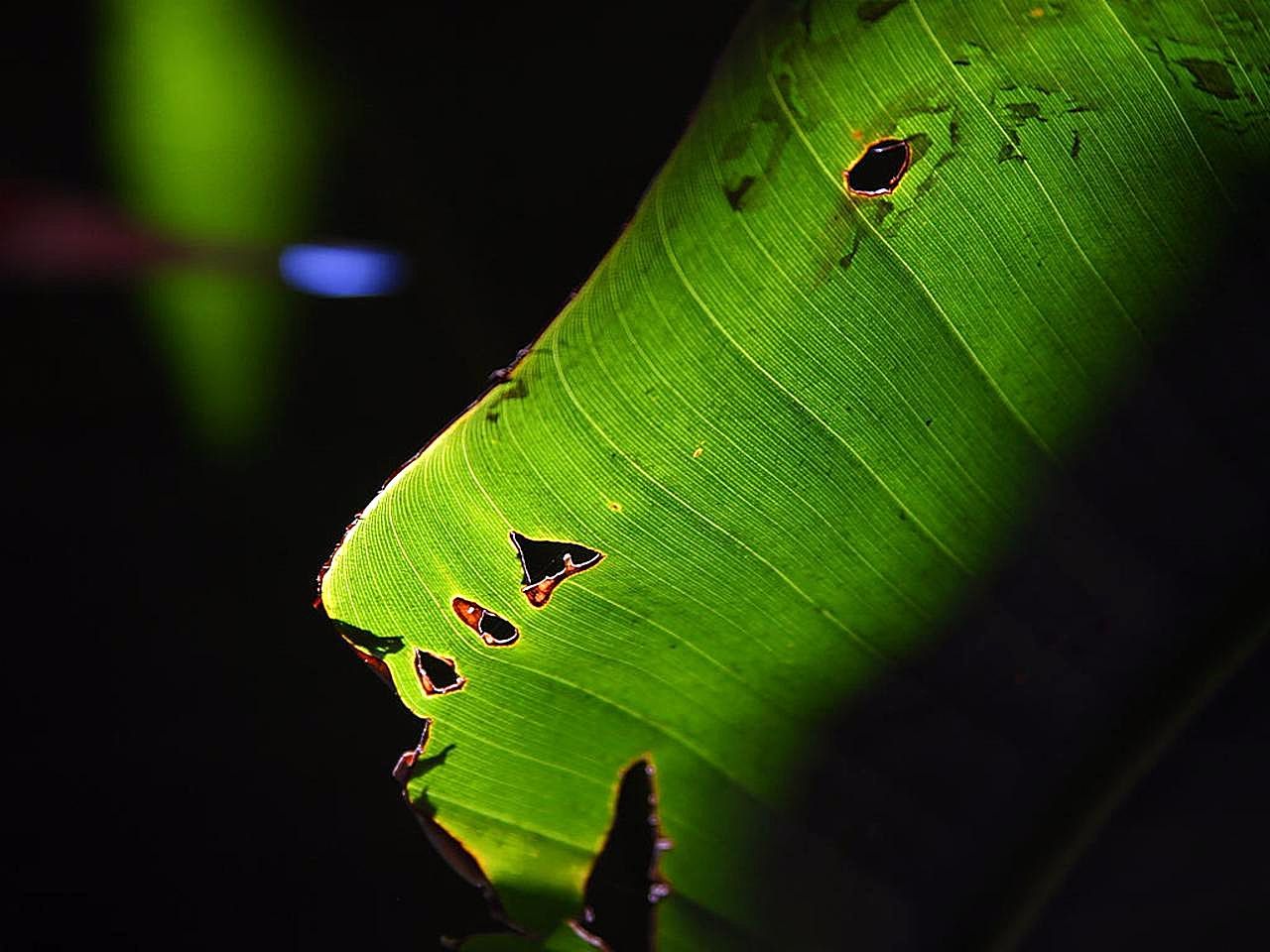
Banana Leaf
Musa × paradisiaca
Banana leaf is a broad, glossy paddle of foliage prized for its clean tropical geometry and versatility. Florists use it whole for bold architectural greenery, roll or fold it to line the inside of glass vases, or cut it into strips and sculptural forms for modern and tropical designs. Inexpensive and widely available year-round, it brings instant lushness and scale to installations and event work. It is best used fresh, as the cut blade gradually dries and curls at the edges.
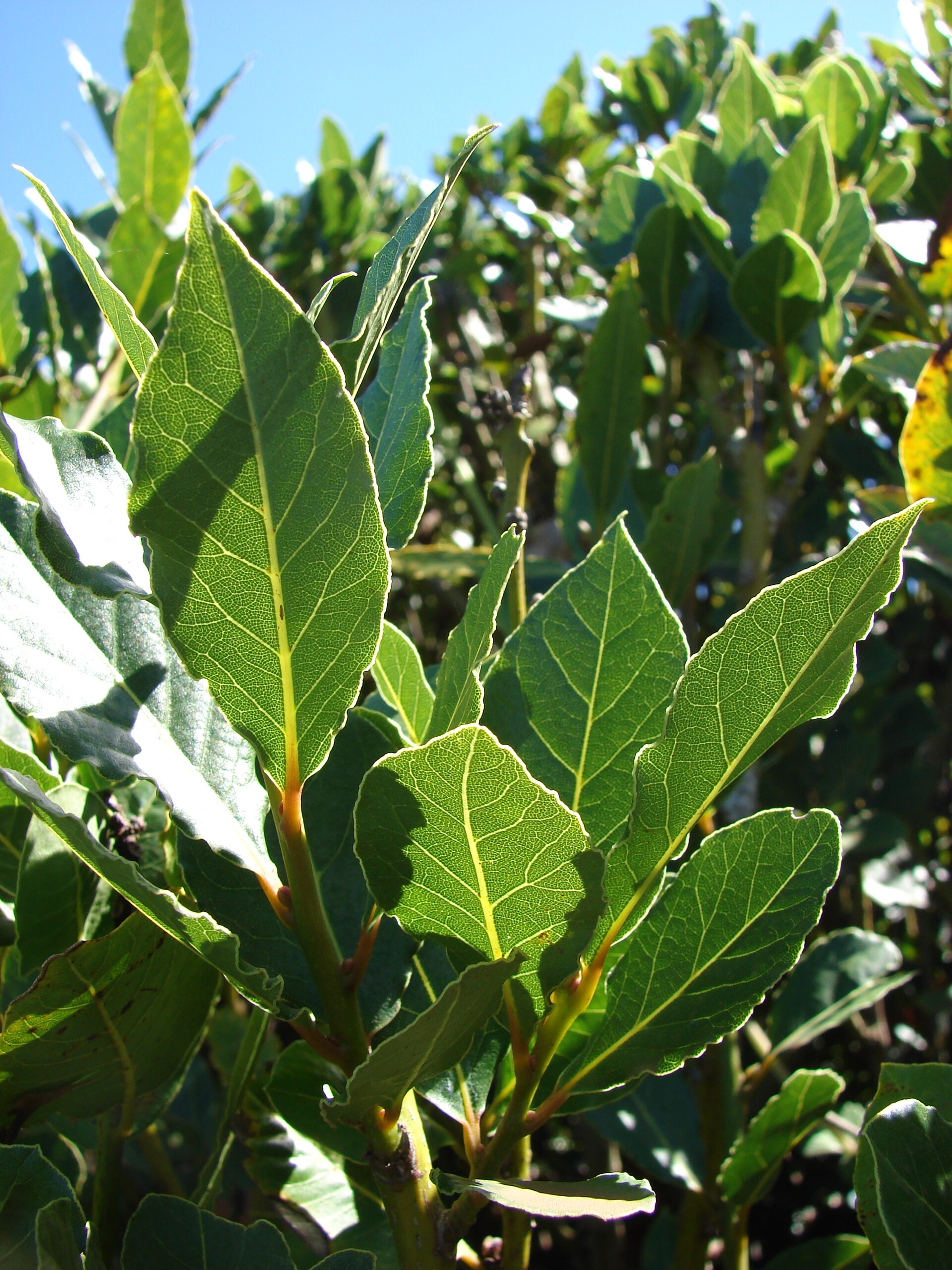
Bay Laurel
Laurus nobilis
Bay laurel (Laurus nobilis) is the aromatic evergreen of classical wreaths and Mediterranean cooking, valued by florists for its firm, glossy dark-green leaves and warm, spicy scent. The sturdy, upright stems make crisp foliage for garlands, wreaths and structured arrangements. Leaves are long-lasting and dry beautifully, holding shape and fragrance for months. Its rich history of honour and victory adds meaning to celebratory work.
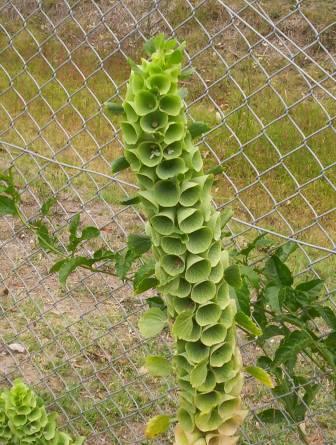
Bells of Ireland
Moluccella laevis
Bells of Ireland is a striking all-green line flower, its tall stems ringed with cup-shaped, apple-green calyces that look like a column of little bells. There is no petal colour to speak of — the appeal is entirely form and that fresh, unusual green, which makes it a favourite for adding height, structure and a botanical, garden-grown feel. Florists reach for it in tall arrangements, arches and monochrome-green designs, and it also dries and preserves well. Watch for the hidden spines when stripping the stems.
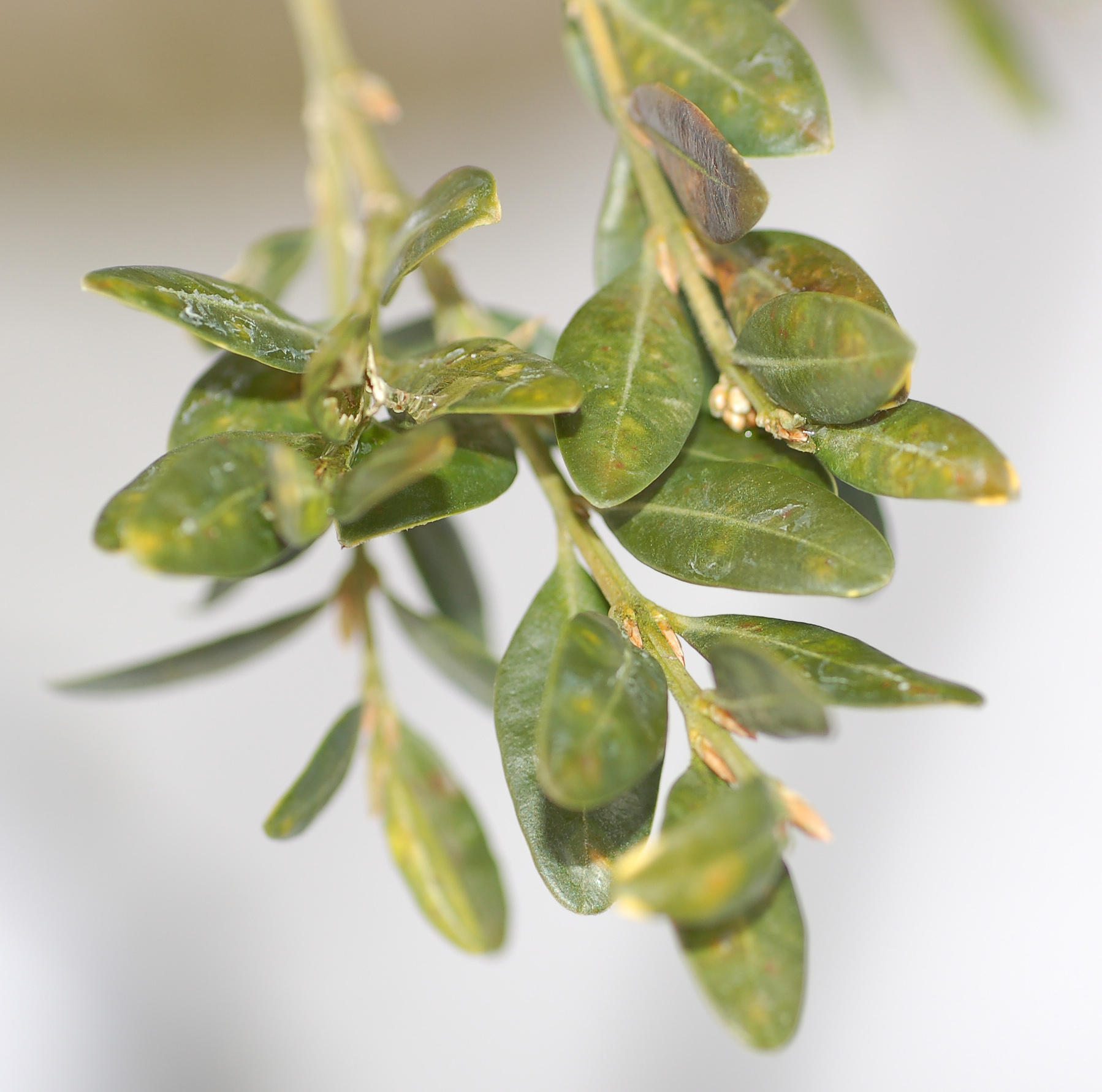
Boxwood
Buxus sempervirens
Boxwood is a fine-textured evergreen with small, dense, deep-green leaves along stiff woody stems. Long a mainstay of formal and holiday design, it forms lush topiary shapes, wreaths, garlands and compact greenery bases. Its tight foliage holds up remarkably well, even out of water, making it invaluable for installations and Christmas work. Florists love its classic, clipped, garden-hedge character.
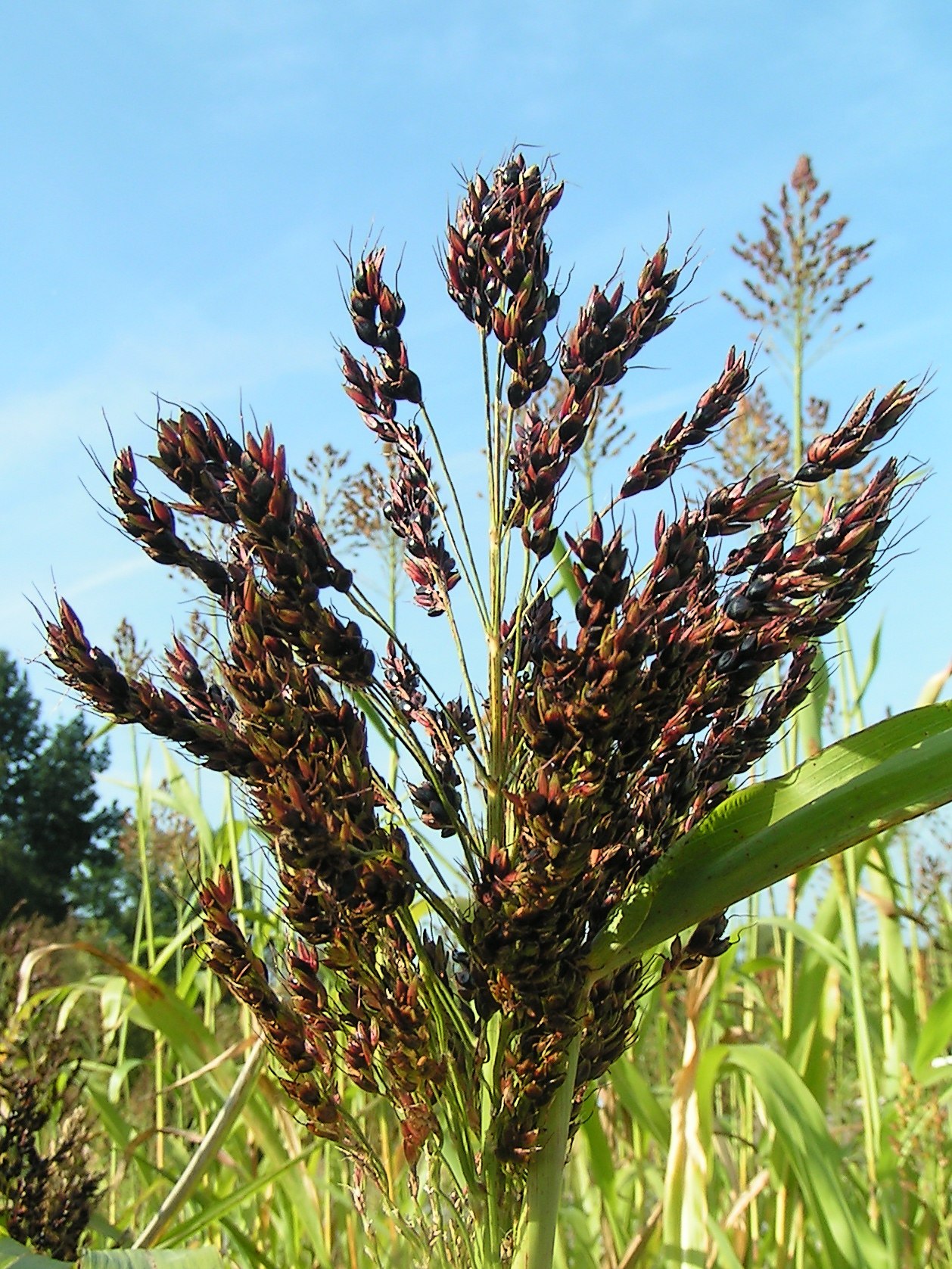
Broomcorn
Sorghum bicolor
Sorghum, or broomcorn, is a robust cereal grass grown for the large, branching seed heads that gave the traditional broom its bristles. In floristry those heavy heads bring bold, russet-to-burgundy texture and real presence to autumn and dried designs. Colours run from cream and bronze through deep red to near-black, and the sturdy stems dry easily into a graceful arc. Florists use it as a dramatic, harvest-toned accent that anchors rustic bouquets, installations and seasonal displays.
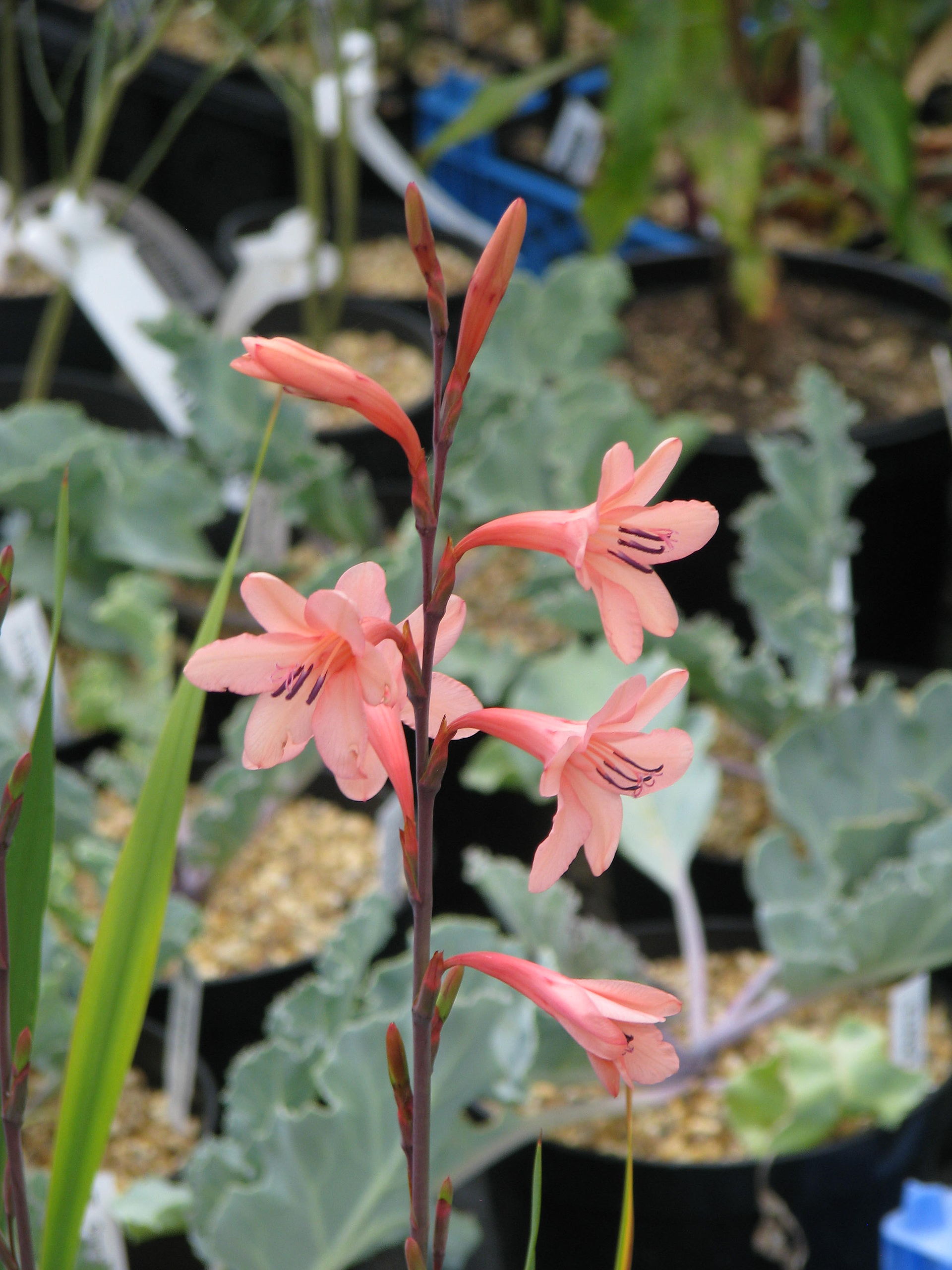
Bugle Lily
Watsonia borbonica
Bugle lily raises tall, elegant spikes of tubular trumpet flowers in warm pinks, corals and reds, resembling a more refined, slender gladiolus. A South African corm from the Cape, it brings height and a soft, old-fashioned grace to large-scale work. The blooms open in sequence up the stem, giving several days of gradual display. Florists use its stately line in tall arrangements, installations and romantic garden-style weddings.
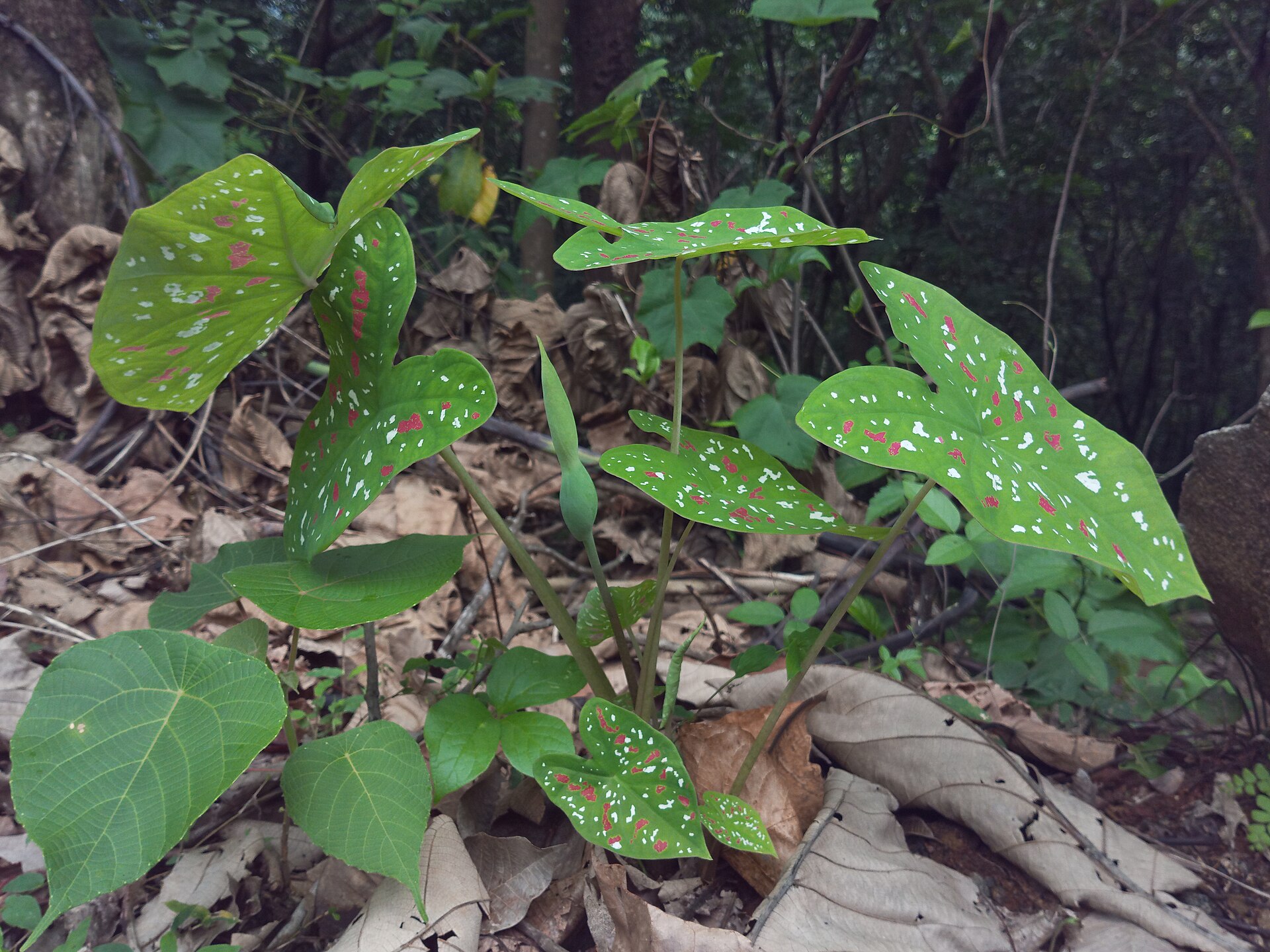
Caladium Leaf
Caladium bicolor
Caladium leaf is a painterly heart-shaped blade splashed with pink, red, white and green veining, giving it the nickname angel wings. Native to the Amazon, it brings extraordinary colour to tropical designs where most foliage stays plain green. Florists use it as a decorative accent leaf in bouquets, editorial pieces and low arrangements where its markings can be admired up close. It is delicate and short-lived once cut, so it rewards careful handling and warm conditions.
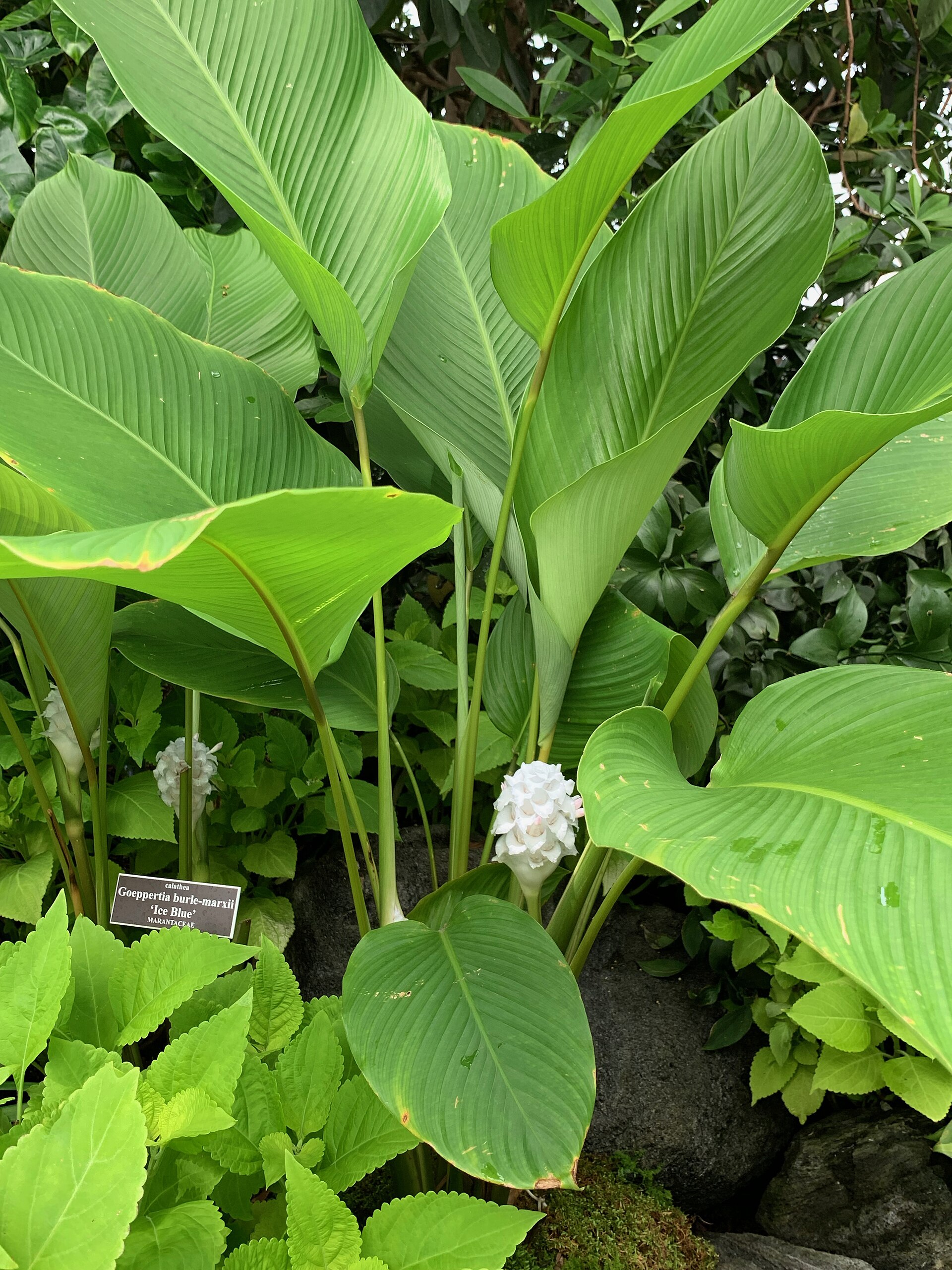
Calathea Leaf
Goeppertia (syn. Calathea)
Calathea leaf is a striking patterned foliage whose oval blades carry feathered stripes, spots or veins in deep greens, often with a dramatic burgundy underside. Native to the tropical Americas, it is a favourite for adding graphic texture and colour to modern and tropical arrangements. Florists use it both face-up for its peacock-like markings and reversed to show the wine-red back. More resilient as a cut than many exotic leaves, it holds its beauty for one to two weeks when kept warm and hydrated.
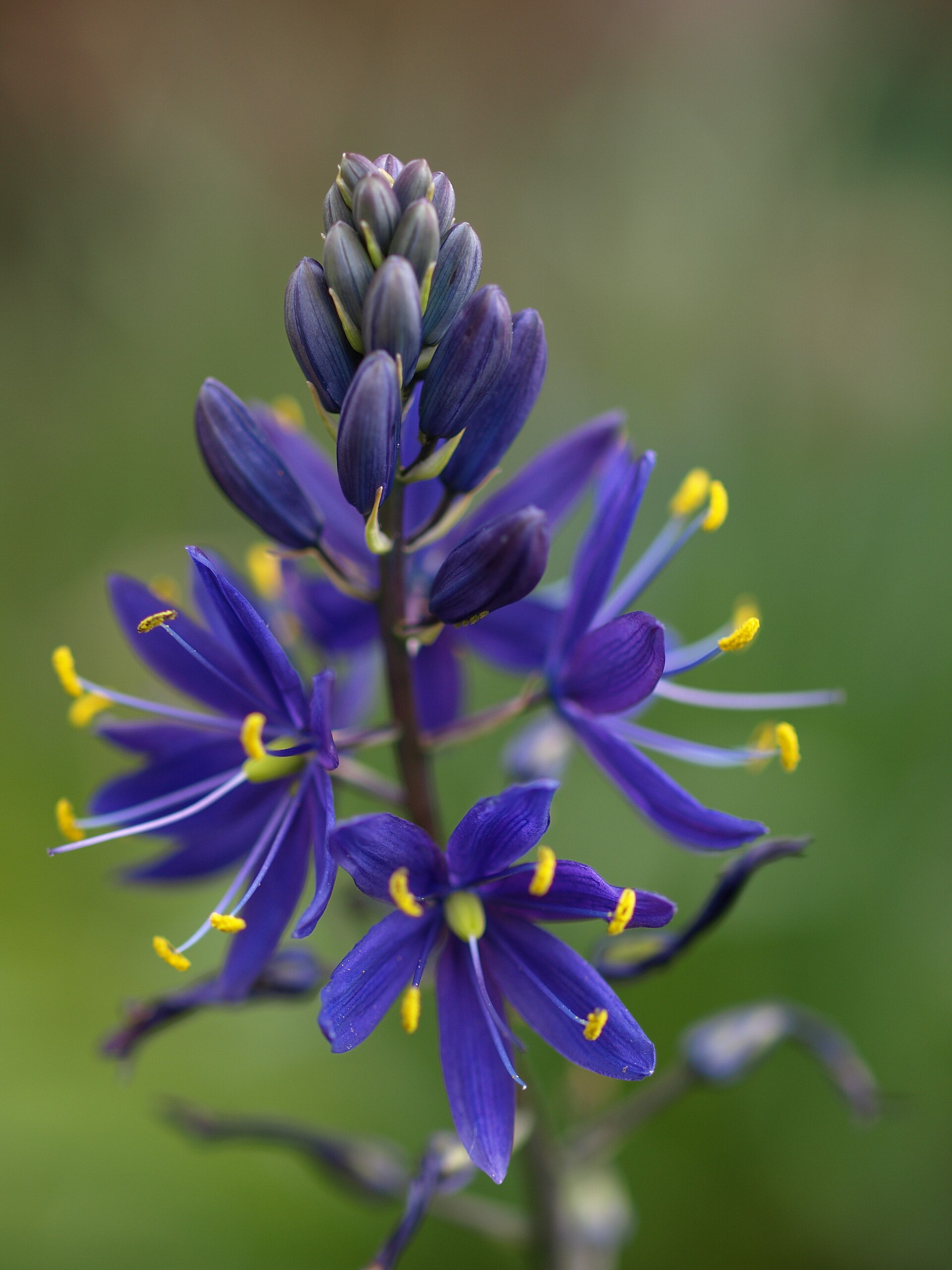
Camassia
Camassia leichtlinii
Camassia sends up slender, tapering spires of star-shaped flowers in soft blues, violets and creamy whites, opening gradually from the base of the spike. A prairie and meadow native, it gives florists a graceful, naturalistic line flower that adds vertical rhythm and gentle colour to spring designs. Its wild-hyacinth look suits garden-style bouquets, tall arrangements and loose installations. Blooming across April and May, it captures the fresh, untamed feel of a spring meadow.
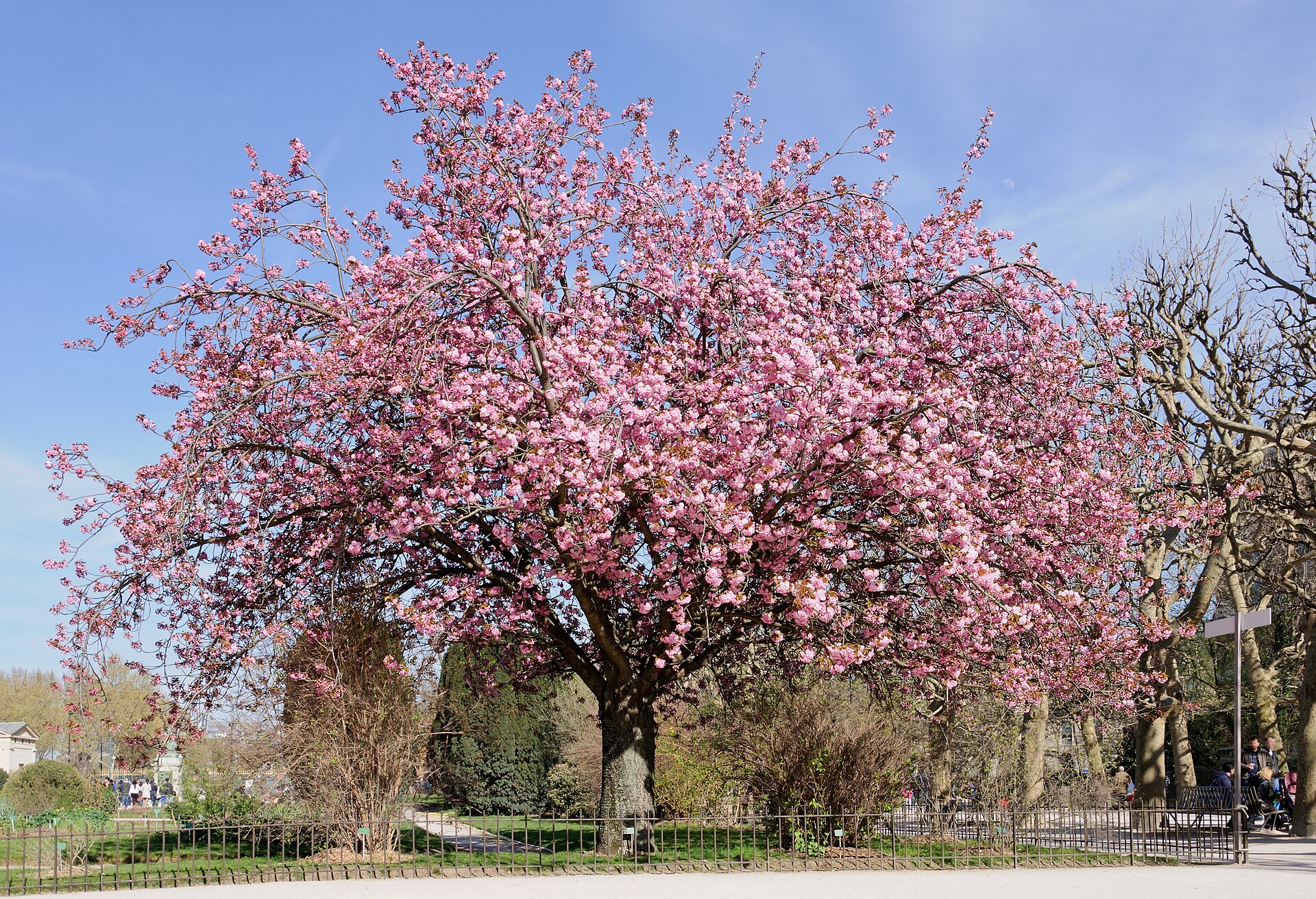
Cherry Blossom
Prunus serrulata
Cherry blossom is the fleeting emblem of spring — woody branches clouded with soft pink and white five-petalled flowers along their length. Florists treasure it for dramatic, ethereal height in luxury weddings, ceiling installations and grand arrangements, where its blush-toned branches create an instant sense of romance. The bloom window is famously brief, which makes the branches feel precious and highly seasonal. Cut in bud, they can be gently forced open indoors ahead of the outdoor season.
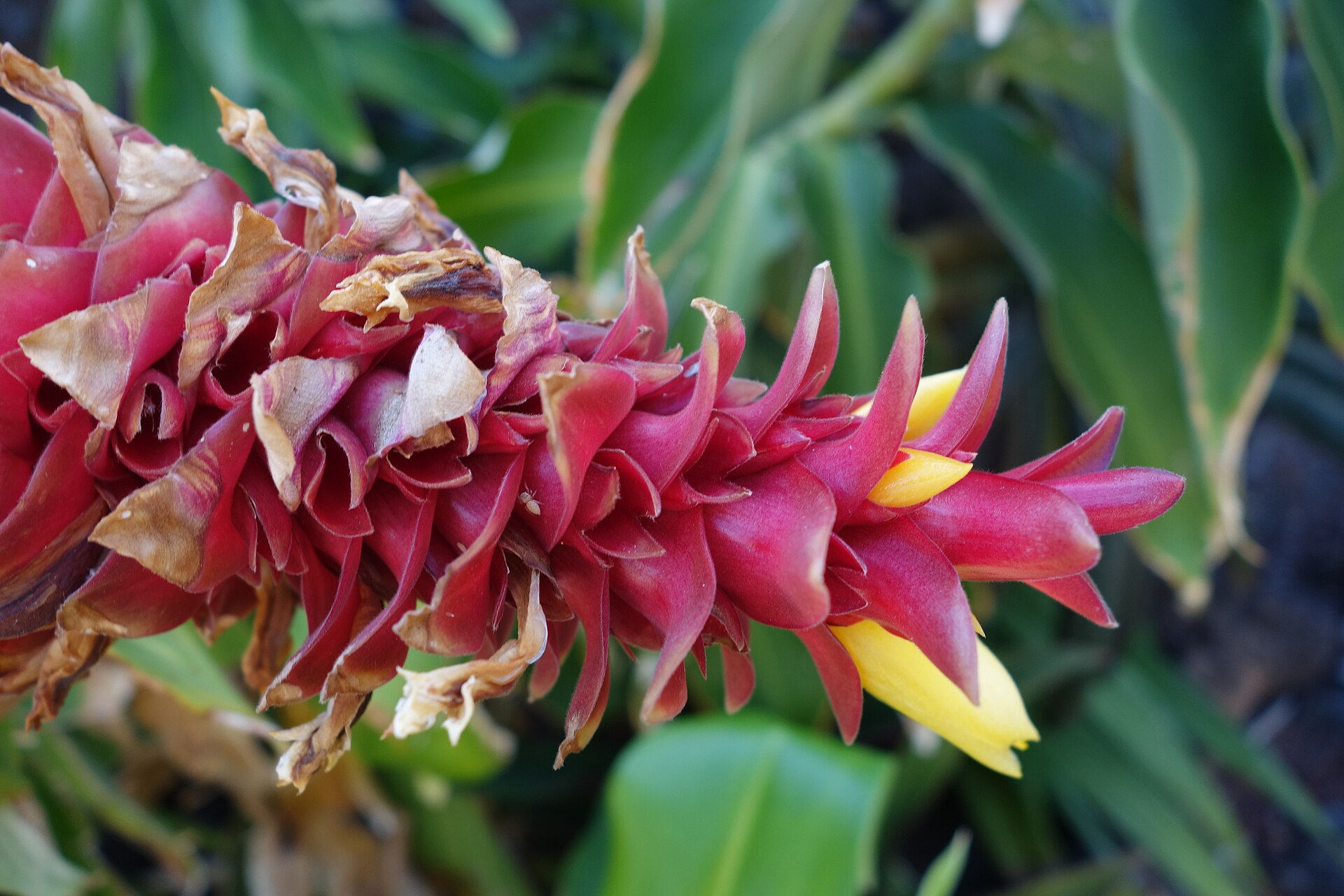
Costus
Costus barbatus
Costus, the spiral ginger, forms a striking cone of waxy crimson bracts arranged in an overlapping spiral, from which small tubular yellow flowers peek. A member of the spiral-ginger family Costaceae and native to Central America, it delivers the same tropical drama as true ginger with a distinctive geometric twist. Florists use it as a sculptural focal in tropical event work, tall arrangements and installations, where its bold red tower holds attention. Sturdy and long-lasting, it is an easygoing exotic that keeps its colour for well over a week.
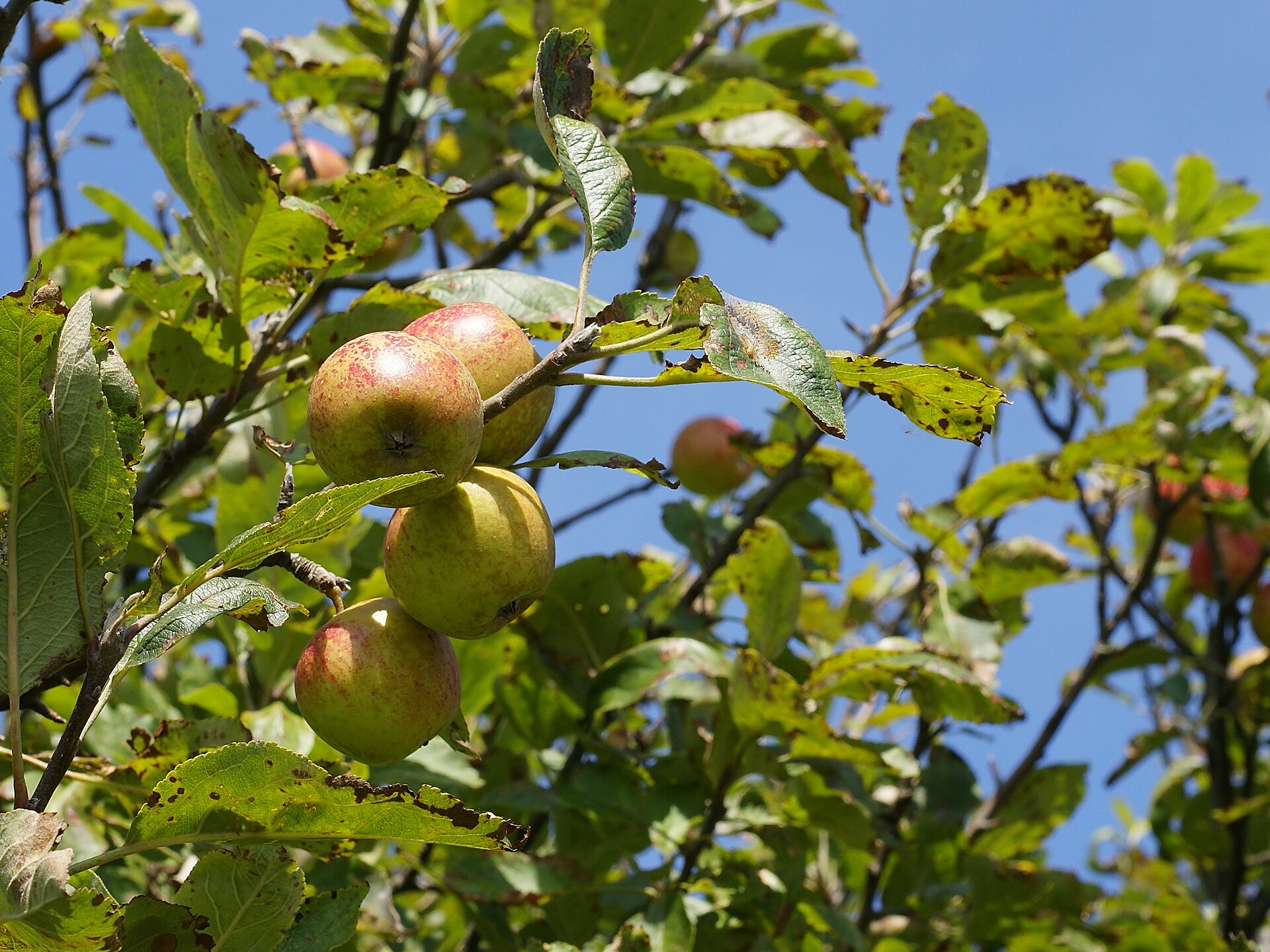
Crab Apple
Malus sylvestris
Crab apple branches carry clusters of glossy miniature apples in shades of red, gold and burgundy, often still clothed in autumn leaves. Their weight and orchard character make them a natural focal texture for large-scale seasonal and editorial designs. Florists use them to add depth, movement and a sense of ripe abundance to autumn arch installations and tall arrangements. Firm and long-lasting, the fruit holds its colour well when kept cool.
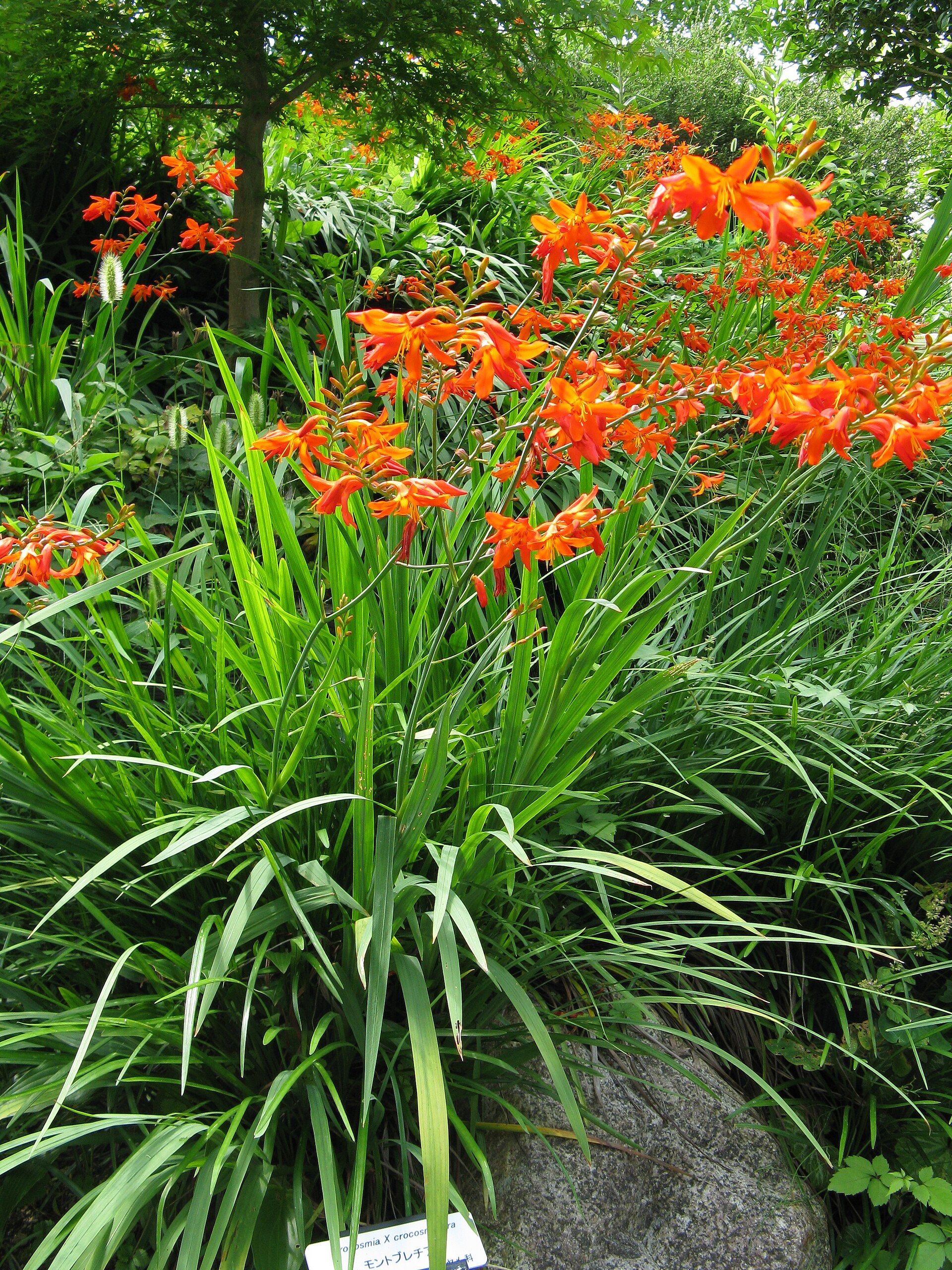
Crocosmia
Crocosmia x crocosmiiflora
Crocosmia sends up graceful arching sprays of fiery orange, red and gold funnel-shaped blooms on branching stems. A vigorous South African hybrid, it delivers hot, high-summer colour and a natural, flame-like line to arrangements. Florists prize both the flowers and the beaded green seed pods that follow, which add wiry texture to autumnal designs. Its warm tones and sweeping movement make it a favourite for garden-style and seasonal work.
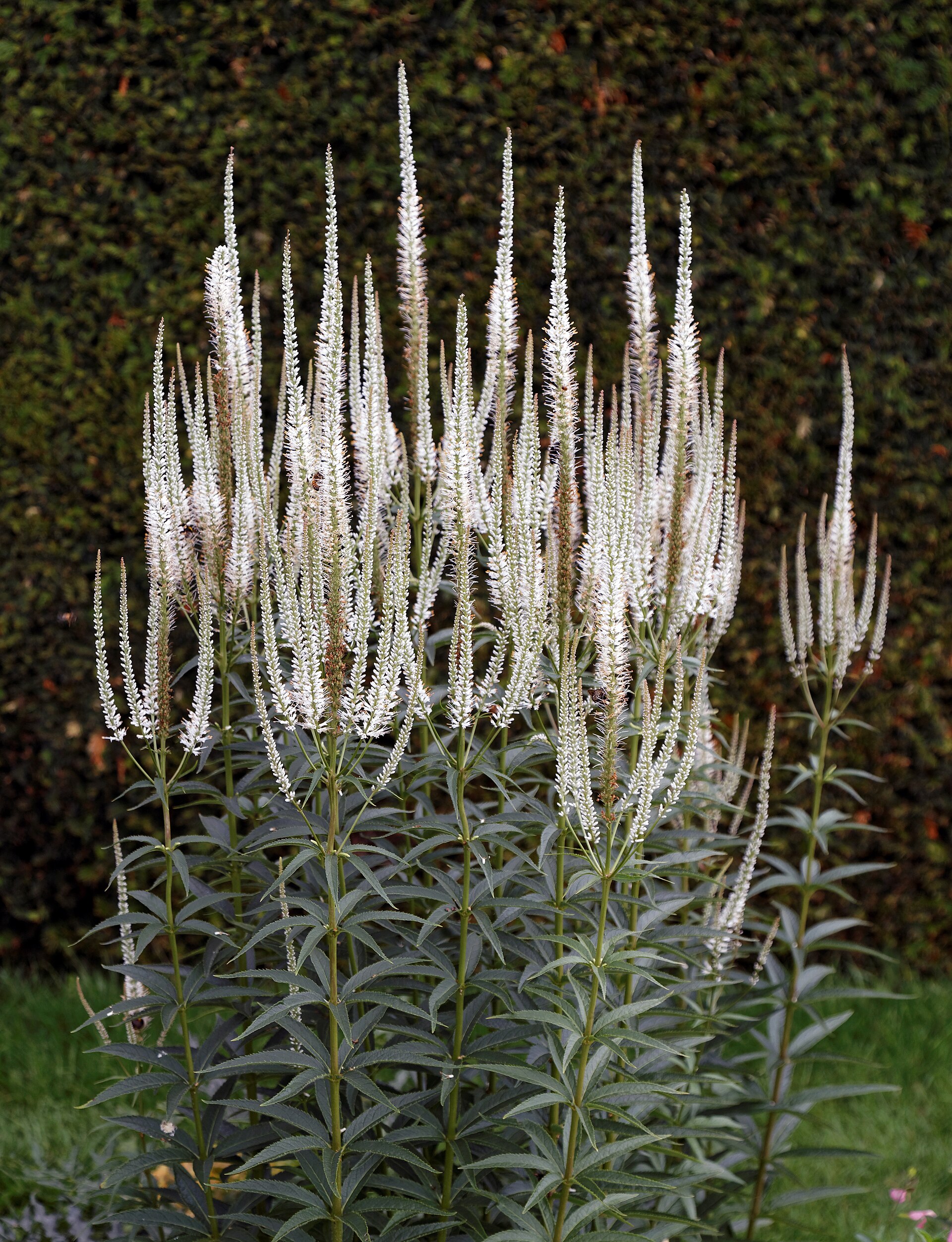
Culver's Root
Veronicastrum virginicum
Veronicastrum, or Culver's root, sends up elegant tapering spires that branch into candelabra-like tips, each densely packed with tiny florets in white, soft blue, lavender and pink. Florists prize it as a refined, garden-style line flower that adds height, delicacy and gentle movement to summer arrangements. Its slender, whip-like form contrasts beautifully with rounded focal blooms in loose, naturalistic designs. Taller and more graceful than common veronica, it is a favourite for airy, romantic wedding and installation work.
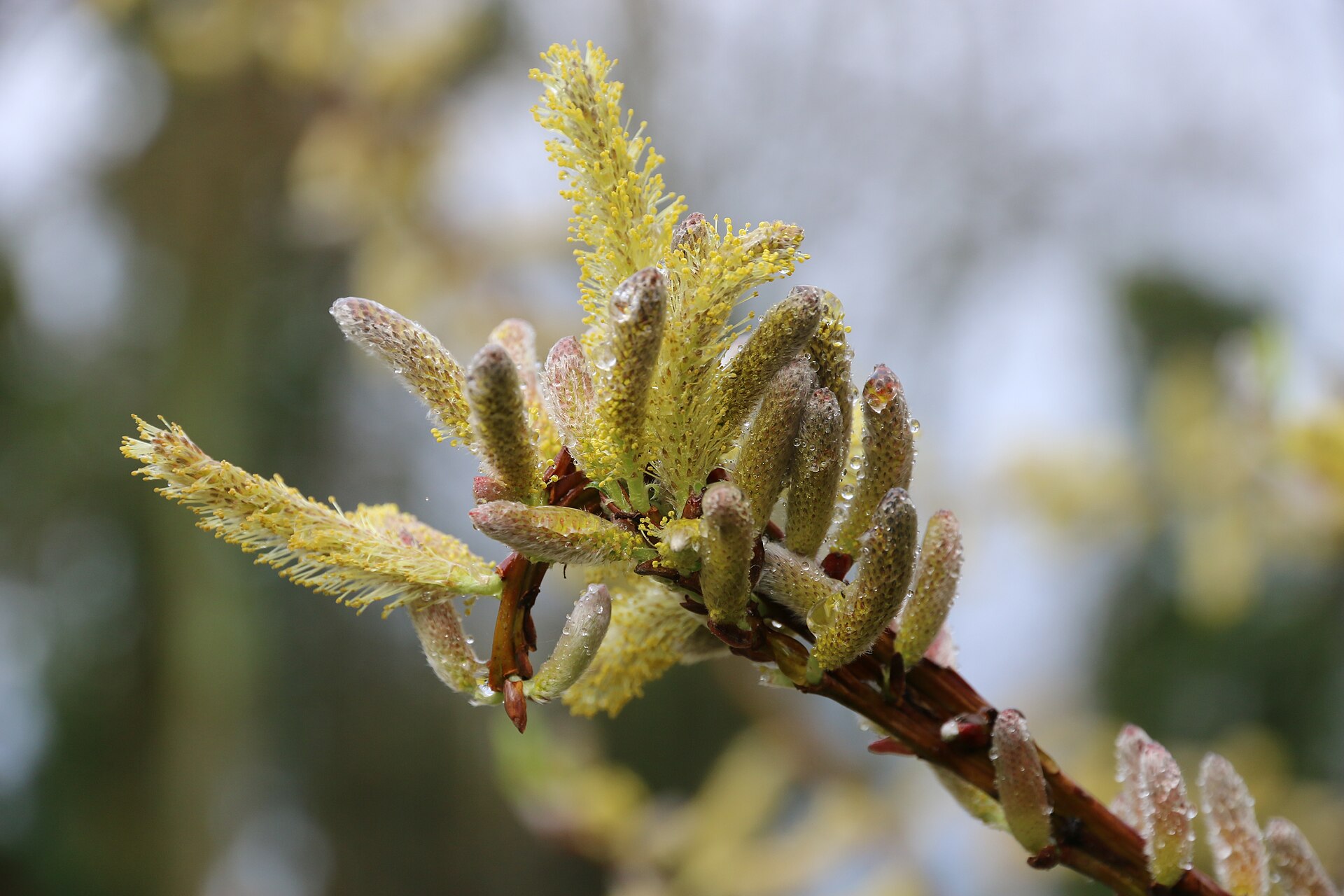
Curly Willow
Salix matsudana 'Tortuosa'
Curly willow is a bare, twisting branch whose corkscrew stems bring instant movement and drama to a design. Florists use it as a year-round structural line — arching over installations, spilling from tall vases, or wired into armatures where its sinuous curves do the work. It is nearly indestructible, lasting weeks fresh and drying beautifully in place, and can be gently bent to shape while still supple. The leafless, sculptural form suits modern, minimalist and architectural styles.
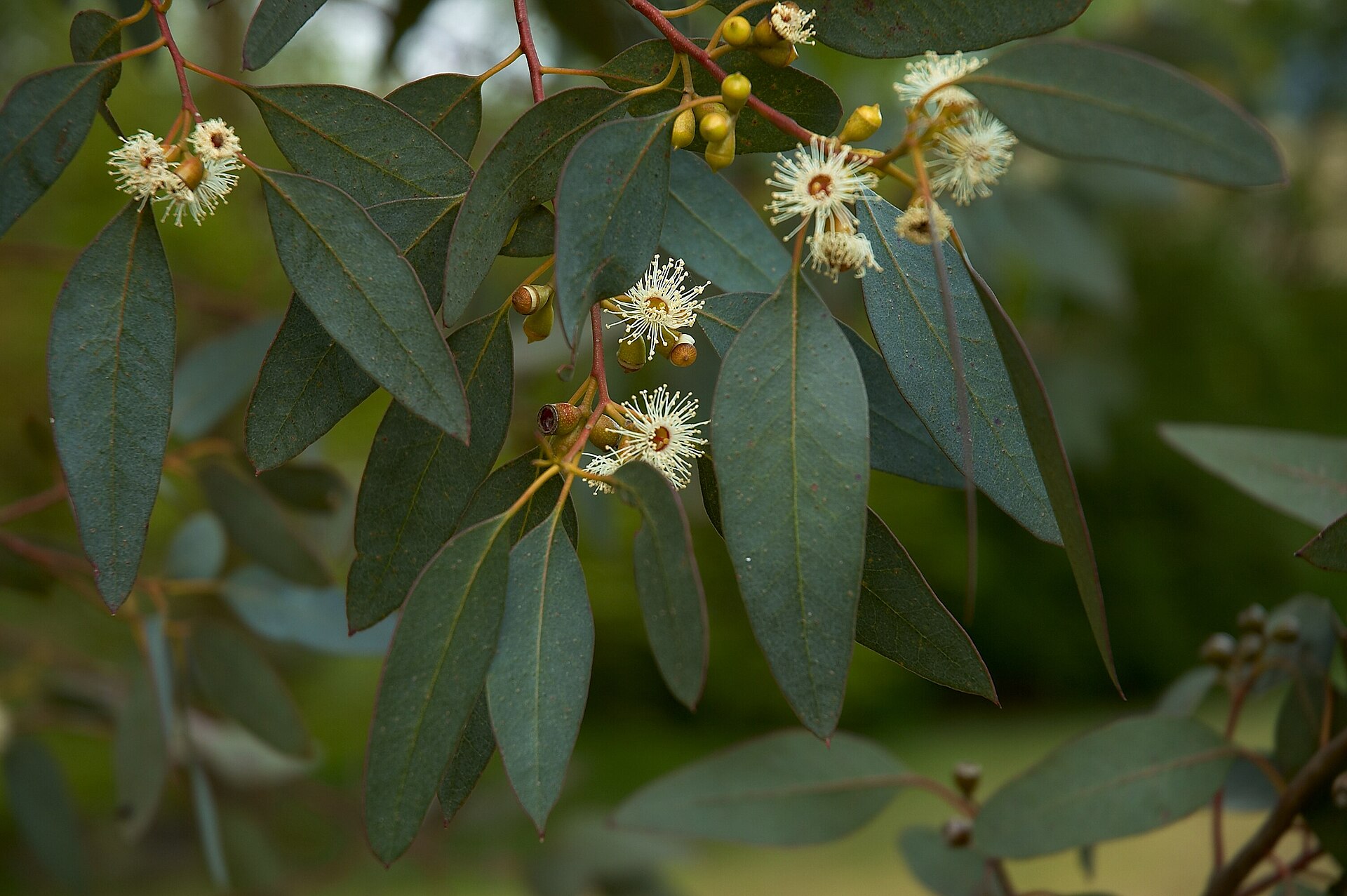
Eucalyptus Gunnii
Eucalyptus gunnii
Eucalyptus gunnii, the cider gum, carries small rounded blue-green leaves along feathery, flexible sprays. It is one of the most useful florist greeneries, adding airy volume and a fresh, resinous scent to bouquets, garlands and arrangements. The stems are inexpensive, long-lasting and dry well, making gunnii a year-round workhorse. Its soft, trailing habit suits everything from bridal bouquets to large installations.
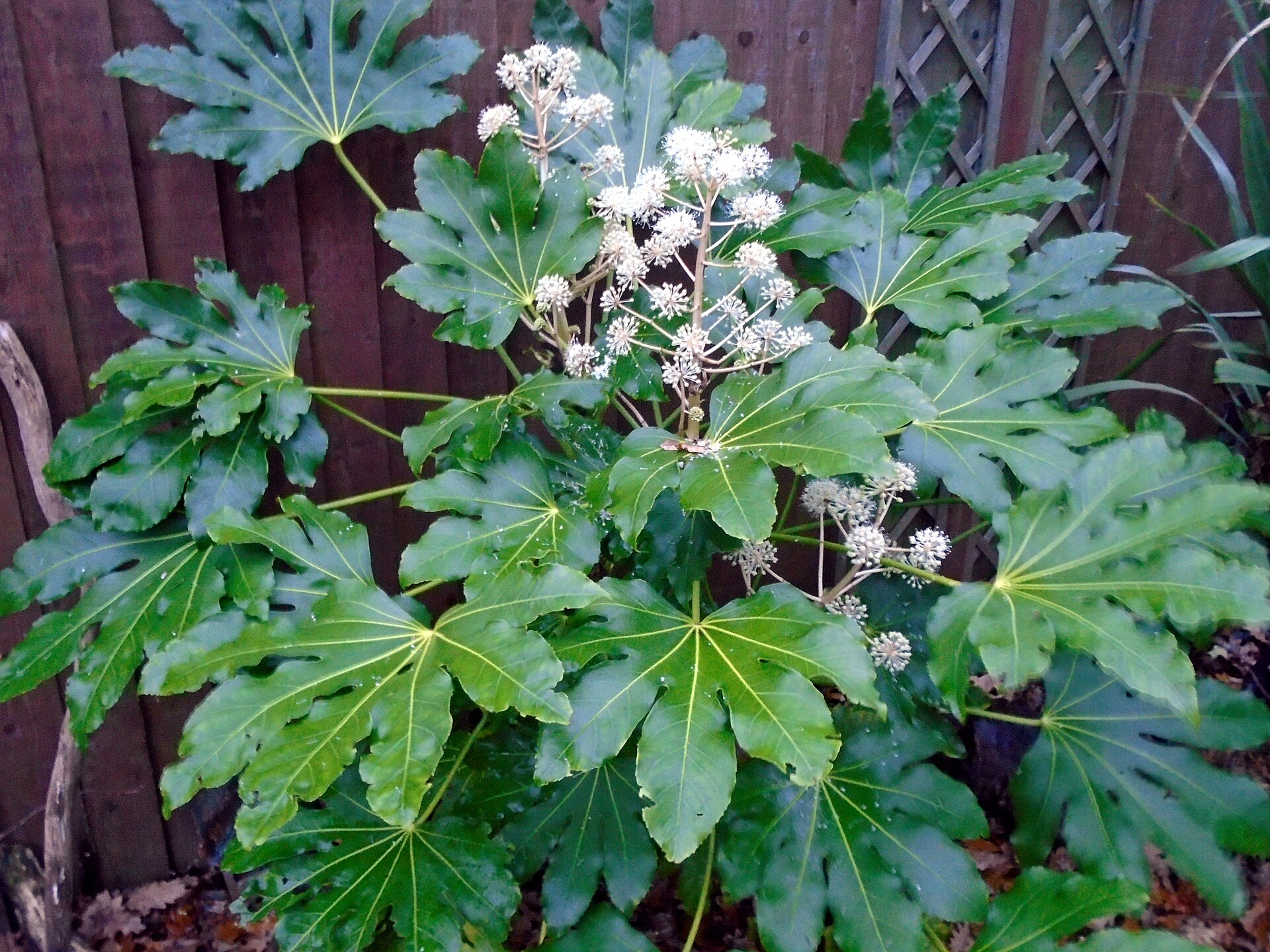
Fatsia Leaf
Fatsia japonica
Fatsia japonica supplies large, glossy, deeply lobed leaves shaped like an open hand, bringing bold tropical structure to designs. Its architectural foliage anchors modern arrangements, large-scale installations and statement bouquets with a single dramatic leaf. Rich green and hard-wearing, it also appears in cream-variegated forms for extra impact. Florists prize its clean lines, sculptural silhouette and long-lasting durability.
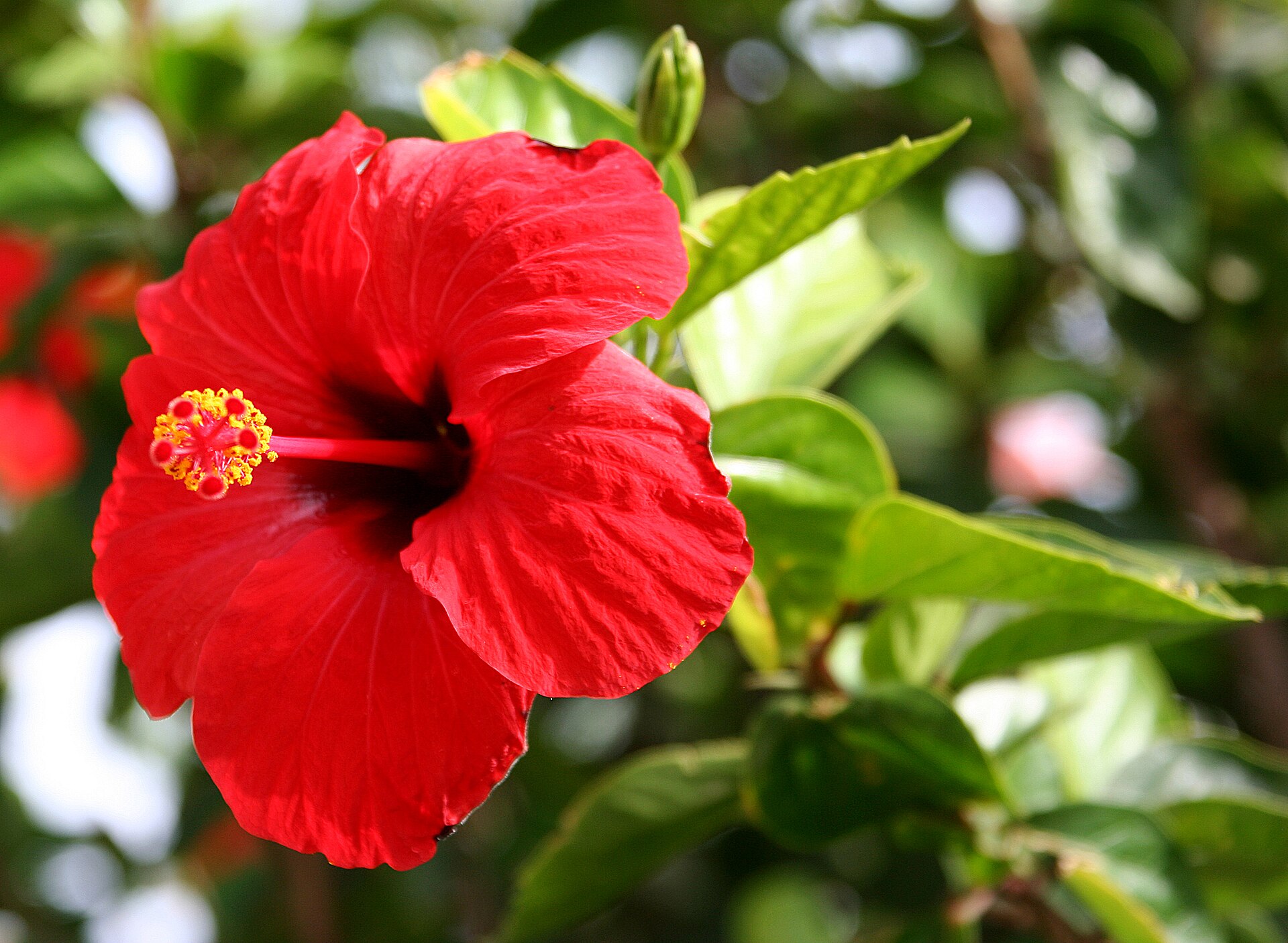
Hibiscus
Hibiscus rosa-sinensis
Hibiscus rosa-sinensis is the flamboyant tropical shrub behind the classic single-day flower — a broad, silky trumpet with a long central column of stamens. Colours run from fiery red and coral to yellow, apricot and white, each bloom lasting only about a day whether cut or on the plant. Florists reach for it in tropical and editorial designs where drama outweighs longevity, often floating blooms in water or placing them at the very last moment. Nothing signals the tropics more instantly than its open, saturated face.
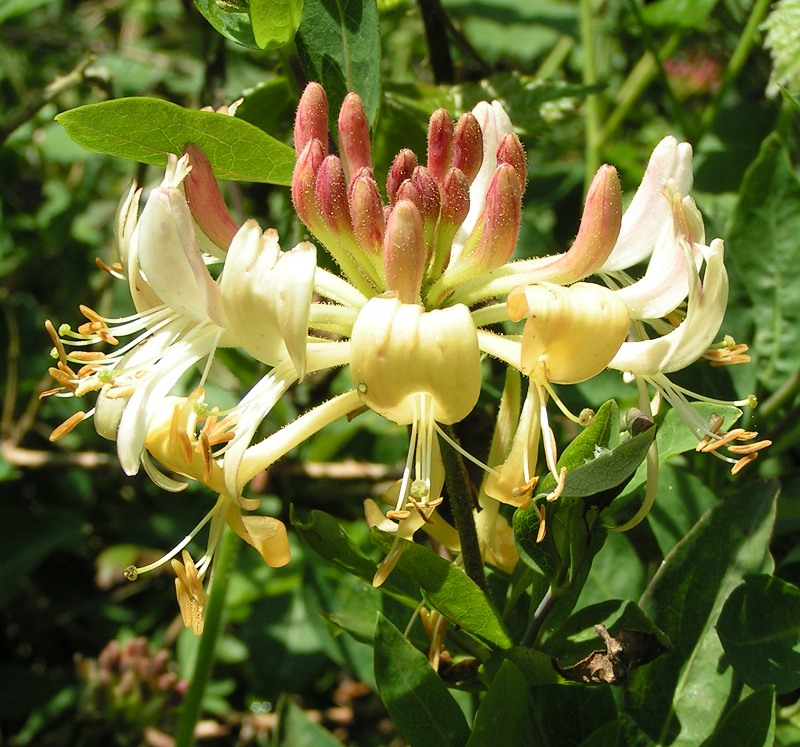
Honeysuckle Vine
Lonicera periclymenum
Honeysuckle (Lonicera periclymenum) is a fragrant climbing vine bearing tubular cream, yellow and blush flowers loved for their evening scent. In floristry it brings a nostalgic, cottage-garden romance to summer bouquets and installations, trailing softly for movement. The flowers are short-lived once cut, so it is used as a scented, seasonal luxury rather than a lasting bloom. Its heady perfume and tumbling habit make it a garden-wedding favourite.
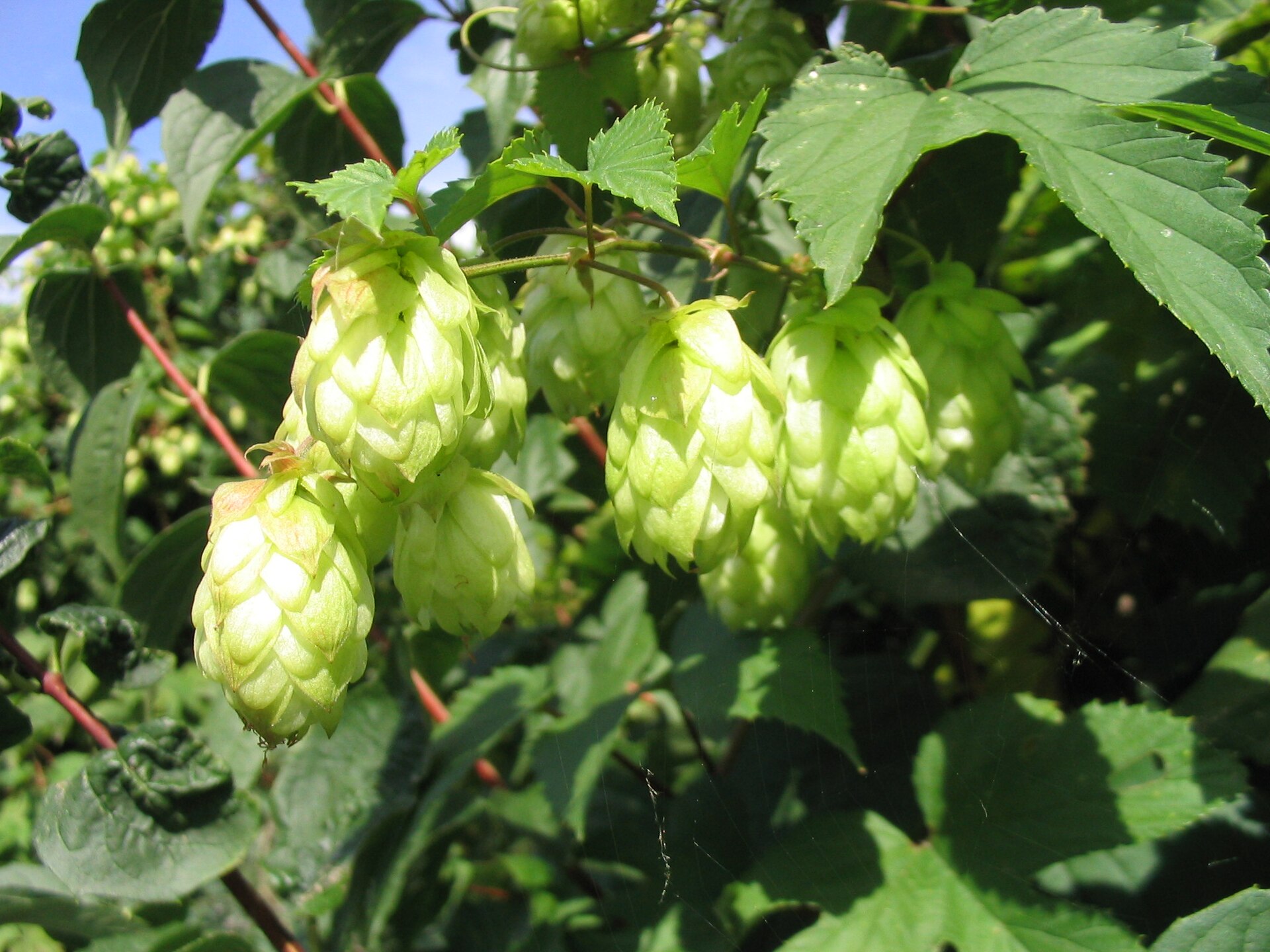
Hops
Humulus lupulus
Hops are the papery, cone-like flowers of Humulus lupulus, the climbing vine grown for brewing. In floristry the fresh green cones bring a soft, textural, cottage-garden feel to garlands, arches and autumn arrangements, and they dry beautifully for lasting work. Their trailing bines add gentle movement and a rustic, harvest-season character. They are a seasonal favourite for late-summer and autumn weddings.
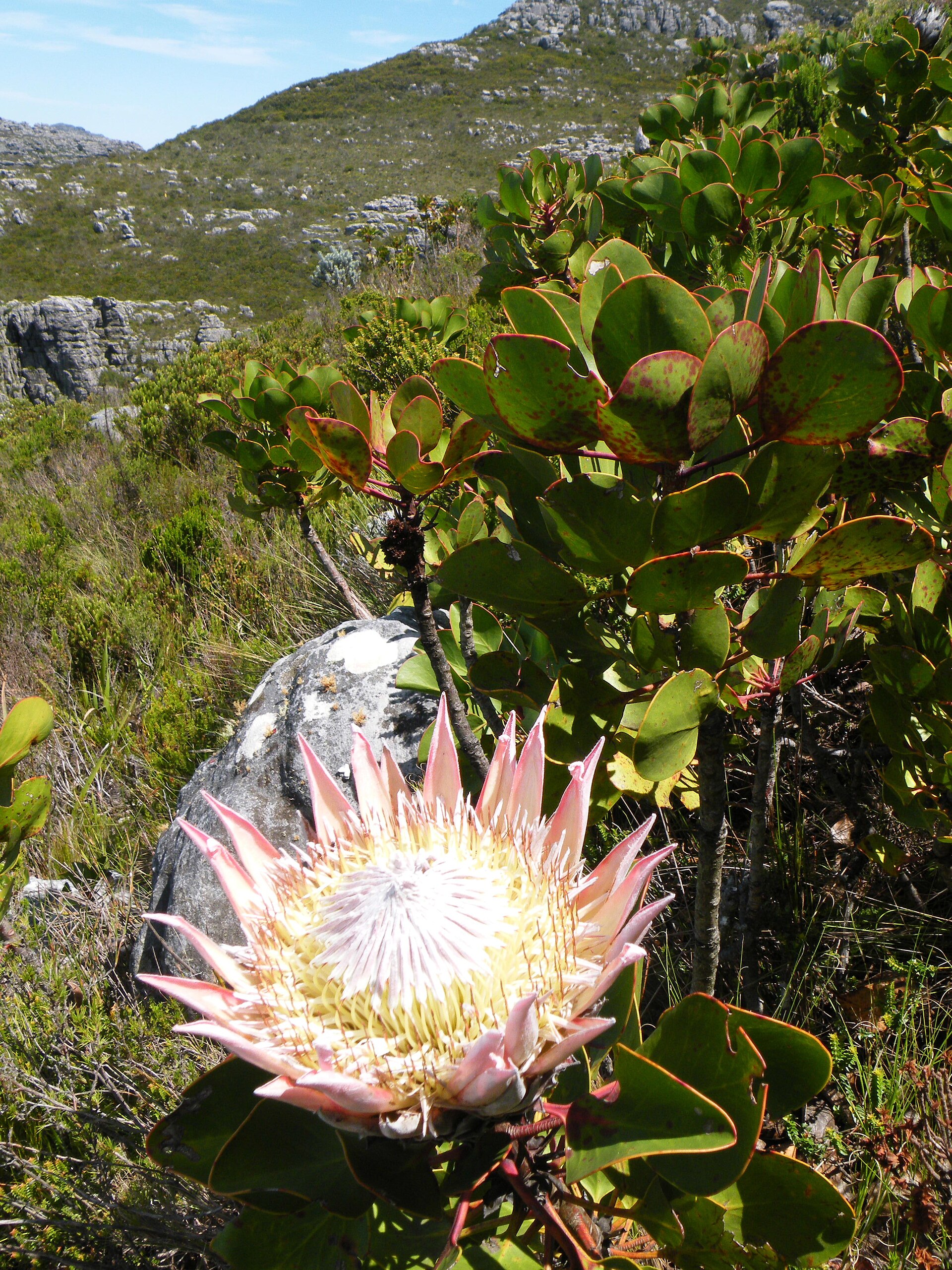
King Protea
Protea cynaroides
The King Protea is the largest of all proteas and the national flower of South Africa, crowned by a bowl of stiff, pointed bracts around a dense central cone. Florists prize it as a bold, architectural focal flower that anchors modern, luxury and autumnal designs. A single bloom can carry an entire arrangement, and its woody stem gives an exceptionally long vase life. It also dries beautifully, holding its sculptural shape for months.
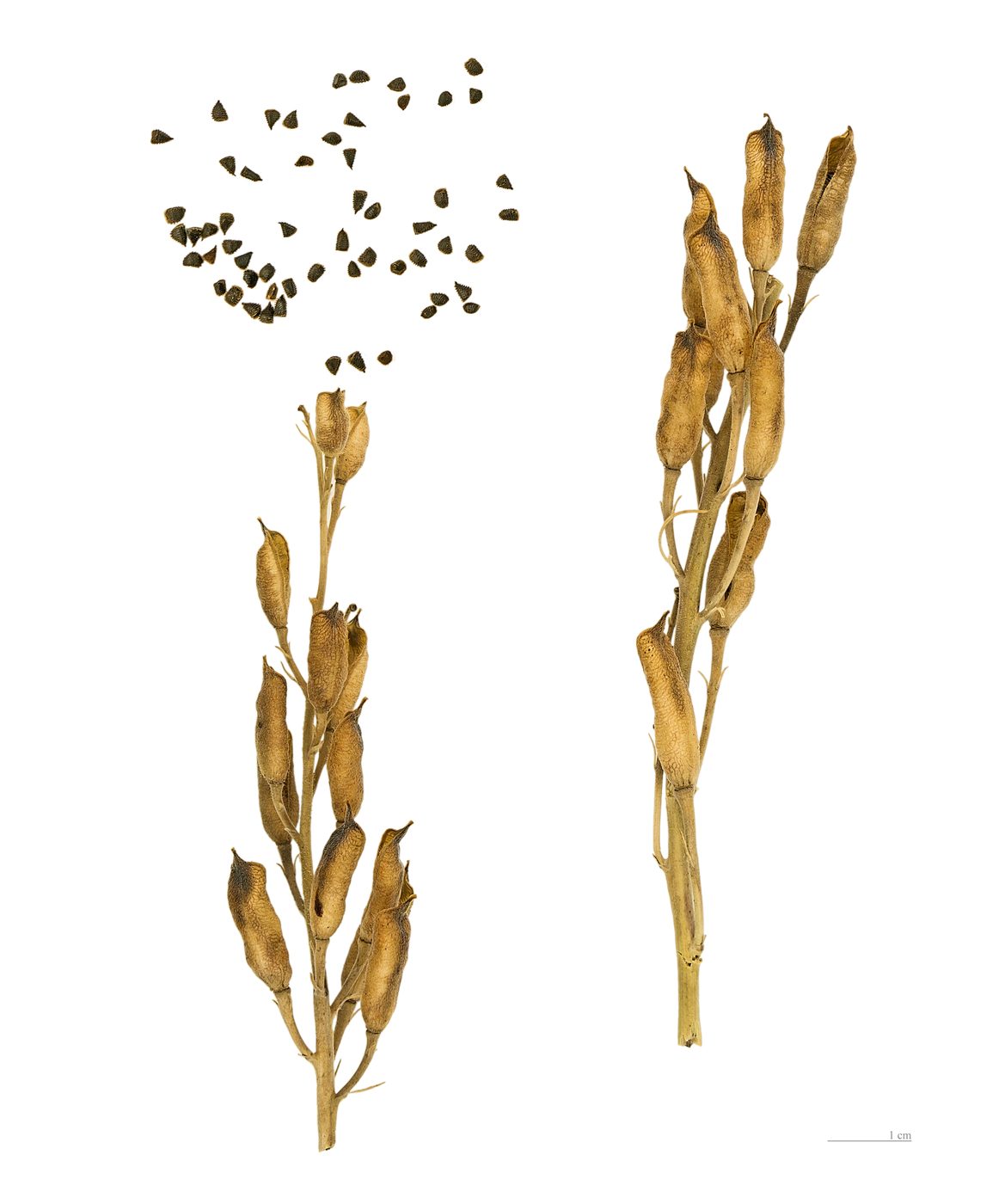
Larkspur
Consolida ajacis
Larkspur is the annual, more available cousin of delphinium — same vertical line and true blue potential at a lower price. Dries with the colour preserved, so it's used widely in dried wreath and boutonniere work. Toxic if ingested; not for households with pets that chew flowers.
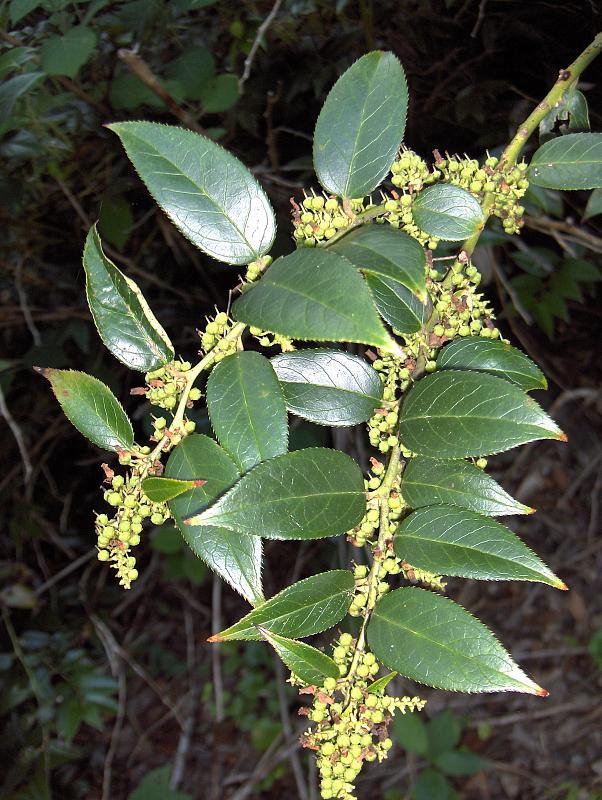
Leucothoe
Leucothoe fontanesiana
Leucothoe brings gracefully arching stems clothed in glossy, lance-shaped leaves that shift from deep green to rich burgundy and bronze in cooler months. Variegated 'Rainbow' forms add cream, pink and coral tints, giving florists a foliage that doubles as colour. Its natural curve lends flowing movement to bouquets, garlands and cascading designs. Hardy and long-lasting, it works year-round but shines in autumn and winter palettes.
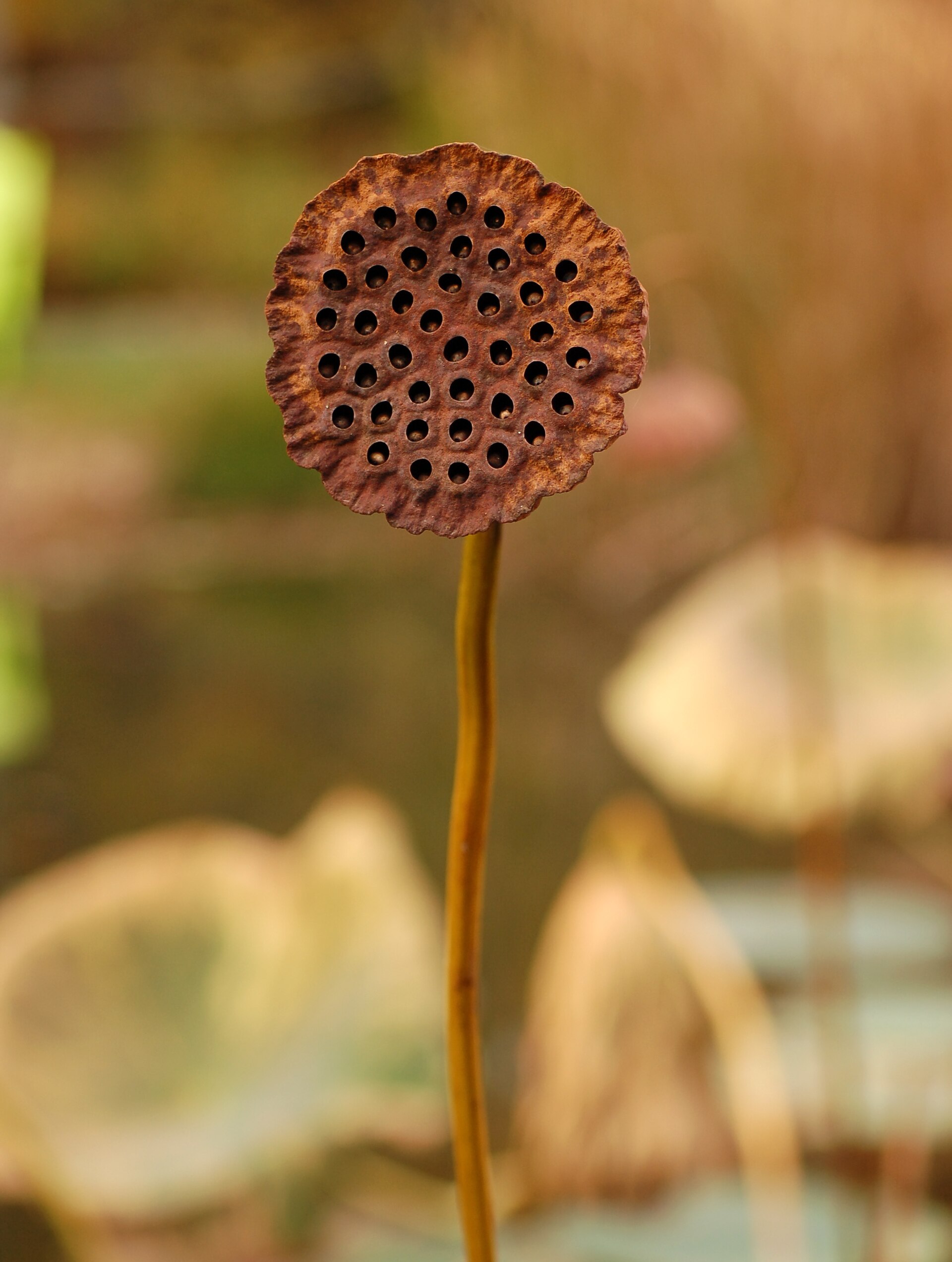
Lotus Pod
Nelumbo nucifera
The lotus pod is the woody seed head of the sacred lotus, a sculptural, honeycombed disc that brings bold, architectural texture to modern and dried design. Fresh pods read cool green and gradually cure to a rich woody brown that lasts indefinitely once dried. Florists use them as arresting focal accents in installations, autumn arrangements and editorial work, where their graphic form contrasts beautifully with softer blooms. Long-lasting and endlessly reusable, they are a staple of the dried and textural palette.
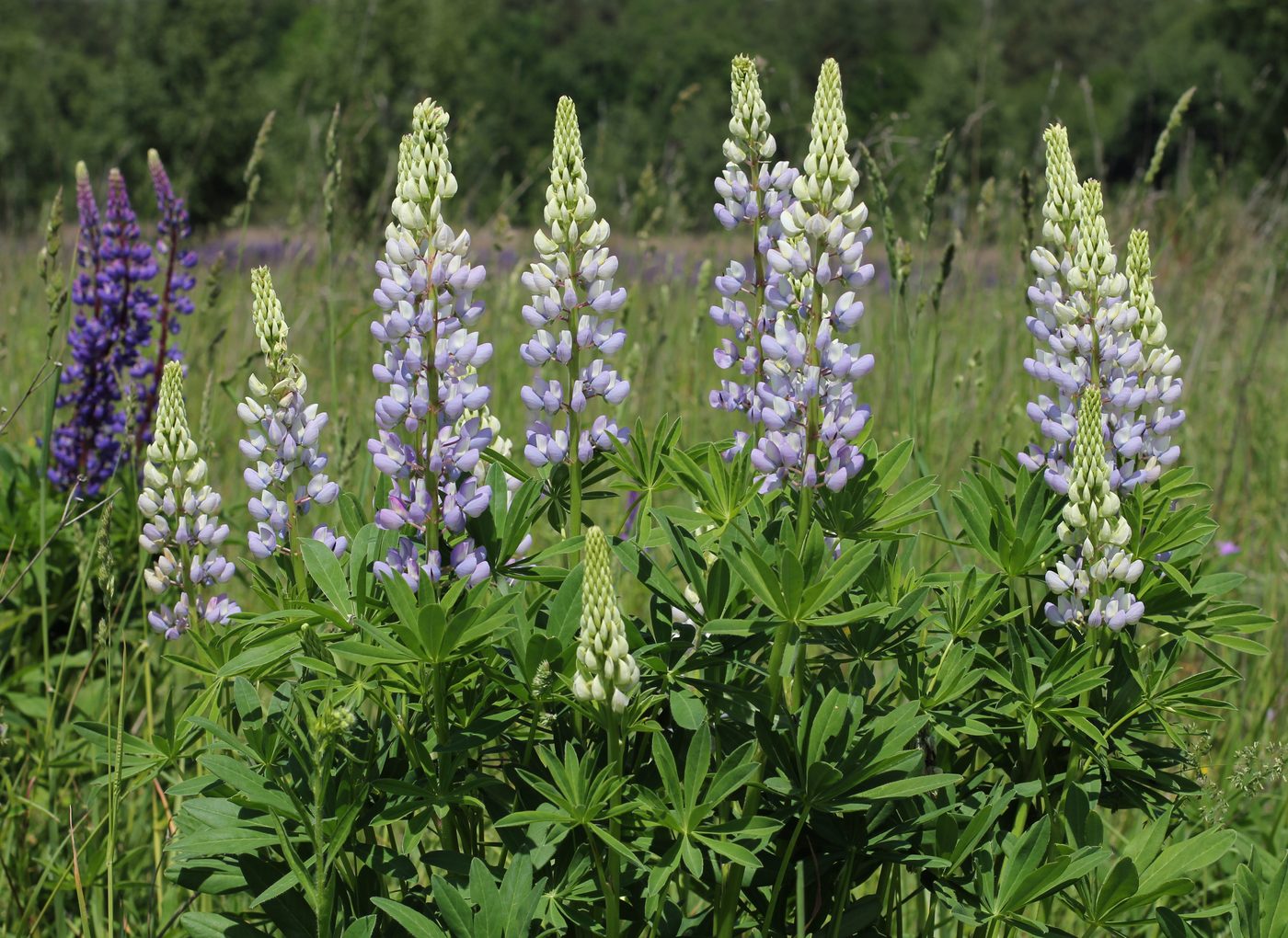
Lupine
Lupinus
The lupine is a vertical spire of pea-shaped florets in an unusually rich colour range — the natural blues and purples rival delphinium at a fraction of the cost. A cottage-garden wedding staple, and the state flower of Texas (Bluebonnet subspecies). Multiple florets open bottom-up over a week.
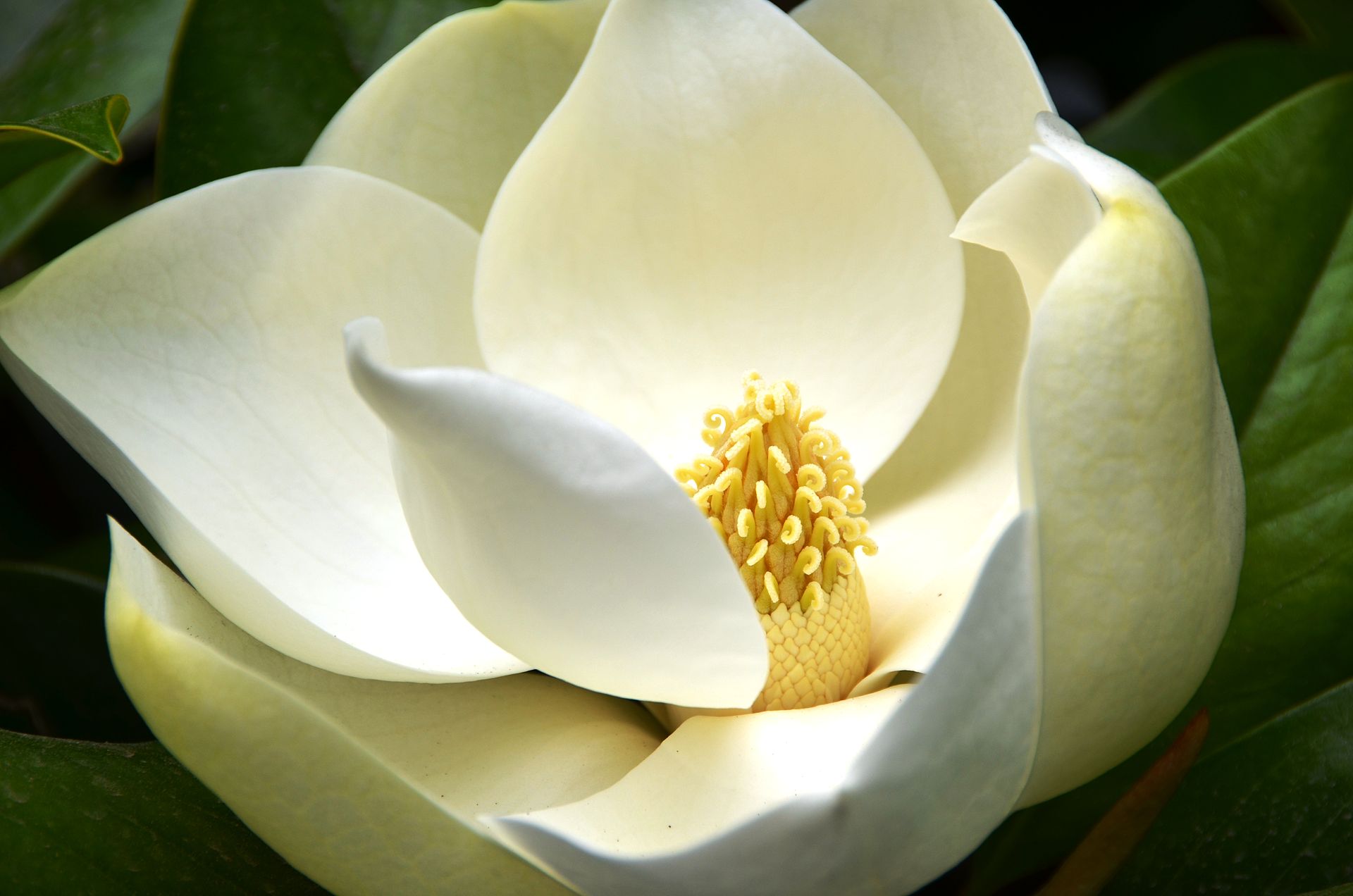
Magnolia
Magnolia grandiflora
Magnolia grandiflora is a stately evergreen tree offering two gifts to florists: enormous, lemon-scented cream flowers and thick, glossy leaves backed with suede-brown felt. The blooms are among the most fragrant and architectural focals available, while the branches and foliage anchor large-scale installations and wreaths year-round. Cut flowers open quickly and are fleeting, so they are used at their moment of glory in luxury and event work. Few materials bring the same sculptural presence and Southern-garden grandeur.
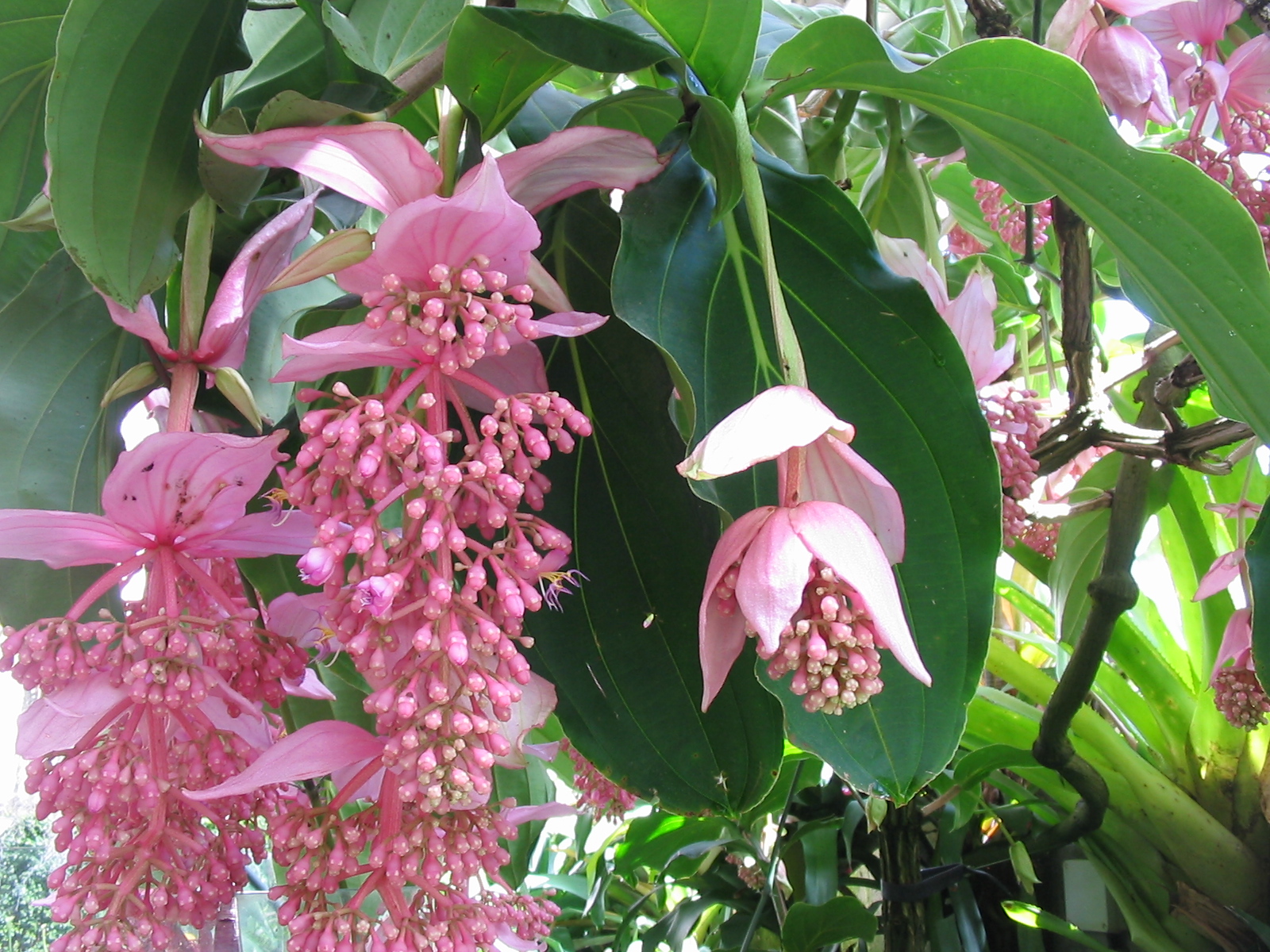
Medinilla
Medinilla magnifica
Medinilla is a spectacular tropical showpiece prized for its cascading panicles of coral-pink flowers cradled by large papery bracts, resembling a chandelier of grapes. Native to the humid mountain forests of the Philippines, it is grown as a specialty cut and commands a premium price. Florists reach for it when a design needs a single, unforgettable focal with pendulous movement — it suits luxury and tropical weddings and high-end editorial work. Its drama comes at a cost: it is delicate, chill-sensitive and best featured on its own rather than crowded into mixed arrangements.
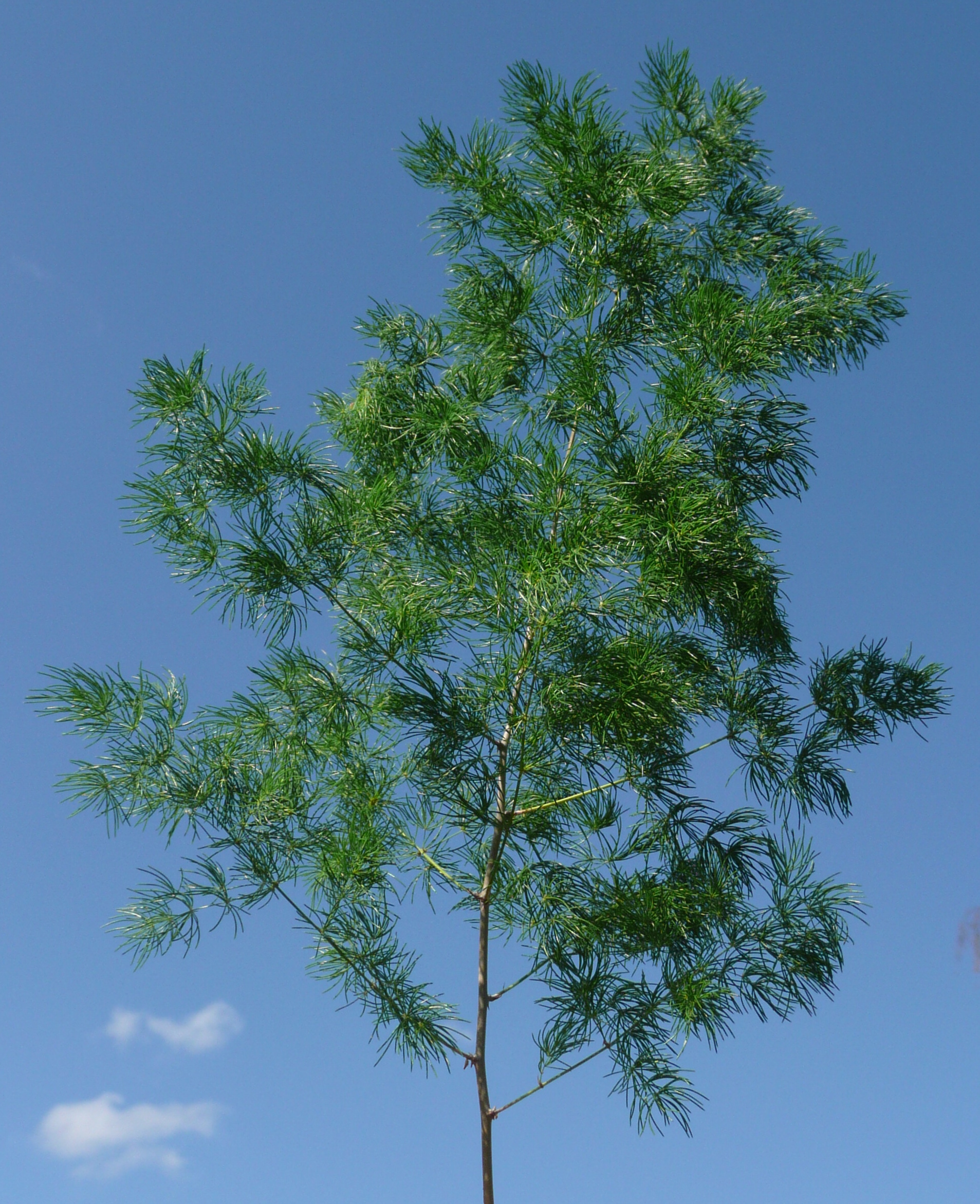
Ming Fern
Asparagus retrofractus
Ming fern is another ornamental asparagus rather than a true fern, recognised by its stiff, zig-zagging stems topped with fluffy pompom tufts of fine green needles. The clustered, cloud-like texture adds depth and structure to arrangements, and its long, strong stems suit large-scale and architectural work. It is notably durable, holding well in and out of water, which makes it a dependable choice for events and installations. Florists prize its distinctive sculptural silhouette.
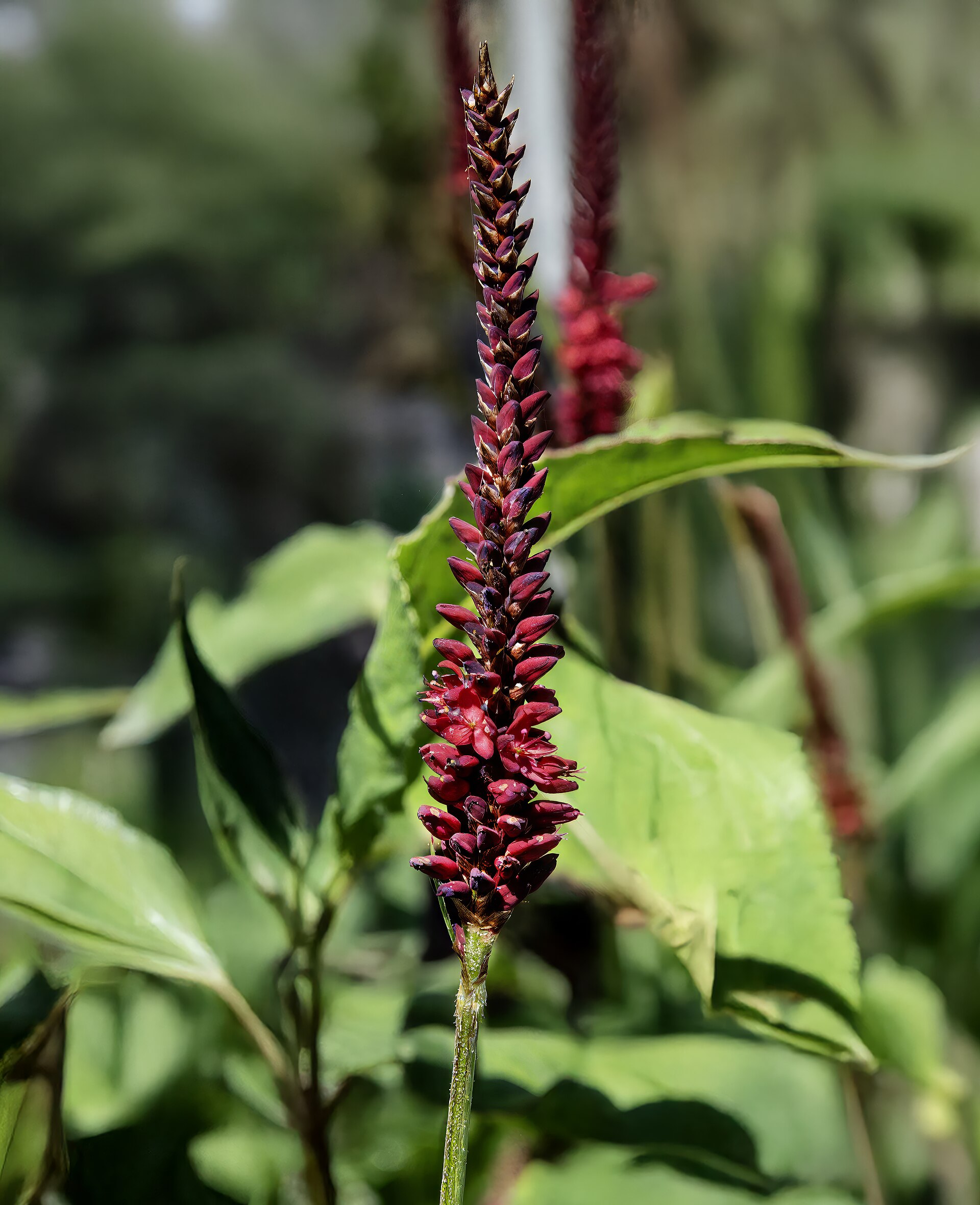
Mountain Fleece
Persicaria amplexicaulis
Persicaria sends up slender, tapering spikes of tiny red or pink florets on wiry stems, bringing vertical rhythm and a wild, meadow texture to arrangements. A staple of naturalistic and garden-style design, it threads colour and movement between rounder focal flowers through late summer and autumn. The bottlebrush spires read as soft line work, echoing grasses and veronica. Buy stems well coloured with the lowest florets still fresh.
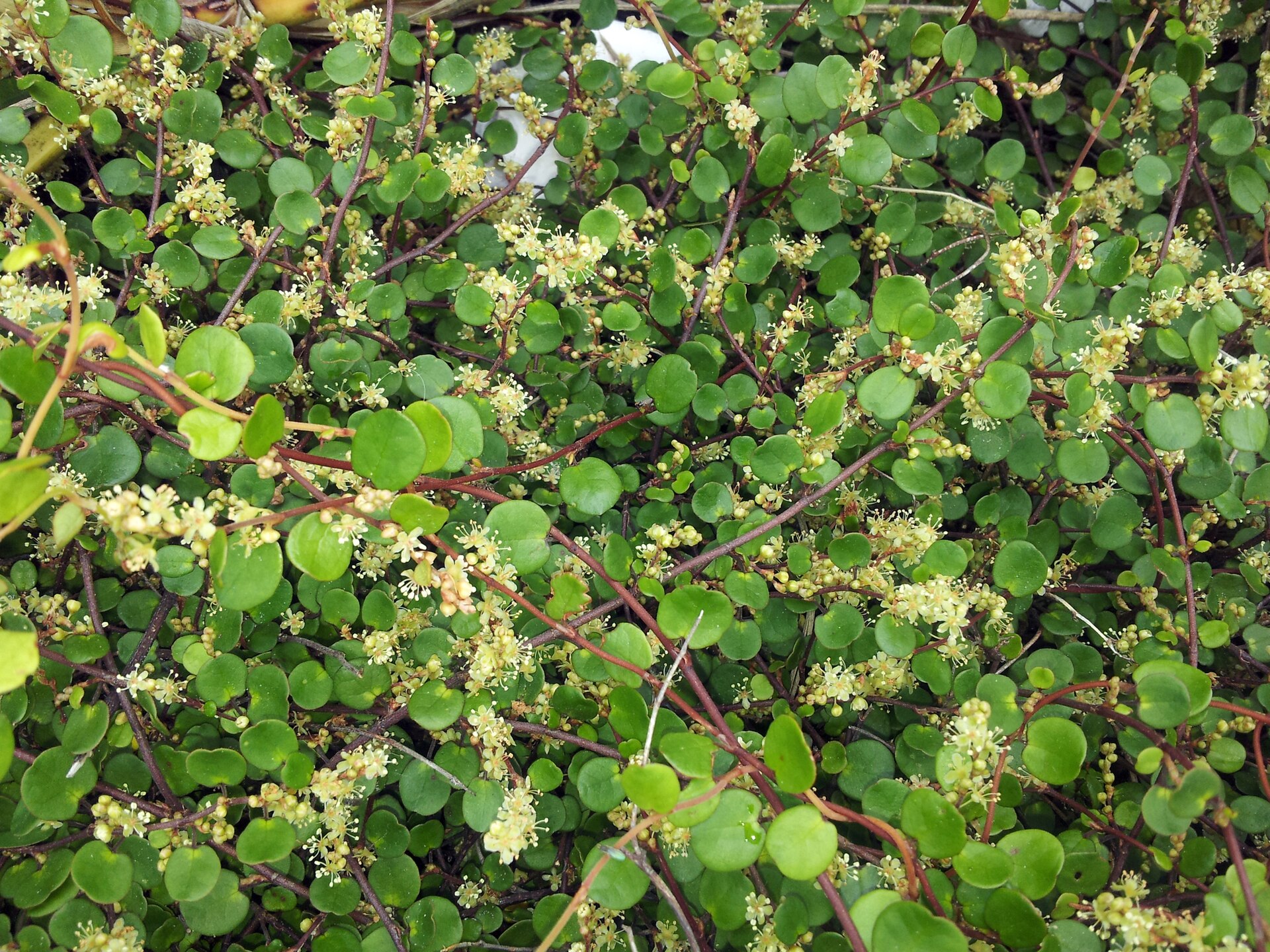
Muehlenbeckia
Muehlenbeckia complexa
Muehlenbeckia, often sold as wire vine or angel vine, is a New Zealand climber with fine, dark, wiry stems set with tiny round leaves. Its delicate, tangling texture makes it a favourite for wiring into crowns, garlands and intricate installations. It is durable, forgiving to handle and dries well, so it earns its place year-round. Florists reach for it whenever they want a light, airy green line with movement.
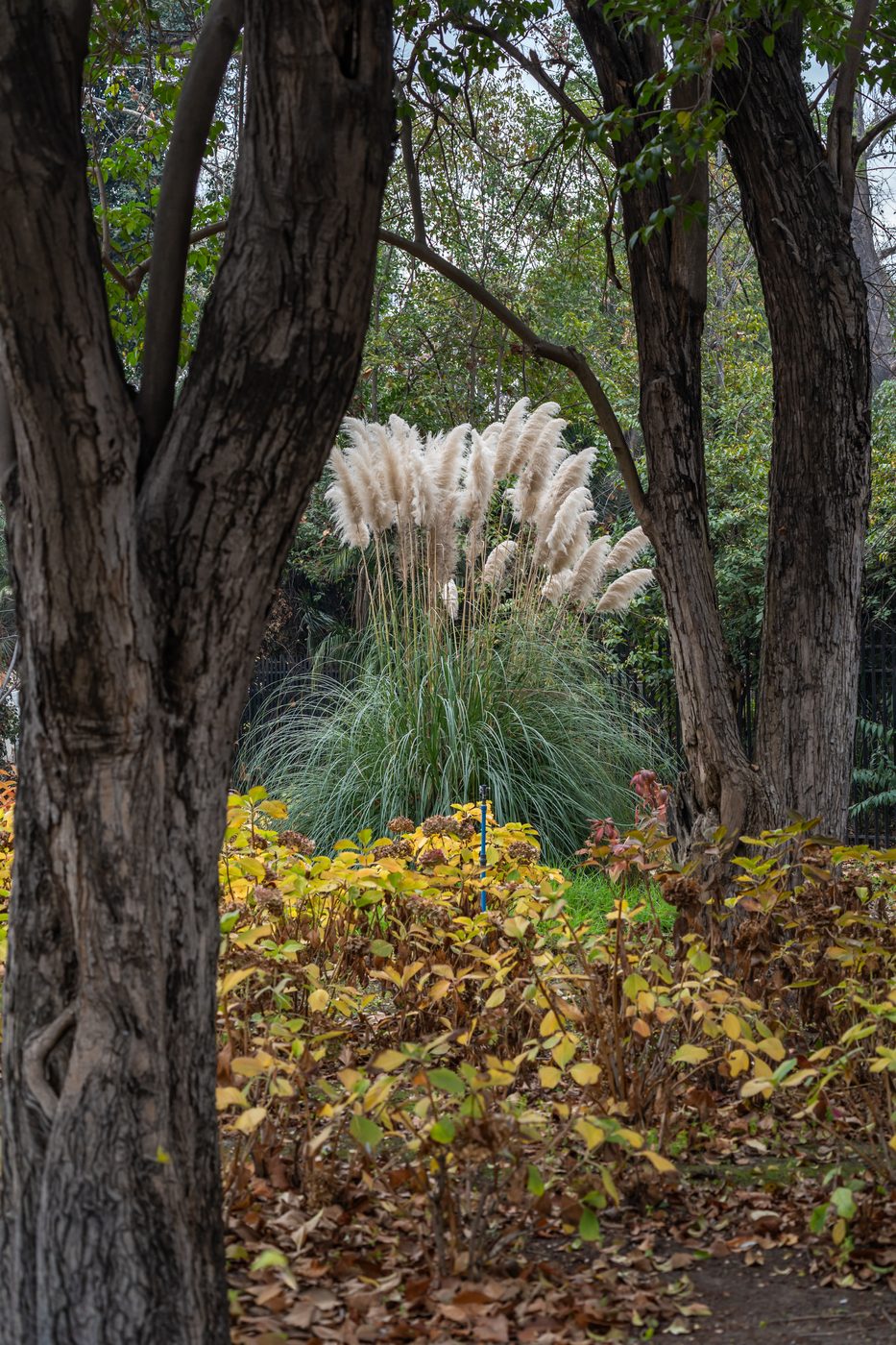
Pampas grass
Cortaderia selloana
Pampas grass is the defining installation material of the 2020s boho-wedding aesthetic — soft, cloud-like plumes on tall stems, sold pre-dried and lasting years. Used for arches, floor installations, and oversized fireplace arrangements. Environmental note: pampas is invasive in California and the Mediterranean; sustainable buyers seek US or European commercial crops.
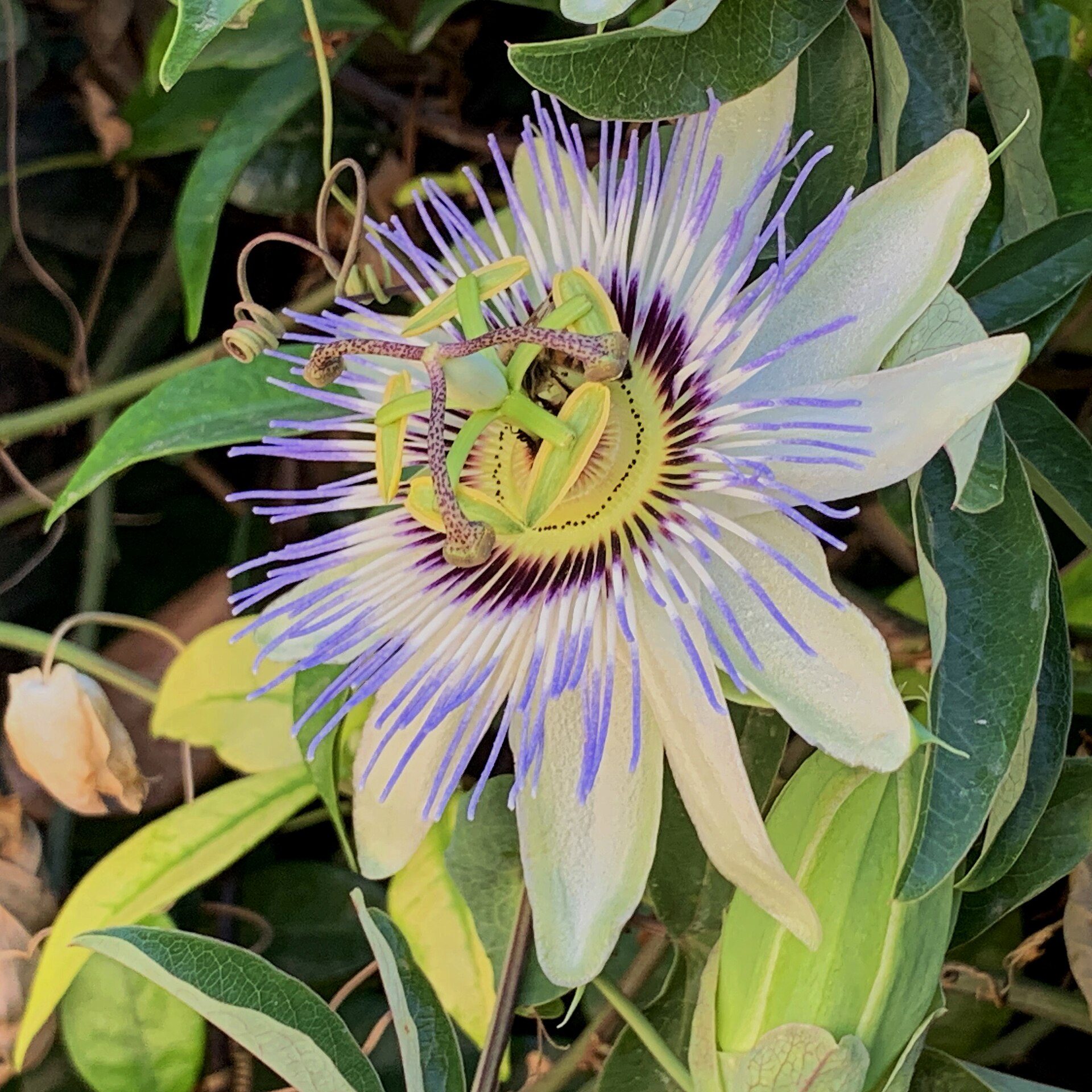
Passionflower Vine
Passiflora caerulea
The passionflower vine (Passiflora caerulea) is grown for its intricate, otherworldly blooms and curling tendrils. Florists use its foliage and tendrils for exotic movement in editorial and garden-style work, with the striking purple-and-white flowers as a fleeting focal accent. Each flower lasts only a day, so it is a specialist, high-impact material rather than a workhorse. Its symbolism of faith and passion adds meaning to romantic designs.
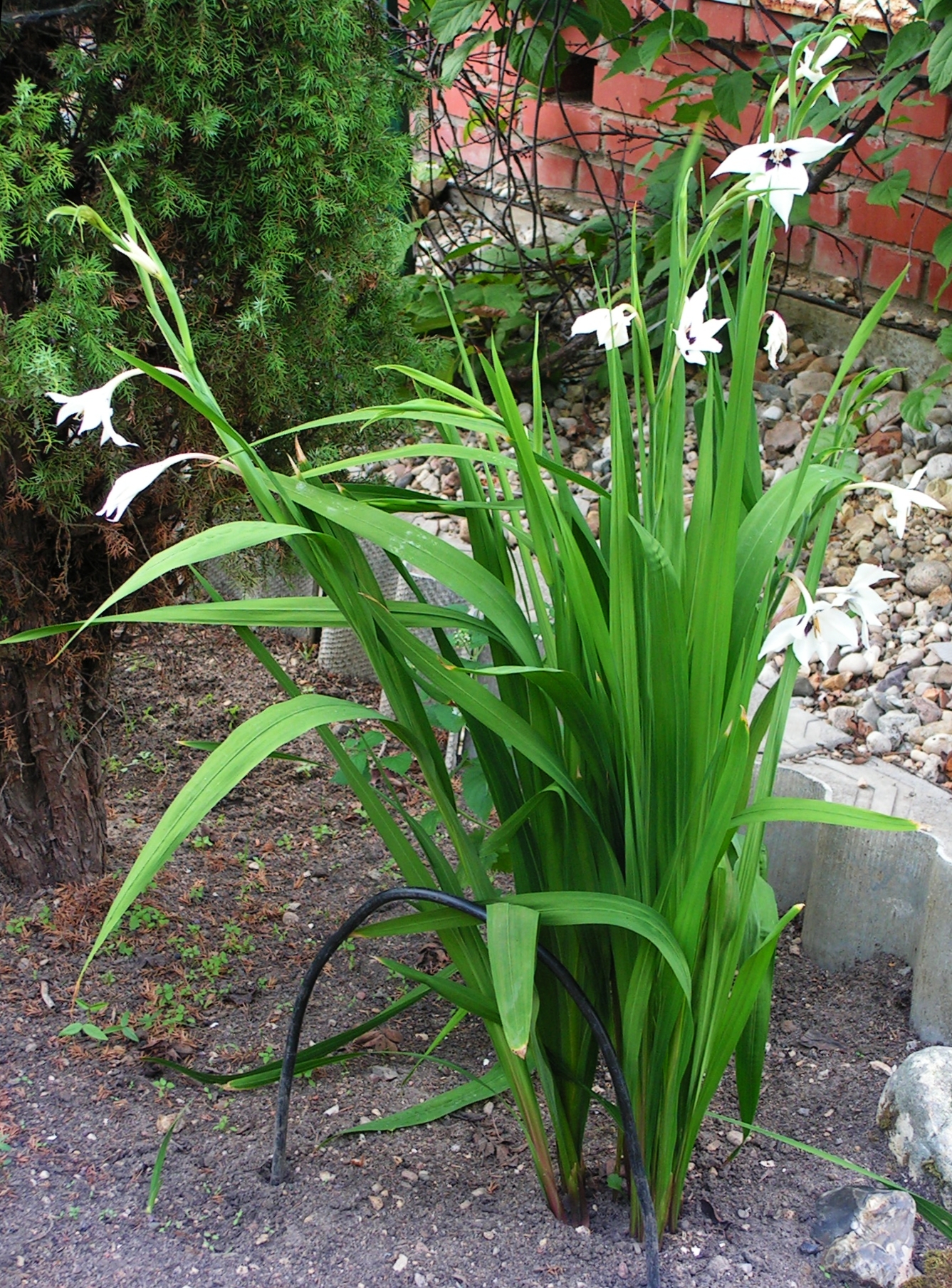
Peacock Orchid
Gladiolus murielae
Peacock orchid is a graceful late-summer relative of the gladiolus, bearing nodding white stars marked with a deep maroon central blotch. Native to the Ethiopian highlands, it is treasured above all for its sweet, jasmine-like evening fragrance. Its slender, arching spikes bring an airy elegance that feels far more delicate than a standard gladiolus. Florists reach for it in romantic, garden-style and luxury wedding work where perfume and refinement count.
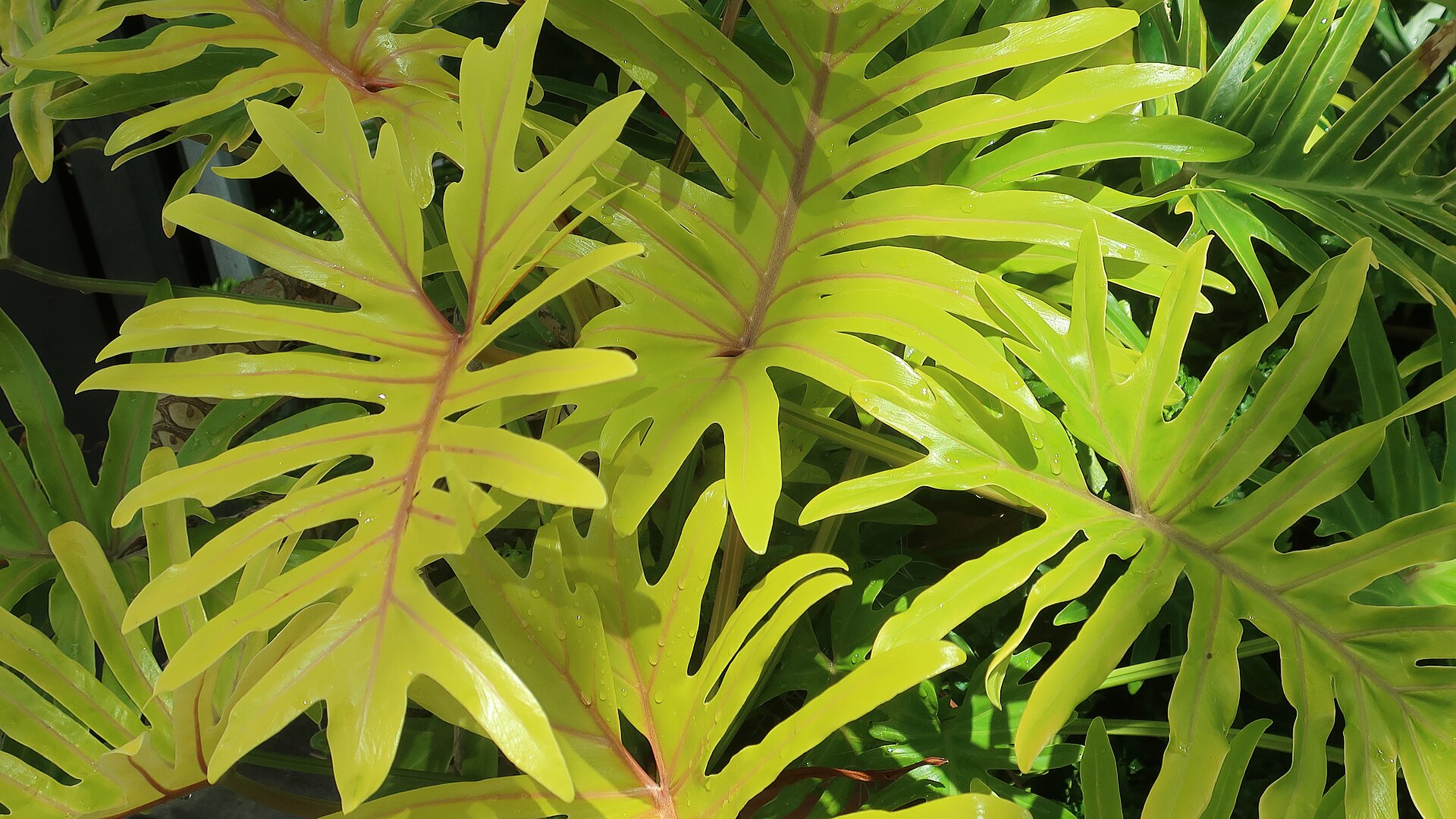
Philodendron Leaf
Philodendron bipinnatifidum
Philodendron leaf is a large, deeply lobed tropical foliage that brings instant scale and drama to bold arrangements. Its glossy, split blades read as sculptural greenery, ideal for tropical bouquets, corporate pieces and large-format installations. A single leaf can anchor a design or line a tall vase, and the foliage lasts for weeks with basic care. Florists reach for it whenever they want architectural, jungle-lush structure with minimal fuss.
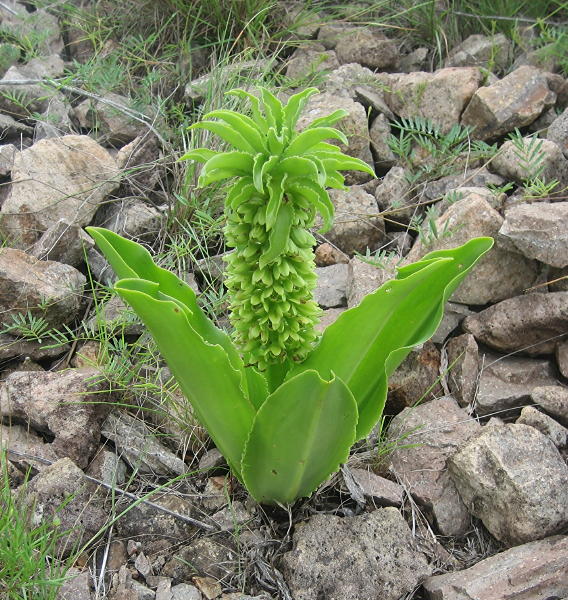
Pineapple Lily
Eucomis comosa
Pineapple lily is a striking summer bulb whose star-packed flower spike is crowned by a leafy tuft that mimics a pineapple top. Florists prize it for its bold, sculptural silhouette and remarkable vase life, which easily outlasts most soft summer flowers. The blooms shade from lime green through cream to dusky burgundy, giving arrangements a fresh, slightly tropical edge. It anchors tall modern designs and adds unexpected texture to summer wedding work.
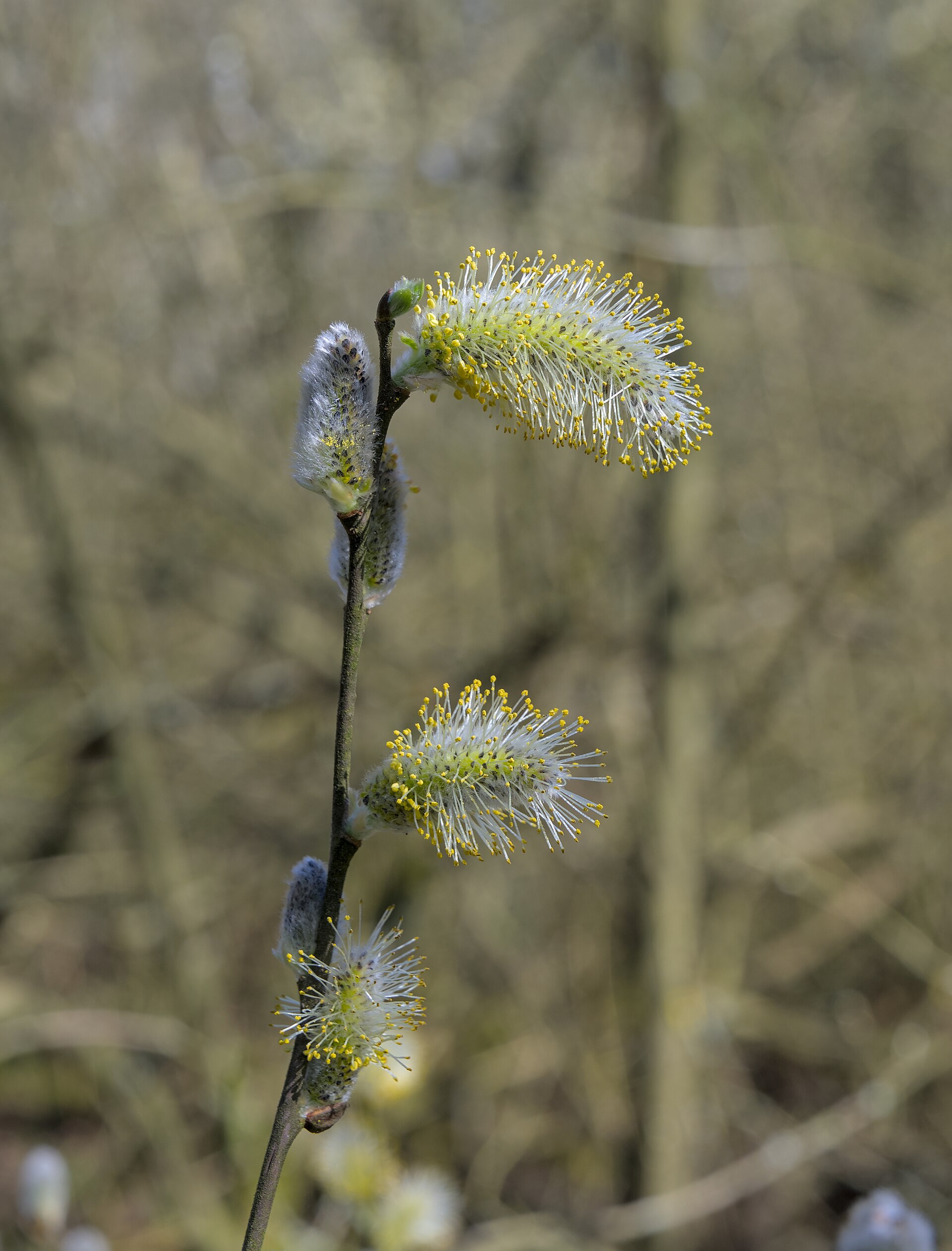
Pussy Willow
Salix caprea
Pussy willow is a much-loved late-winter branch, its bare woody stems studded with soft, silvery-grey catkins that feel like velvet. Florists use it as a sculptural line for spring arrangements, adding gentle texture, movement and a quiet, natural elegance. It is wonderfully forgiving — needing little or no water and lasting for weeks, and it dries in place to hold almost indefinitely. Kept dry, the catkins stay tight and silky; left in water, they open into fluffy yellow blooms.
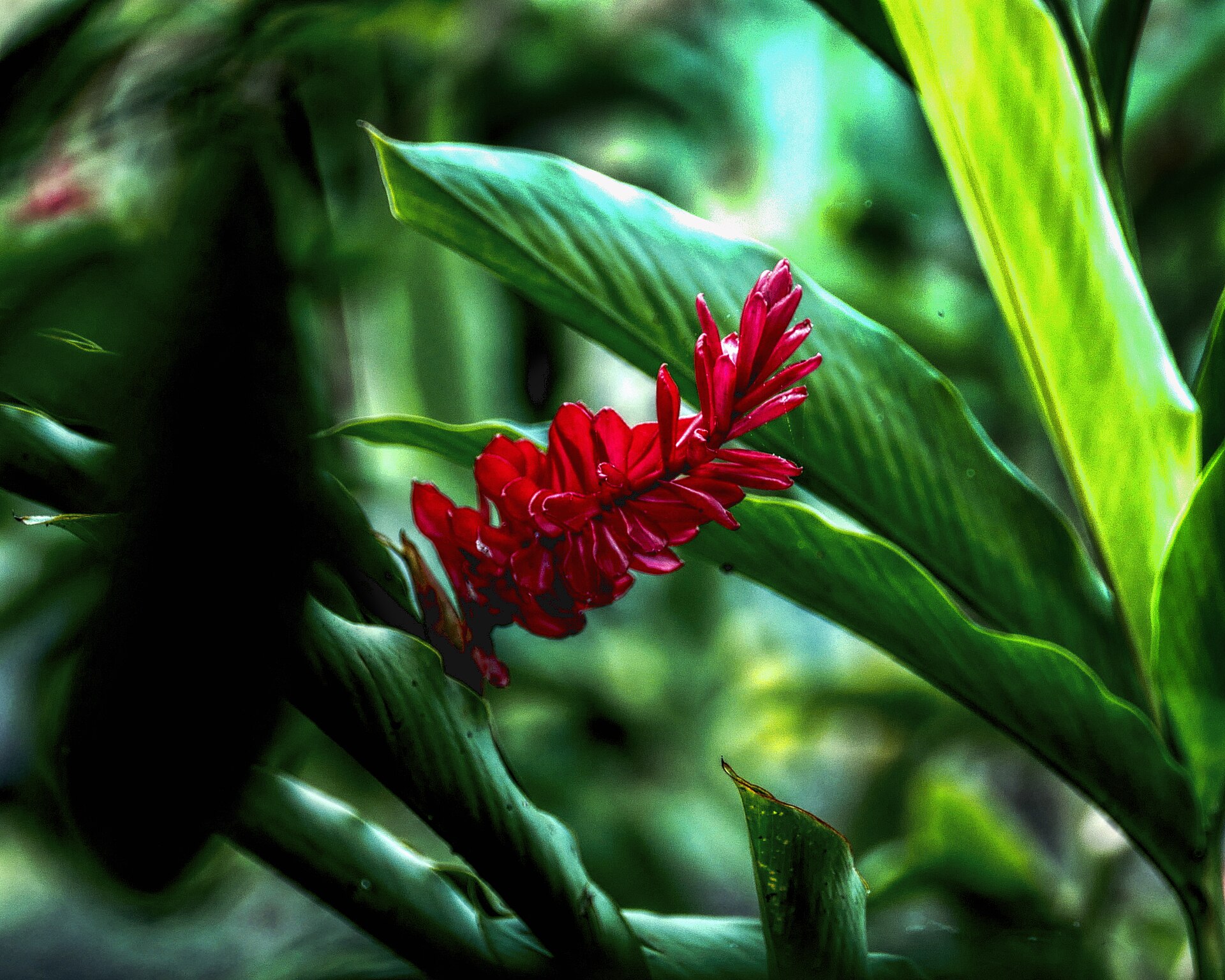
Red Ginger
Alpinia purpurata
Red ginger is an iconic tropical focal formed from a dense cone of glossy, waxy bracts in vivid scarlet or hot pink, held upright on a tall leafy stem. Native to Malaysia and naturalised across the Pacific, it is a workhorse of tropical floristry thanks to an exceptional vase life that can reach three weeks. Its bold, sculptural form anchors large event arrangements, tropical bridal work and hotel installations. Sturdy and forgiving to handle, it delivers maximum drama for a moderate price.
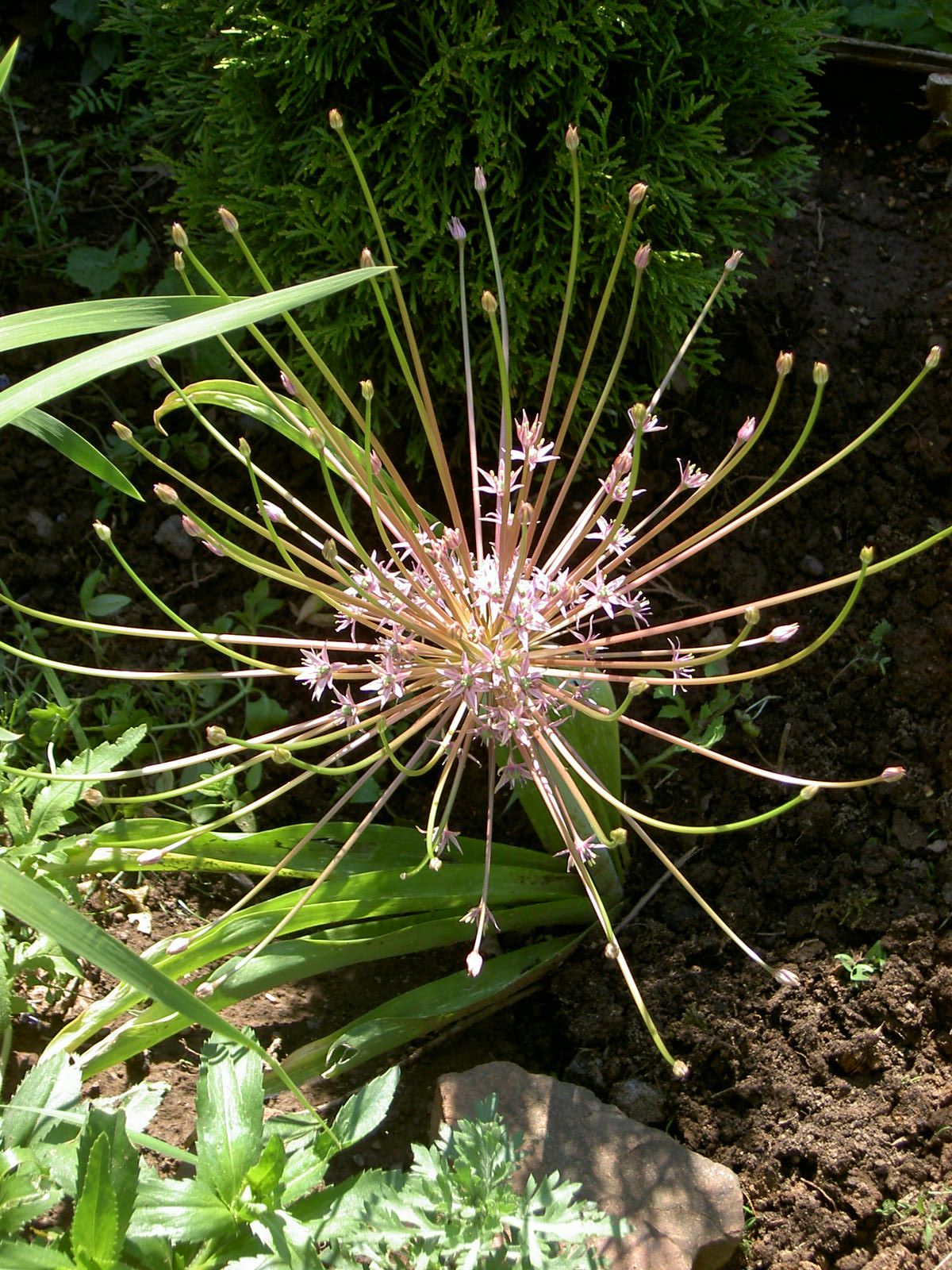
Schubert Allium
Allium schubertii
Schubert allium is the most spectacular of the ornamental onions, forming a vast exploding sphere of purple-pink florets on stalks of varying length, like a frozen firework. The airy, up-to-a-foot-wide head makes an instant sculptural focal point in modern and editorial designs. It lasts for weeks fresh and dries beautifully, holding its dramatic starburst form for months. Florists use it to add scale, architecture and a sense of drama to installations and statement arrangements.
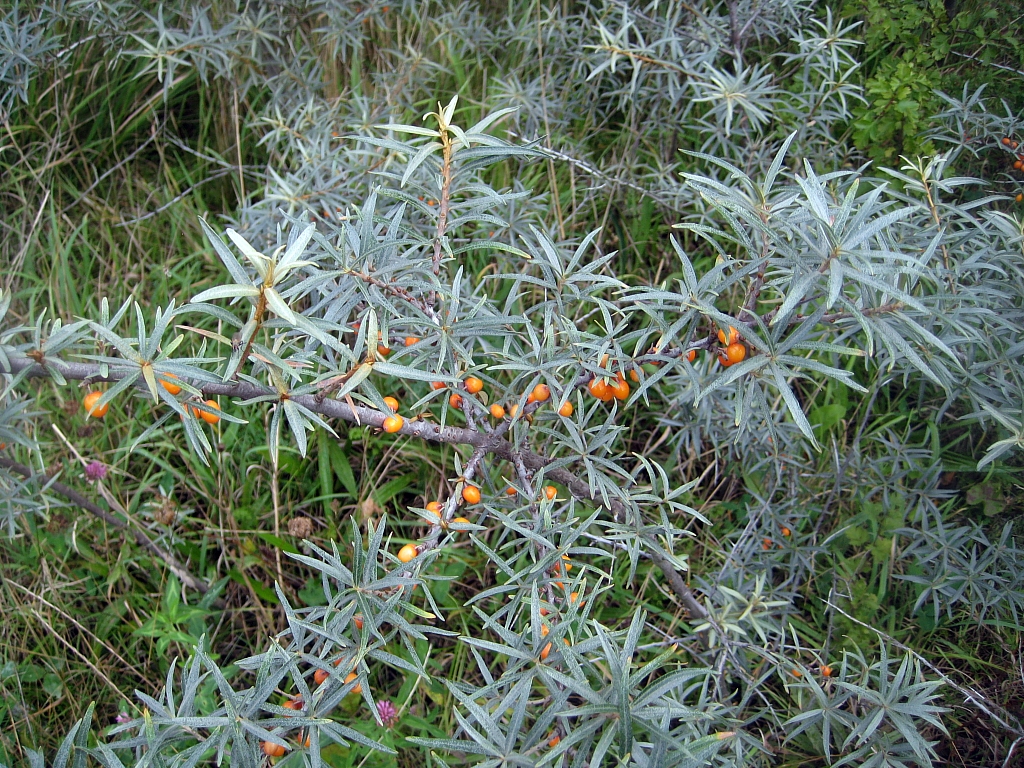
Sea Buckthorn
Hippophae rhamnoides
Sea buckthorn is a thorny coastal branch densely studded with vivid orange berries running the full length of the stem, framed by narrow silvery-green leaves. Its striking, almost graphic colour and long arching line make it a standout for architectural and editorial autumn work. Florists prize how firmly the berries cling, giving one of the longest-lasting fruit displays available. The berries are an edible superfood but ferociously sour, and the vicious thorns mean gloves are essential.
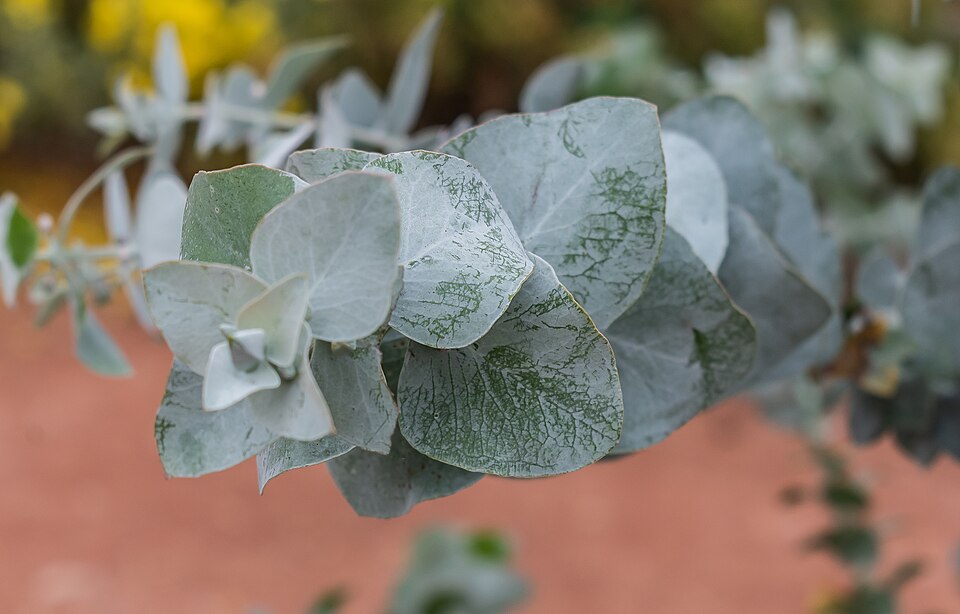
Seeded eucalyptus
Eucalyptus populus
Seeded eucalyptus carries small silver-green seed clusters along its stems — the design detail that distinguishes it from other eucalyptus varieties. The seeds catch light, hold shape when dried, and give boutonnieres their signature textural interest. A premium alternative to plain silver dollar eucalyptus.
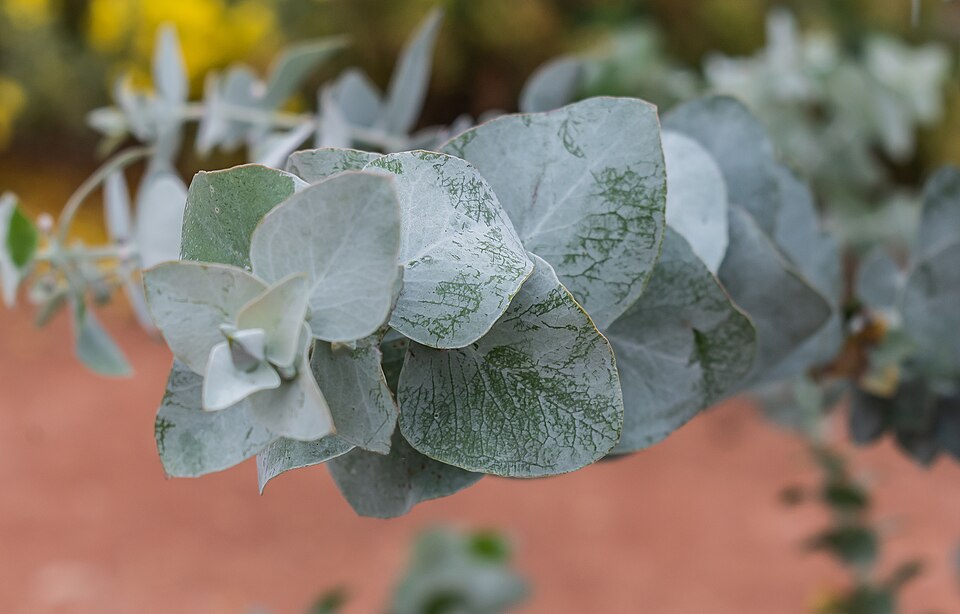
Silver dollar eucalyptus
Eucalyptus cinerea
Silver dollar eucalyptus is the default modern-wedding greenery — round silver-blue leaves, long vase life, and the ability to dry in place. Grown widely in California and Ecuador. The paler cultivars (Eucalyptus cinerea 'Silver Dollar') dominate wedding work; the greener cultivars (E. polyanthemos) work for editorial and dark-palette design.
Smilax
Asparagus asparagoides
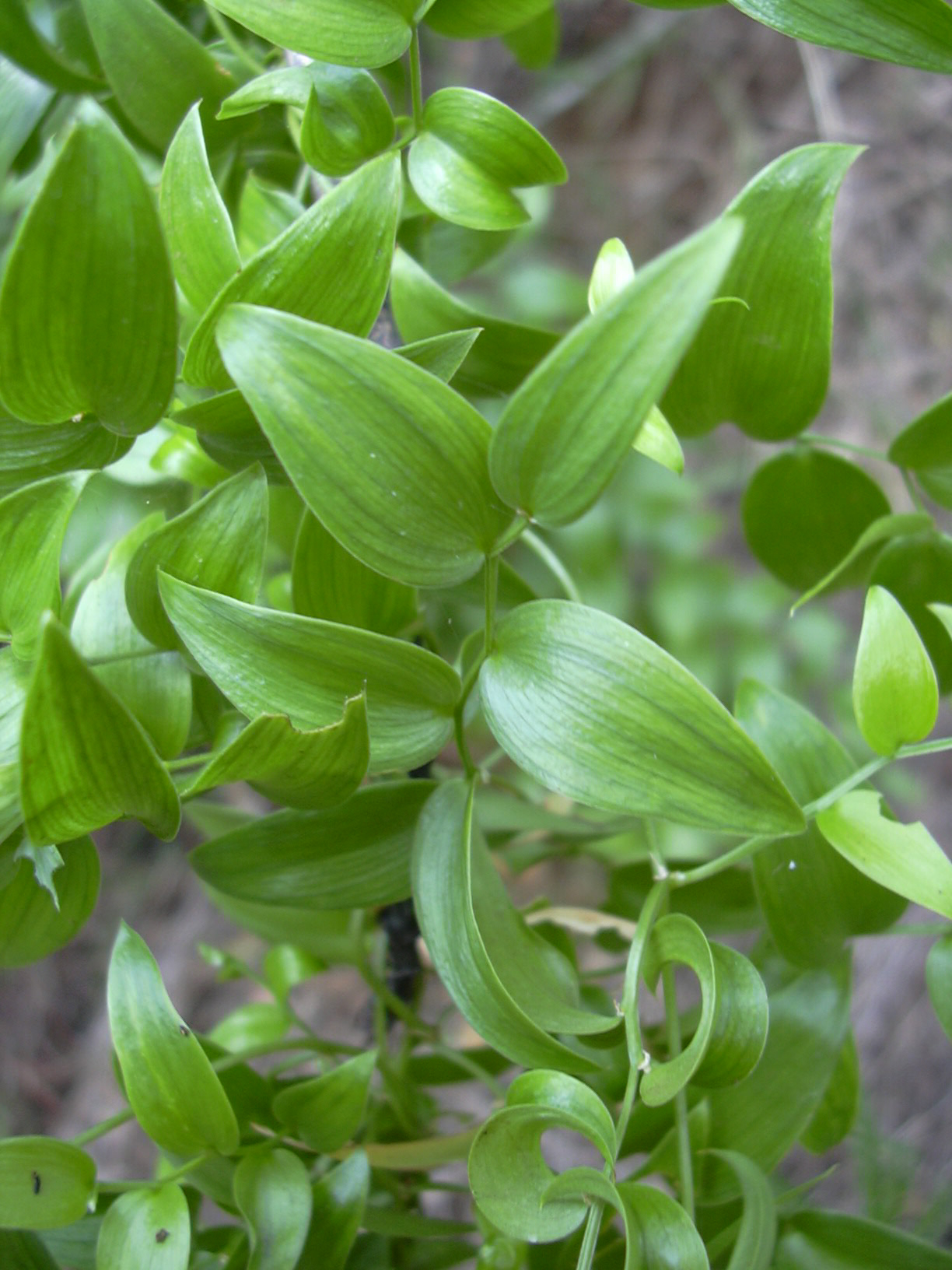
Smilax is the florist's classic bridal vine — long, slender strands of small, glossy green leaves that drape and swag with effortless grace. Though sold as 'smilax', the material used today is usually Asparagus asparagoides rather than true Smilax. Florists prize it for garlands, table runners, arches and cascading installations where a fine, natural green line is needed. It dehydrates quickly once cut, so it rewards careful conditioning and last-minute placement.
Star Jasmine
Trachelospermum jasminoides
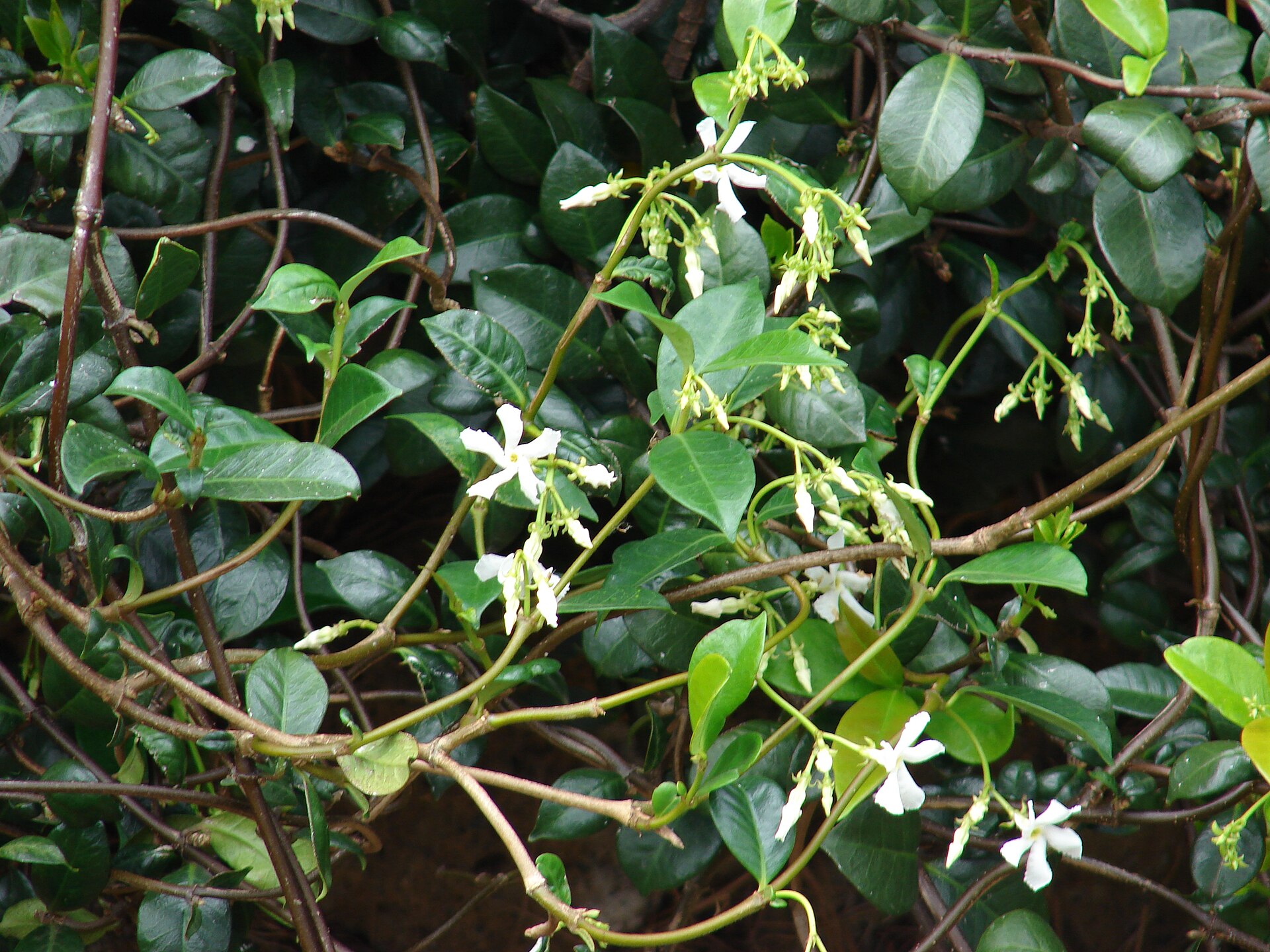
Star jasmine (Trachelospermum jasminoides), also called confederate jasmine, is an evergreen climbing vine with glossy dark leaves and intensely fragrant white star-shaped flowers. Florists love its long, supple lengths for cascading garlands, arches and installations, and its perfume for garden-style weddings. The foliage is durable and holds well, while the scented blooms bring a heady early-summer luxury. It is a versatile, romantic trailing green.
Summer Hyacinth
Galtonia candicans
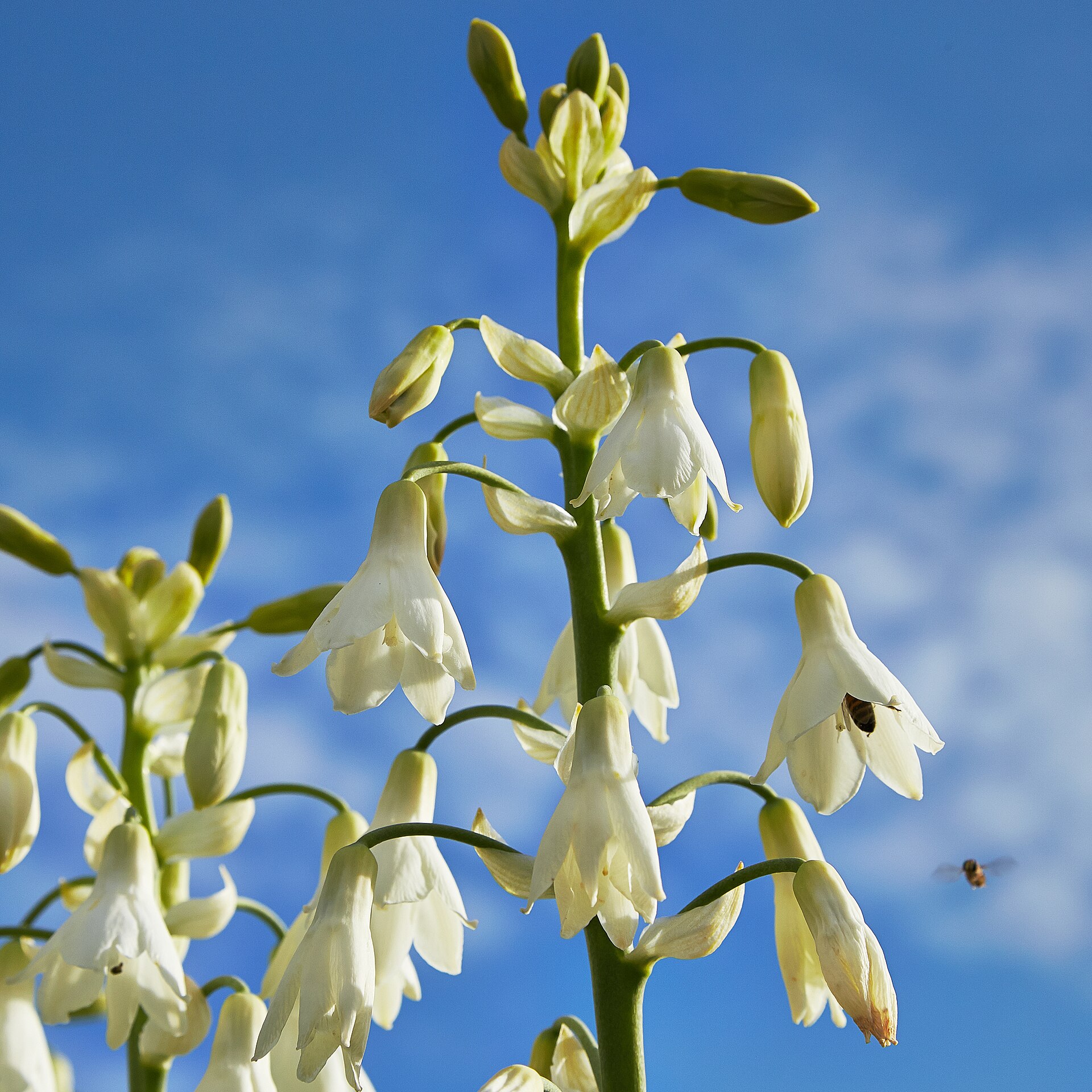
Summer hyacinth carries a tall spire of pendulous, waxy white bells that lend height and a soft, green-throated glow to summer designs. Unrelated to spring hyacinth despite the name, it blooms in late summer and brings a gentle, honeyed fragrance. Florists reach for its clean architecture in garden-style and luxury wedding work, where its pale bells cool down warmer palettes. The elegant, nodding form suits both airy bouquets and stately tall arrangements.
Sword Fern
Polystichum munitum
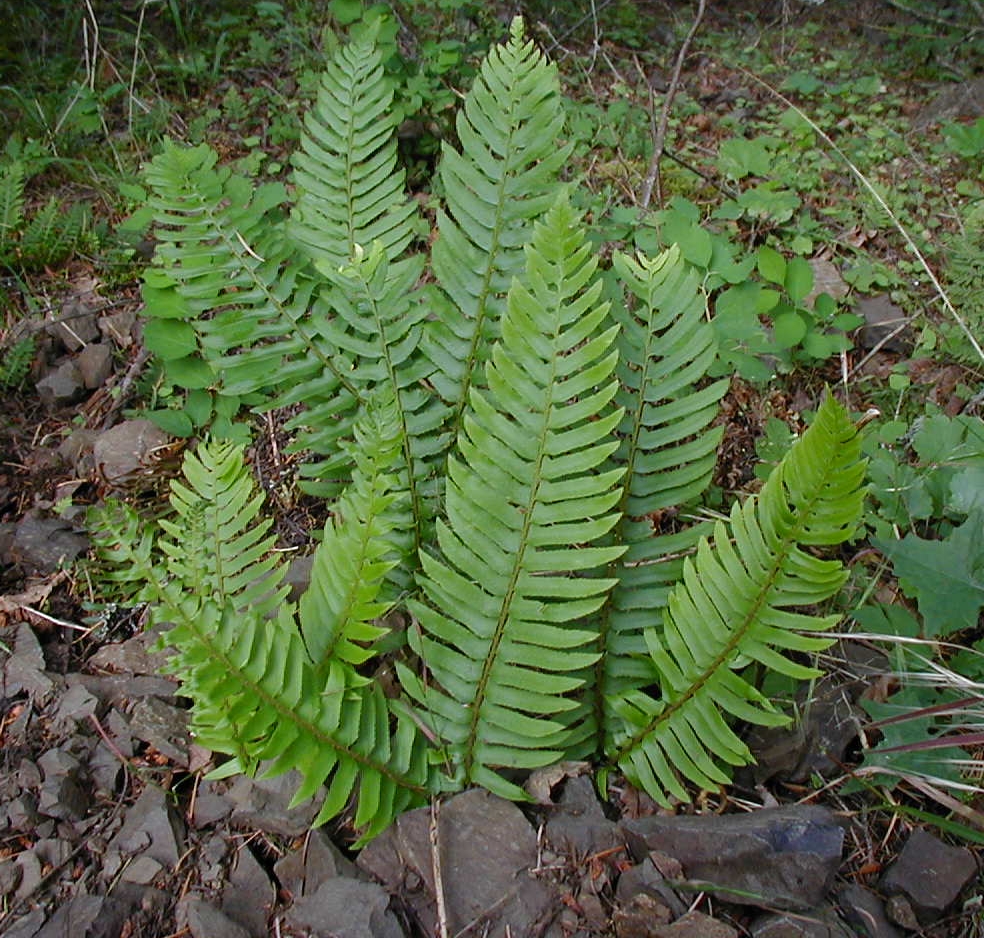
Sword fern produces long, upright fronds of neatly ranked, deep-green leaflets on sturdy stems. Wild-harvested in the Pacific Northwest, it is a reliable, inexpensive cut green with a fresh, natural character. Florists use its bold, tapering blades to build structure, add length and frame bouquets and arrangements. Hardier than many ferns, it holds its colour and form well through a design's life.
Tall Verbena
Verbena bonariensis
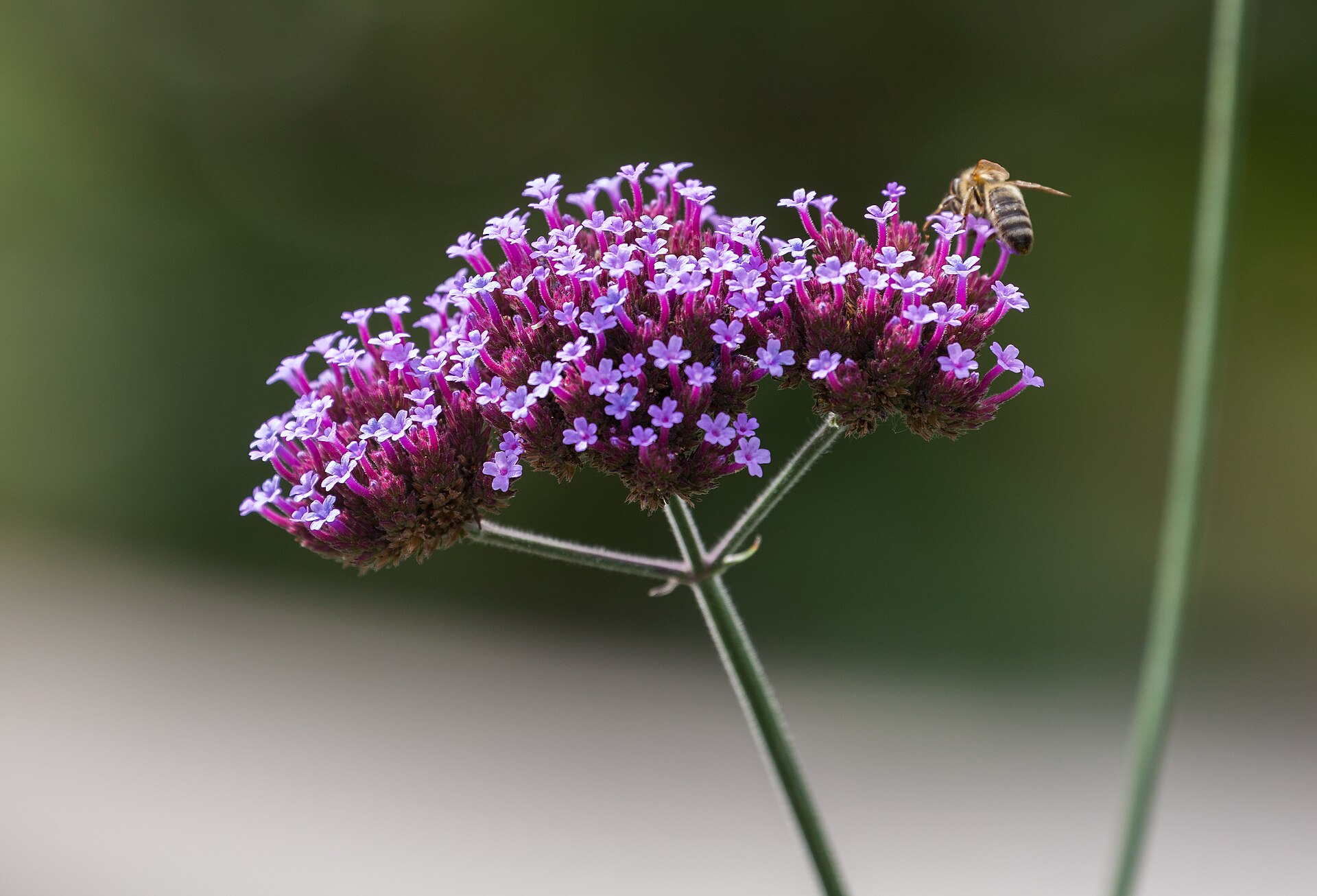
Verbena bonariensis carries small clusters of violet-purple florets atop tall, wiry, near-leafless stems, creating a see-through veil of colour that floats above a bouquet. Beloved in naturalistic and boho design, it adds height, haze and pollinator-garden charm without weight. Its airy branching structure lets it drift among focal flowers and grasses for a wild, just-gathered look. The clear purple is a useful accent wherever soft violet tones are wanted.
Ti Leaf
Cordyline fruticosa
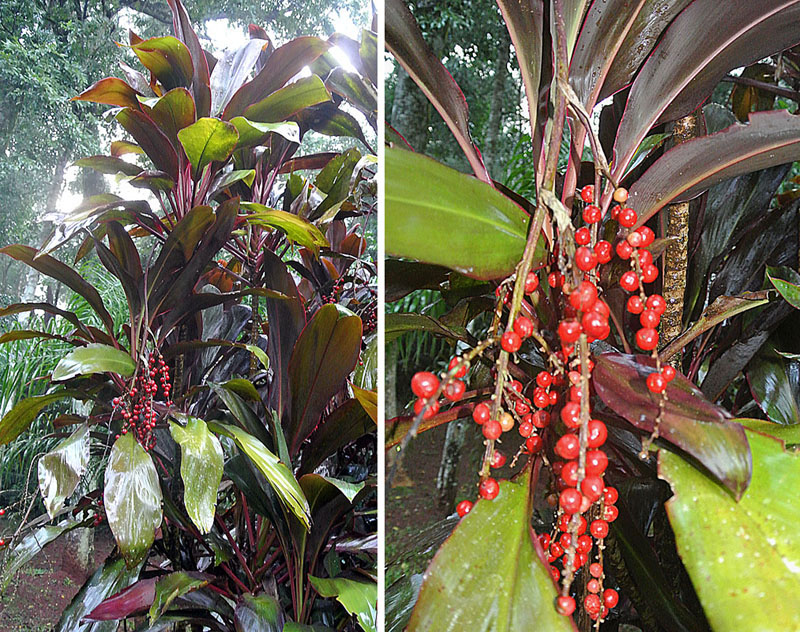
Ti leaf comes from the tropical cordyline, a plant long grown across the Pacific for luck and protection. Its long, glossy blades range from deep green to vivid burgundy, red and pink, giving florists sleek, colourful lines for modern and tropical design. The flexible leaves are often rolled, folded or looped inside vases as a decorative liner, and they last for weeks with minimal care. Bold, durable and dramatic, ti leaf is a mainstay of contemporary and event floristry.
Tithonia
Tithonia rotundifolia
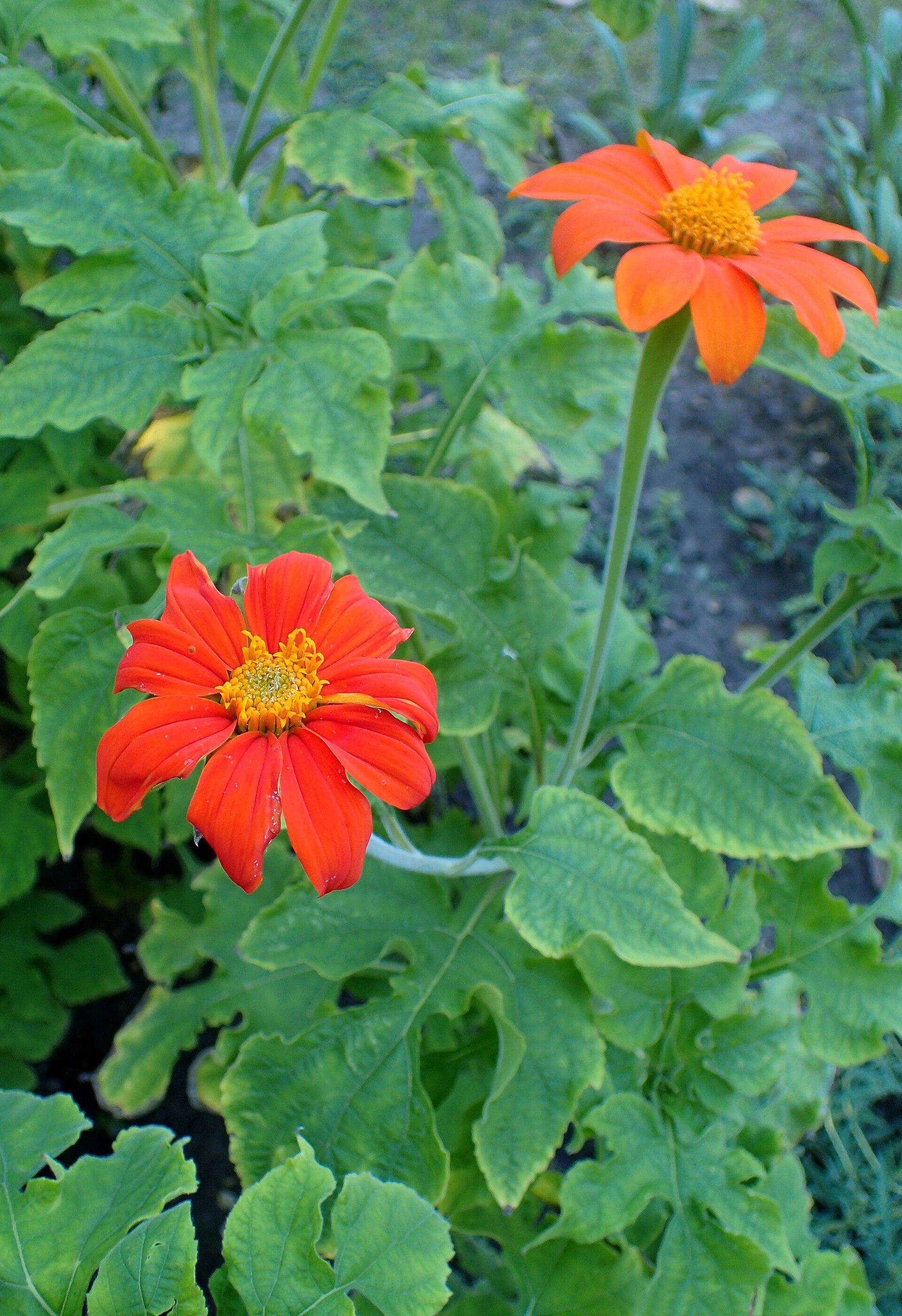
Tithonia, the Mexican sunflower, produces vivid orange-scarlet daisy blooms on tall, branching stems that bring tropical heat to late-summer designs. Florists love its saturated colour and generous stem length for larger, garden-style and installation work. Each velvety flower has a neat central disc and slightly reflexed rays, glowing like a small sun. Its hollow stems need careful handling and plenty of water, but the payoff is one of the most intense oranges in the seasonal palette.
Torch Ginger
Etlingera elatior
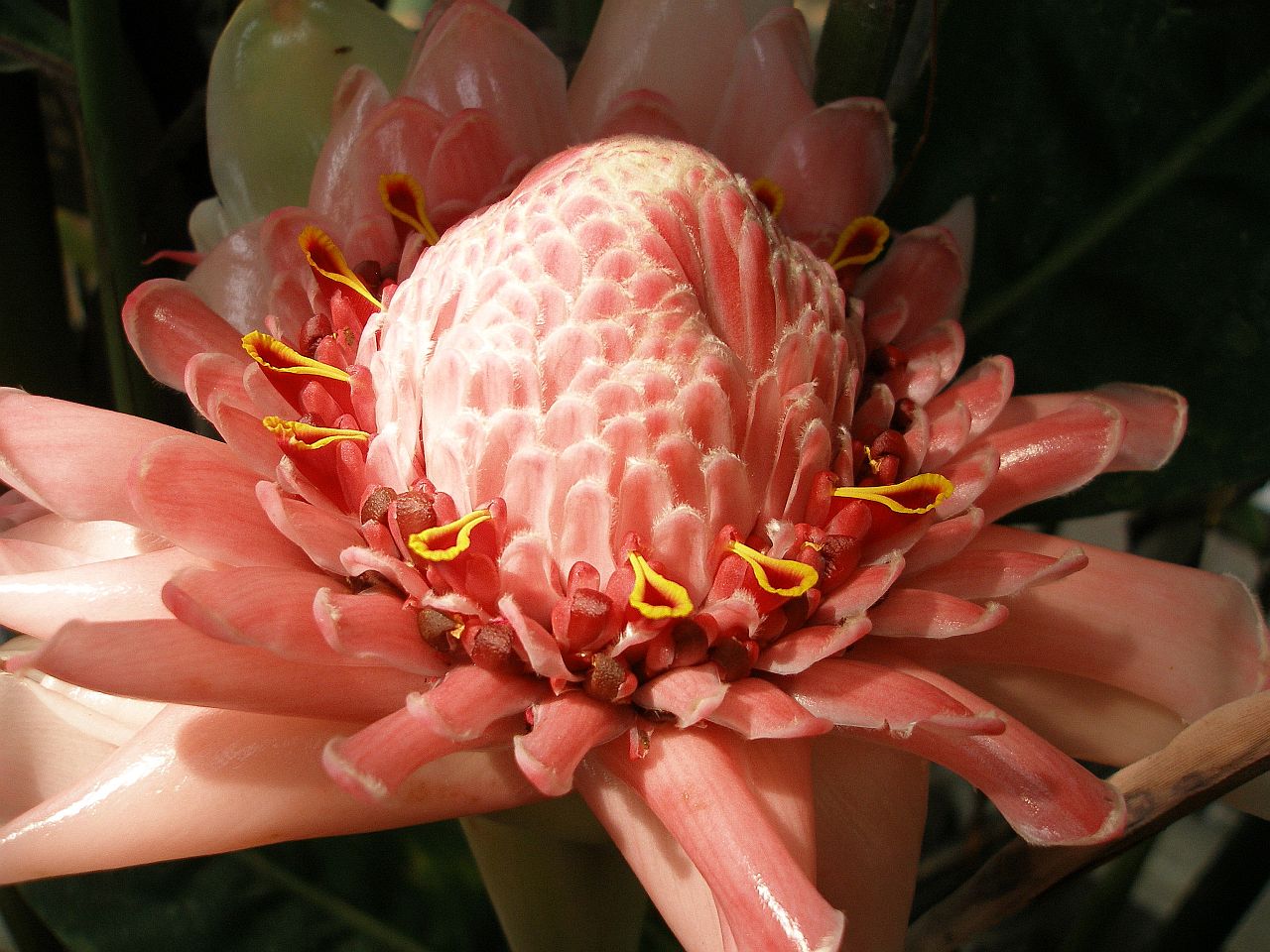
Torch ginger sends up a tall, sturdy stalk topped by a glossy, waxy inflorescence of tightly overlapped bracts, most often in vivid red or pink — hence its other name, porcelain rose. A member of the ginger family from Southeast Asia, it is a dramatic tropical focal with excellent vase life and real presence in large designs. Florists use it for tropical weddings, installations and statement arrangements where scale and saturated colour are wanted. Its sculptural, torch-like head reads as exotic and luxurious in equal measure.
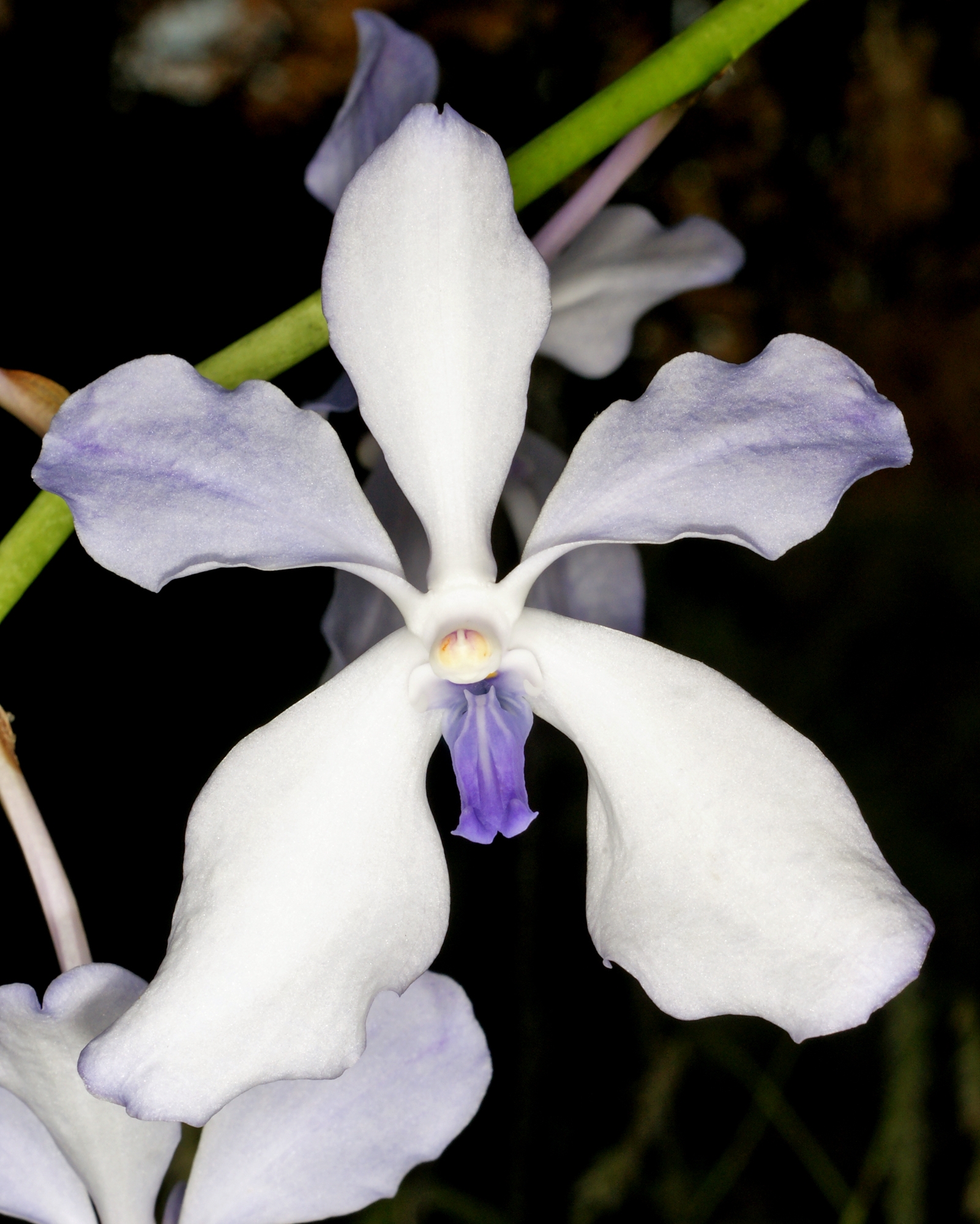
Vanda Orchid
Vanda
Vanda orchids are among the most coveted of all cut orchids, famous for the electric blue and violet lattice of Vanda coerulea and its hybrids — colours almost unheard of elsewhere in the flower world. Each thick stem carries a row of large, flat, jewel-toned blooms with remarkable substance and vase life. A true statement flower, vanda anchors luxury and editorial designs and dazzles in modern, minimal work. Its rarity and saturated colour place it firmly at the premium end of the orchid spectrum.
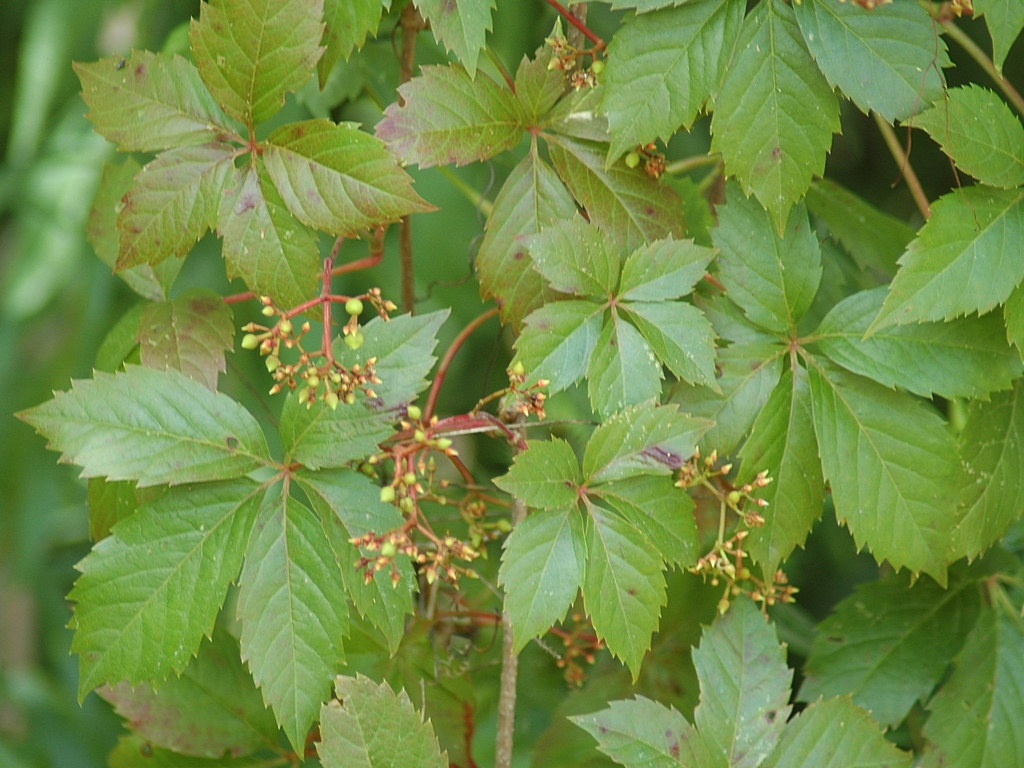
Virginia Creeper
Parthenocissus quinquefolia
Virginia creeper (Parthenocissus quinquefolia) is a vigorous North-American climbing vine best known for the fiery red, bronze and burgundy tones its five-part leaves take on in autumn. Florists cut it for seasonal installations, garlands and tablescapes where its trailing habit and rich colour bring drama. The foliage is fleeting and prone to dropping, so it is used fresh for short, high-impact autumn work. In summer its green leaves offer a softer, garden-style line.