Flowers in season in September
133 flowers at their natural peak in September — seasonal, better priced and longer-lasting. Peak varies by hemisphere and greenhouse supply.
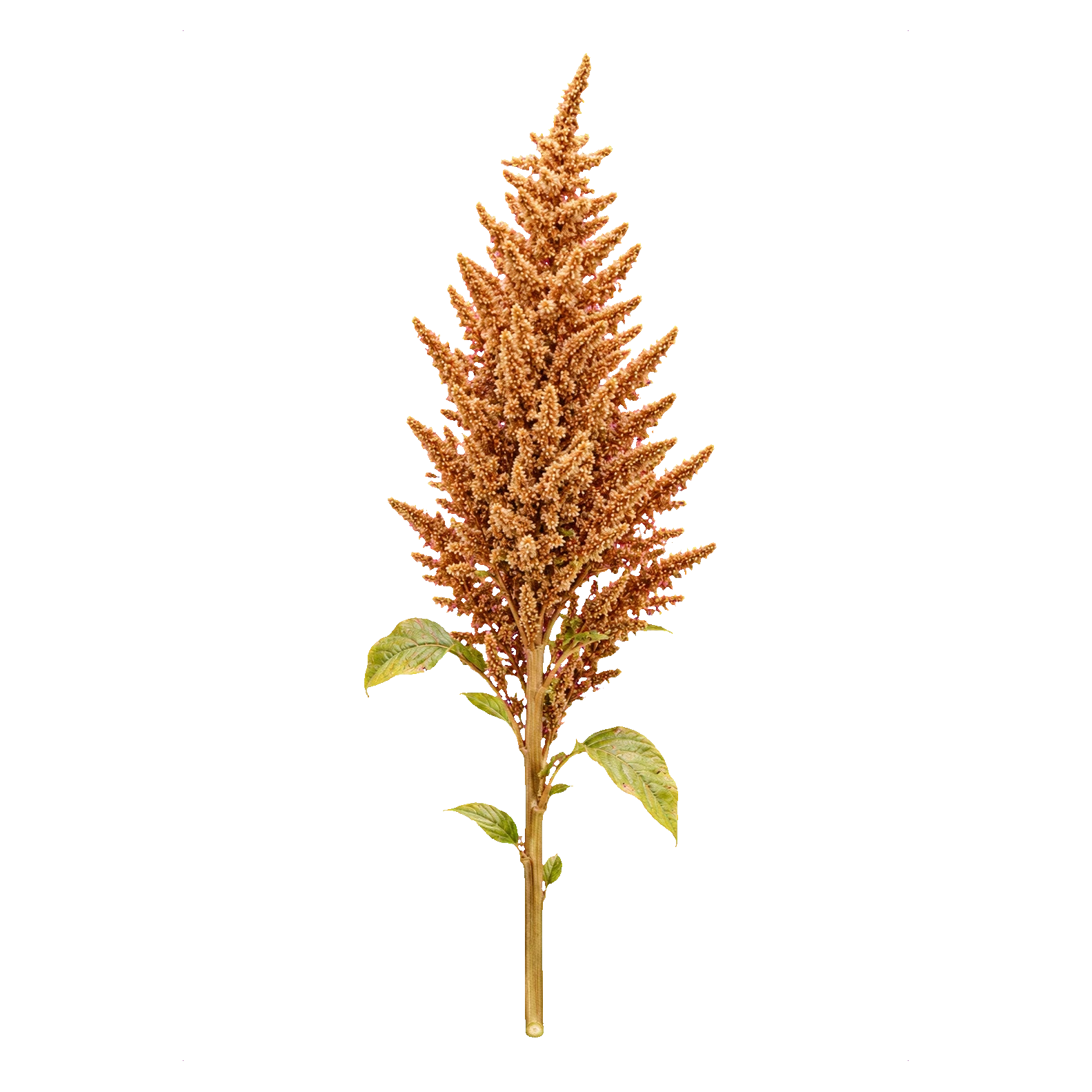
Amaranthus
Amaranthus caudatus
Amaranthus is prized for its long, velvety, rope-like tassels that cascade and drip from a bouquet with lush, tactile drama. The trailing form, love-lies-bleeding, spills in deep crimson or chartreuse green, while upright types add plush texture and height. Florists love it for boho and autumn weddings, cascading bridal bouquets and generous installations where movement and richness matter. It also dries exceptionally well, holding both colour and its distinctive draping shape.
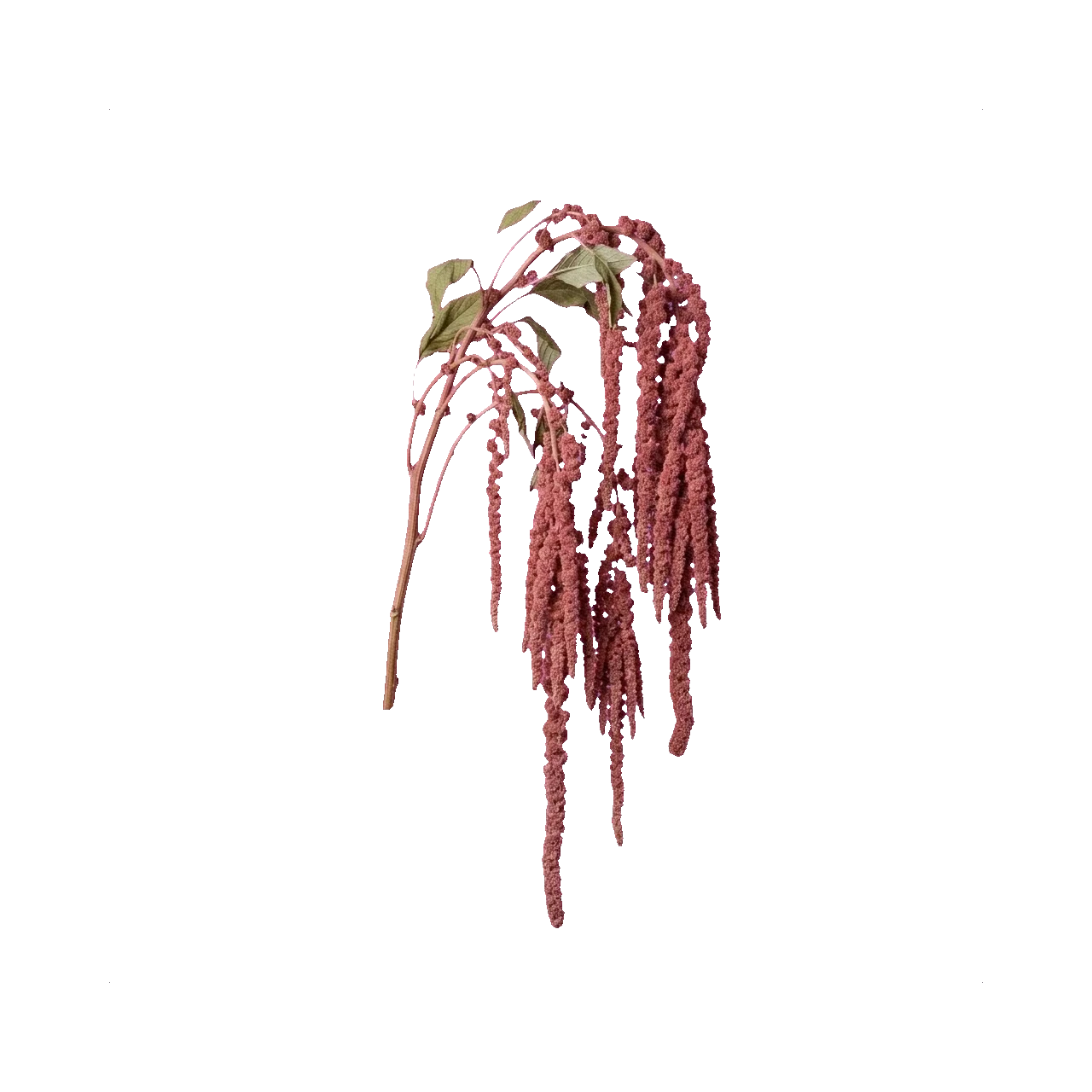
Amaranthus (preserved)
Amaranthus
Amaranthus (preserved) (Amaranthus) — a dried flower. Holds shape for months — for dried arrangements and décor.

Asparagus
Asparagus
Asparagus (Asparagus) — decorative greenery. Adds backdrop, volume and line.
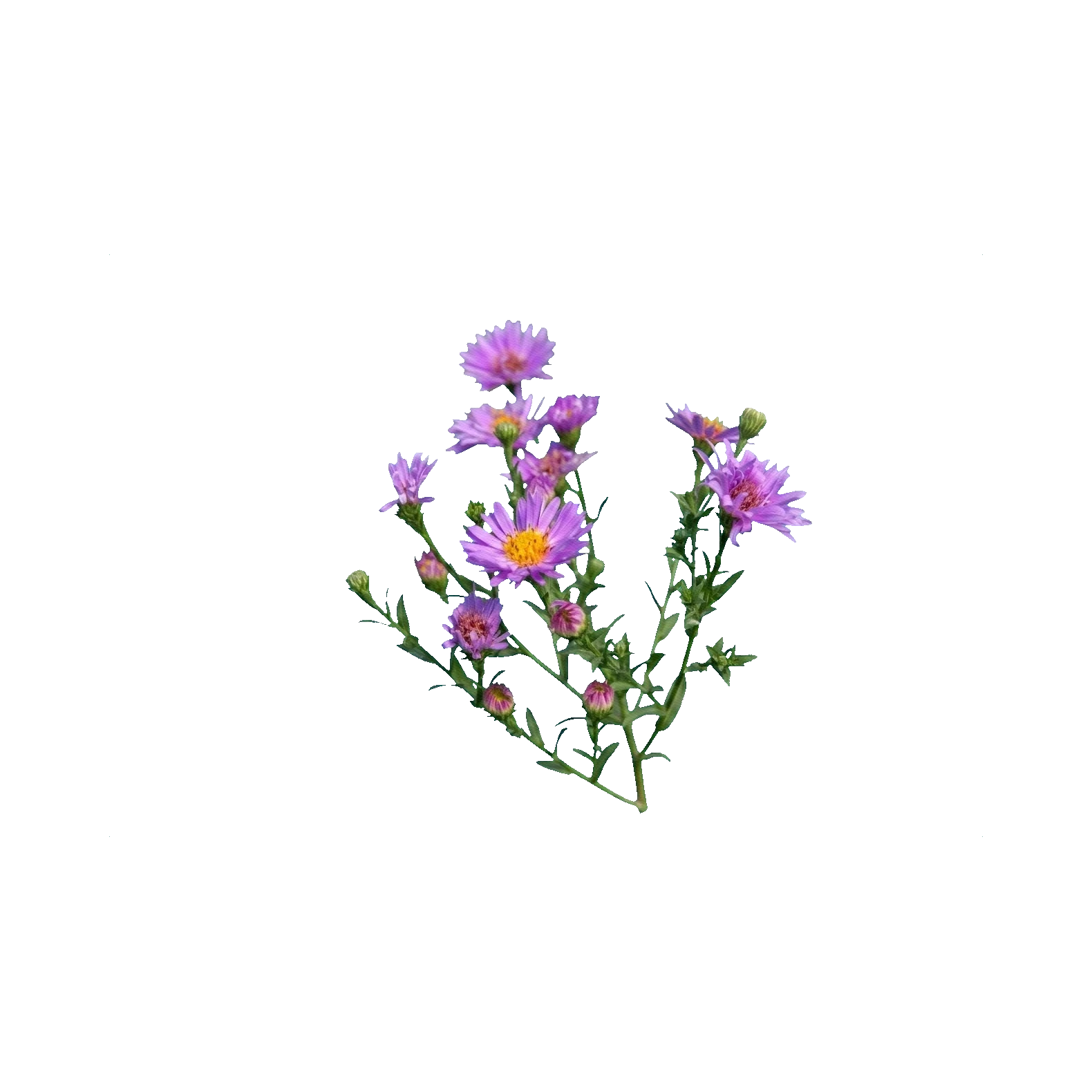
Aster
Symphyotrichum
The aster is one of the last true field flowers of the year — dozens of small daisy-like florets on branching stems, opening in September and October when little else is fresh. Purple and lavender are the classic autumn palette. Splits into many usable side stems, giving strong coverage per stem.
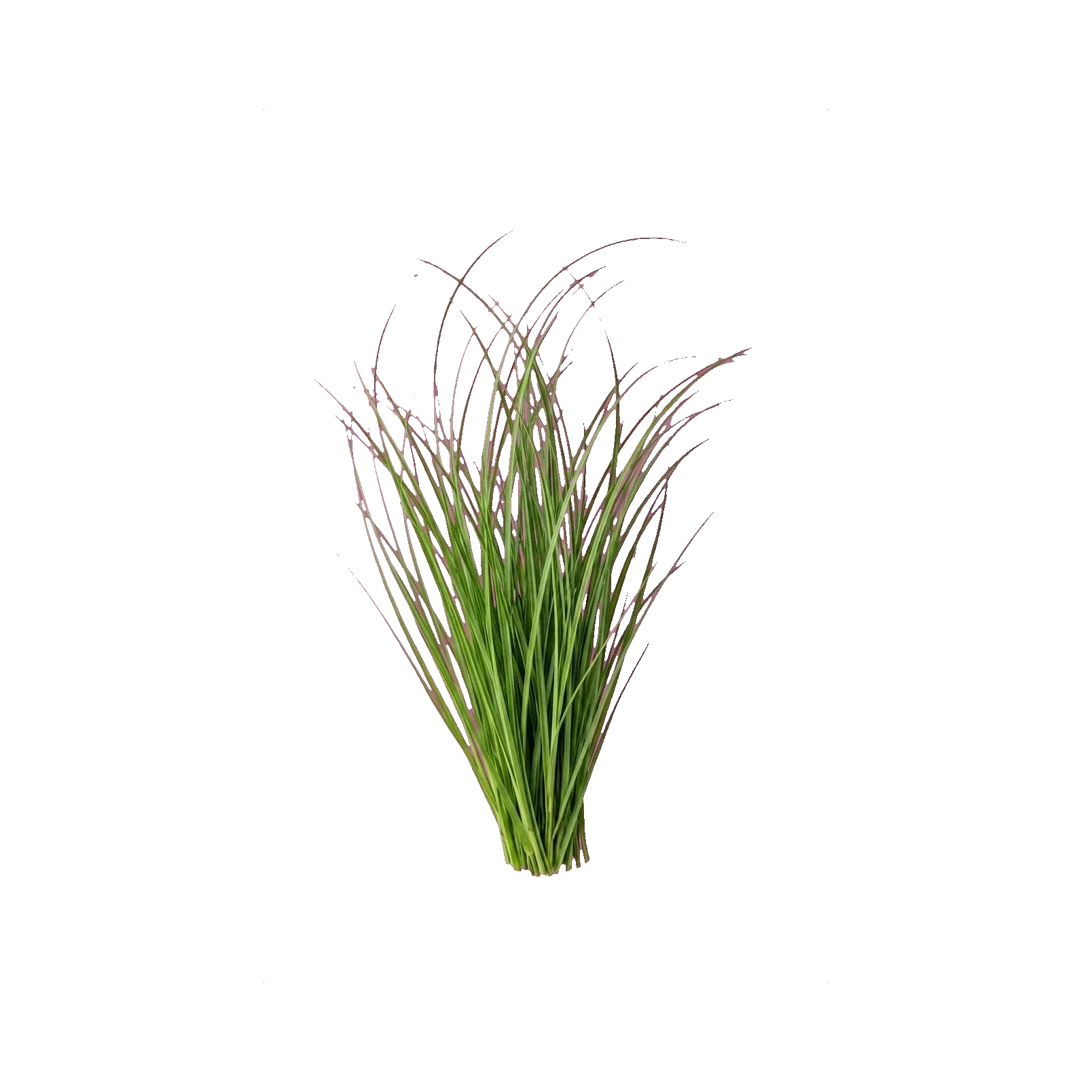
Bear grass
Xerophyllum tenax
Bear grass (Xerophyllum tenax) — decorative greenery. Adds backdrop, volume and line.
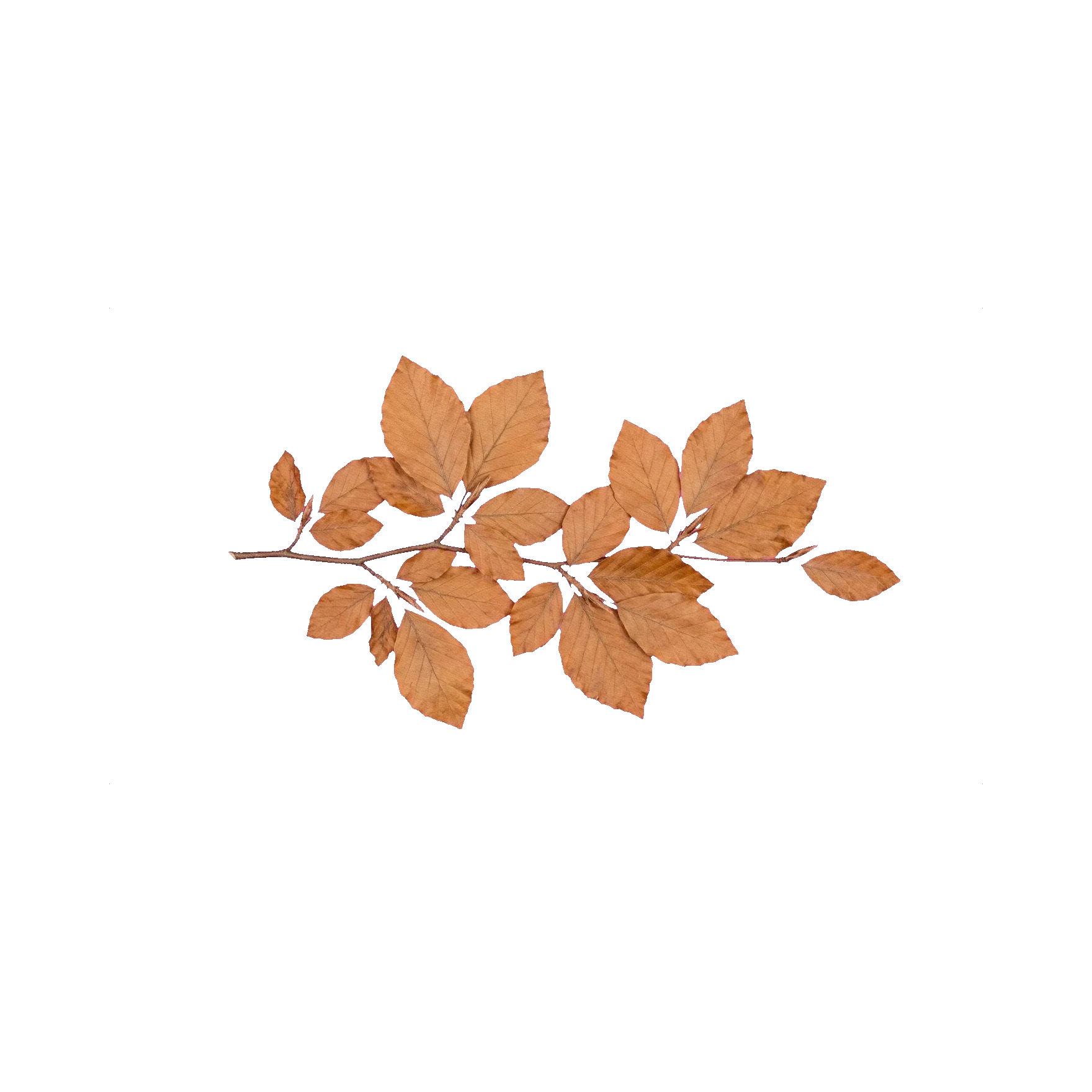
Beech foliage
Fagus sylvatica
Beech foliage (Fagus sylvatica) — decorative greenery. Adds backdrop, volume and line.
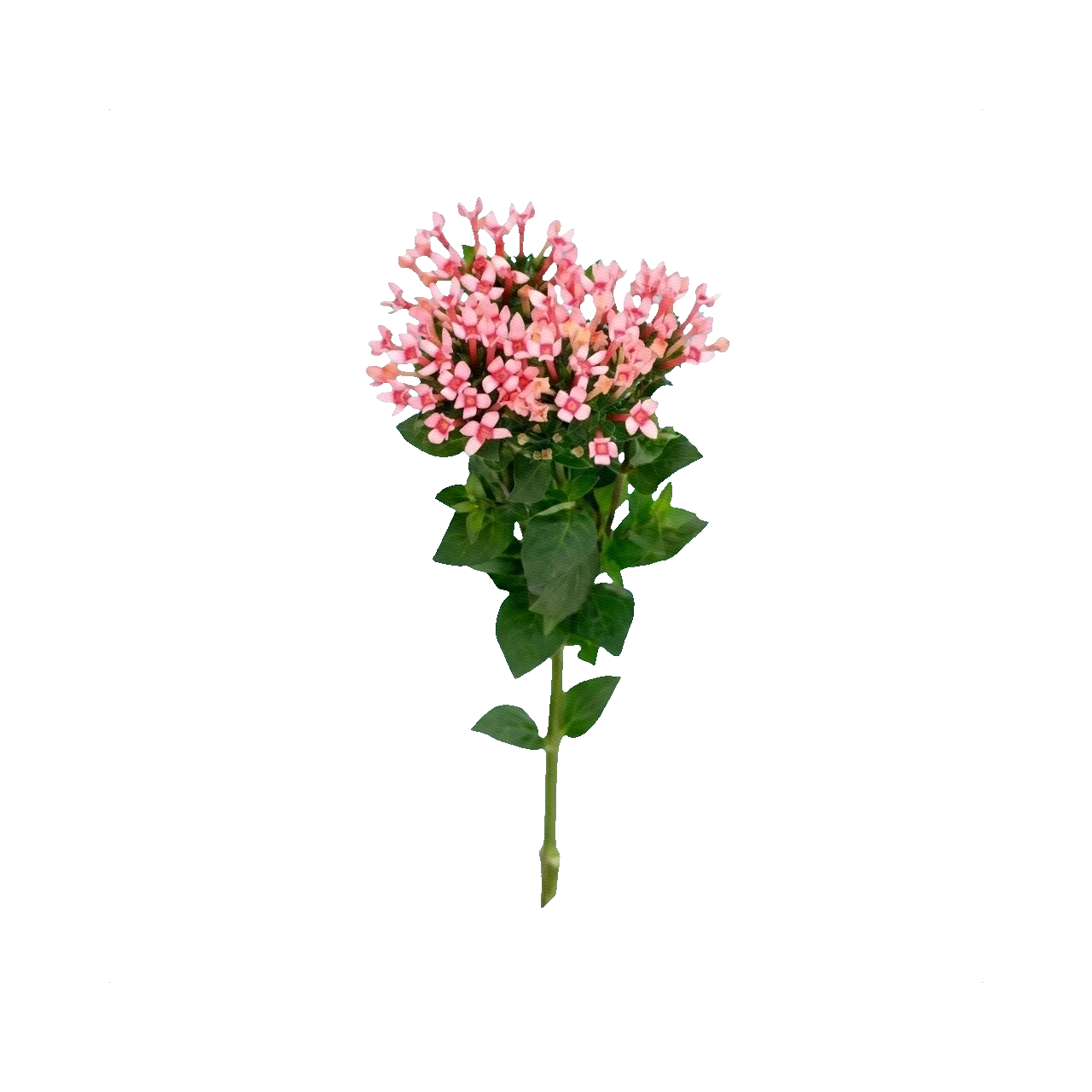
Bouvardia
Bouvardia longiflora
Bouvardia is a Mexican member of the coffee family, carrying tight clusters of slender four-petalled stars in white, pink, coral and red — the white forms delicately scented. Its airy heads add texture and a soft, hand-gathered feel to bouquets, and it has long been a wedding favourite. Bouvardia is notoriously thirsty and ethylene-sensitive, wilting fast if allowed to dry, so it rewards attentive conditioning. Used well, it brings a fresh, starry filler few other flowers can match.

Brunia
Brunia
Brunia (Brunia) — a cut flower. Works well in mixed and mono bouquets.
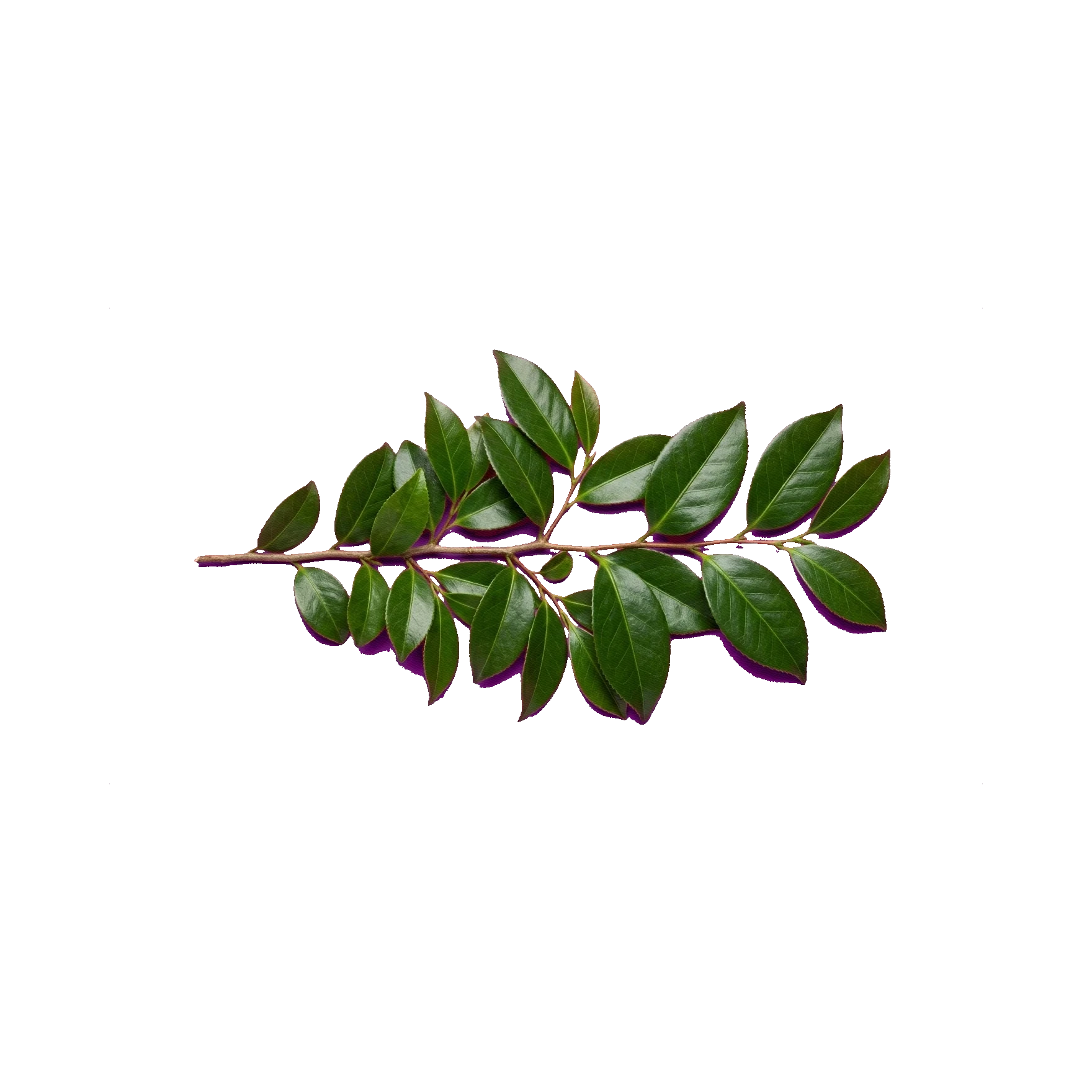
Camellia foliage
Camellia
Camellia foliage (Camellia) — decorative greenery. Adds backdrop, volume and line.
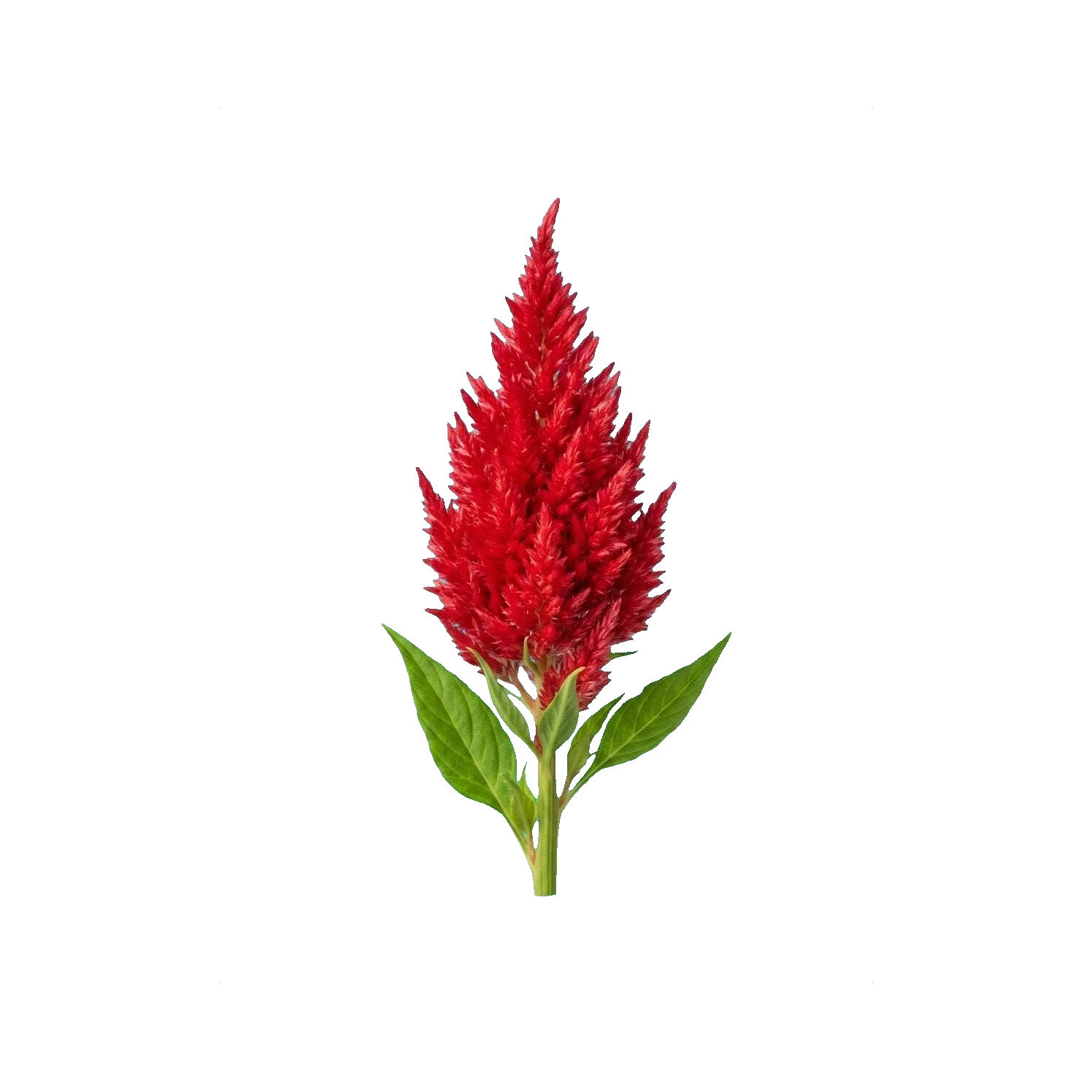
Celosia
Celosia argentea
Celosia is a tender annual prized for its intense, saturated color and unusual texture — from the velvety, brain-like crests of cockscomb types to the feathery plumes of the plumosa forms. Florists reach for it as a bold focal or textural accent in summer and autumn work, where it holds its shape and color for well over a week. It dries beautifully, keeping much of its vibrancy, which makes it a favorite for everlasting arrangements. Its warm reds, oranges and golds bring depth and a slightly wild, garden-grown feel.
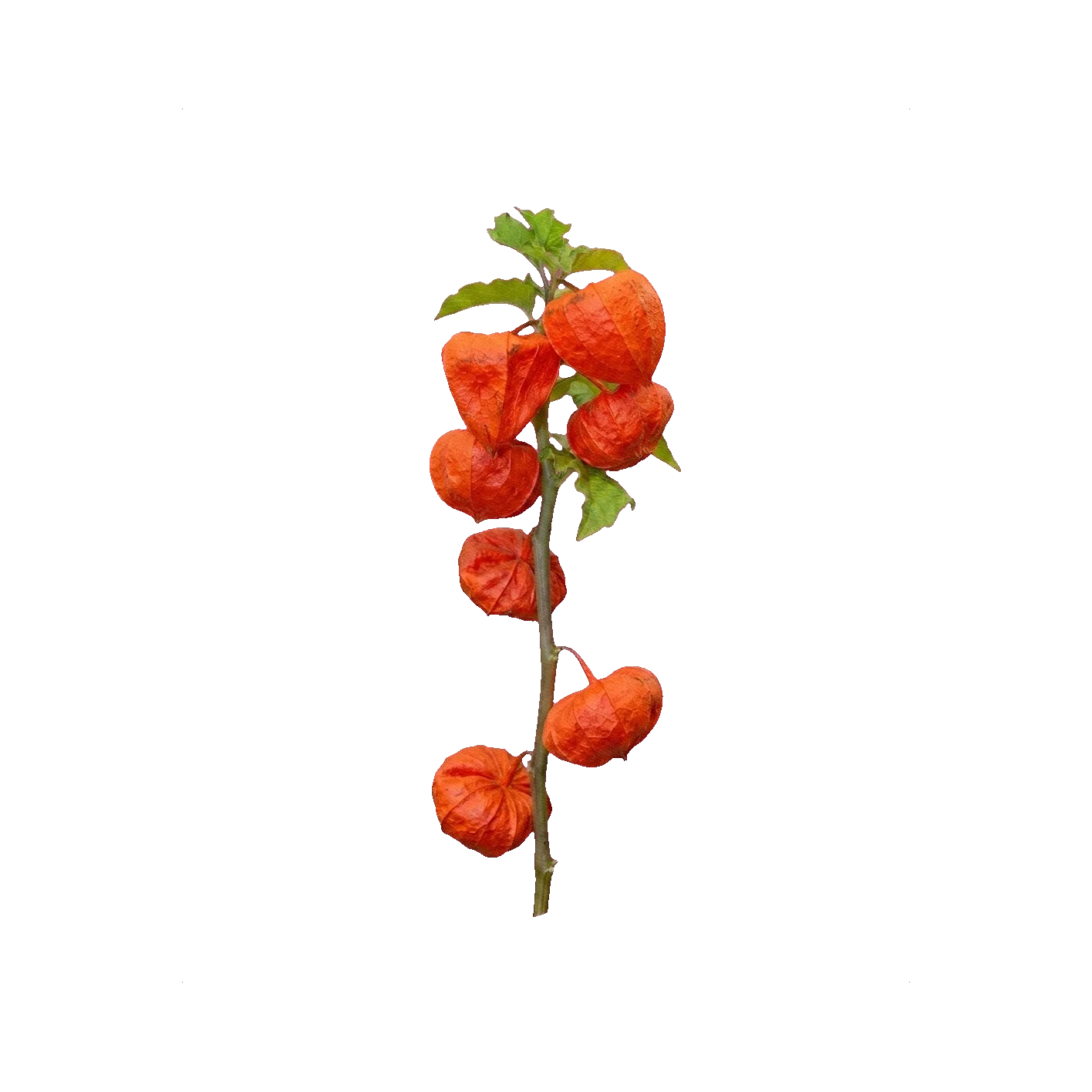
Chinese Lantern
Physalis alkekengi
Physalis, better known as Chinese lantern, produces rows of inflated papery husks that ripen to a glowing pumpkin-orange in autumn. Each lantern encloses a small round fruit, and it is the vivid, translucent casings that make the stems so distinctive. Florists love them for their warm colour and lantern-like shape in seasonal, rustic and Halloween-toned designs. They dry beautifully with no loss of colour, making them a favourite for lasting autumn and winter arrangements.
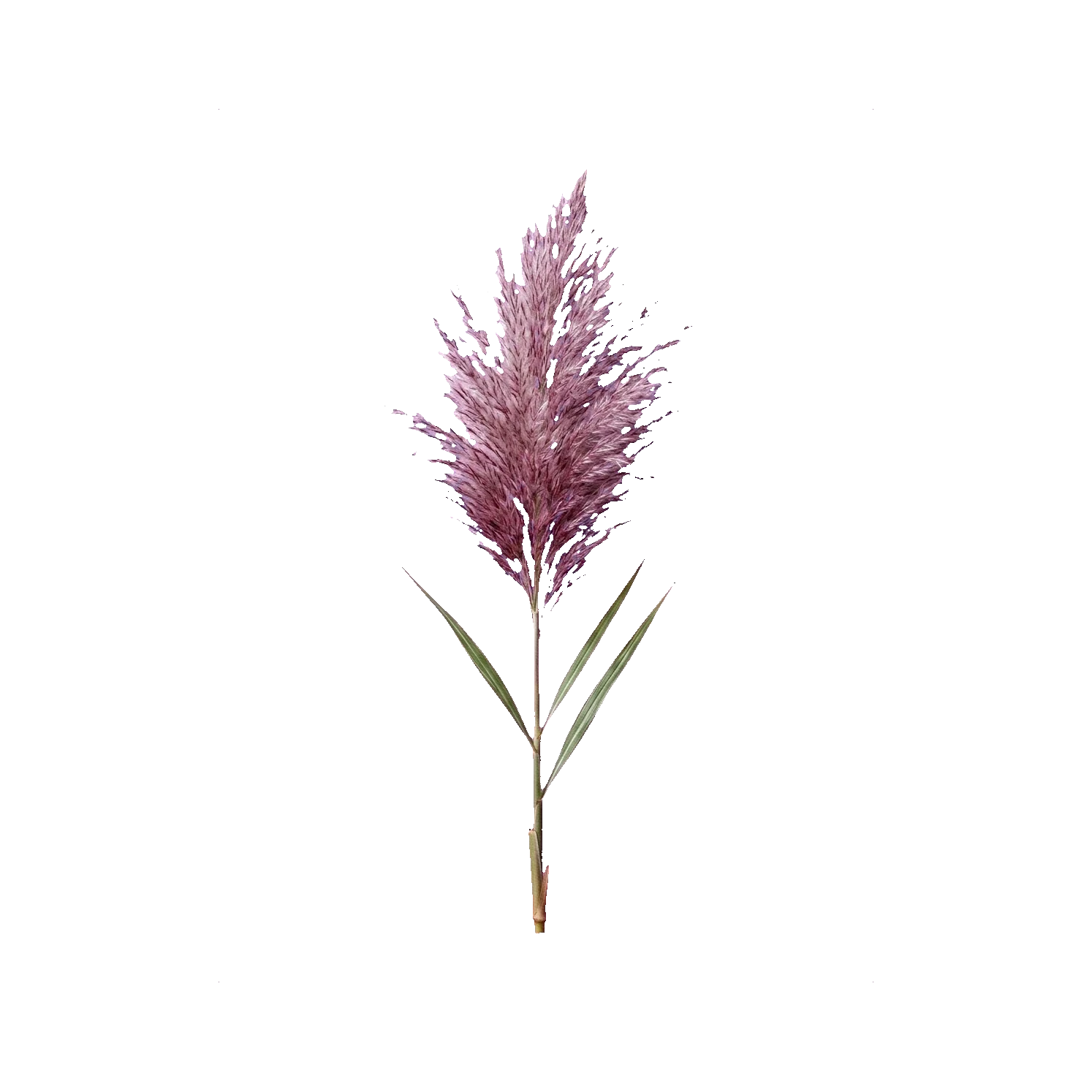
Chinese Silver Grass
Miscanthus sinensis
Miscanthus, Chinese silver grass, is a tall Asian ornamental grass prized for the silky, fan-shaped plumes it throws up in late summer and autumn. The feathery flower heads catch the light with a silvered, blush-pink sheen and mature to soft cream, giving florists a graceful, architectural line for tall arrangements and installations. Some forms carry finely variegated blades as a bonus. Fresh plumes are fleeting and shed, so miscanthus is most often used dried, when its elegant, wind-brushed form lasts indefinitely.
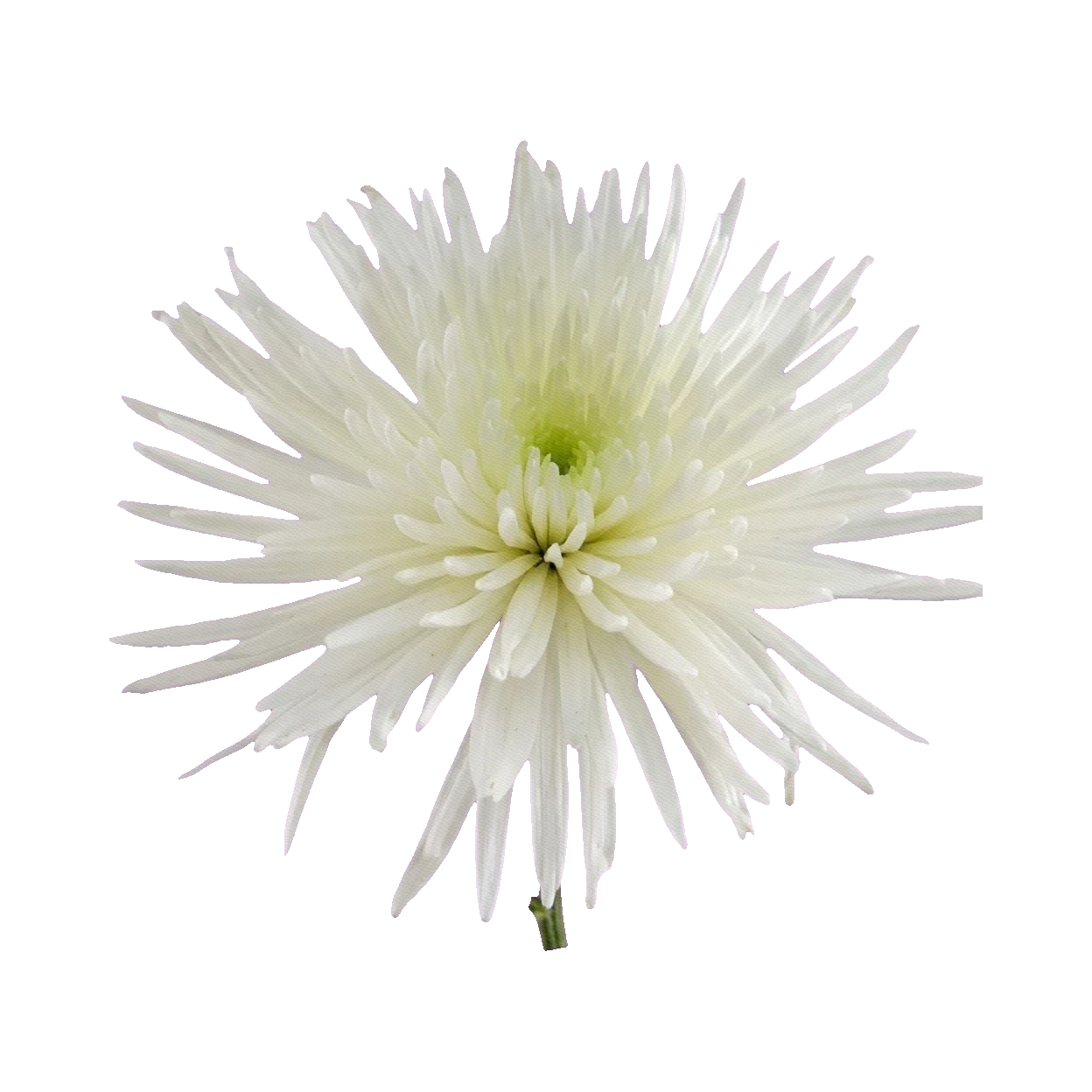
Chrysanthemum
Chrysanthemum
The workhorse of the everyday flower shop — decades-long vase life, wide colour range, and modest pricing. Disbud chrysanthemums (single bloom per stem) have been elevated by contemporary Japanese florists into a design flower rivalling roses. Culturally sensitive: chrysanthemums are the funeral flower in France, Italy, Belgium — avoid for celebration bouquets in those markets.
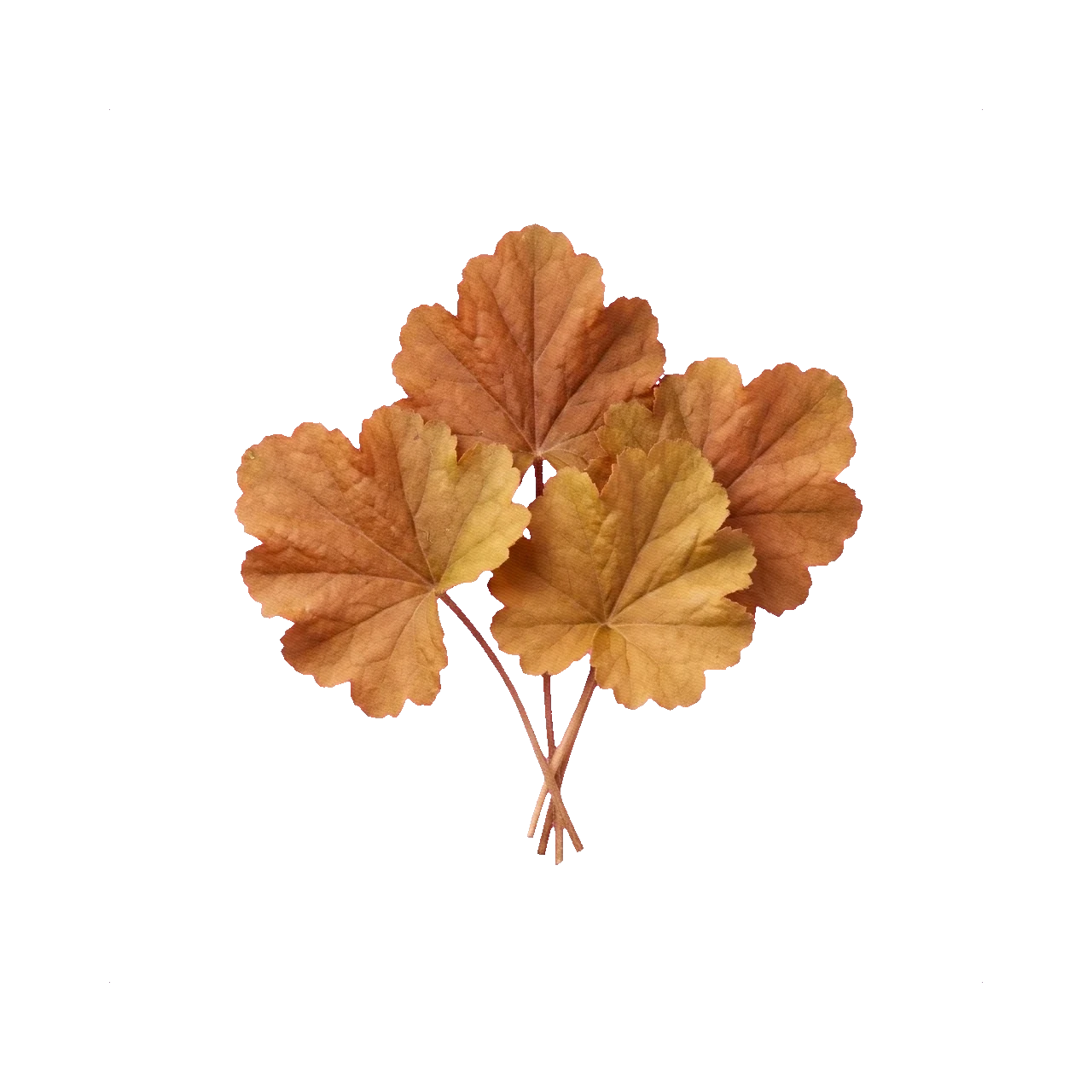
Coral bells foliage
Heuchera
Coral bells foliage (Heuchera) — decorative greenery. Adds backdrop, volume and line.

Cordyline
Cordyline
Cordyline (Cordyline) — decorative greenery. Adds backdrop, volume and line.
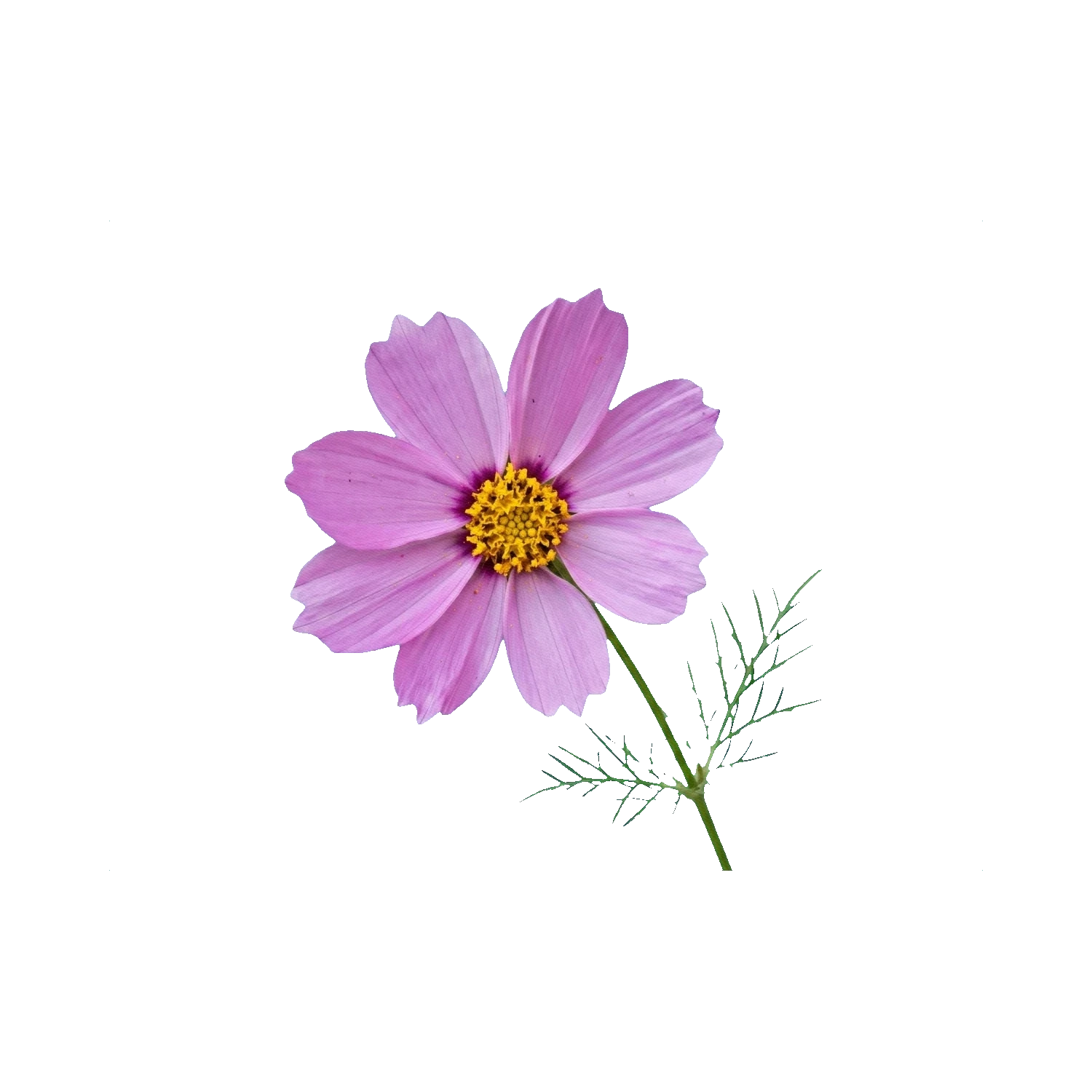
Cosmos
Cosmos bipinnatus
Cosmos is the flower of the modern garden-to-vase movement — delicate, airy, and hyper-seasonal. Chocolate cosmos (C. atrosanguineus) is the specialty version, with a deep burgundy-brown colour and a genuine chocolate scent. Fragile in every dimension; a day-of-event flower, not a shipping flower.
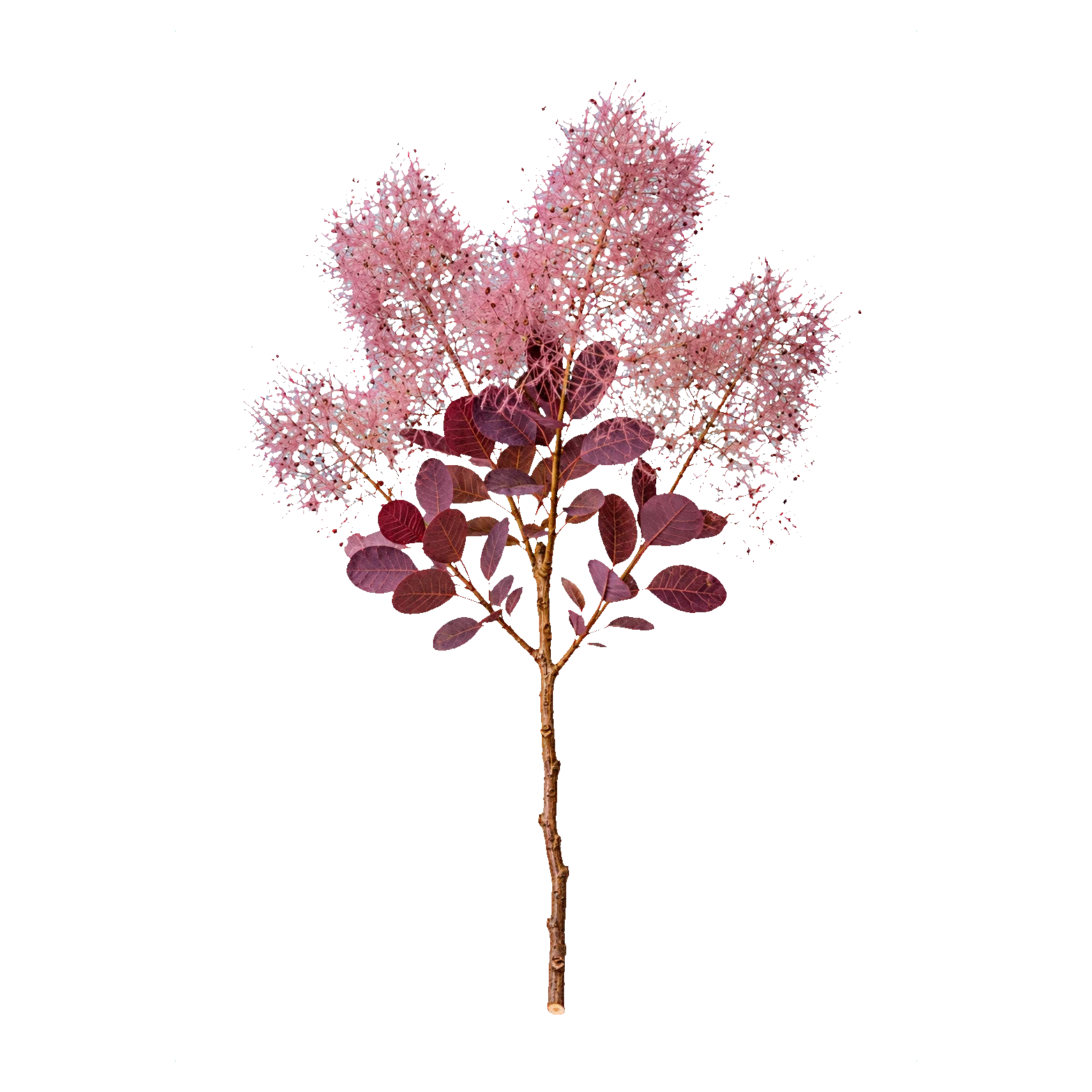
Cotinus (smoke bush)
Cotinus coggygria
Cotinus (smoke bush) — textural material: airy 'smoke' plumes and rounded burgundy foliage. Volume and colour in a bouquet.
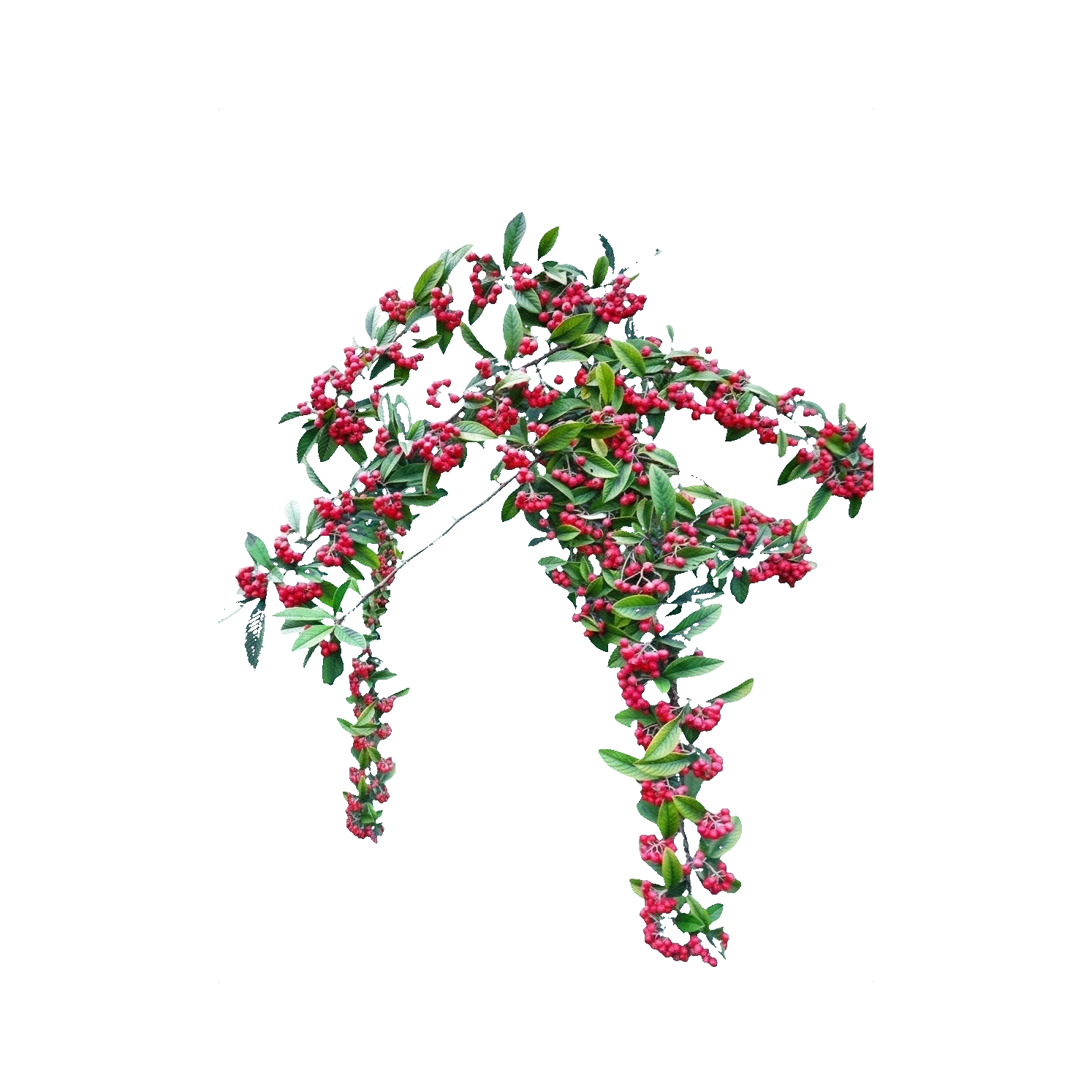
Cotoneaster
Cotoneaster horizontalis
Cotoneaster is a deciduous to semi-evergreen shrub whose arching, herringbone branches carry glossy leaves and clusters of bright red berries. Cut in autumn it brings warm seasonal colour and natural, wild movement to arrangements, wreaths and rustic table designs. As the leaves turn, the same branch offers russet foliage alongside its jewel-like fruit, giving florists two textures on one stem. It is an inexpensive, hard-wearing choice for autumn and festive work.
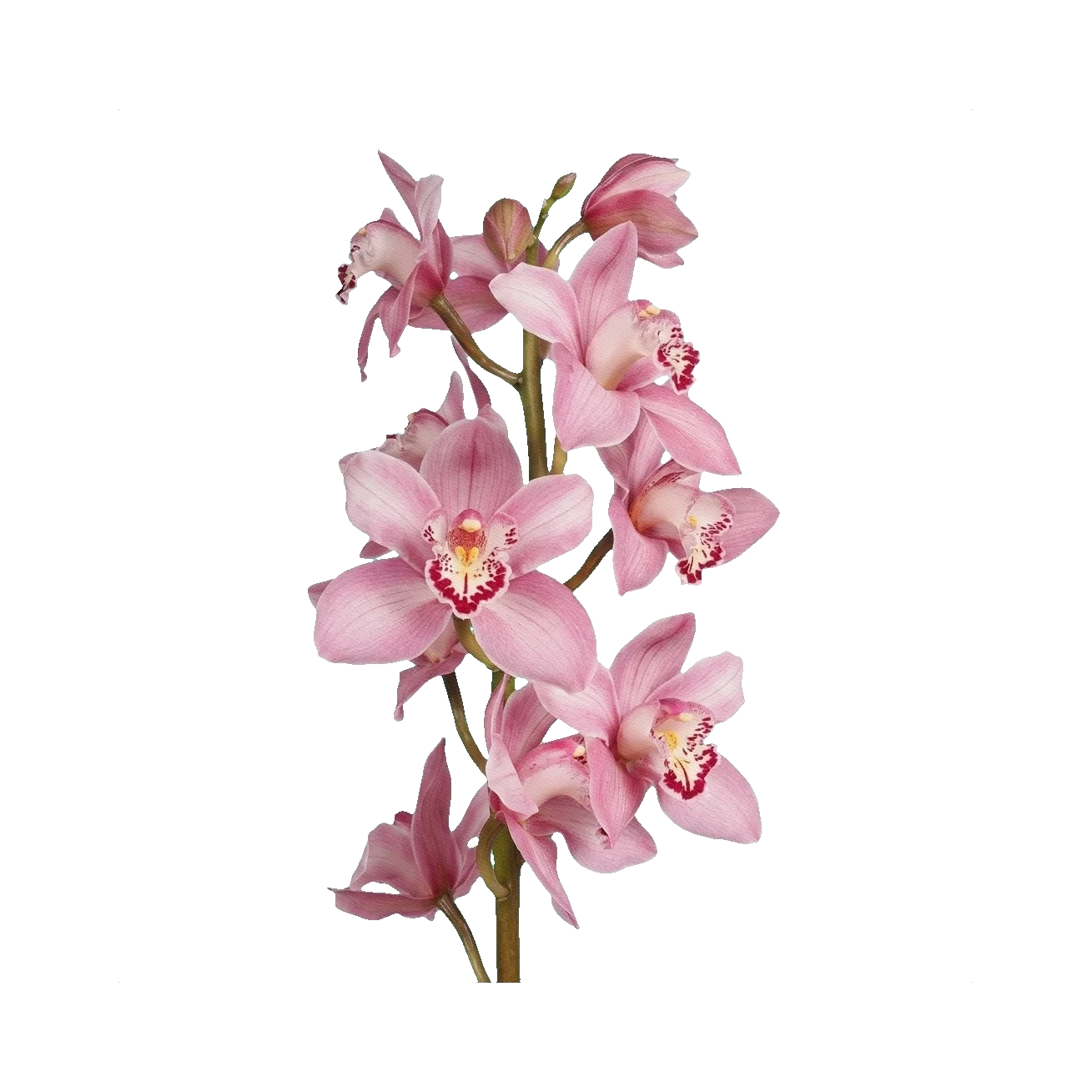
Cymbidium orchid
Cymbidium
A cymbidium orchid with waxy blooms (Cymbidium). A premium exotic accent.
Dahlia
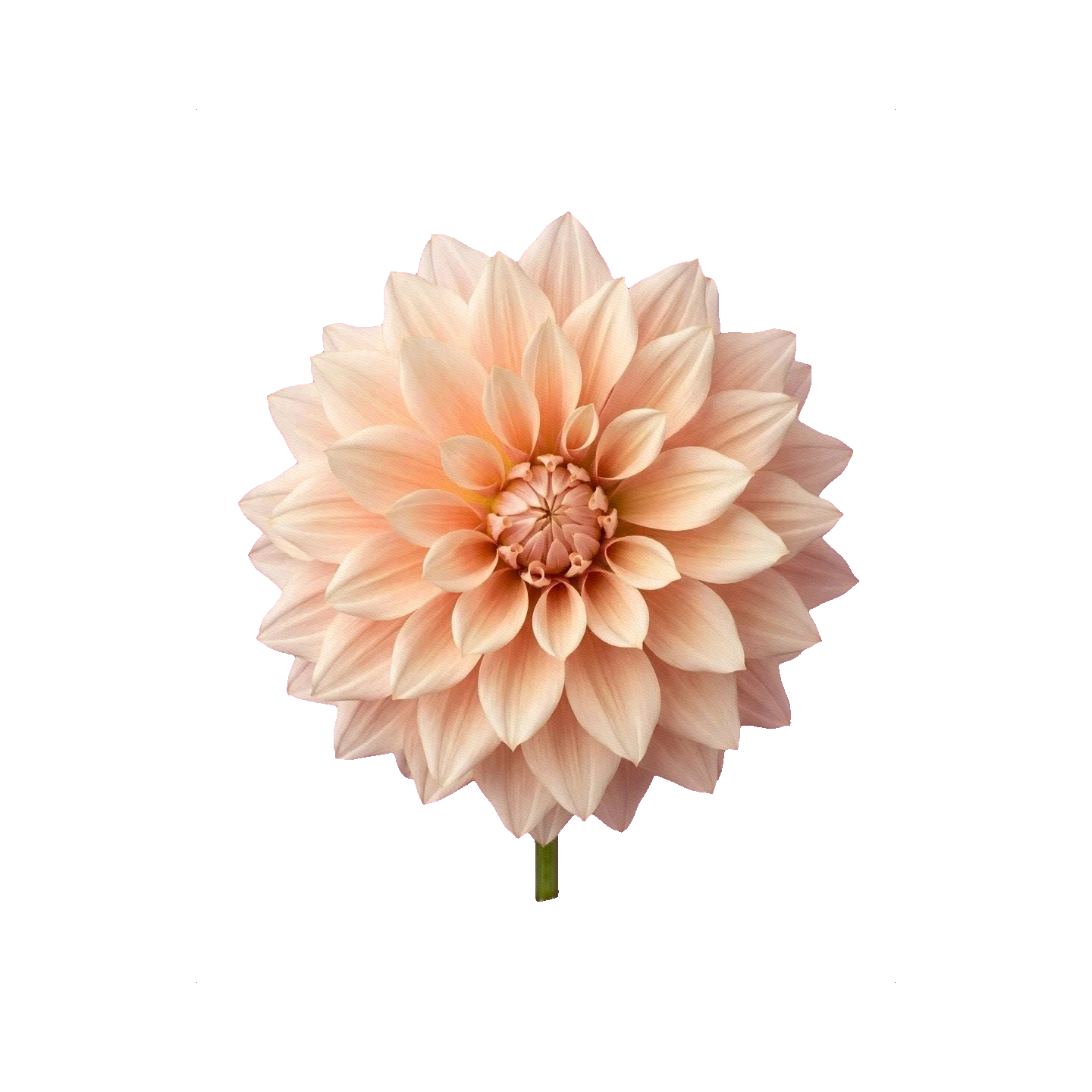
Dahlia
The dahlia is the flower of late summer and autumn — a season most wedding calendars underweight. From tight pom-poms (5 cm) to dinner-plate cultivars (25+ cm), dahlias cover the whole design spectrum. Café au Lait (dusty blush) is the most-requested wedding dahlia in the world. Because they are local and seasonal, dahlias reward direct-from-farm sourcing.

Echinacea
Echinacea purpurea
The purple coneflower has moved from herbal medicine cabinet to modern cut-flower — new cultivars in coral, orange, and burgundy have expanded the design palette beyond the traditional purple. The prominent seed cone at the centre remains after petals drop, giving a second design phase to the same stem.
Eryngium
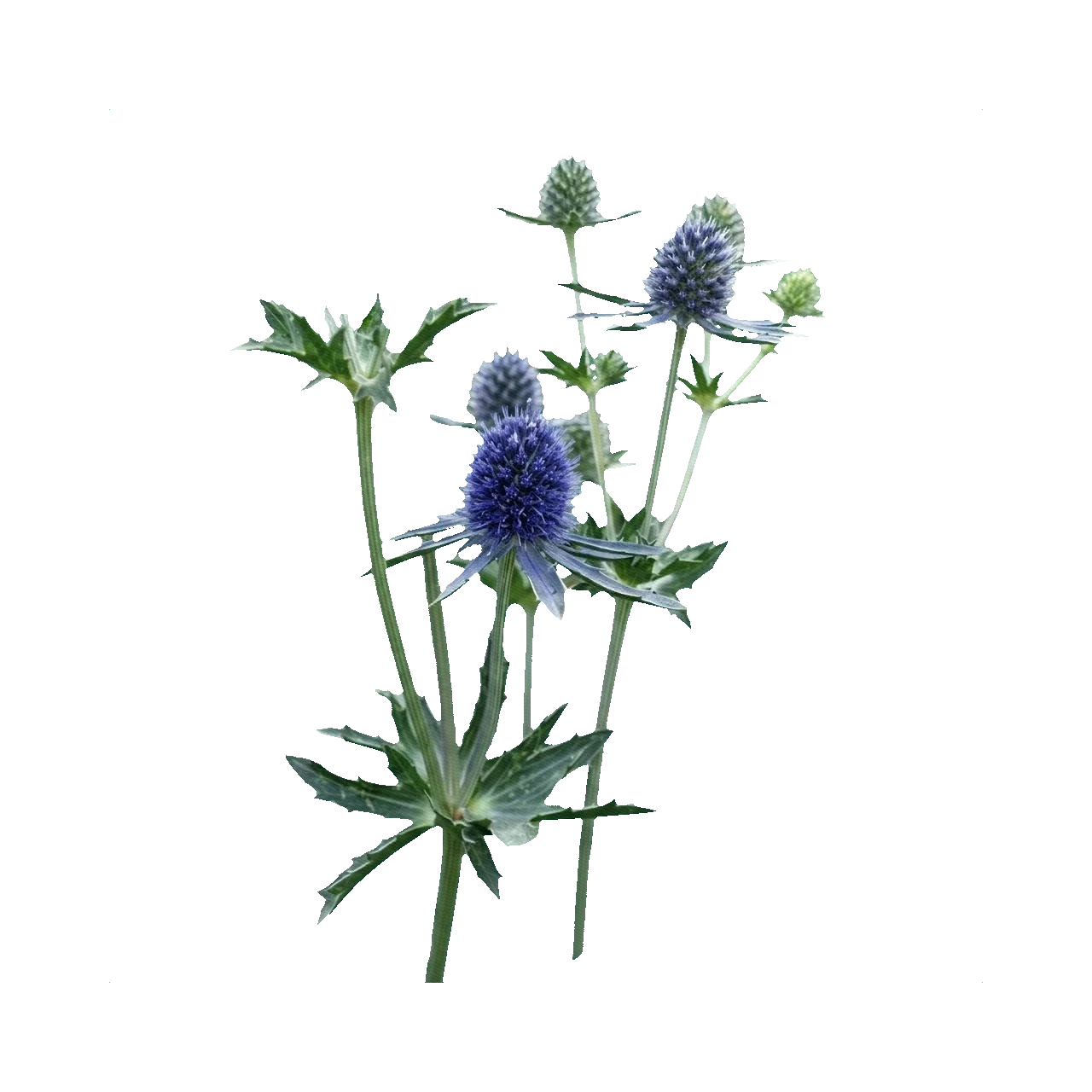
Eryngium
Eryngium delivers a rare naturally-blue cut flower in a sculptural, cone-headed form. Photographs like nothing else in a bouquet; also dries perfectly and holds its silver-blue colour for years. One caveat: the spines will draw blood — always handle in gloves.
Eucalyptus
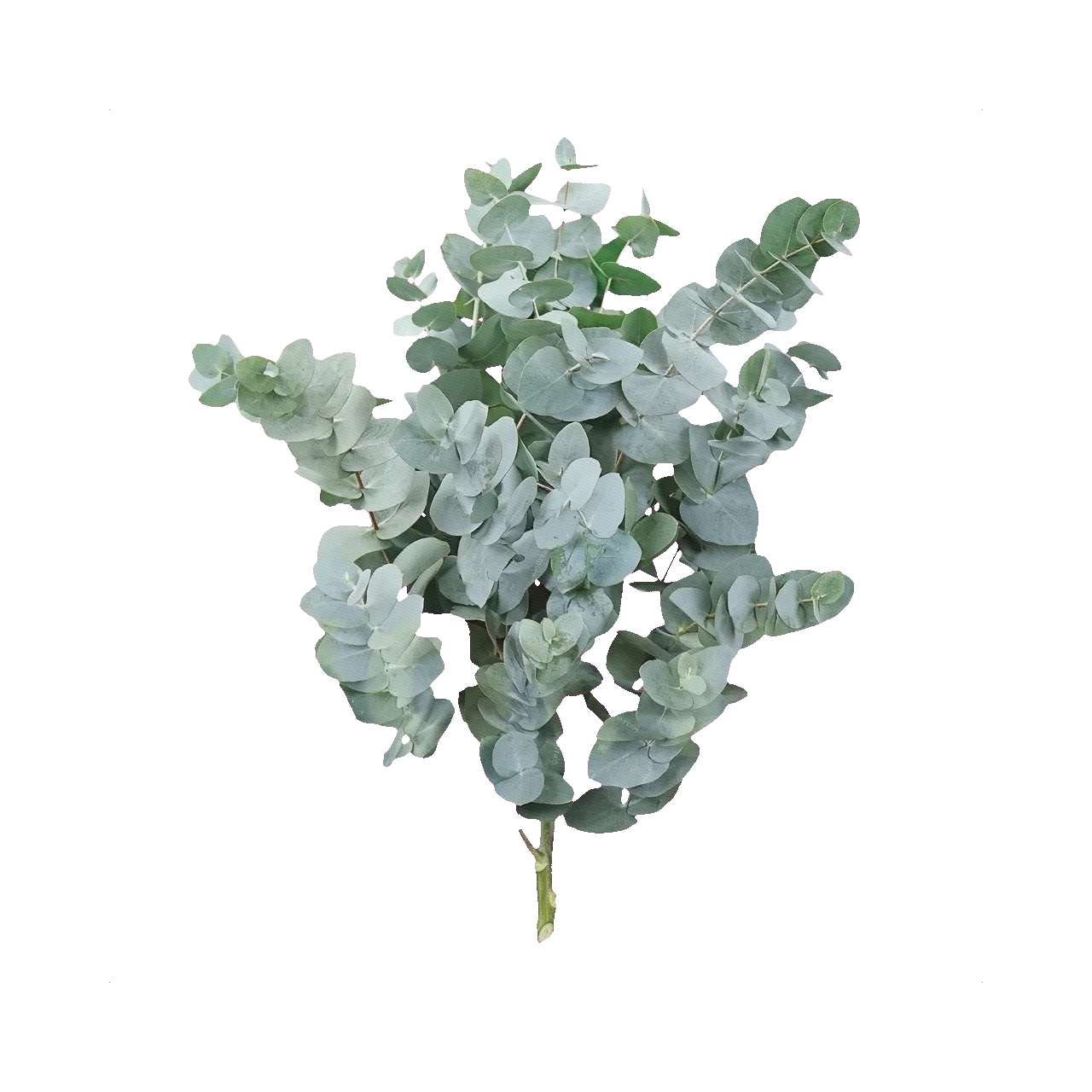
Eucalyptus
Eucalyptus — aromatic silvery-green foliage (Eucalyptus). Backdrop and texture for any bouquet.
Feather grass
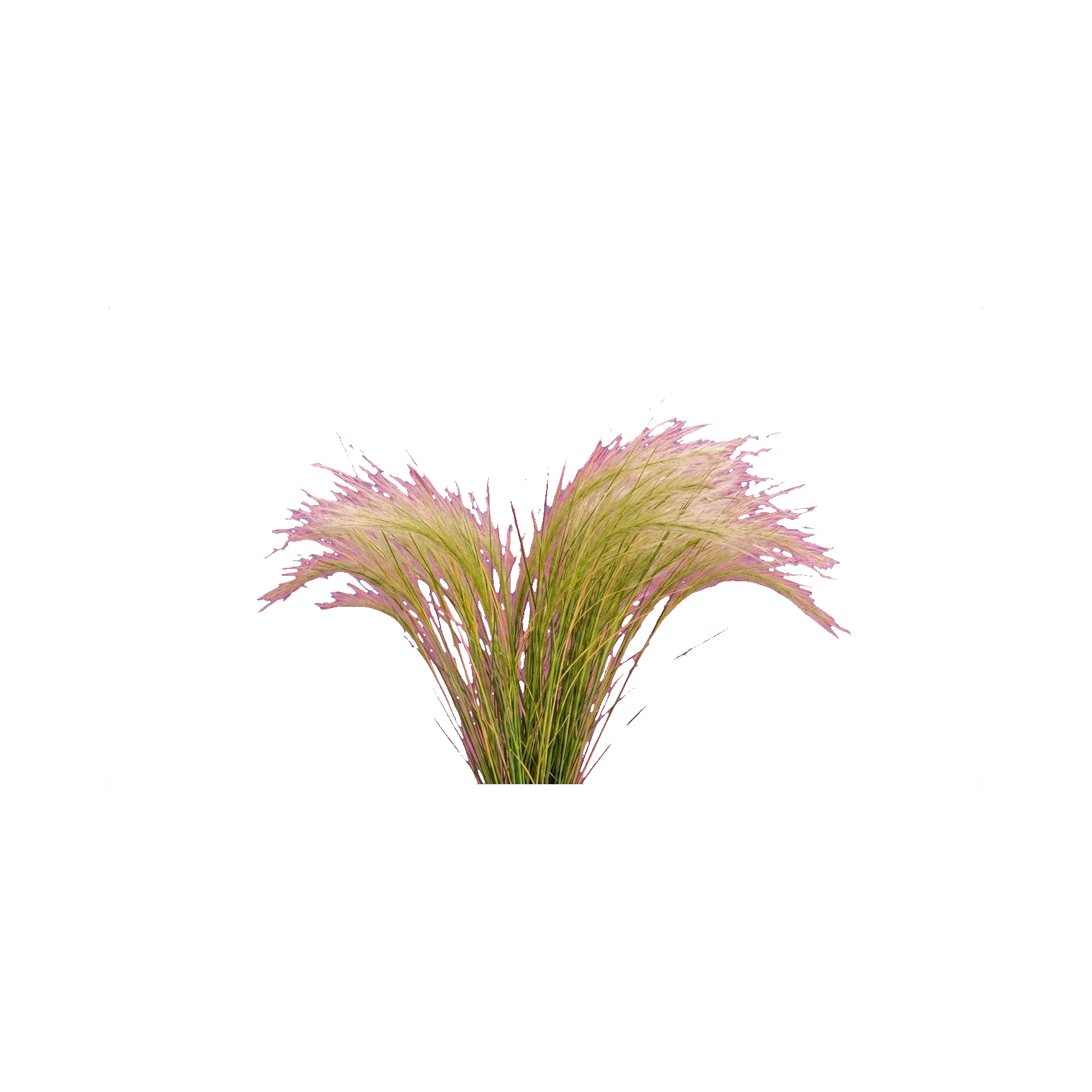
Stipa
Feather grass (Stipa) — a dried flower. Holds shape for months — for dried arrangements and décor.

Fern
Polypodiophyta
Fern (Polypodiophyta) — decorative greenery. Adds backdrop, volume and line.

Feverfew
Matricaria / Tanacetum parthenium
Feverfew (Matricaria / Tanacetum parthenium) — a cut flower. Works well in mixed and mono bouquets.

Floral foam
Floral foam — floristry packaging and supplies. For wrapping and assembling bouquets.

Floral paper
Floral paper — floristry packaging and supplies. For wrapping and assembling bouquets.

Galax
Galax urceolata
Galax is a low woodland groundcover whose round, leathery, heart-shaped leaves are a florist staple for backing and finishing. The flat, glossy foliage turns rich bronze and burgundy in cold weather, giving a warm alternative to plain green. Because the leaves are so durable and long-lasting, they are ideal as bouquet collars, corsage backing and neat wraps around hand-tied stems. Inexpensive and endlessly useful, galax is a quiet workhorse in wedding and everyday design.
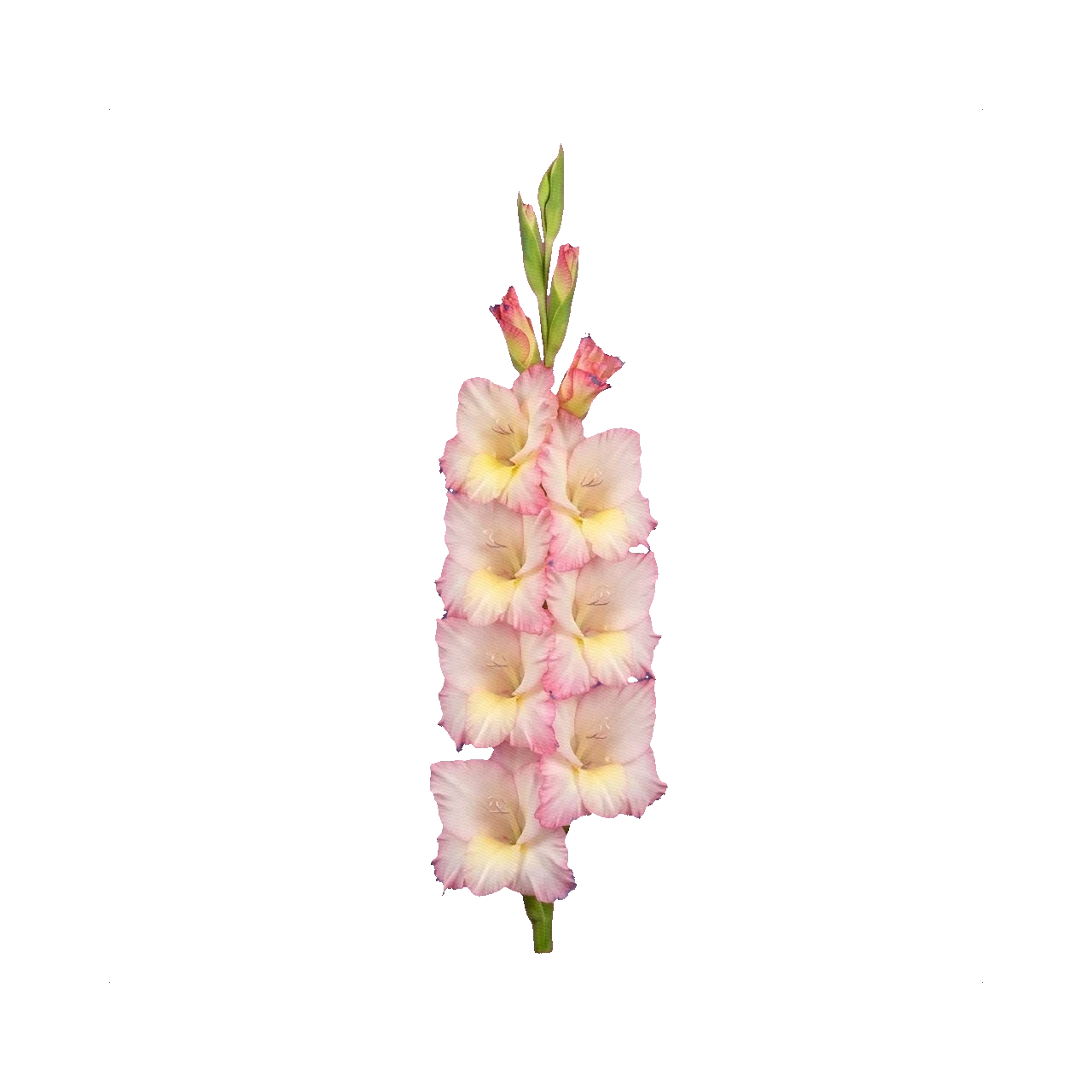
Gladiolus
Gladiolus
The gladiolus is the line flower of late summer — reaching 150 cm on strong stems with 8–15 florets that open bottom-up over ten days. Snap off the top 2–3 unopened buds at purchase; they'll never open properly and steal energy from lower florets. A funeral and sympathy staple in North America, an everyday flower elsewhere.
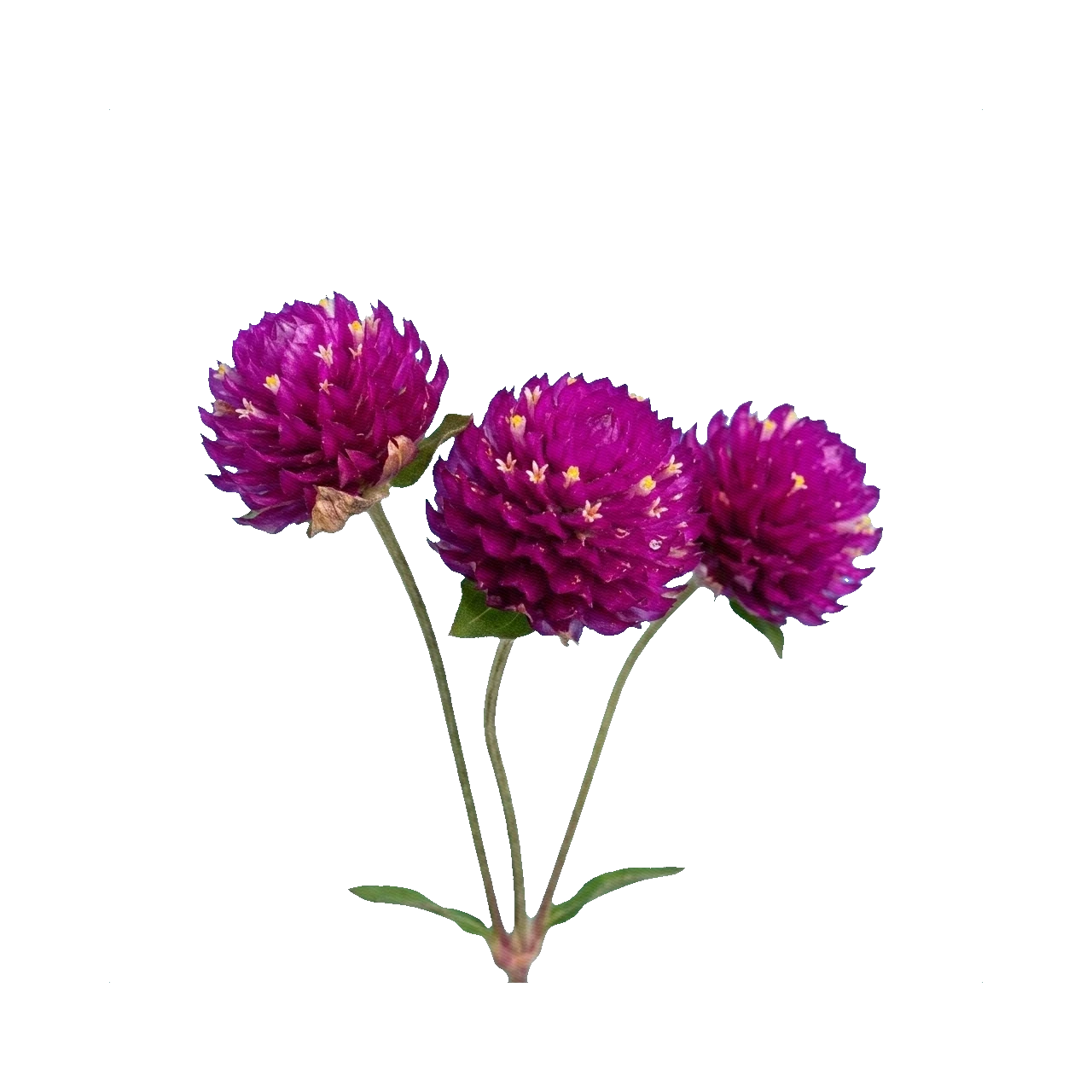
Globe amaranth
Gomphrena globosa
Gomphrena delivers papery, clover-shaped heads in saturated colours that never fade — the flower will last 2-3 weeks in a vase and indefinitely dried. A workhorse for summer wedding filler and boutonniere work, and a foundation for preserved-flower installations.

Hazel
Corylus
Hazel (Corylus) — decorative greenery. Adds backdrop, volume and line.
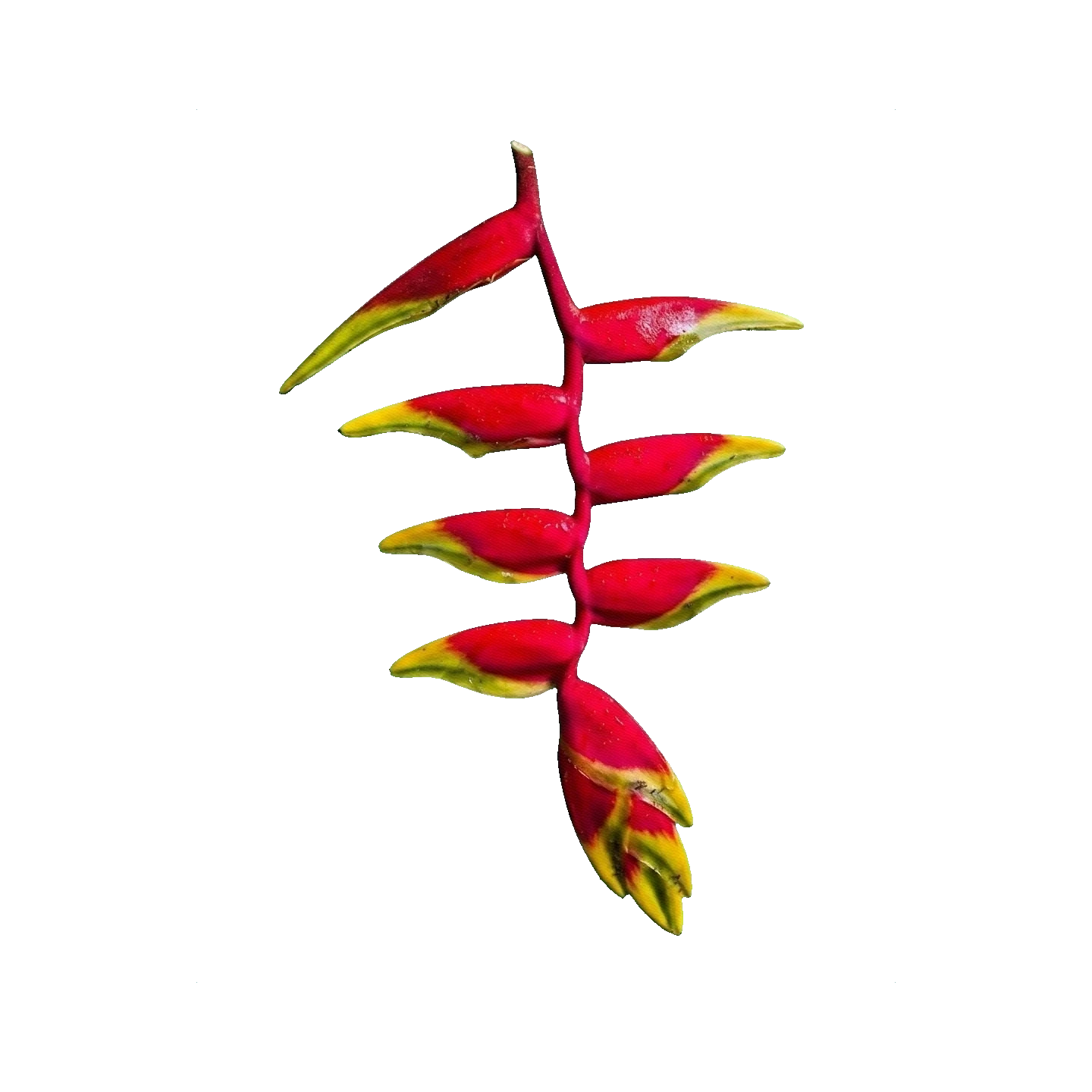
Heliconia
Heliconia
Heliconia, often called lobster claw or false bird-of-paradise, is a boldly architectural tropical whose waxy, boat-shaped bracts zig-zag up a tall stem in vivid red, orange and yellow. Native to the tropical Americas, it brings instant drama, scale and a sculptural line to large-scale and tropical designs. Its thick stems and long vase life make it a workhorse for installations, tall arrangements and event work. Few flowers deliver the same tropical impact from a single stem.
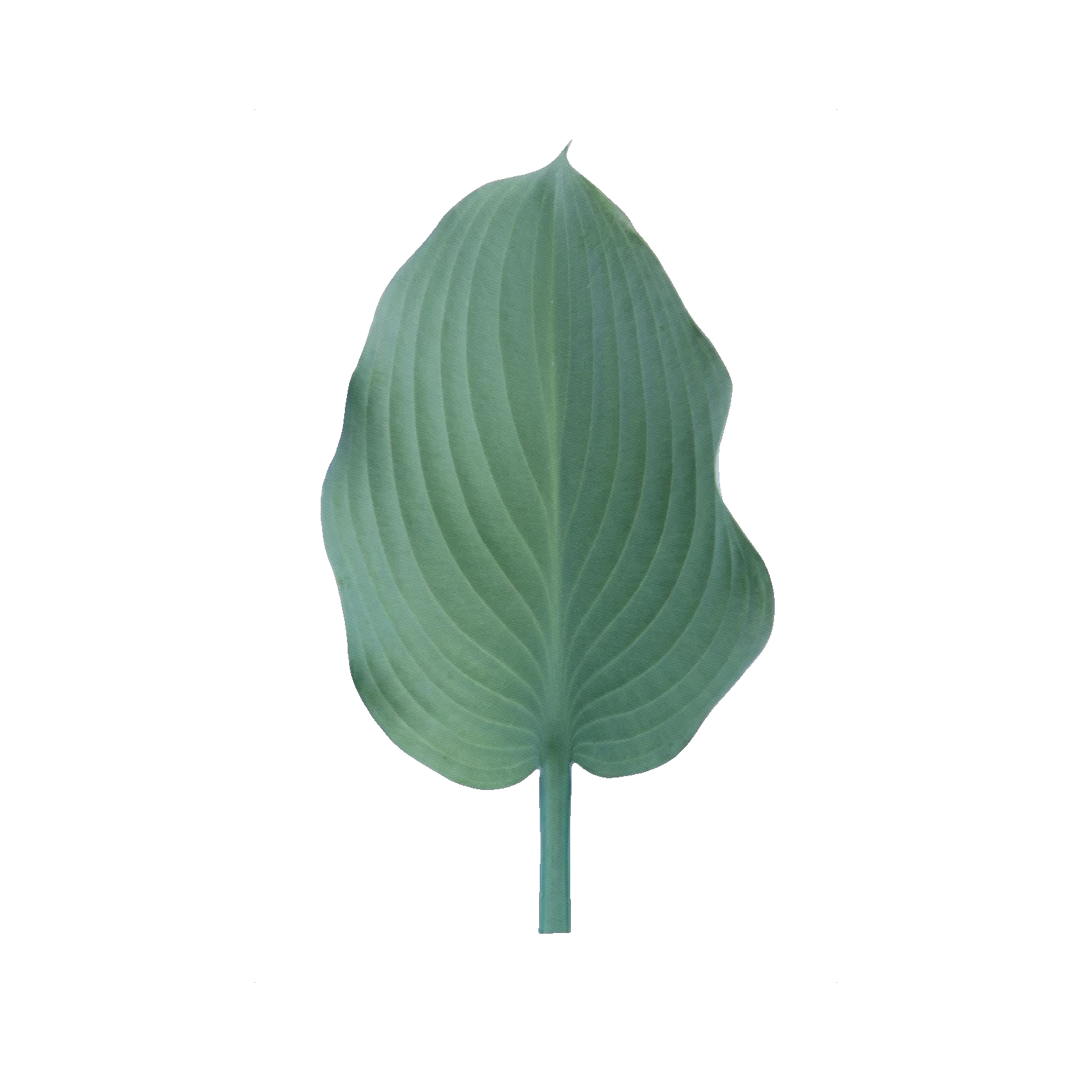
Hosta
Hosta
Hosta (Hosta) — decorative greenery. Adds backdrop, volume and line.
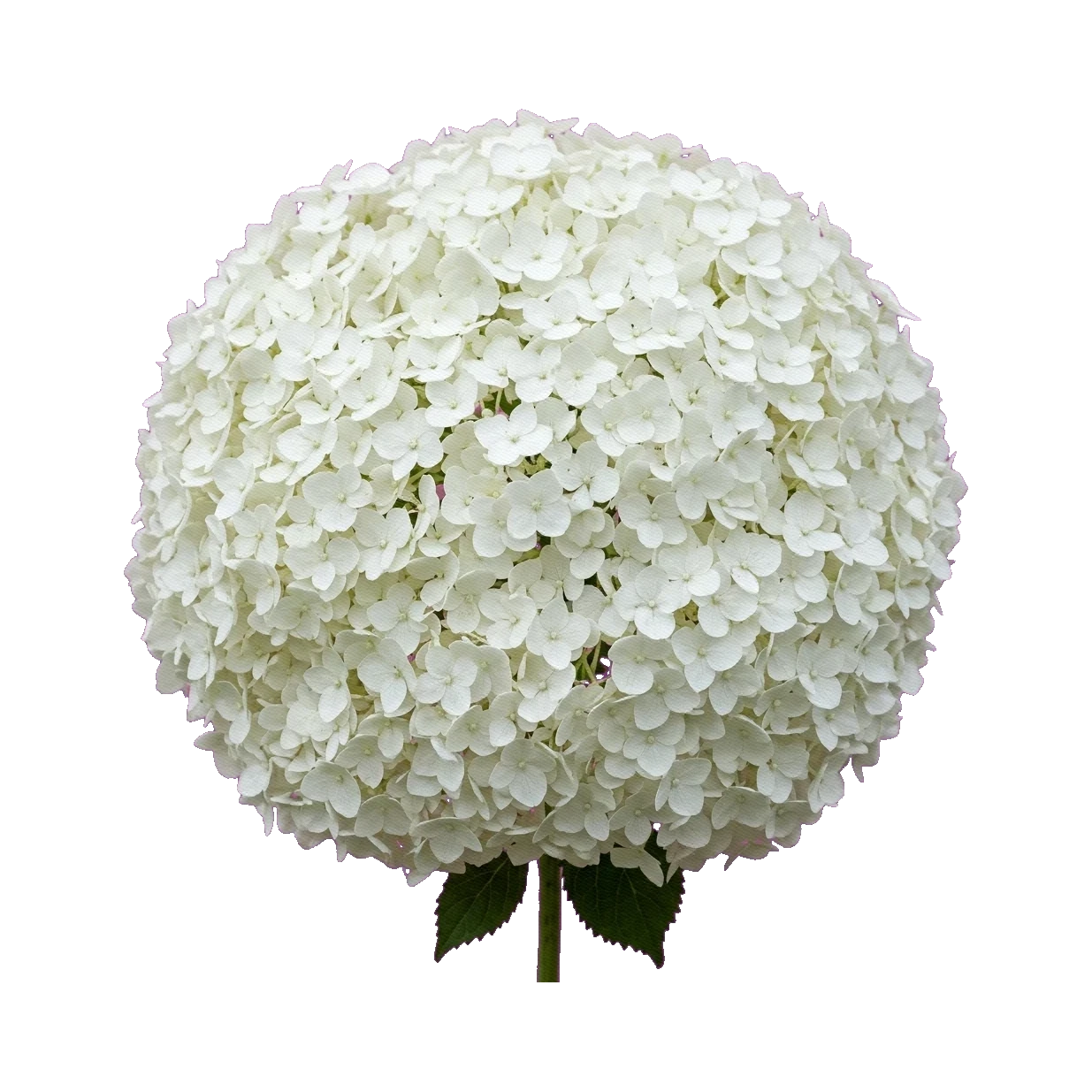
Hydrangea
Hydrangea macrophylla
One hydrangea head can carry a bouquet single-handedly — up to 20 cm of coverage per stem. Growers now offer 'antique' hydrangeas where the natural late-summer colour shift (blue → pink → green → burgundy) is preserved, creating a browsed, painterly effect that dominates editorial floristry. Fragile once cut — plan the timeline carefully.
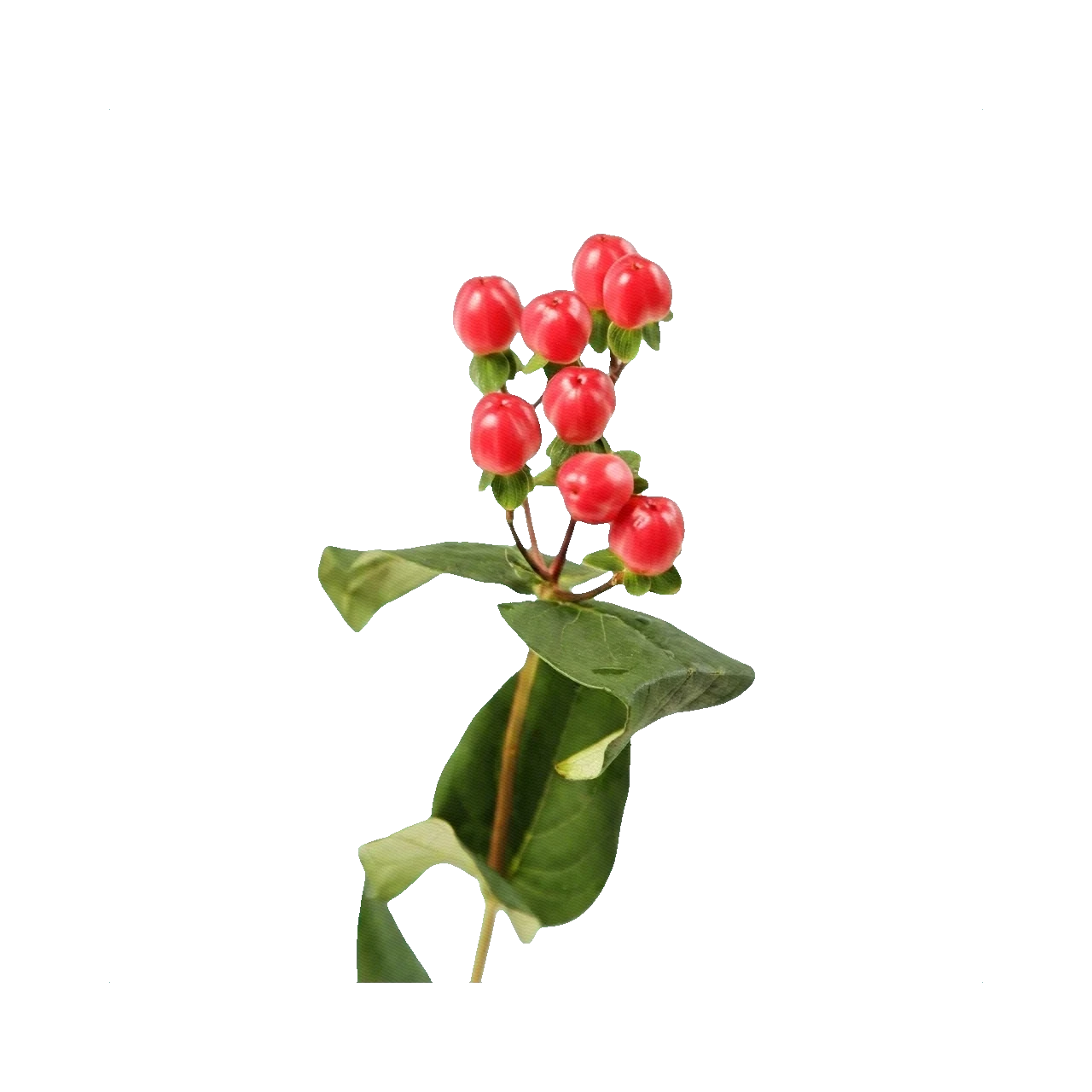
Hypericum Berry
Hypericum androsaemum
Hypericum, known for its glossy St John's wort berries, is a woody stem crowned with clusters of firm, jewel-like fruits in red, green, peach, cream and burgundy. Florists reach for it year-round as a long-lasting, textural filler that adds a pop of colour and a modern, structural note. The berries hold beautifully out of water for a short time, making them ideal for buttonholes, crowns and cascading designs. Sturdy and reliable, it is one of the hardest-working accents in the cooler.
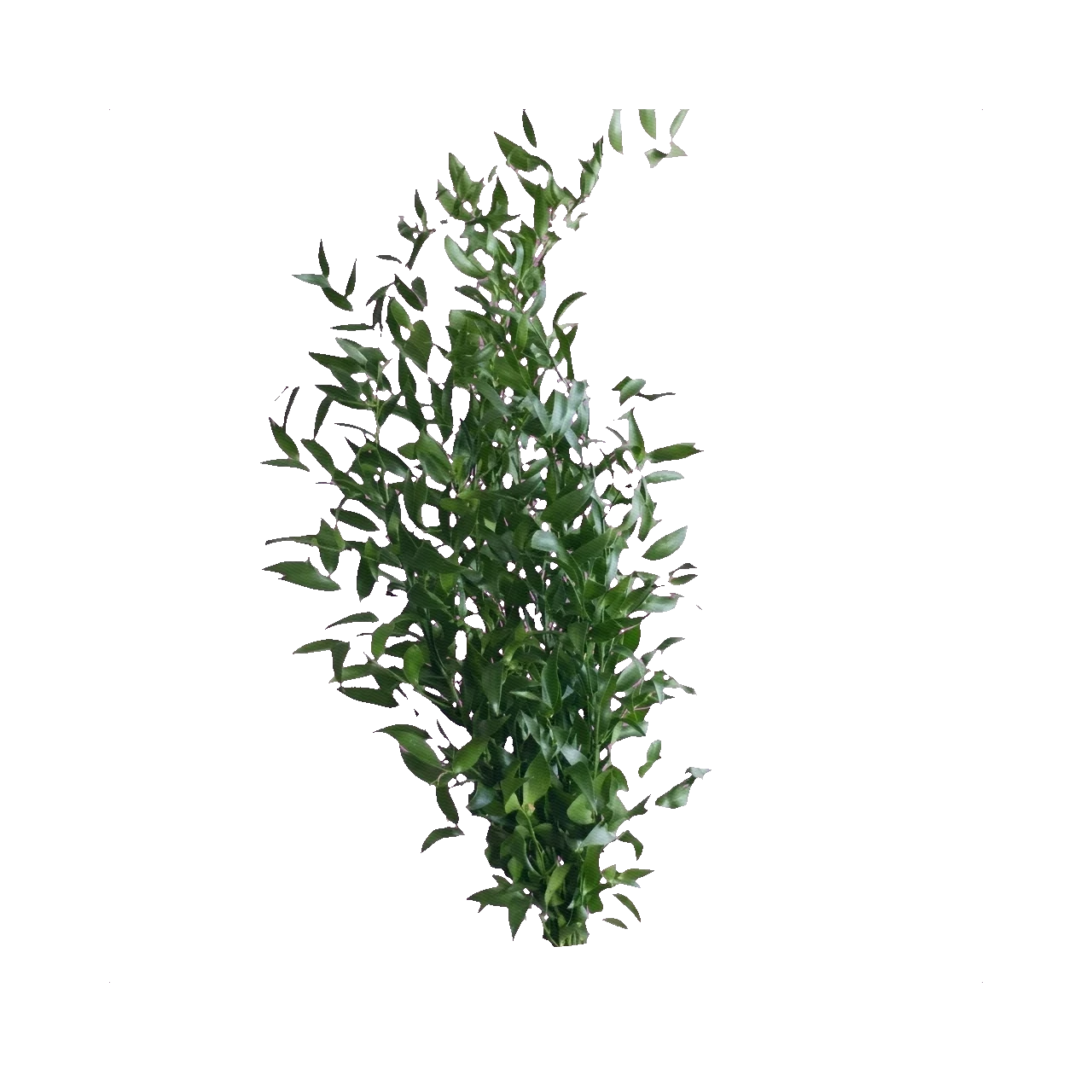
Italian ruscus
Danae racemosa
Italian ruscus (Danae racemosa) — decorative greenery. Adds backdrop, volume and line.
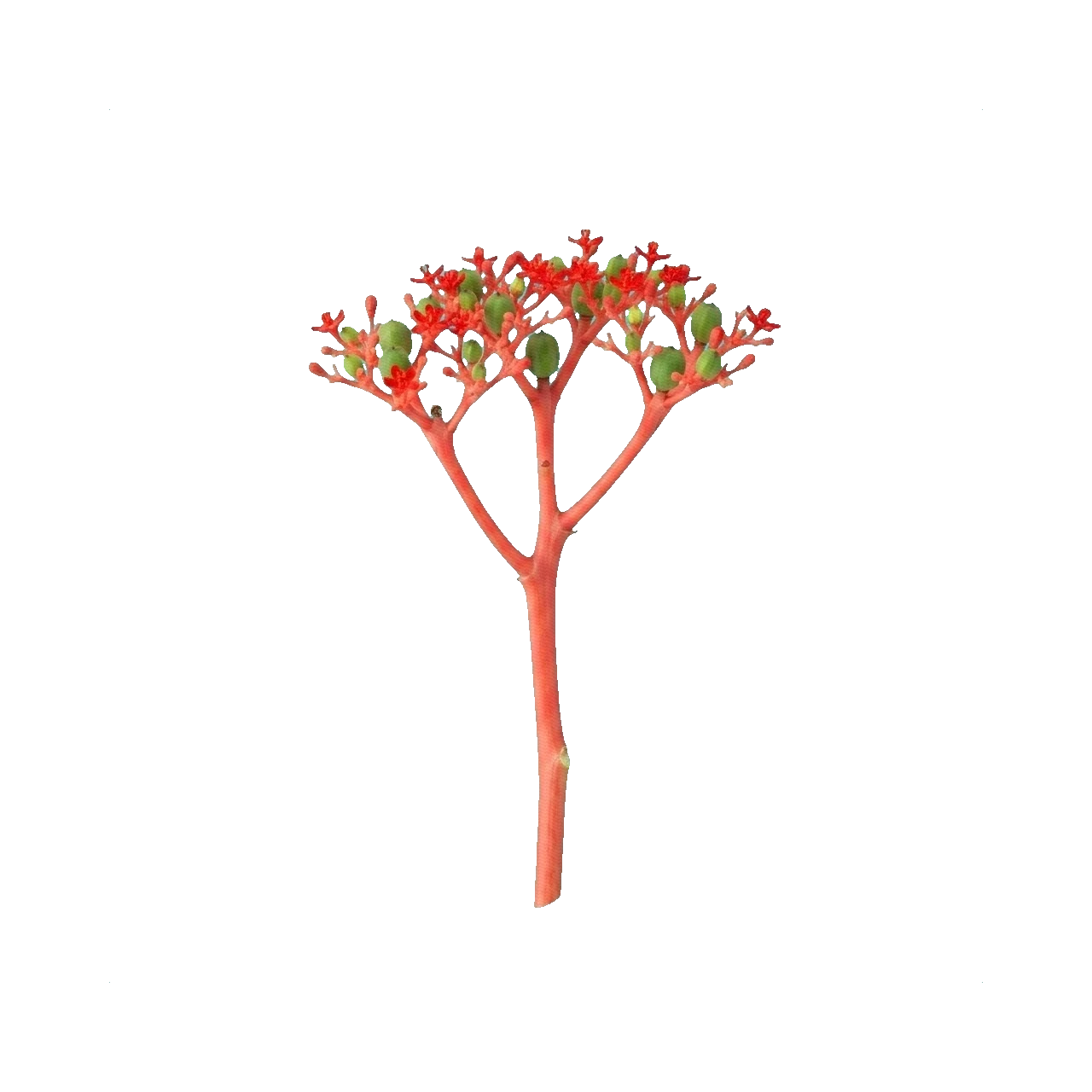
Jatropha
Jatropha podagrica
Jatropha (Jatropha podagrica) — a cut flower. Works well in mixed and mono bouquets.
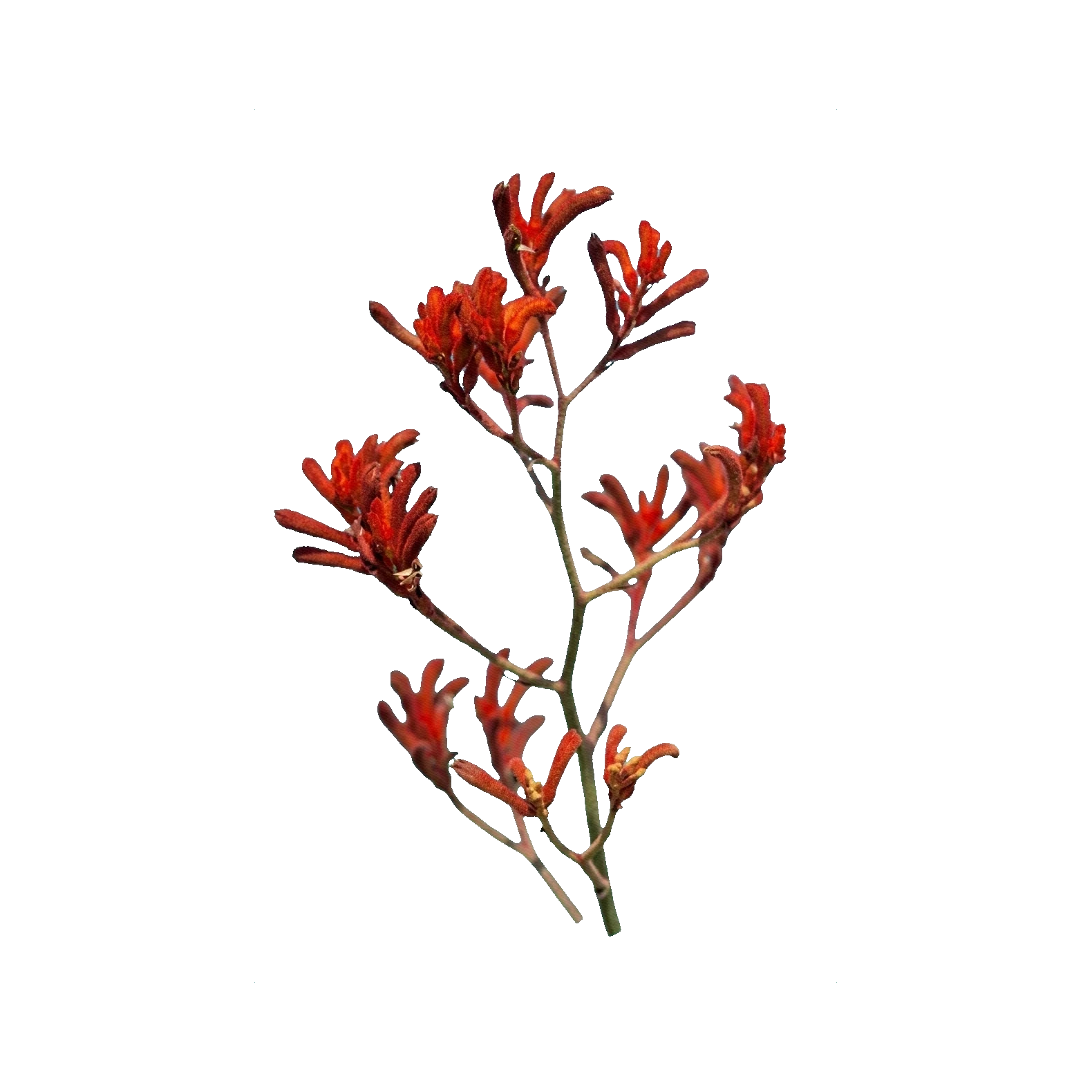
Kangaroo Paw
Anigozanthos
Kangaroo paw, native to Western Australia, is instantly recognisable for the velvety, tubular flowers that fan out like a paw along wiry, branching stems. Its fuzzy texture and unusual colour range — from red and green to yellow, orange and near-black — bring a distinctive, contemporary edge to bouquets. As a line flower it adds height, movement and textural interest, and it dries beautifully for everlasting work. Hardy and long-lasting, it is a favourite of native, boho and garden-style design.
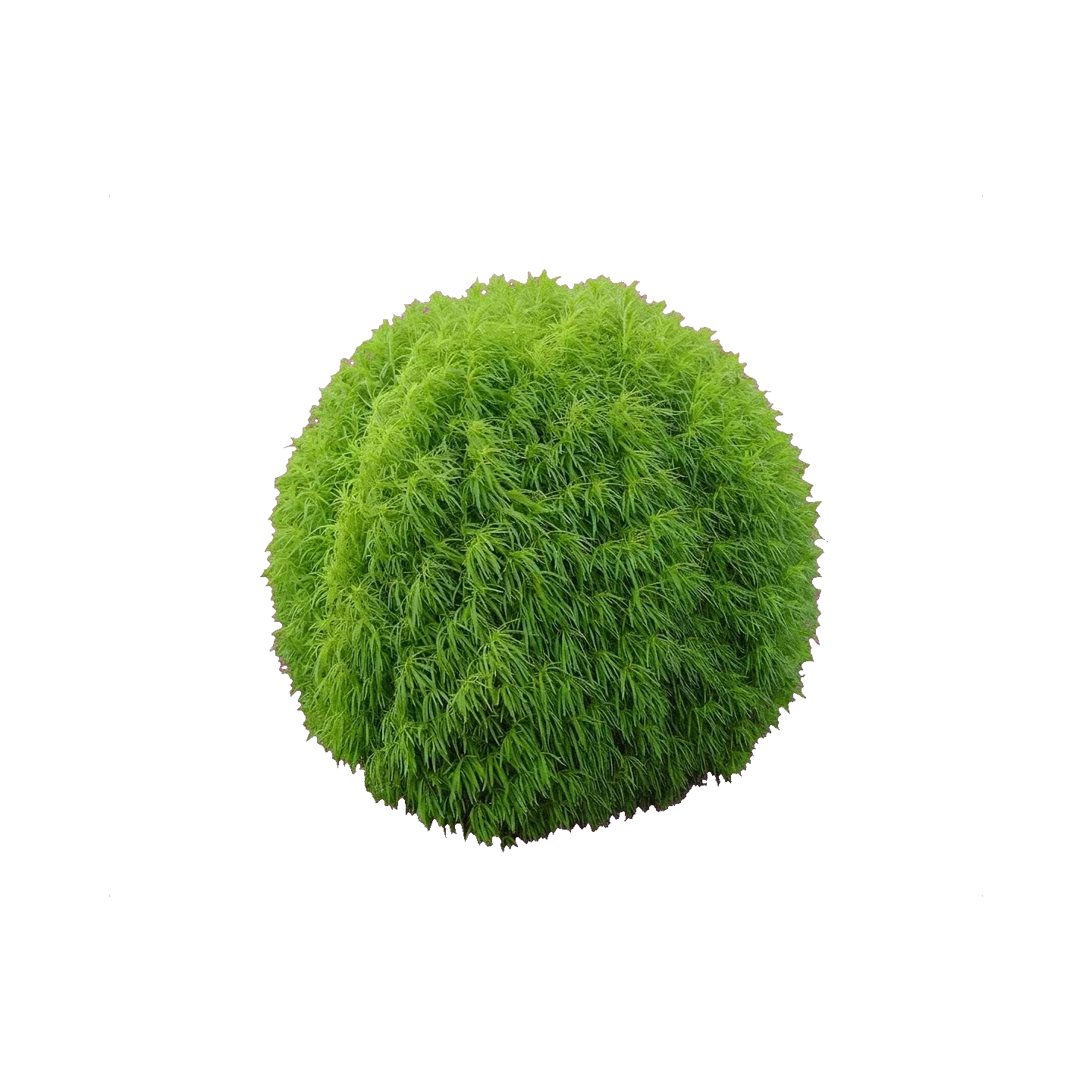
Kochia
Kochia
Kochia (Kochia) — decorative greenery. Adds backdrop, volume and line.
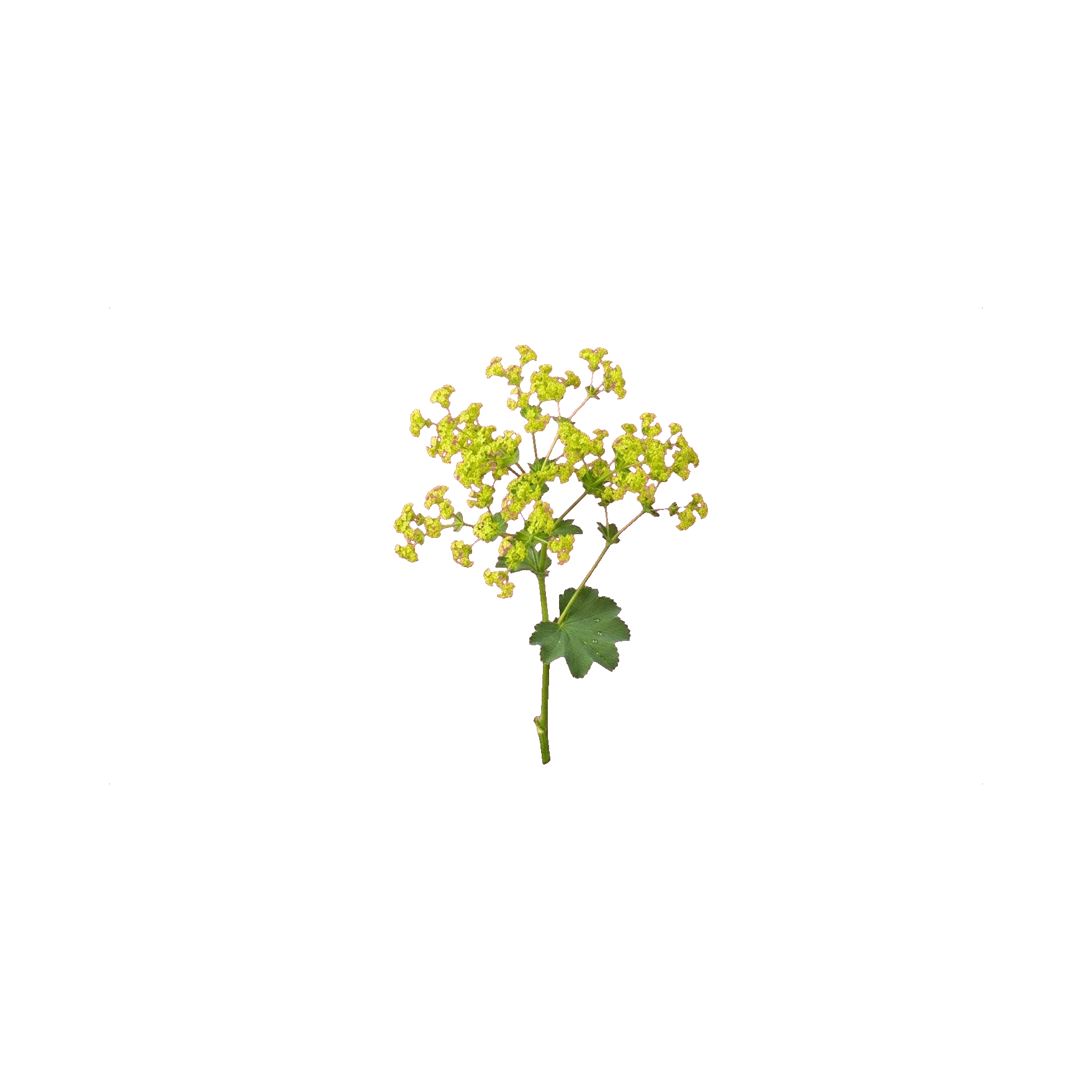
Lady's mantle
Alchemilla mollis
Lady's mantle (Alchemilla mollis) — decorative greenery. Adds backdrop, volume and line.

Lamb's ear
Stachys byzantina
Lamb's ear (Stachys byzantina) — decorative greenery. Adds backdrop, volume and line.

Leucadendron
Leucadendron
Leucadendron — cousin of the protea from South Africa's Cape — is the modern editorial designer's autumn signature. The Sunset variety in particular provides warm burgundy-to-copper coloration that no other cut flower matches. Exceptional vase life (up to 4 weeks) makes it a favourite for luxury installation work where flowers need to hold across a multi-day event.
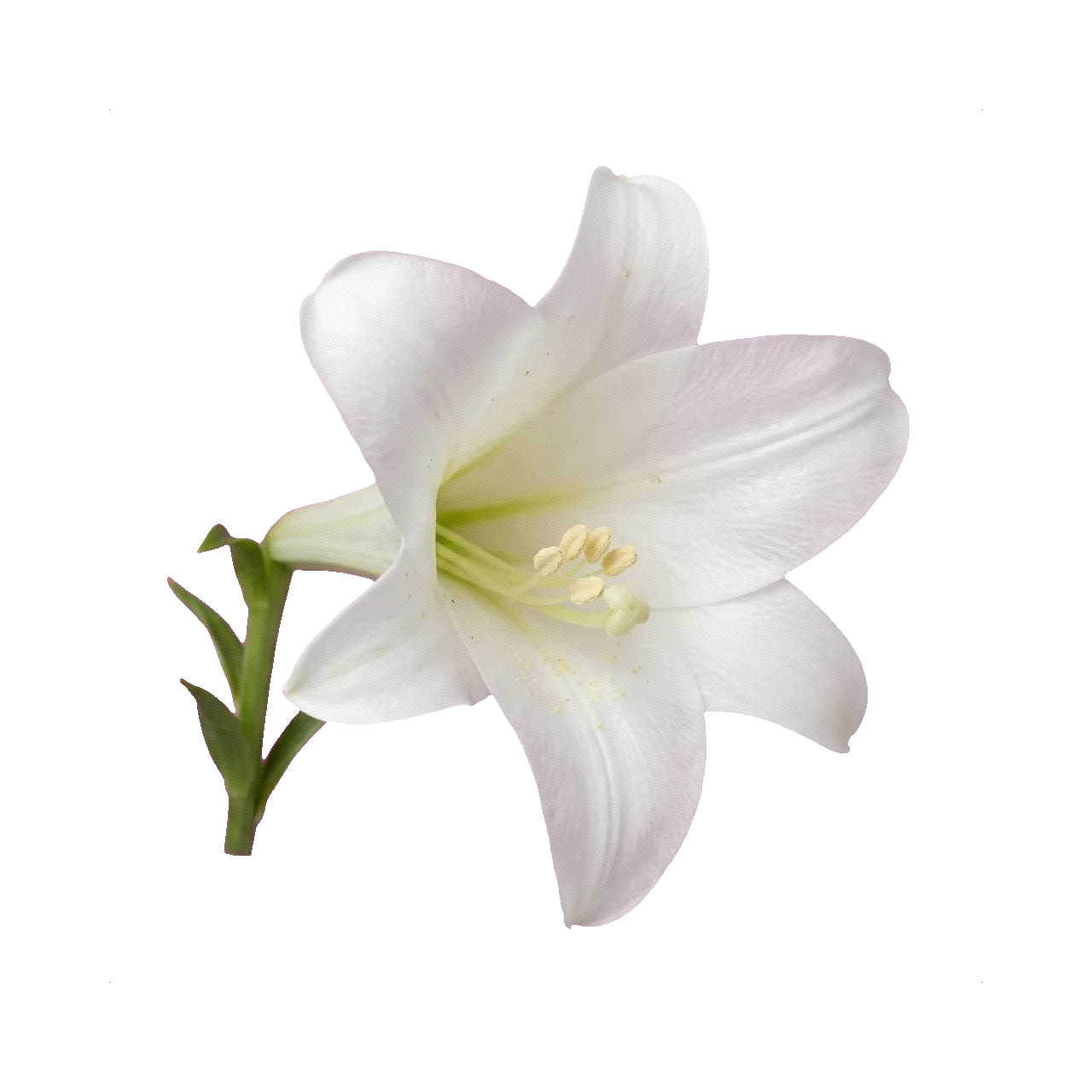
Lily
Lilium
A lily with large expressive blooms (Lilium). A fragrant focal flower; one stem sets the volume.
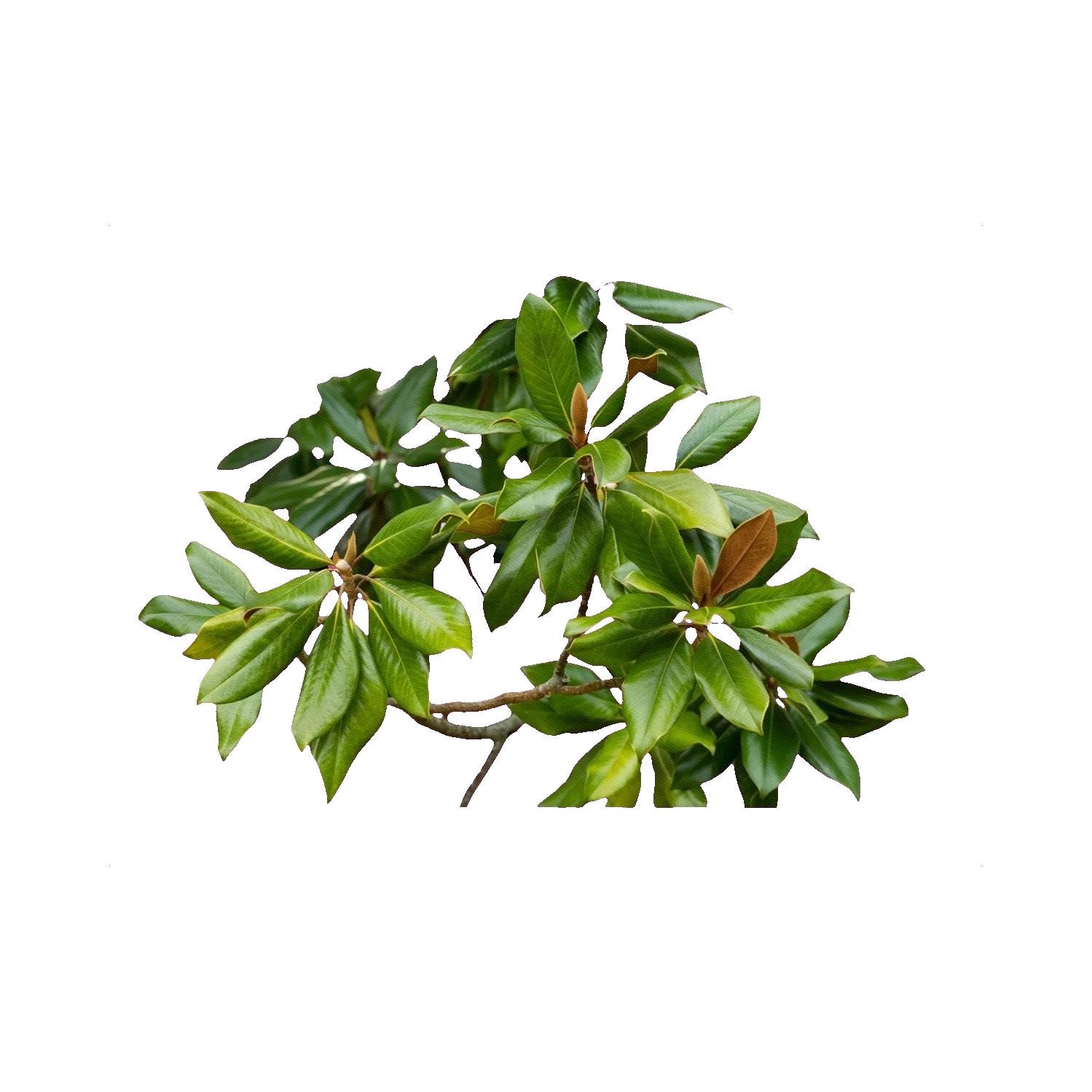
Magnolia Leaf
Magnolia grandiflora
Magnolia leaf (Magnolia grandiflora) is a bold, glossy evergreen foliage with large leathery leaves that are deep green above and a warm suede-brown beneath. Florists prize the two-tone effect, turning leaves to show the felted copper reverse in wreaths, garlands and grand arrangements. The stiff, architectural leaves are extremely long-lasting and dry without dropping, making them a Christmas and installation staple. Cut branches bring instant structure and a rich, Southern elegance.
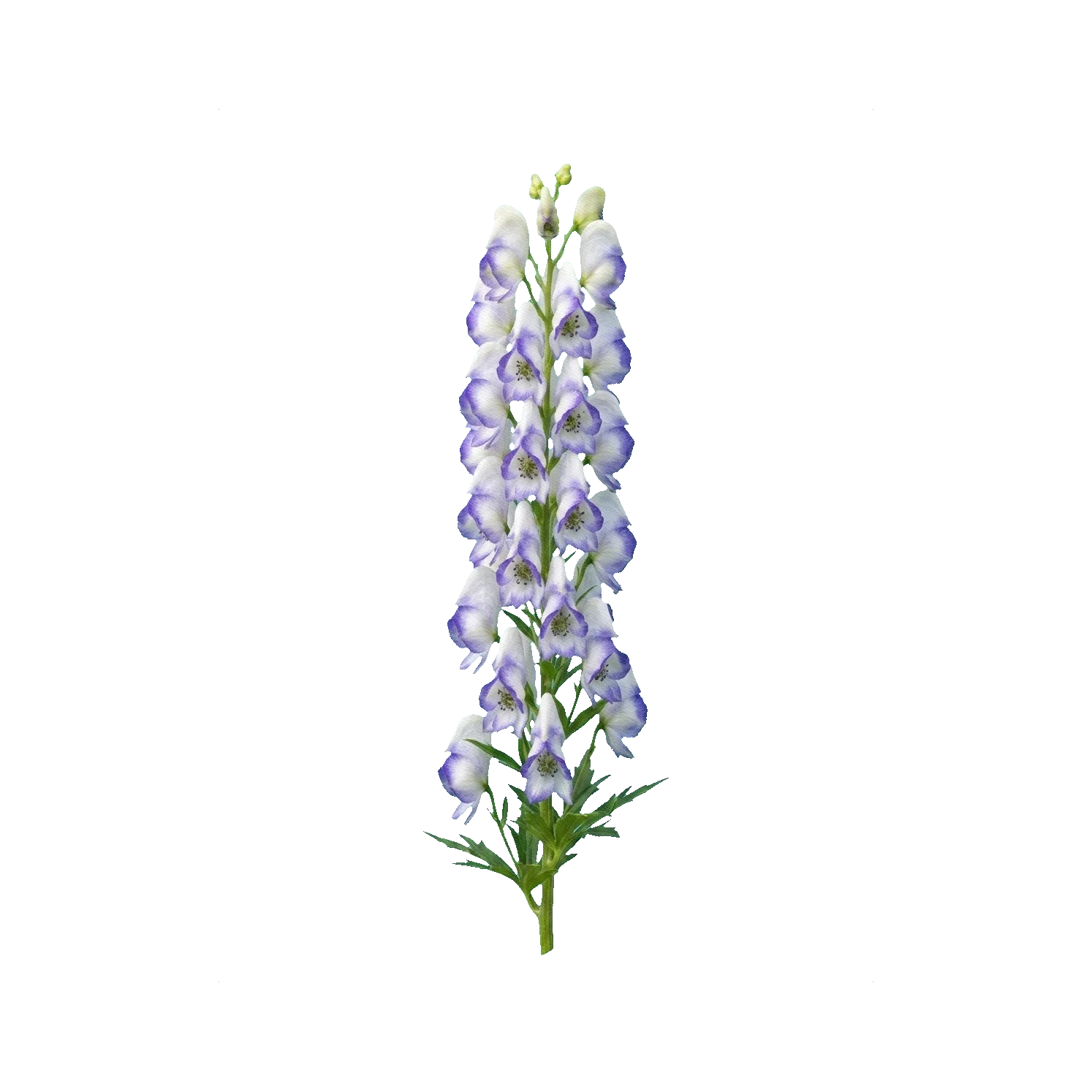
Monkshood
Aconitum napellus
Aconitum, known as monkshood, produces stately spires of hooded, helmet-shaped blooms in rich blues, purples and cool whites. Florists reach for it as a moody line flower that adds depth, height and an old-world garden character to autumn arrangements and editorial work. Every part of the plant is highly toxic, so it must be handled with gloves and kept well away from children, pets and food. Its deep sapphire tones are hard to find in other flowers, making it a treasured accent for dramatic, jewel-toned palettes.

Monstera Leaf
Monstera deliciosa
The monstera leaf, cut from Monstera deliciosa, is one of the most recognisable foliages in modern floristry — a large, glossy, deep-green blade slashed with natural holes and splits. Native to Central American rainforests, it brings bold scale, clean line and a lush tropical mood to arrangements and installations. Exceptionally long-lasting out of water and easy to handle, a single leaf can define a modern bouquet, backdrop or table runner. It is the signature green of tropical and contemporary design.
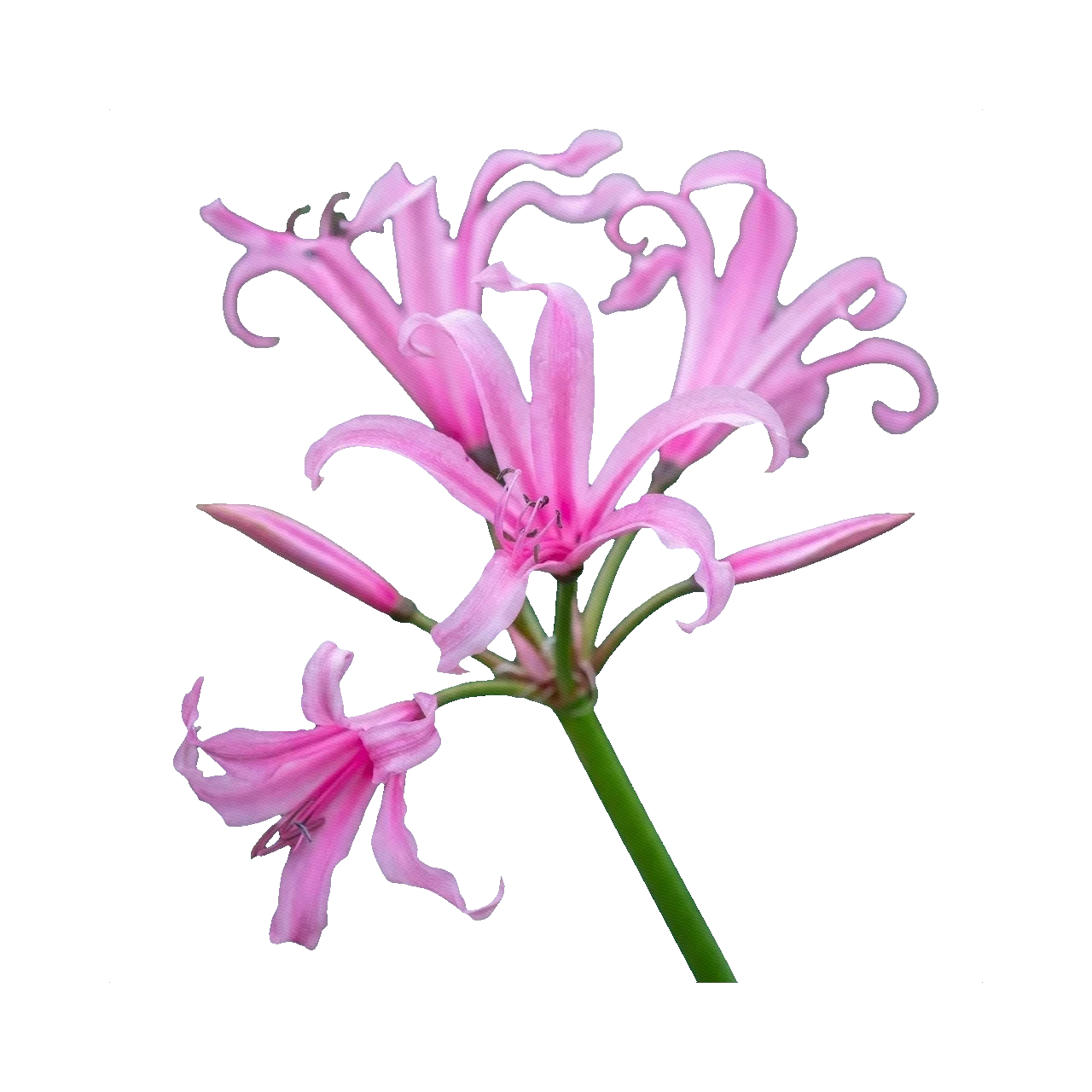
Nerine
Nerine bowdenii
Nerine is an autumn jewel — an umbel of slender, recurved petals that catch the light with an almost frosted, sugared shimmer. Native to South Africa, Nerine bowdenii flowers just as most garden blooms fade, giving florists a fresh, luminous pink for late-season weddings and arrangements. The spidery, leafless stems read as elegant and slightly exotic, and they hold impressively long in the vase. Their delicate crystalline petals bring a refined sparkle to bouquets and luxury autumn work.
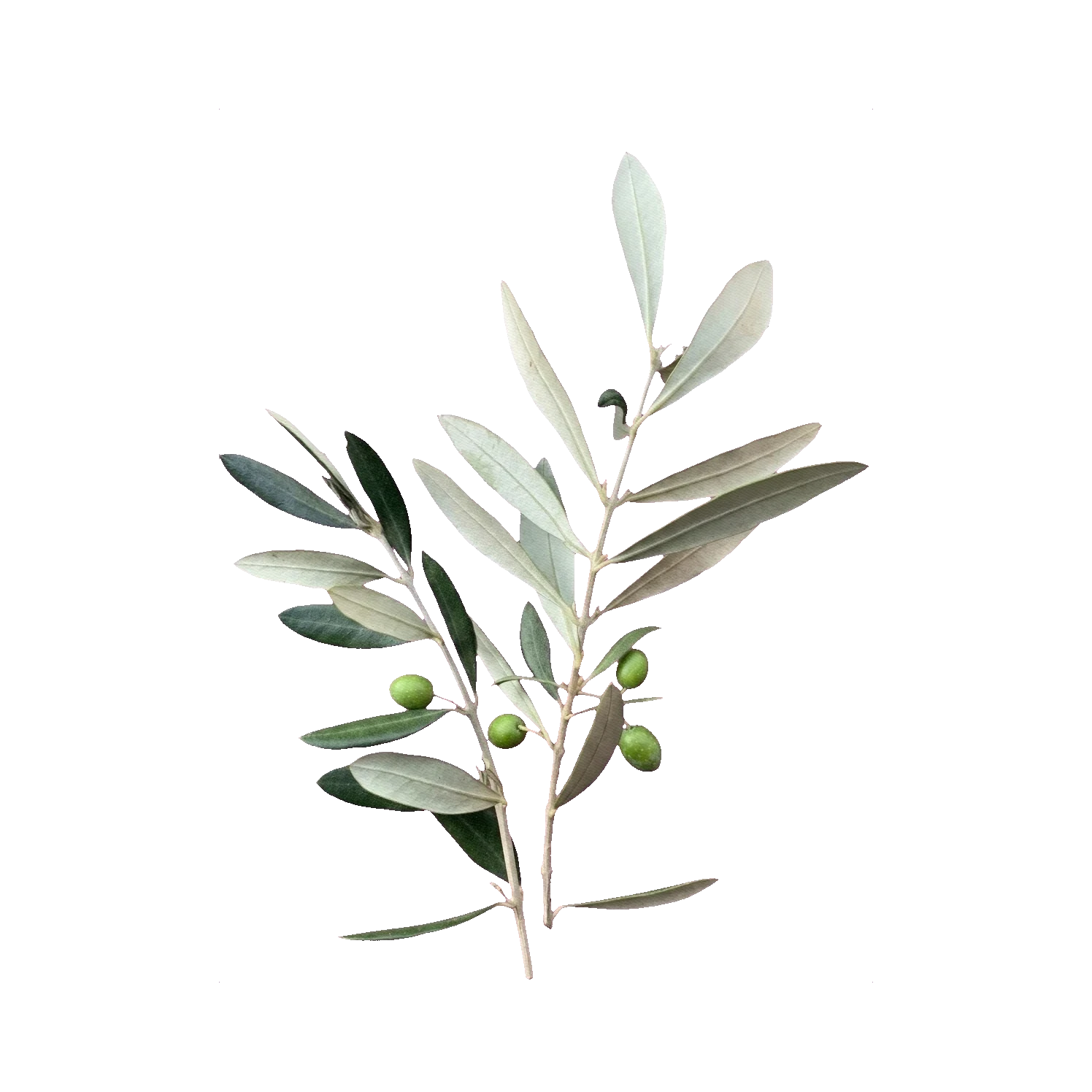
Olive Branch
Olea europaea
Olive (Olea europaea) branches bring a soft, silvery-green Mediterranean elegance that has become a signature of modern and garden-style weddings. The slender grey-green leaves catch the light beautifully and lend movement to arches, garlands and loose bouquets. Some branches carry small unripe olives, adding rustic charm. It has meaningful symbolism and a naturally airy, willowy form that softens any design.

Palm leaf
Arecaceae
Palm leaf (Arecaceae) — decorative greenery. Adds backdrop, volume and line.
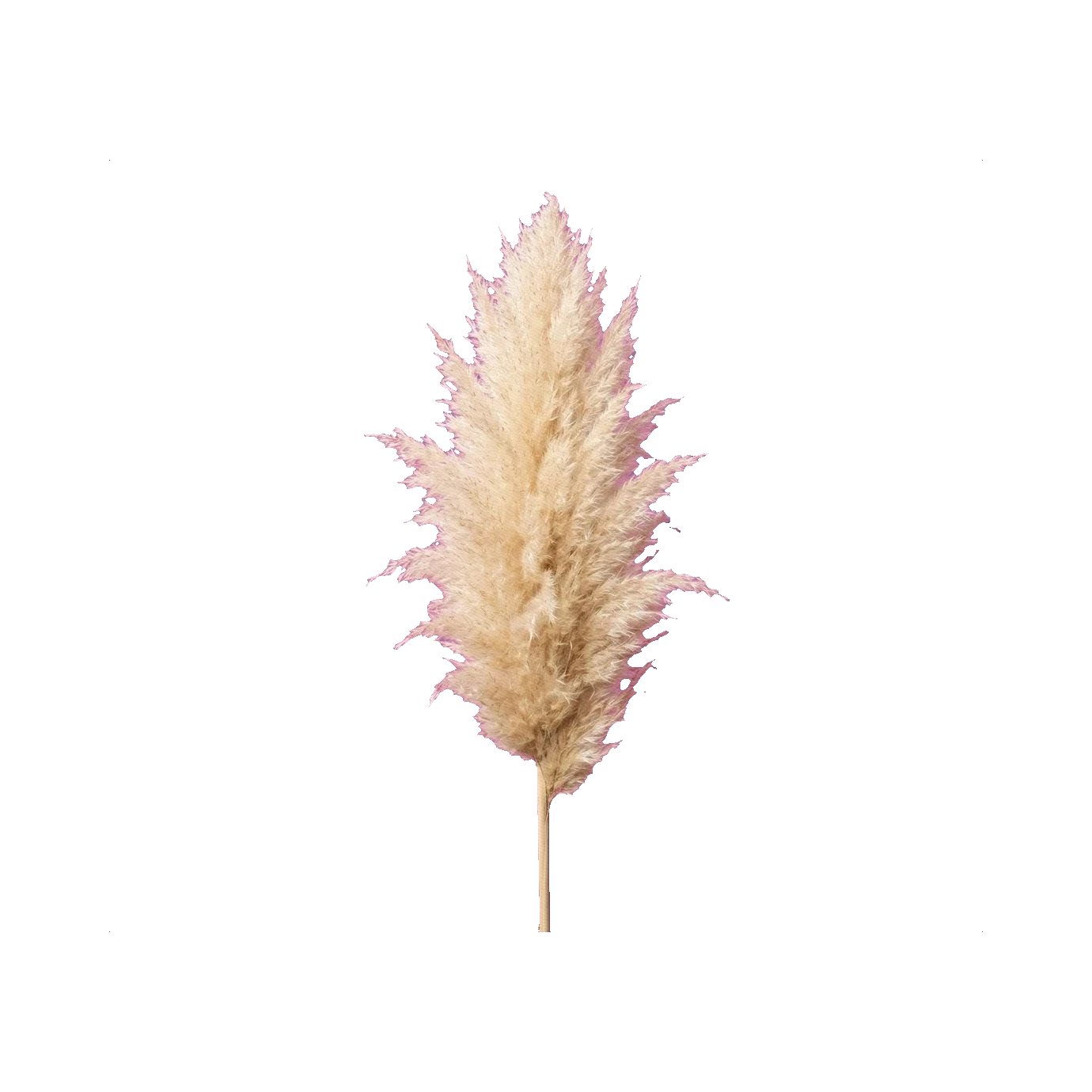
Pampas grass
Cortaderia selloana
Pampas grass with a fluffy plume (Cortaderia selloana). A large dried grass for interior décor.

Phalaenopsis orchid
Phalaenopsis
A phalaenopsis orchid (Phalaenopsis). A refined, long-lasting accent.

Phlox
Phlox paniculata
Garden phlox carries full, domed clusters of five-petalled florets in soft pastels and vivid pinks atop tall leafy stems, releasing a sweet summer fragrance. Florists use it as a fragrant, generous filler that fills space and adds cottage-garden softness to seasonal bouquets and arrangements. It sits between a filler and a focal, giving mass without stiffness. Because its foliage spoils water quickly, clean stripping and frequent water changes keep it at its best.

Preserved rose
Rosa (preserved)
Preserved rose (Rosa (preserved)) — a preserved material. Keeps a fresh look for years without water.
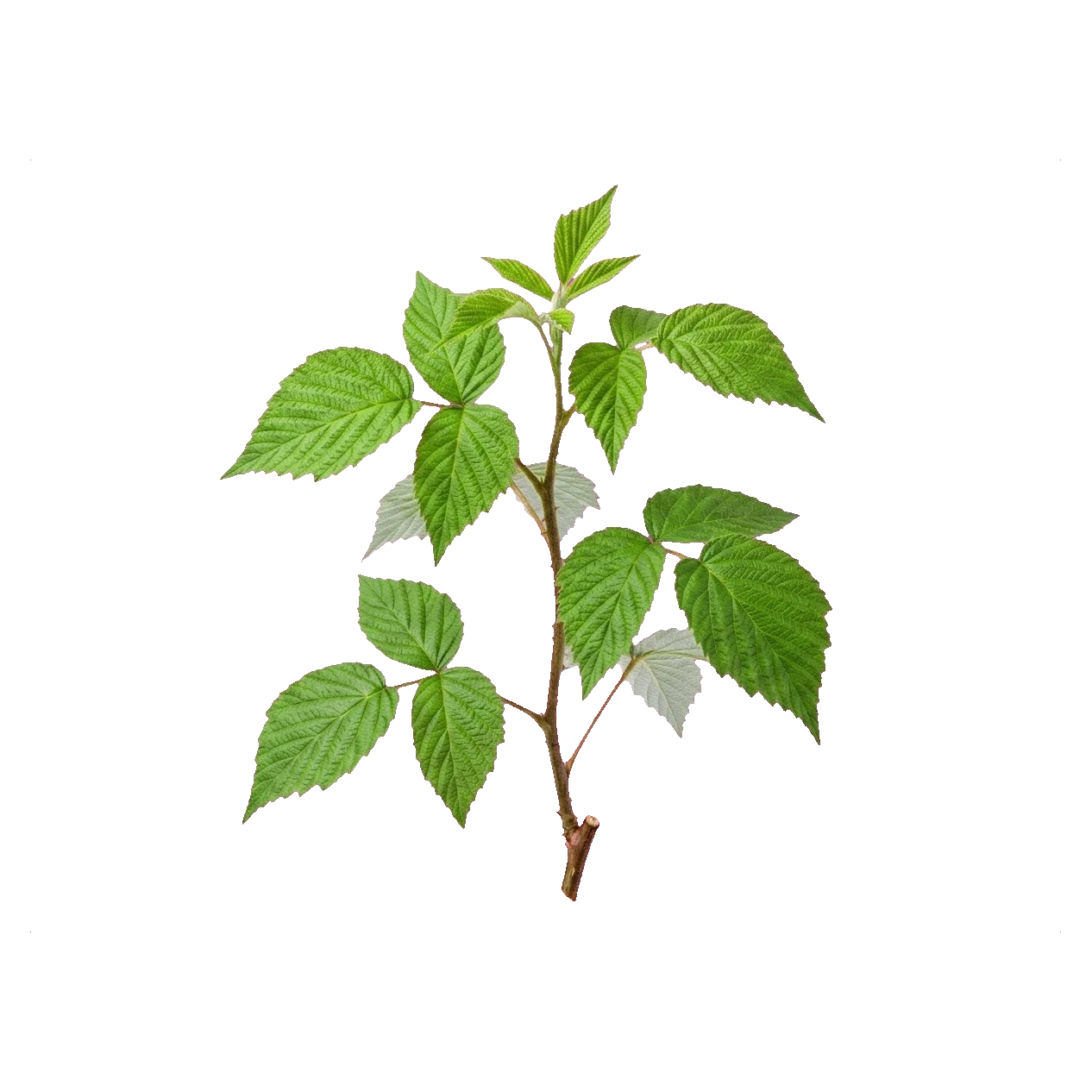
Raspberry leaves
Rubus idaeus
Raspberry leaves (Rubus idaeus) — decorative greenery. Adds backdrop, volume and line.

Ribbon
Ribbon — floristry packaging and supplies. For wrapping and assembling bouquets.

Rose
Rosa
A classic cut rose (Rosa). Perfect for mono bouquets and elaborate arrangements.
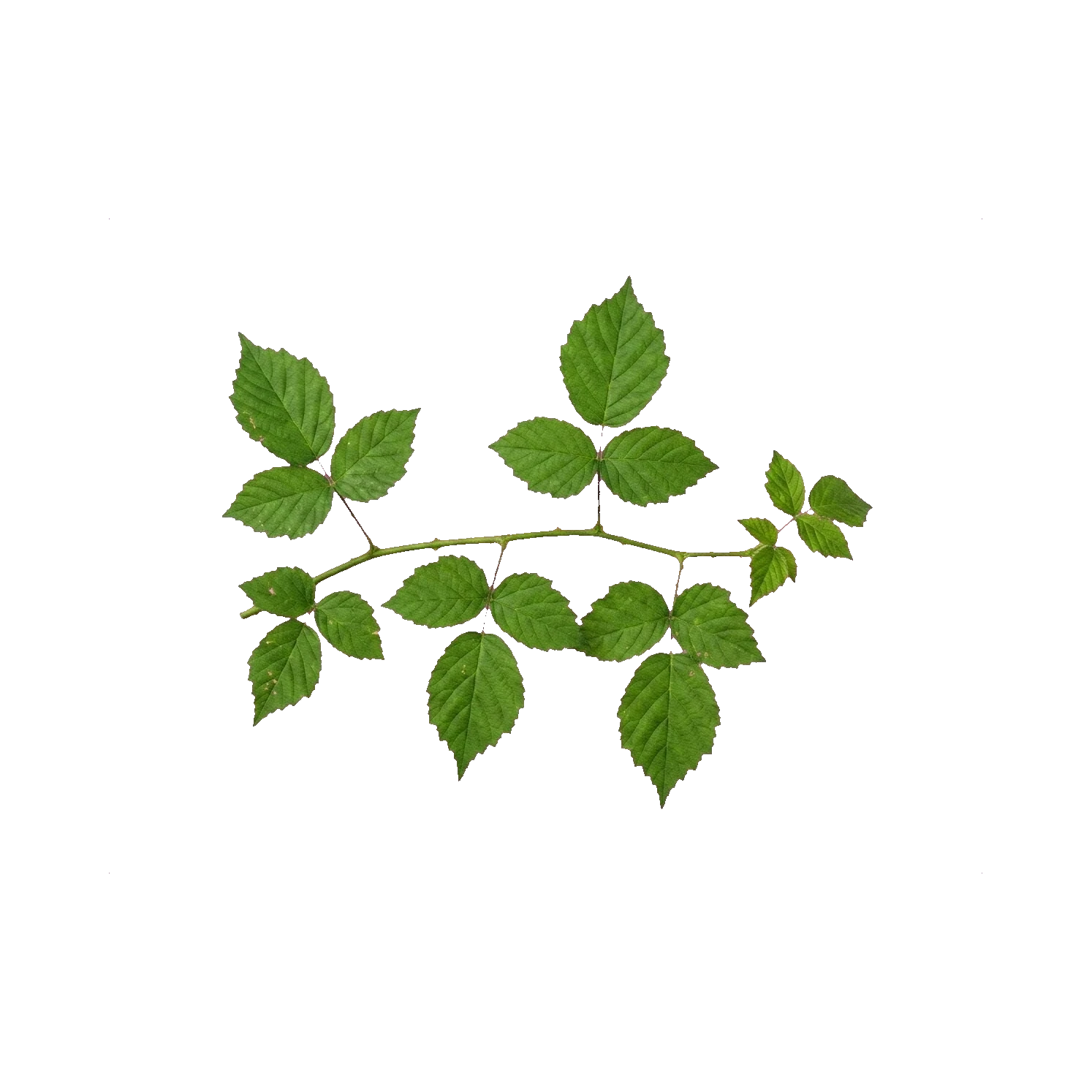
Rubus foliage
Rubus
Rubus foliage (Rubus) — decorative greenery. Adds backdrop, volume and line.

Rudbeckia
Rudbeckia hirta
Rudbeckia is the golden daisy of high summer and early autumn, instantly recognisable by its warm yellow-to-bronze rays circling a dark, domed cone. Florists prize it as a cheerful, sturdy focal that carries meadow and prairie-style designs without fuss. Its colour range spans clear yellow through mahogany and rust, making it a natural fit for late-season and rustic palettes. Reliable, inexpensive and long-lasting, it bridges the gap between sunflowers and the finer autumn daisies.
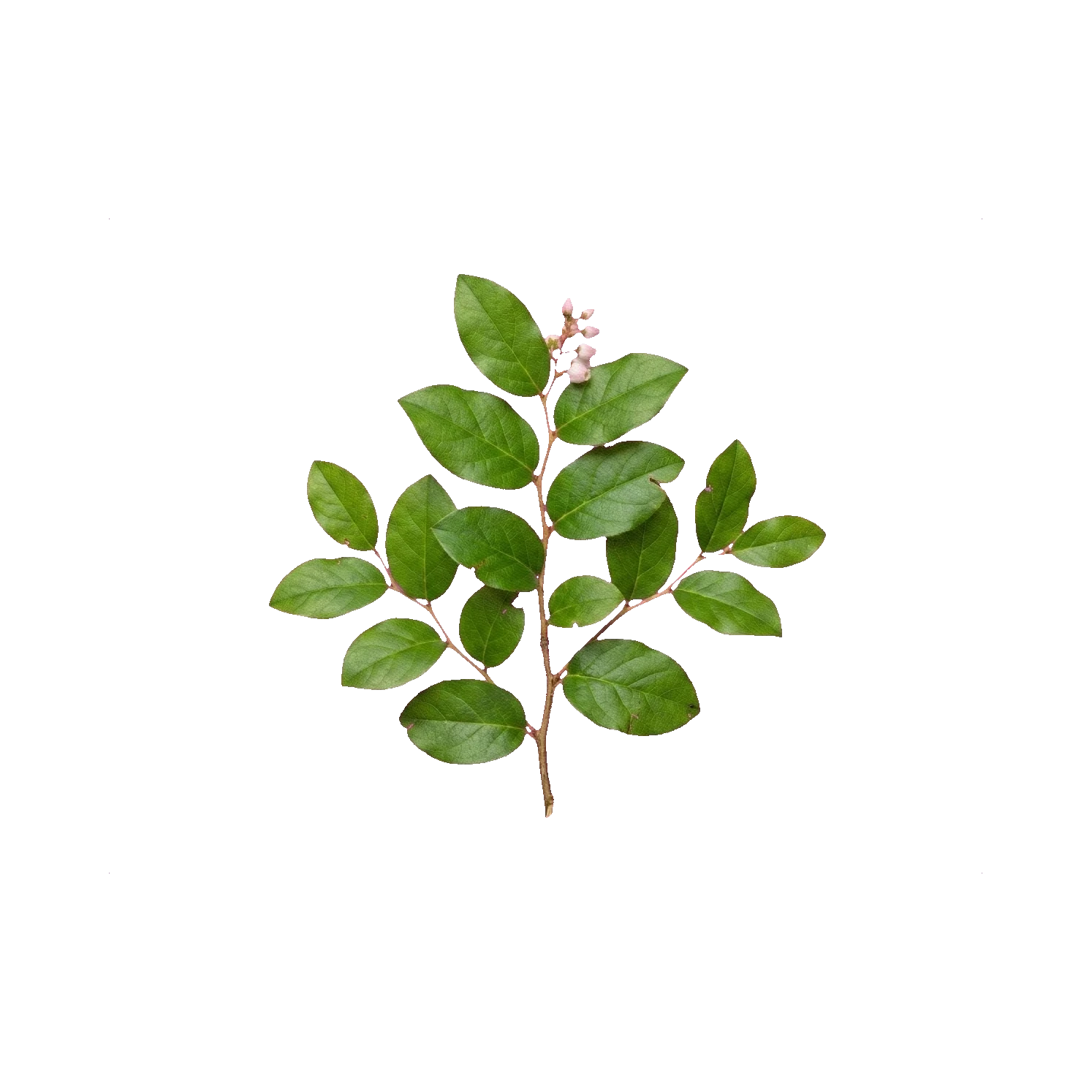
Salal
Gaultheria shallon
Salal (Gaultheria shallon) is a broadleaf evergreen from the Pacific Northwest, prized as one of the most reliable and inexpensive cut foliages in the trade. Its leathery, oval leaves grow densely along woody stems, giving an even backdrop of deep green that is slow to wilt. Florists reach for it constantly to green up bouquets, line arrangements and fill gaps behind focal blooms. It ships and stores exceptionally well, making it a workhorse for weddings and everyday work alike.
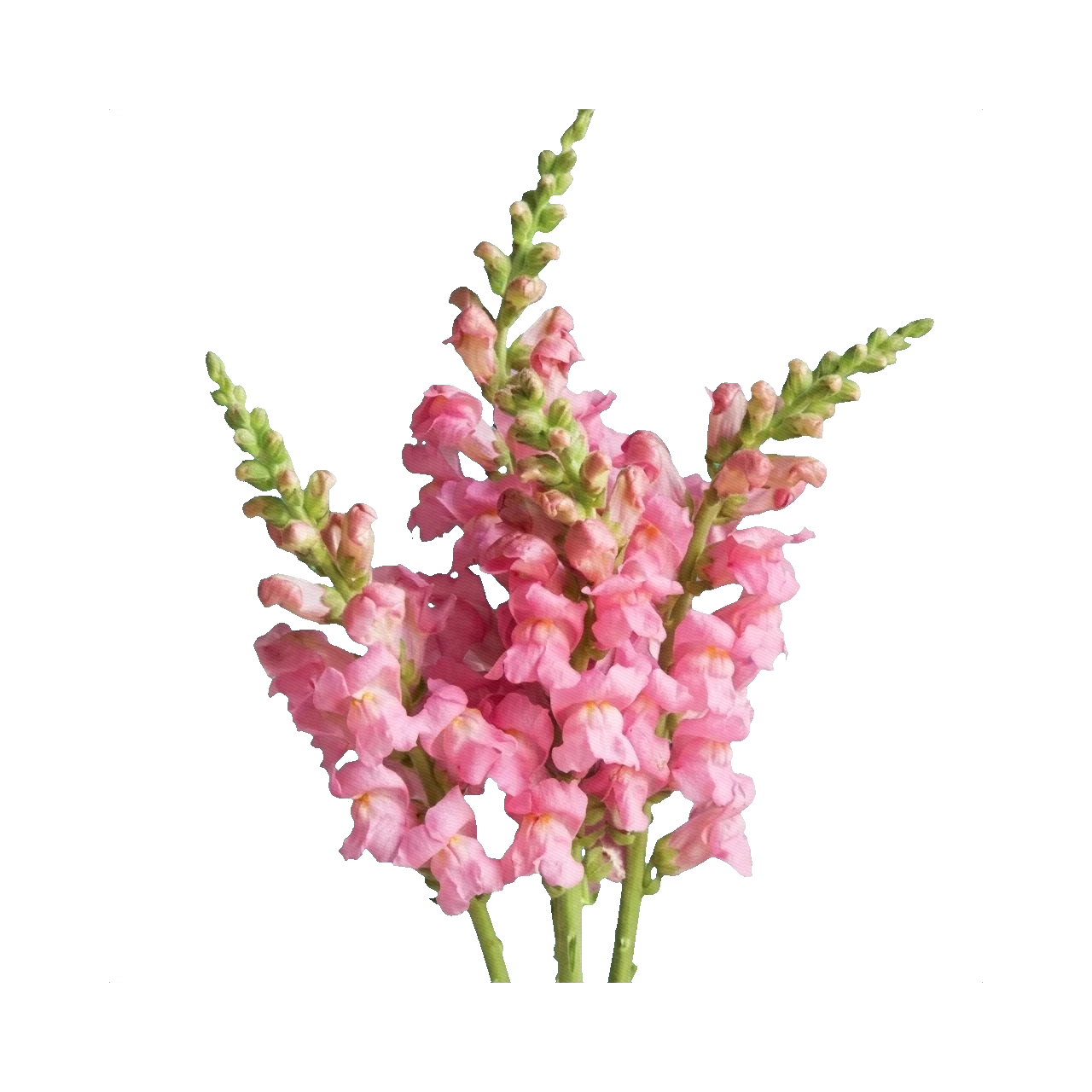
Snapdragon
Antirrhinum majus
The snapdragon delivers vertical line at a mid-range price — reaching 100 cm on strong Chantilly cultivars. Critical to know: snapdragons are geotropic. Store them upright between purchase and use, or the tips will curve back toward the ceiling within hours, creating unusable J-shaped stems.
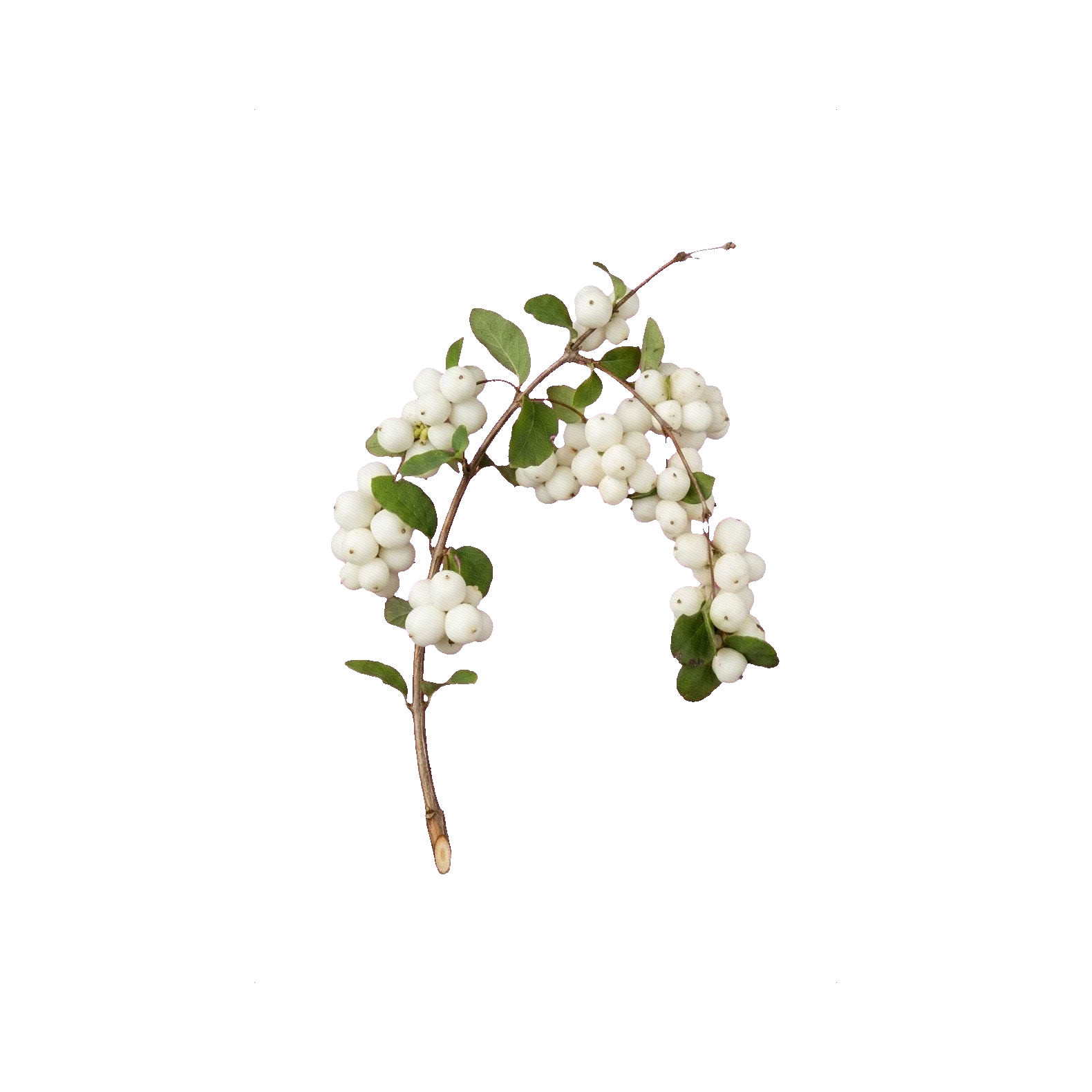
Snowberry
Symphoricarpos albus
Snowberry is a graceful, arching shrub stem hung with clusters of soft, marble-white (or blush-pink) berries. Florists use it as a delicate, romantic filler that brings a wintry, woodland softness to bouquets and installations. The pearly berries dangle on slender branches, adding a gentle cascade and a touch of whimsy. Best in autumn and winter, it pairs beautifully with foliage, roses and seasonal berries.
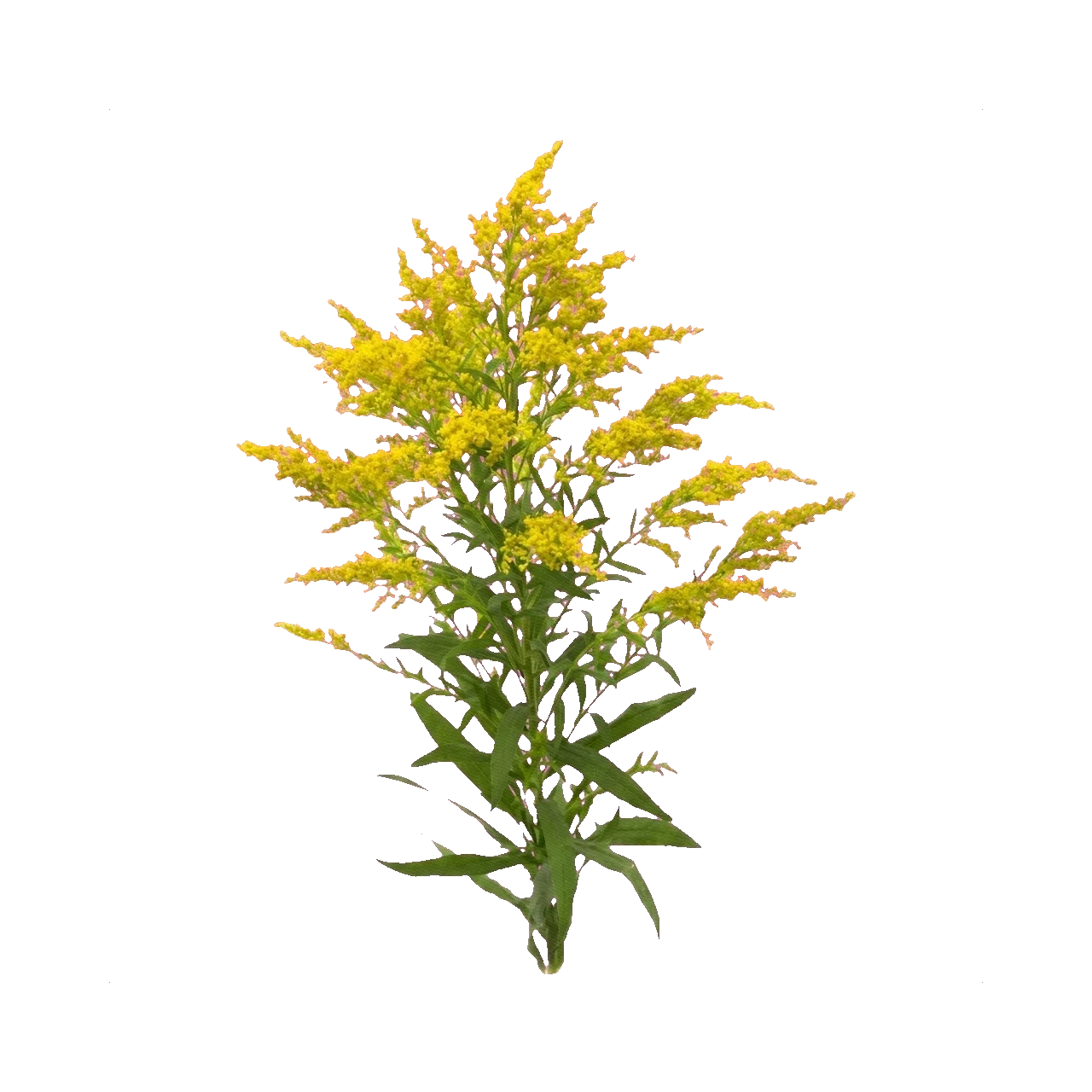
Solidago
Solidago canadensis
Solidago, or goldenrod, is a plumed North American perennial whose feathery sprays of tiny golden flowers add warmth and movement to an arrangement. Florists prize it as an airy, inexpensive filler that softens gaps and echoes the yellow of sunflowers and rudbeckia. Its fine, branching form reads as a golden haze, making it a staple of rustic, autumnal and cottage-garden work. Long-lasting and forgiving, it also dries well for everlasting designs.
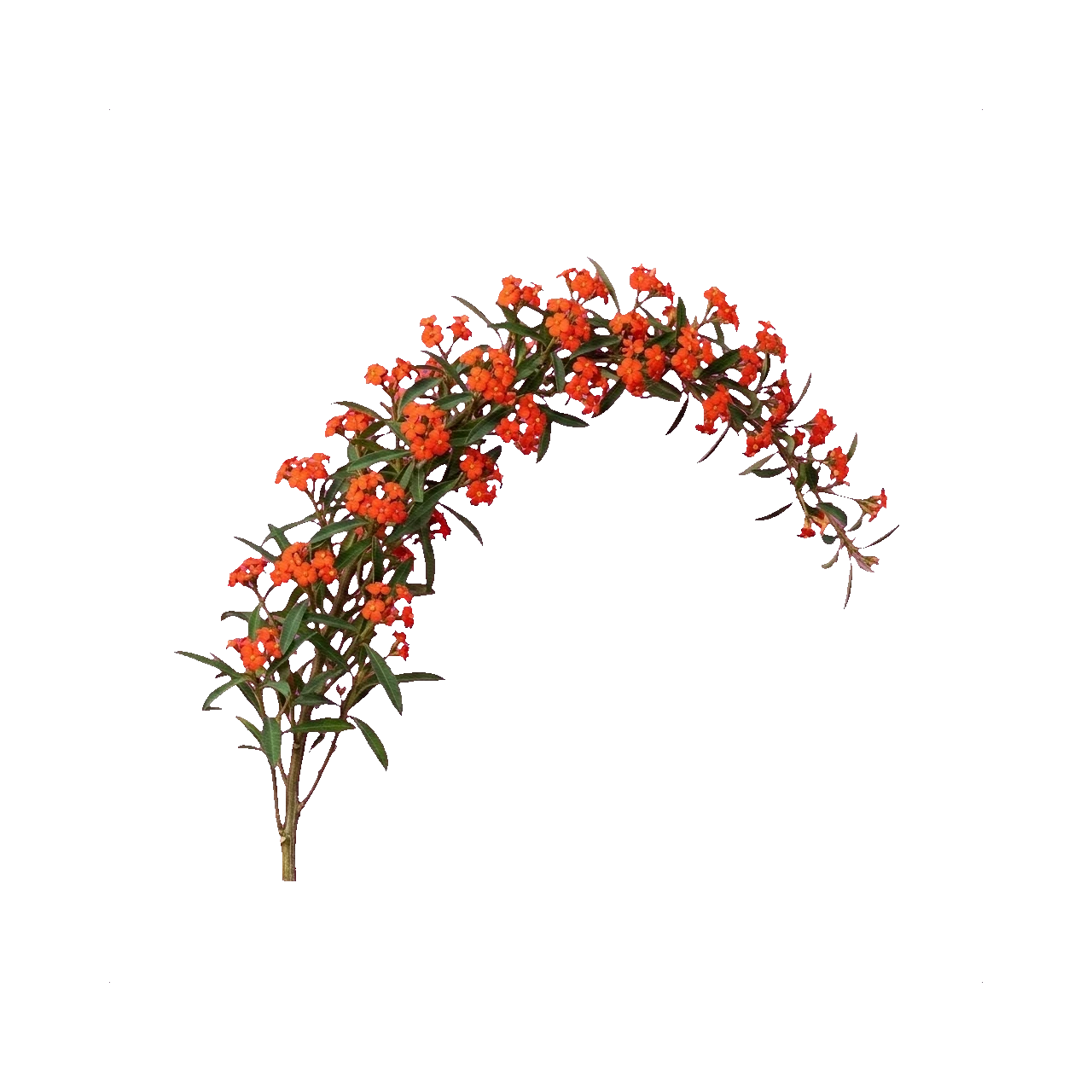
Spurge
Euphorbia
Spurge (Euphorbia) — decorative greenery. Adds backdrop, volume and line.

Stonecrop
Sedum / Hylotelephium
Stonecrop (Sedum / Hylotelephium) — a cut flower. Works well in mixed and mono bouquets.
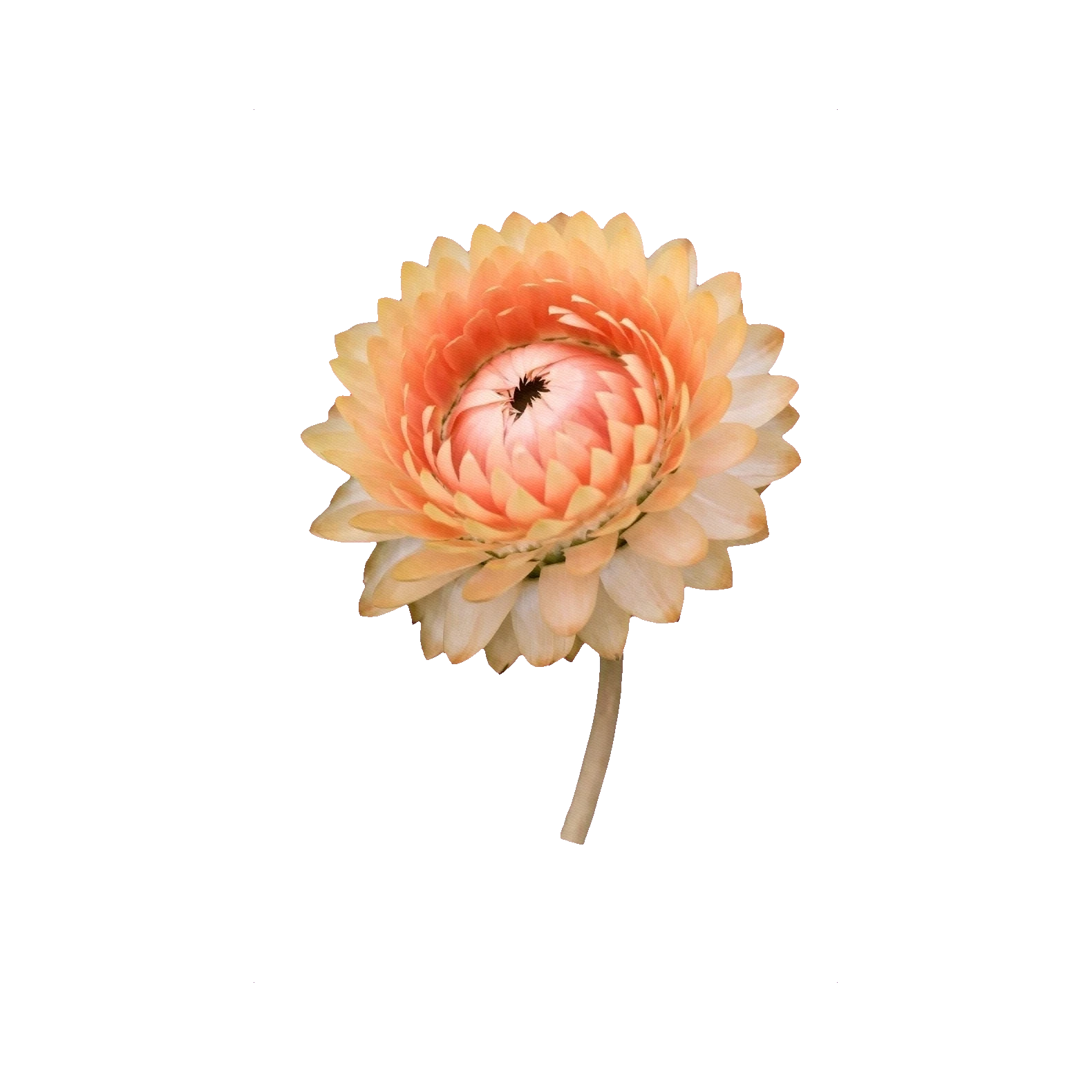
Strawflower
Xerochrysum bracteatum
Strawflower earns its many nicknames — everlasting, paper daisy — from stiff, papery bracts that feel like crisp straw and keep their vivid colour long after cutting. Native to Australia, it works beautifully fresh but truly shines dried, holding rich yellows, oranges and pinks for months. Florists lean on it for textural interest in boho and autumn arrangements, and as an affordable staple of dried bouquets and wreaths. Its durability and warm palette make it a versatile, budget-friendly filler.

Sunflower
Helianthus annuus
Sunflowers are the face of late summer floristry — bold, cheerful, and grown locally on almost every continent. Pollenless varieties (Sunbright, ProCut Orange) have replaced classic pollen-producing sunflowers in commercial work — no more stained tablecloths. Miniature sunflowers (Teddy Bear, fully double heads) have opened the flower to wedding and event use.

Switch Grass
Panicum virgatum
Panicum, or switch grass, is a North American prairie grass whose delicate, cloud-like panicles bring a haze of fine texture to arrangements. Cut fresh, its shimmering green or wine-flushed sprays soften the edges of bouquets and lend an on-trend, meadowy looseness; dried, it holds a feathery, glinting form. Cultivars range from clean green to burgundy-tinted, so it slots into palettes from fresh spring to moody autumn. Airy and forgiving, it is a favourite filler for garden-style and installation work.

Tanacetum
Tanacetum parthenium
Tanacetum (Tanacetum parthenium) — a cut flower. Works well in mixed and mono bouquets.

Throatwort
Trachelium caeruleum
Trachelium, or throatwort, forms domed clusters of tiny star-shaped florets in deep amethyst, blue-violet and white. A dependable, long-lasting filler, it lends colour and a fine textural haze to summer bouquets and event work. The flat-topped heads give designers a soft mass to build against focal flowers, and it holds well out of water for short periods. Its rich purple is especially valued where blue tones are scarce.
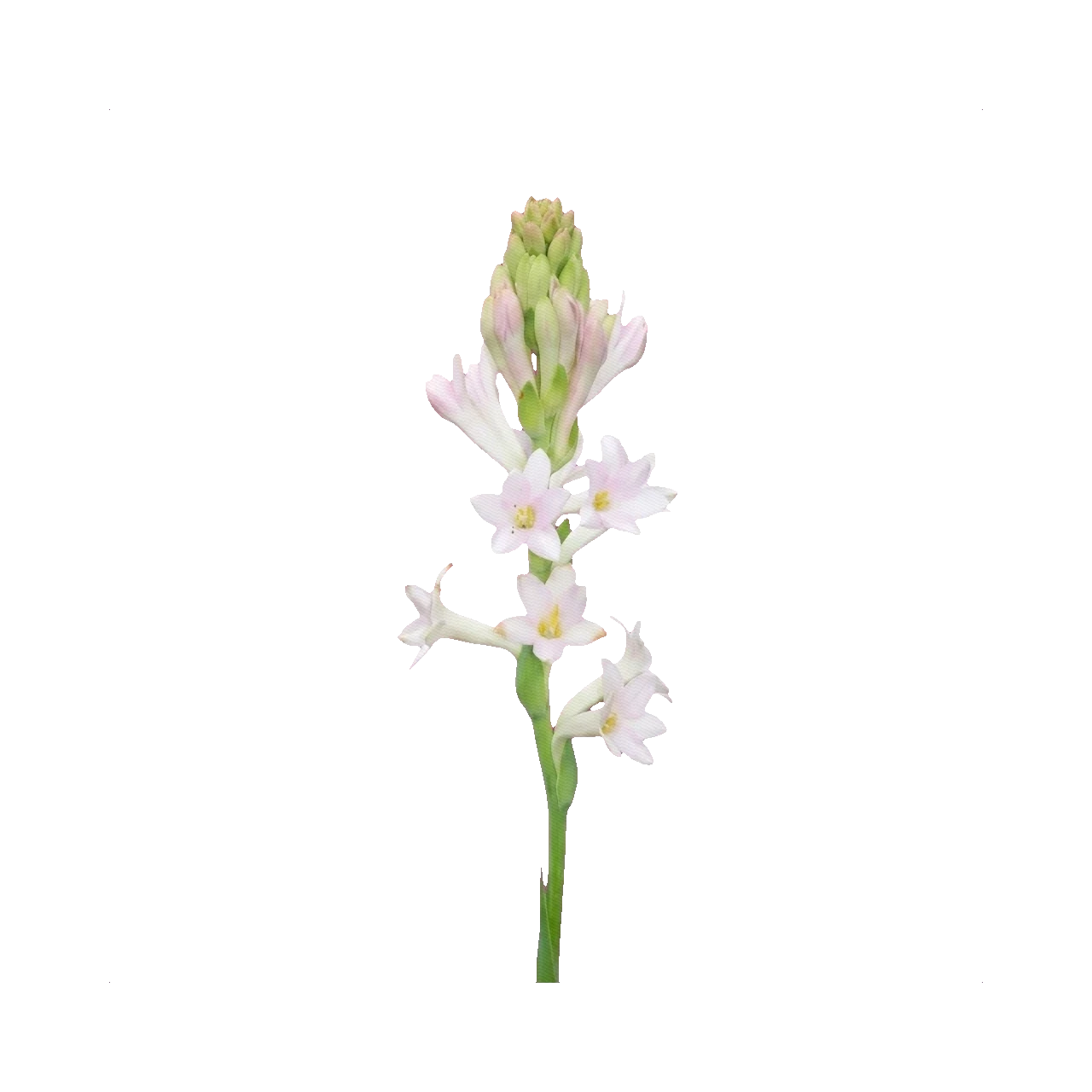
Tuberose
Polianthes tuberosa
Tuberose carries one of the most powerful fragrances in the flower world — a night-blooming, honey-jasmine scent that fills a room. Central to Indian wedding traditions (garlanded around the bride and groom); an editorial favourite in the West for evening events.
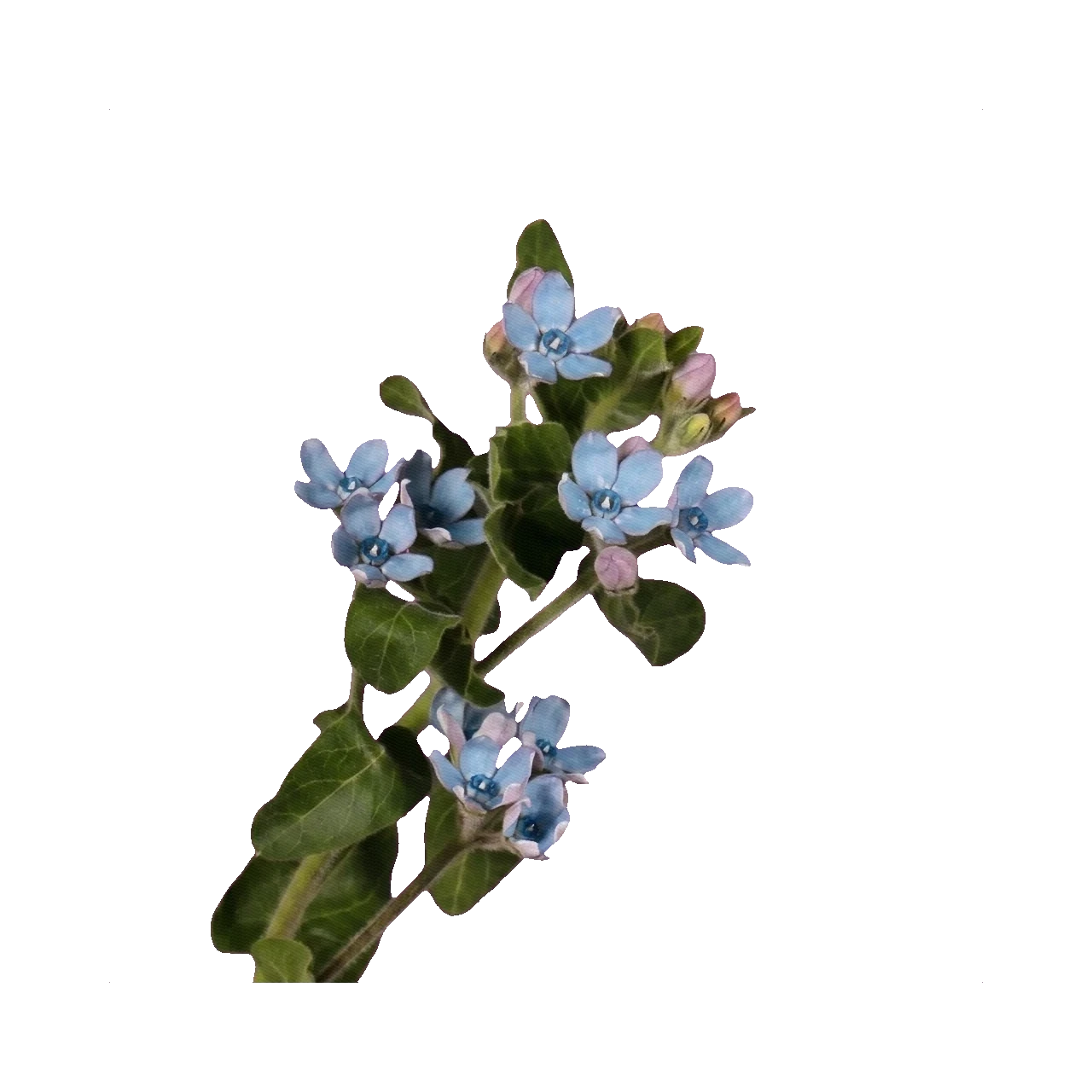
Tweedia
Tweedia caerulea
Tweedia is a tender, semi-climbing perennial usually grown as an annual, treasured for its rare, powdery sky-blue star-shaped flowers that mature to soft lavender. It is one of the most sought-after true-blue flowers for weddings, especially bridal bouquets and boutonnieres, where a touch of genuine blue is wanted. The stems exude a milky sap when cut and need searing before use. Its clusters of five-pointed stars add a delicate, romantic and slightly whimsical note.
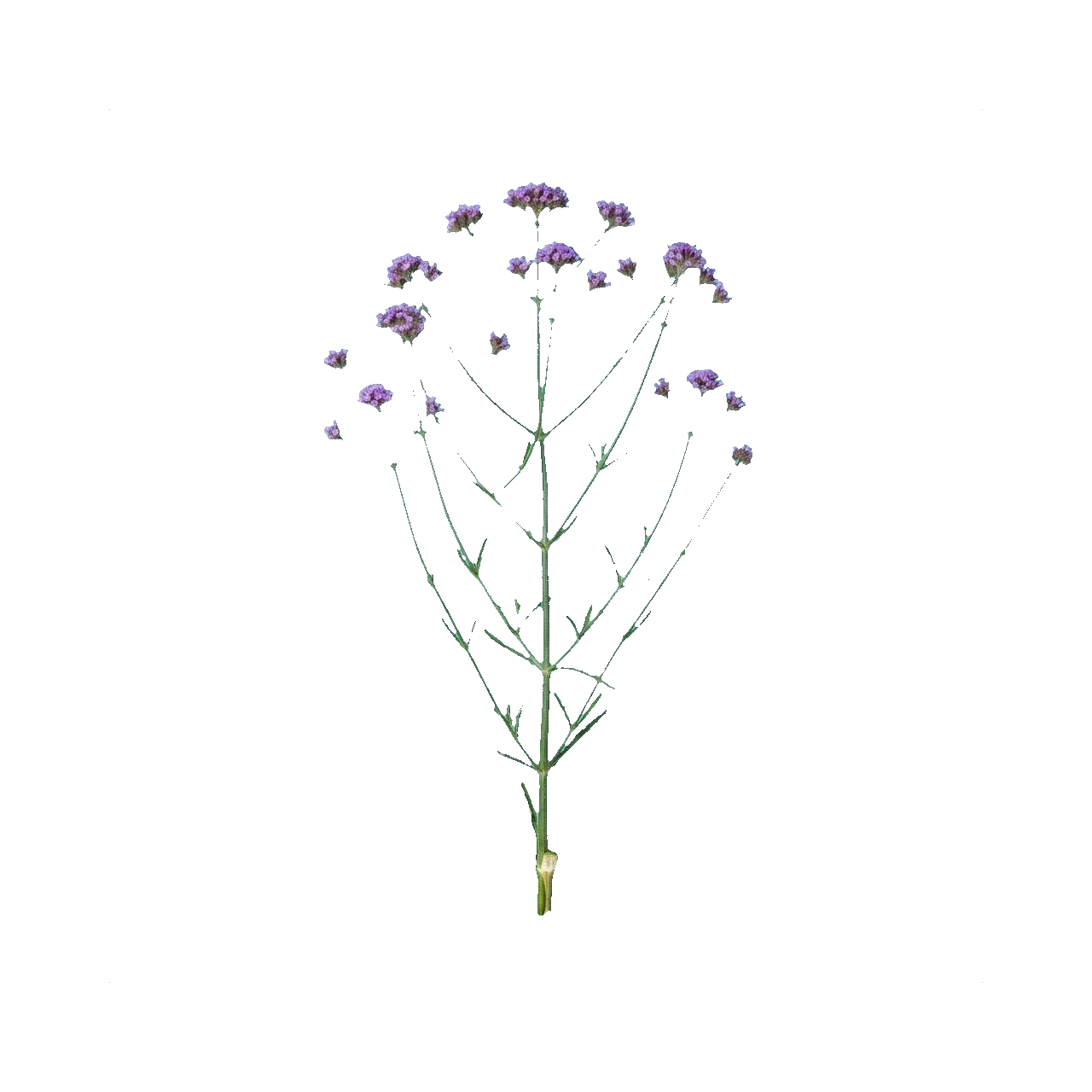
Verbena
Verbena
Verbena (Verbena) — a cut flower. Works well in mixed and mono bouquets.
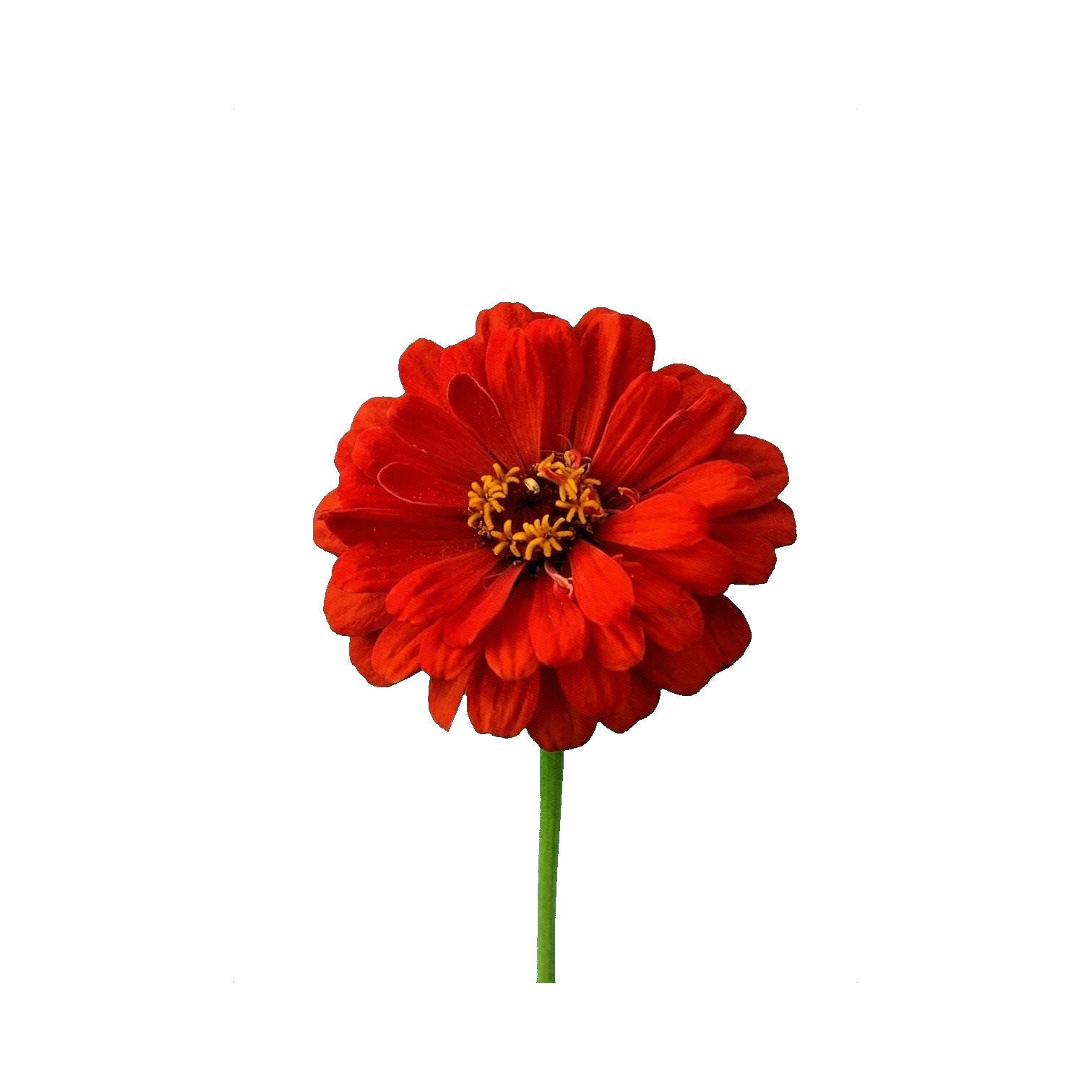
Zinnia
Zinnia elegans
The zinnia is the garden colour bomb of late summer — no other annual delivers this range of saturated hues on stems robust enough for cut work. Benary's Giant series produces 10 cm heads on 70 cm stems; Queeny Lime cultivars carry chartreuse and blush palettes prized by modern florists. Local and seasonal; a farm-to-vase staple.
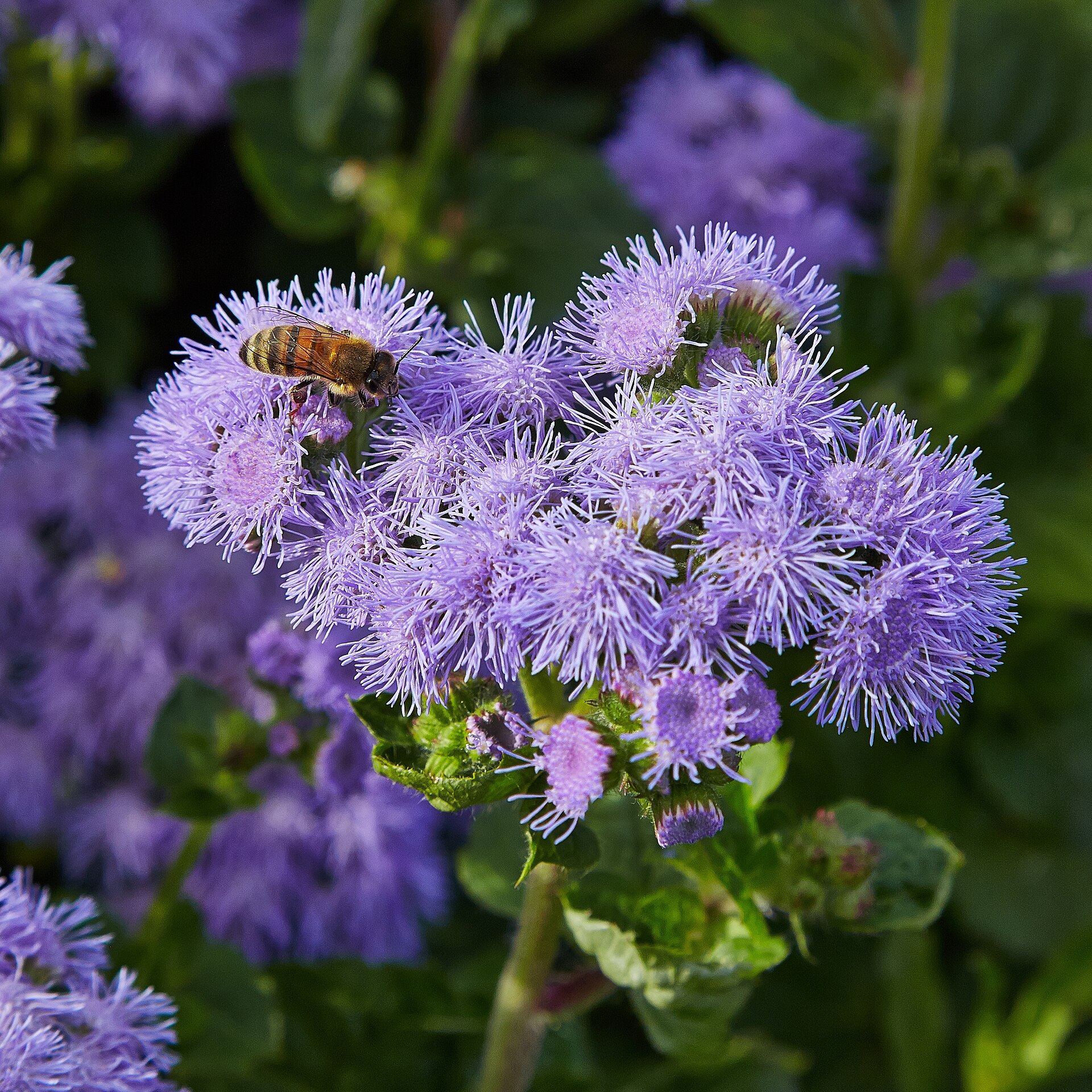
Ageratum
Ageratum houstonianum
Ageratum, or floss flower, is a tender annual bearing soft, fluffy clusters of tiny thread-like florets, most often in cool blue and lavender but also white and pink. Taller cutting varieties such as 'Blue Horizon' give florists useful stems of one of the harder-to-find true blues. It works as a textural filler that softens and cools summer and autumn arrangements. Its powder-puff clusters read almost like a fuzzy, dreamy version of a thistle without the spikes.
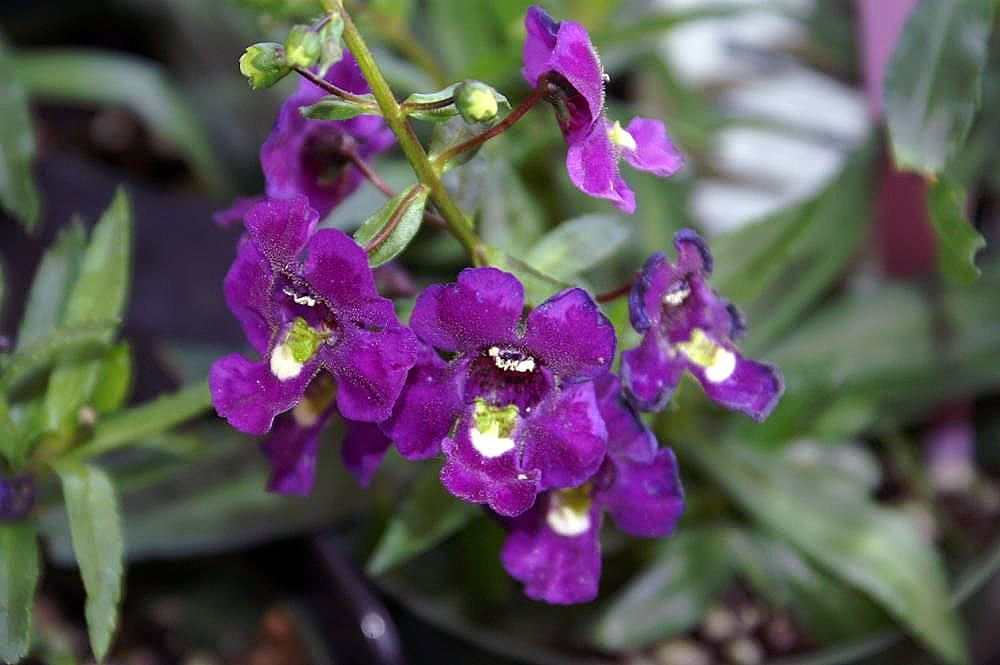
Angelonia
Angelonia angustifolia
Angelonia, aptly nicknamed summer snapdragon, is a tender perennial grown as an annual that thrives in heat and sends up slender spikes of orchid-like flowers in purple, lavender, blue, pink and white. Florists use it as a graceful line flower that adds vertical interest and a soft, airy structure to summer designs. Unlike true snapdragons it tolerates warmth well, staying fresh through hot-weather events. Its delicate florets bring a cottage-garden lightness to bouquets and arrangements.
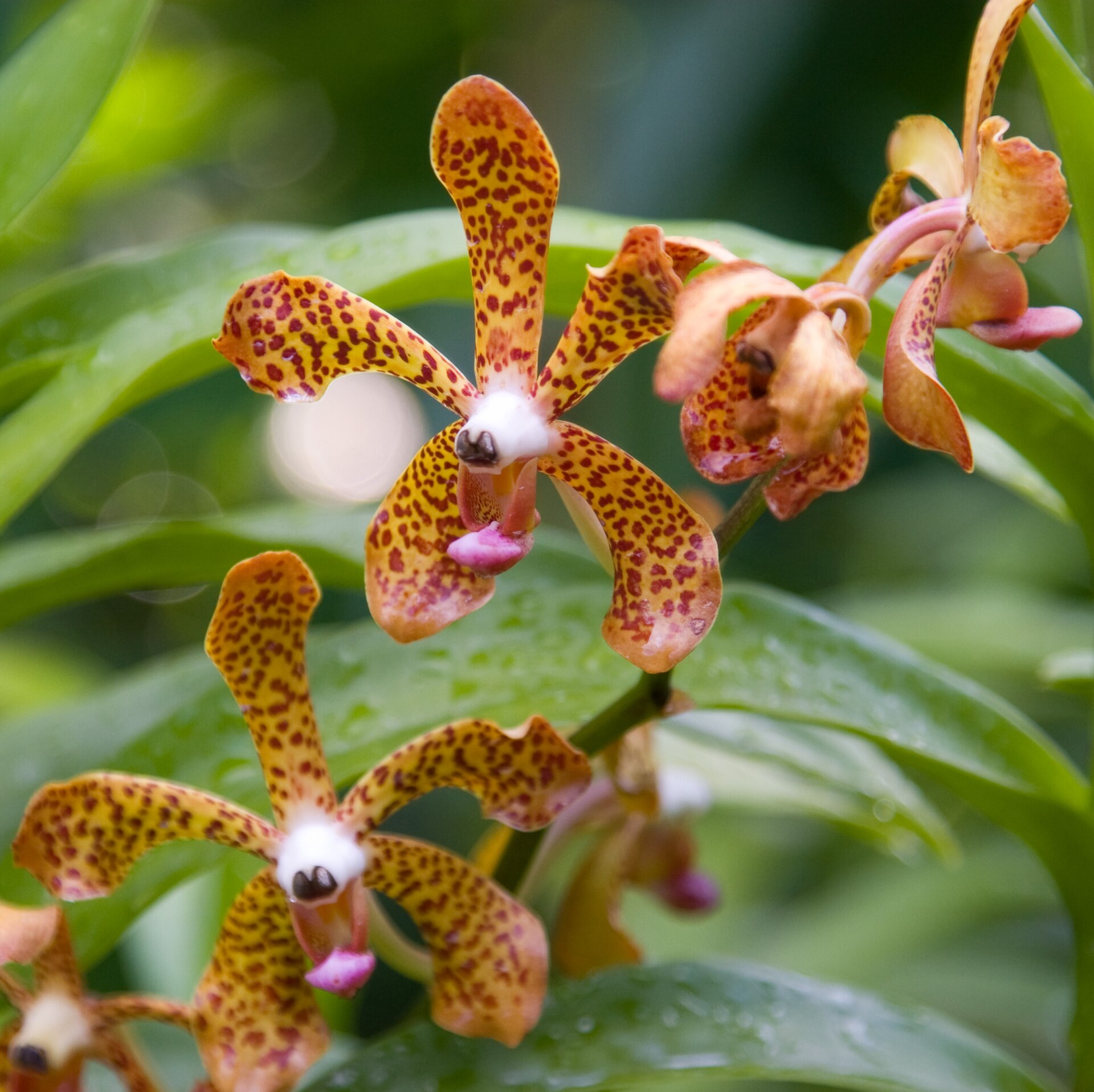
Aranda Orchid
Aranda (Arachnis × Vanda)
Aranda is a hardy hybrid orchid crossing Arachnis and Vanda, carrying rows of flat, often spotted or veined blooms along a tall, wiry spray — the reason it is nicknamed the scorpion orchid. Grown commercially in Singapore and Malaysia, it offers moody purples, blues and bronzed browns rarely found in cut flowers. Florists value it as a tropical line element that draws the eye upward in tall arrangements and modern event pieces. Robust and long-lasting for an orchid, it holds up to bolder, architectural designs.
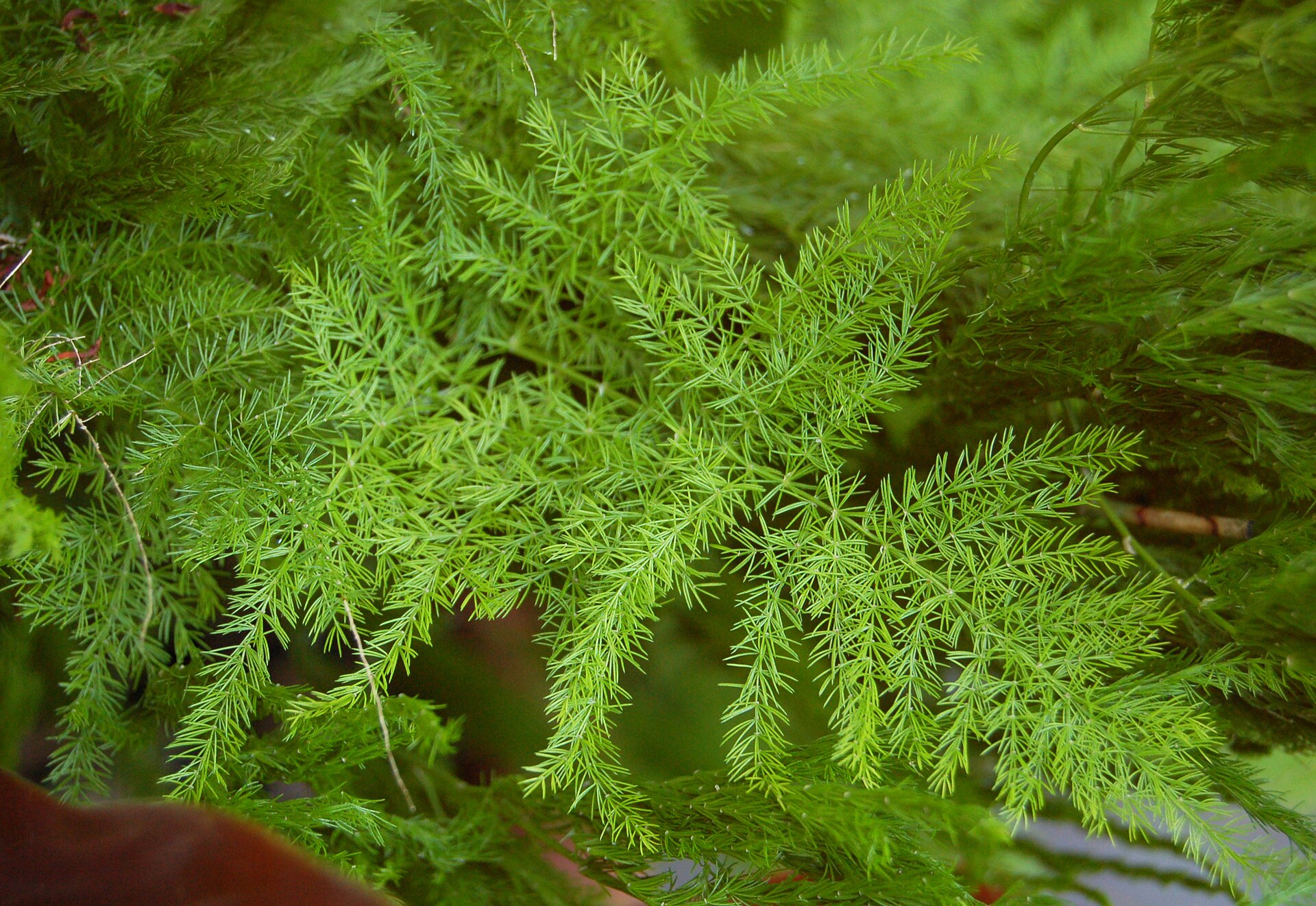
Asparagus Fern
Asparagus setaceus
Asparagus fern (Asparagus setaceus) is not a true fern at all but a member of the asparagus family, valued for its feathery, lace-like sprays of fine green needles. It brings soft, cloud-like texture and a delicate, airy elegance to bouquets and boutonnieres. The flat, horizontal fronds add width and a romantic, old-fashioned softness. It is affordable and widely available, though more perishable than tougher greens, so it is best used fresh.
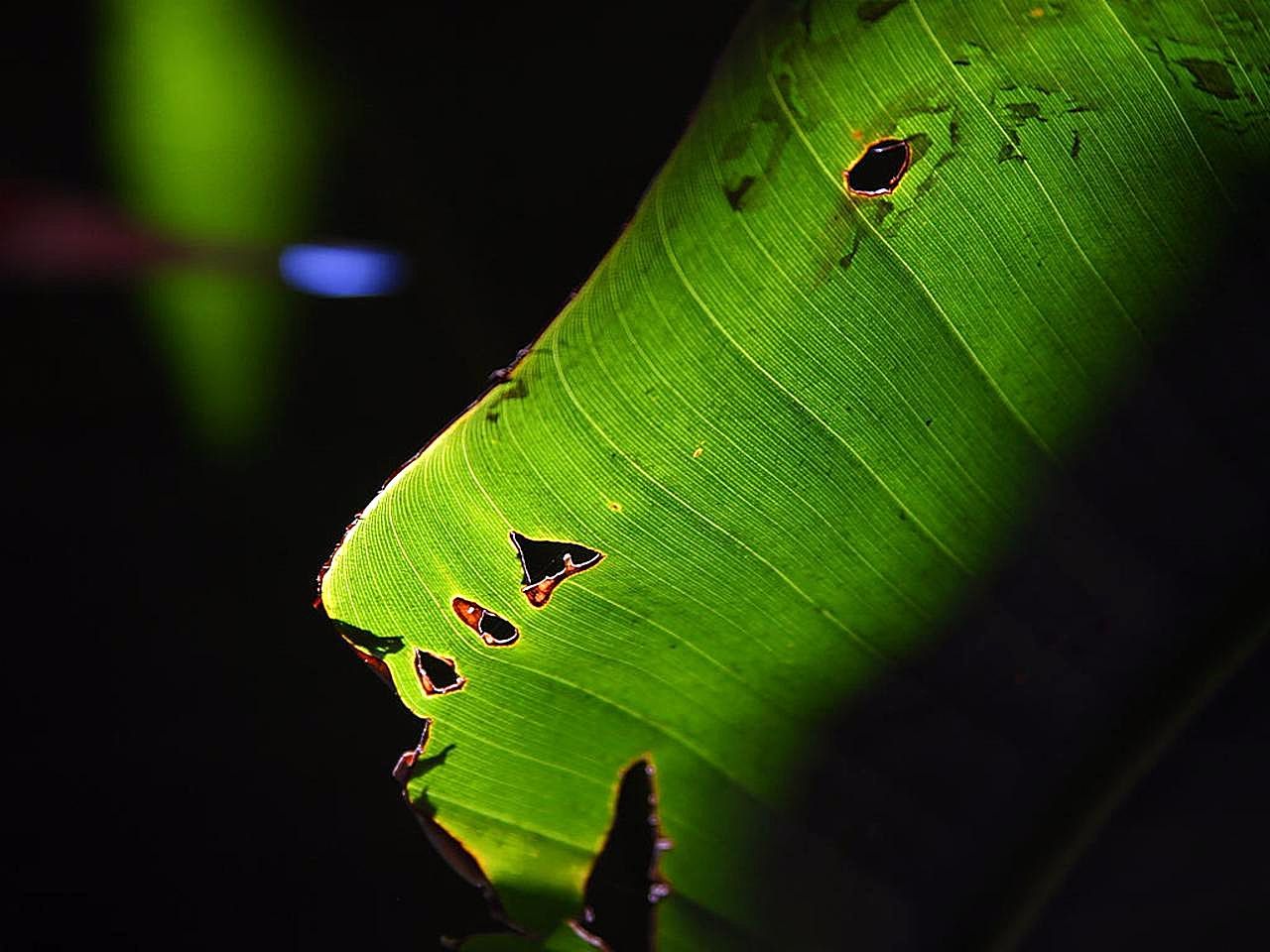
Banana Leaf
Musa × paradisiaca
Banana leaf is a broad, glossy paddle of foliage prized for its clean tropical geometry and versatility. Florists use it whole for bold architectural greenery, roll or fold it to line the inside of glass vases, or cut it into strips and sculptural forms for modern and tropical designs. Inexpensive and widely available year-round, it brings instant lushness and scale to installations and event work. It is best used fresh, as the cut blade gradually dries and curls at the edges.
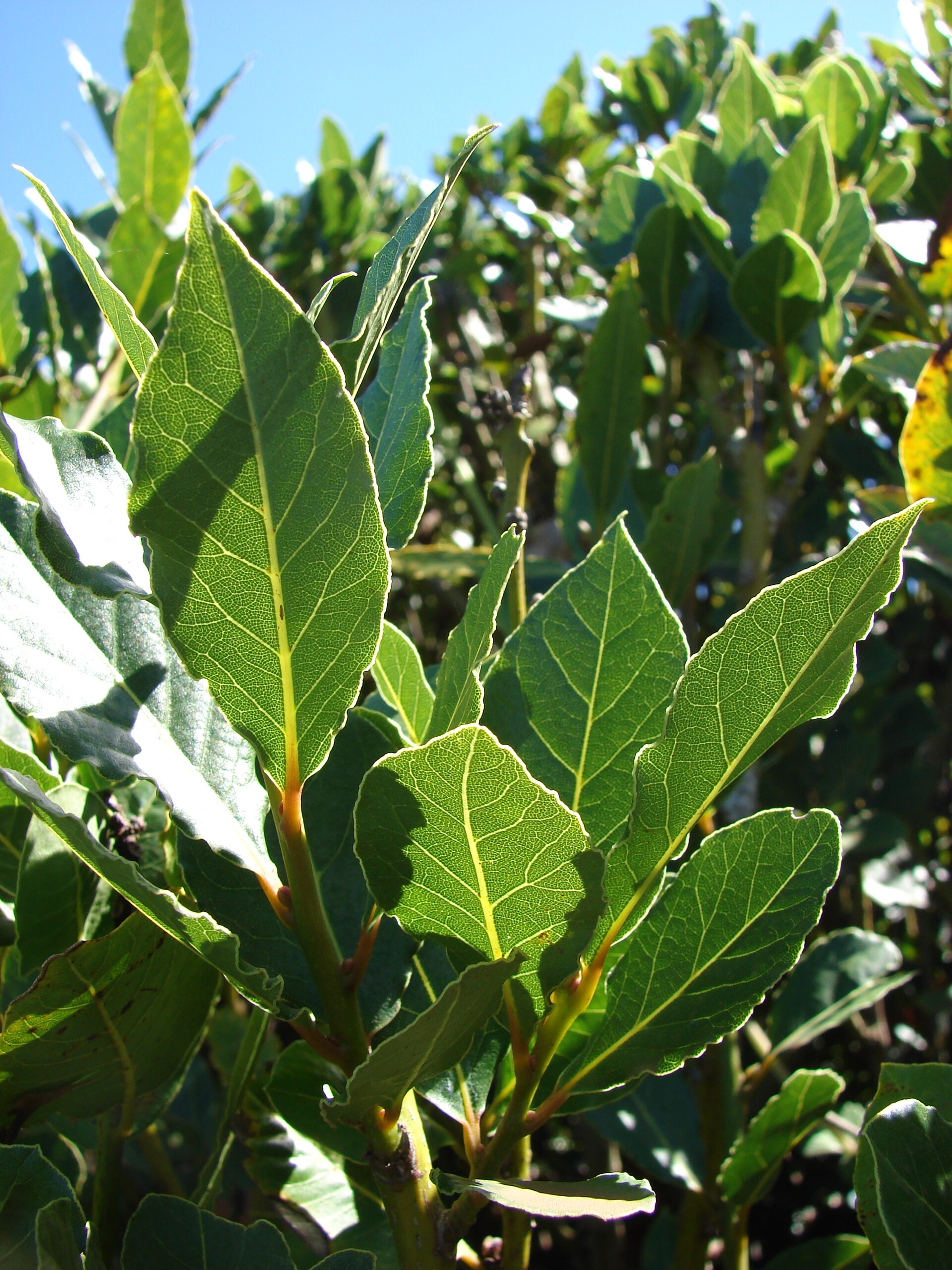
Bay Laurel
Laurus nobilis
Bay laurel (Laurus nobilis) is the aromatic evergreen of classical wreaths and Mediterranean cooking, valued by florists for its firm, glossy dark-green leaves and warm, spicy scent. The sturdy, upright stems make crisp foliage for garlands, wreaths and structured arrangements. Leaves are long-lasting and dry beautifully, holding shape and fragrance for months. Its rich history of honour and victory adds meaning to celebratory work.
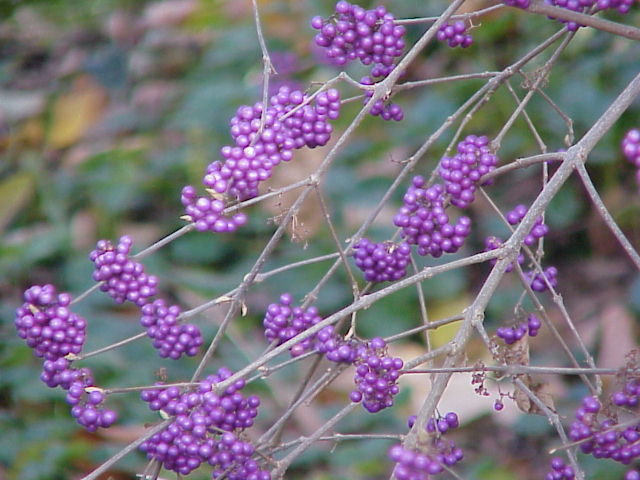
Beautyberry
Callicarpa bodinieri
Beautyberry is prized for its extraordinary clusters of tightly packed berries in an almost unreal metallic violet. Native to China, Callicarpa forms its fruit along bare or lightly leafed stems in autumn, giving florists a rare true-purple berry that photographs like jewellery. It brings a modern, jewel-toned accent to autumn bouquets, editorial work and moody seasonal arrangements. Because the foliage fades fast, florists strip the stems to let the striking berries stand alone.
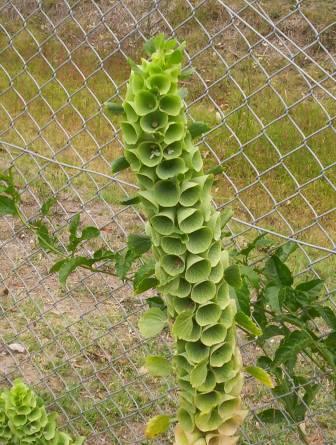
Bells of Ireland
Moluccella laevis
Bells of Ireland is a striking all-green line flower, its tall stems ringed with cup-shaped, apple-green calyces that look like a column of little bells. There is no petal colour to speak of — the appeal is entirely form and that fresh, unusual green, which makes it a favourite for adding height, structure and a botanical, garden-grown feel. Florists reach for it in tall arrangements, arches and monochrome-green designs, and it also dries and preserves well. Watch for the hidden spines when stripping the stems.
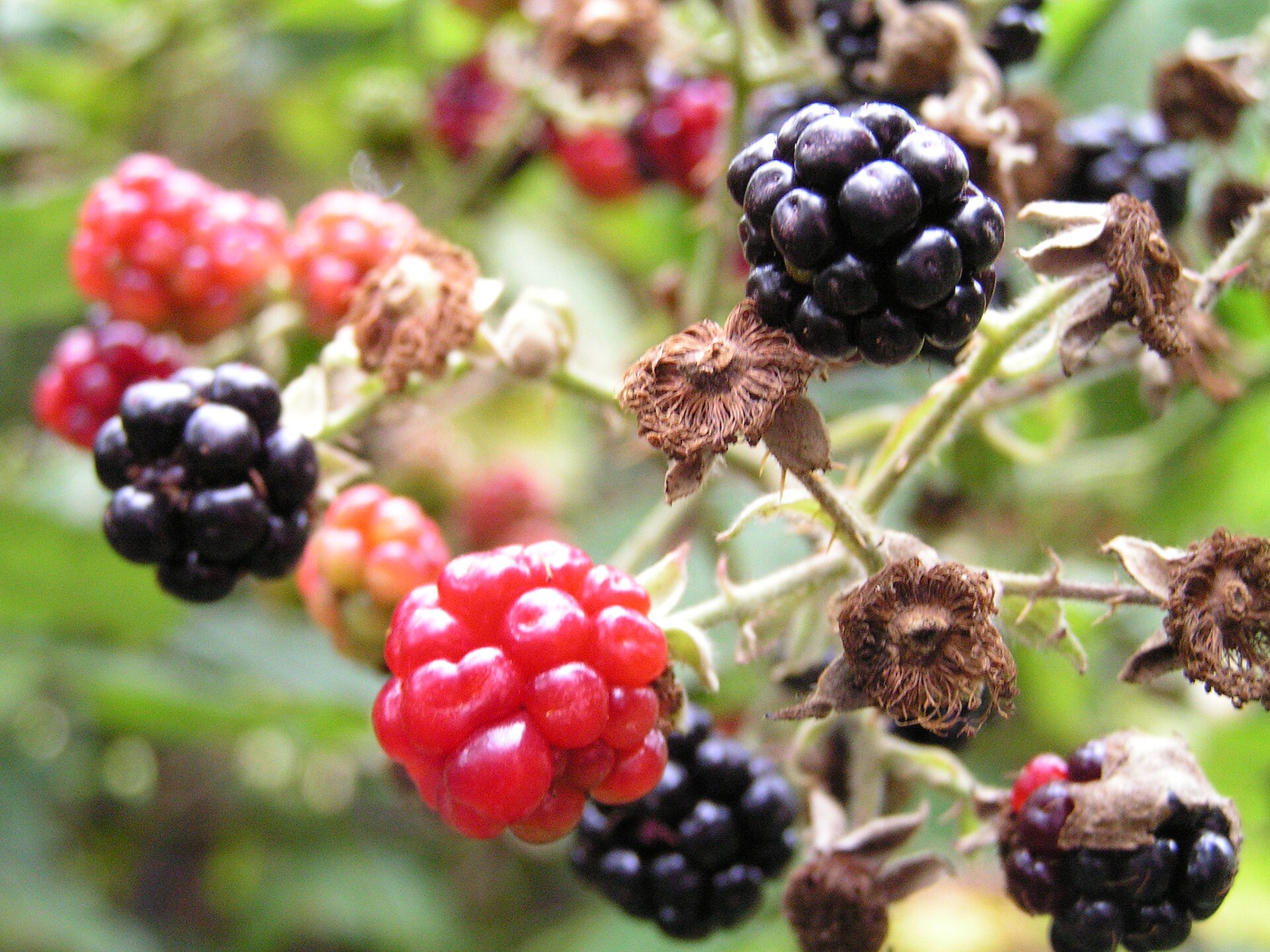
Blackberry Branch
Rubus fruticosus
Blackberry, or bramble, branches carry ripening fruit in a beautiful gradient from green through red to glossy black, often on the same arching stem. That natural colour range makes them a favourite for foraged, garden-style and editorial work through late summer and early autumn. Florists prize the wild, tumbling character they lend to loose bouquets and installations. The soft ripe fruit is short-lived and stains readily, so bramble is best used fresh for close-up seasonal moments.
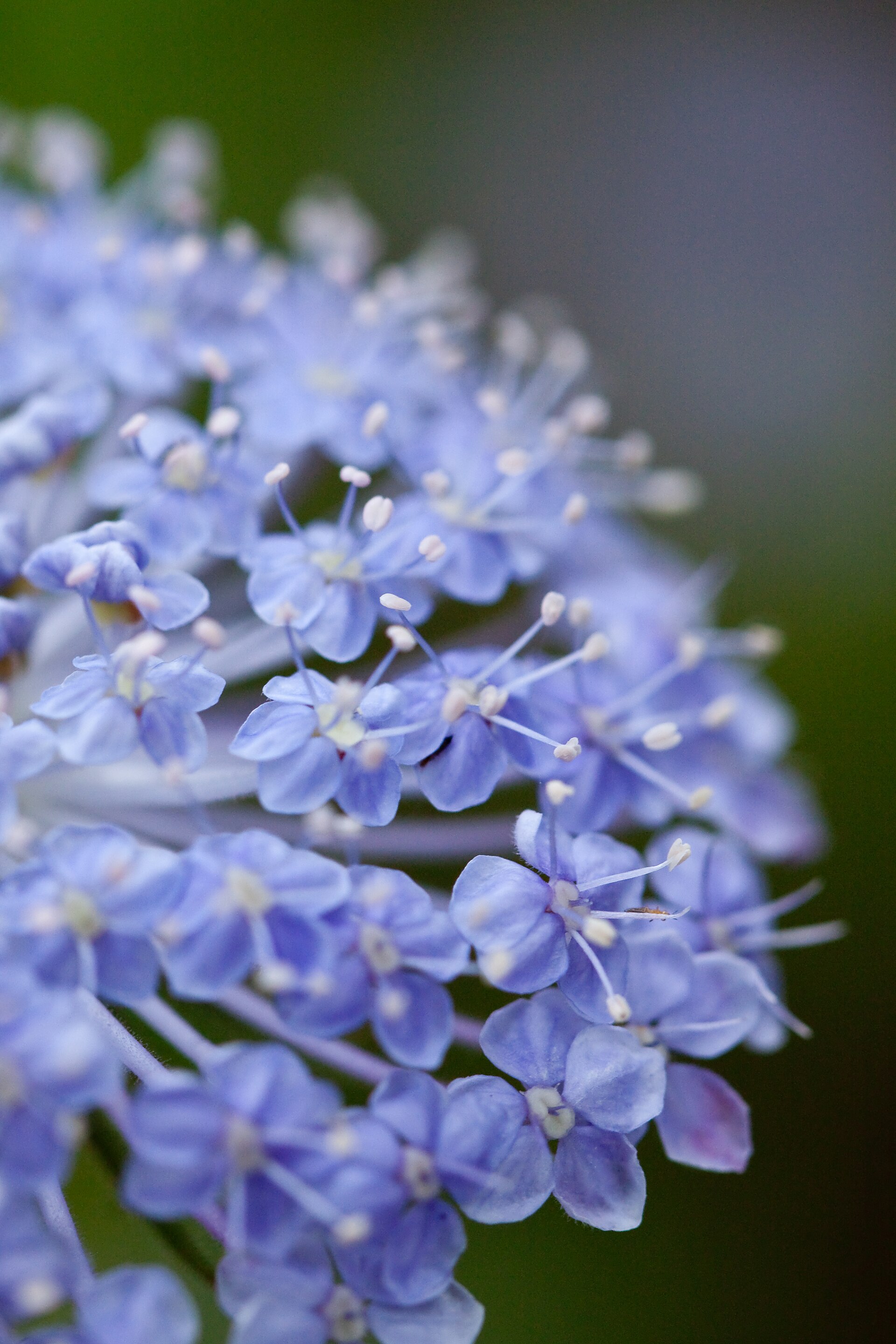
Blue Lace Flower
Trachymene coerulea
Blue lace flower is a tender annual from Western Australia, producing airy, domed umbels of tiny lavender-blue florets on slender stems. It offers florists one of the few genuinely blue lace-textured flowers, echoing the form of white ammi or orlaya but in cool, dreamy tones. It is a favorite filler for soft, romantic summer weddings and garden-style work. The delicate umbels bring a hazy, meadow-like softness that lightens denser arrangements.
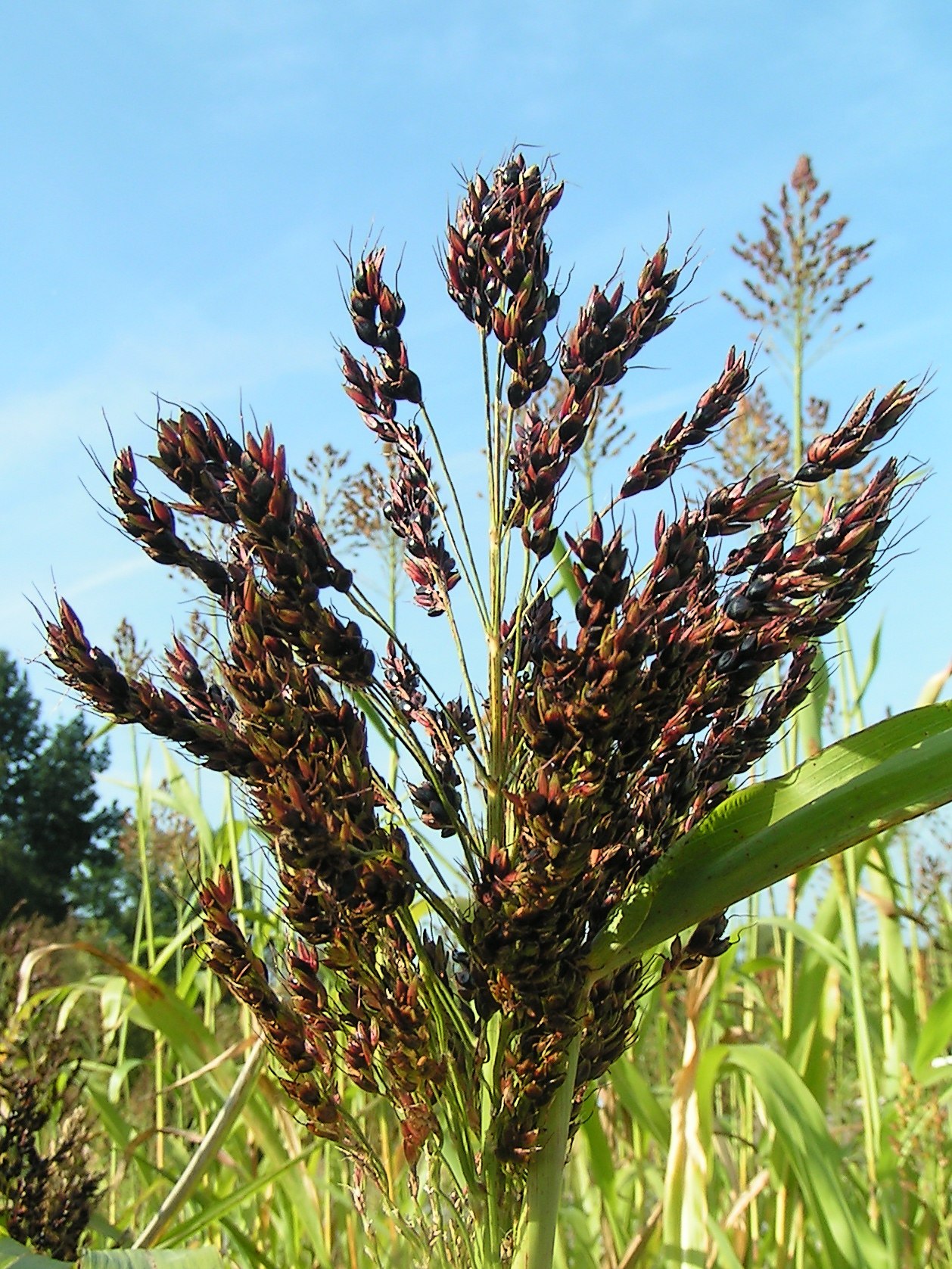
Broomcorn
Sorghum bicolor
Sorghum, or broomcorn, is a robust cereal grass grown for the large, branching seed heads that gave the traditional broom its bristles. In floristry those heavy heads bring bold, russet-to-burgundy texture and real presence to autumn and dried designs. Colours run from cream and bronze through deep red to near-black, and the sturdy stems dry easily into a graceful arc. Florists use it as a dramatic, harvest-toned accent that anchors rustic bouquets, installations and seasonal displays.
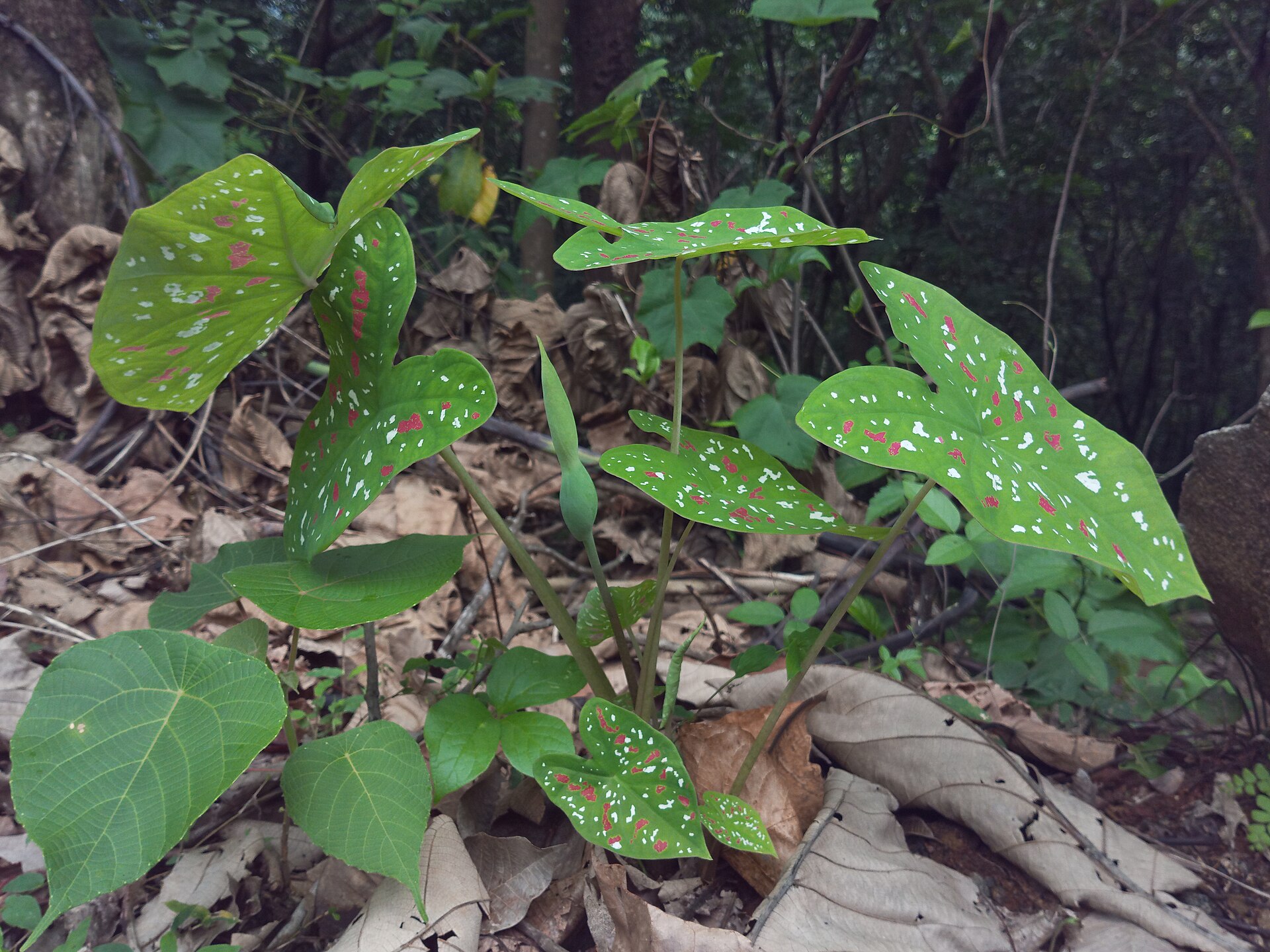
Caladium Leaf
Caladium bicolor
Caladium leaf is a painterly heart-shaped blade splashed with pink, red, white and green veining, giving it the nickname angel wings. Native to the Amazon, it brings extraordinary colour to tropical designs where most foliage stays plain green. Florists use it as a decorative accent leaf in bouquets, editorial pieces and low arrangements where its markings can be admired up close. It is delicate and short-lived once cut, so it rewards careful handling and warm conditions.
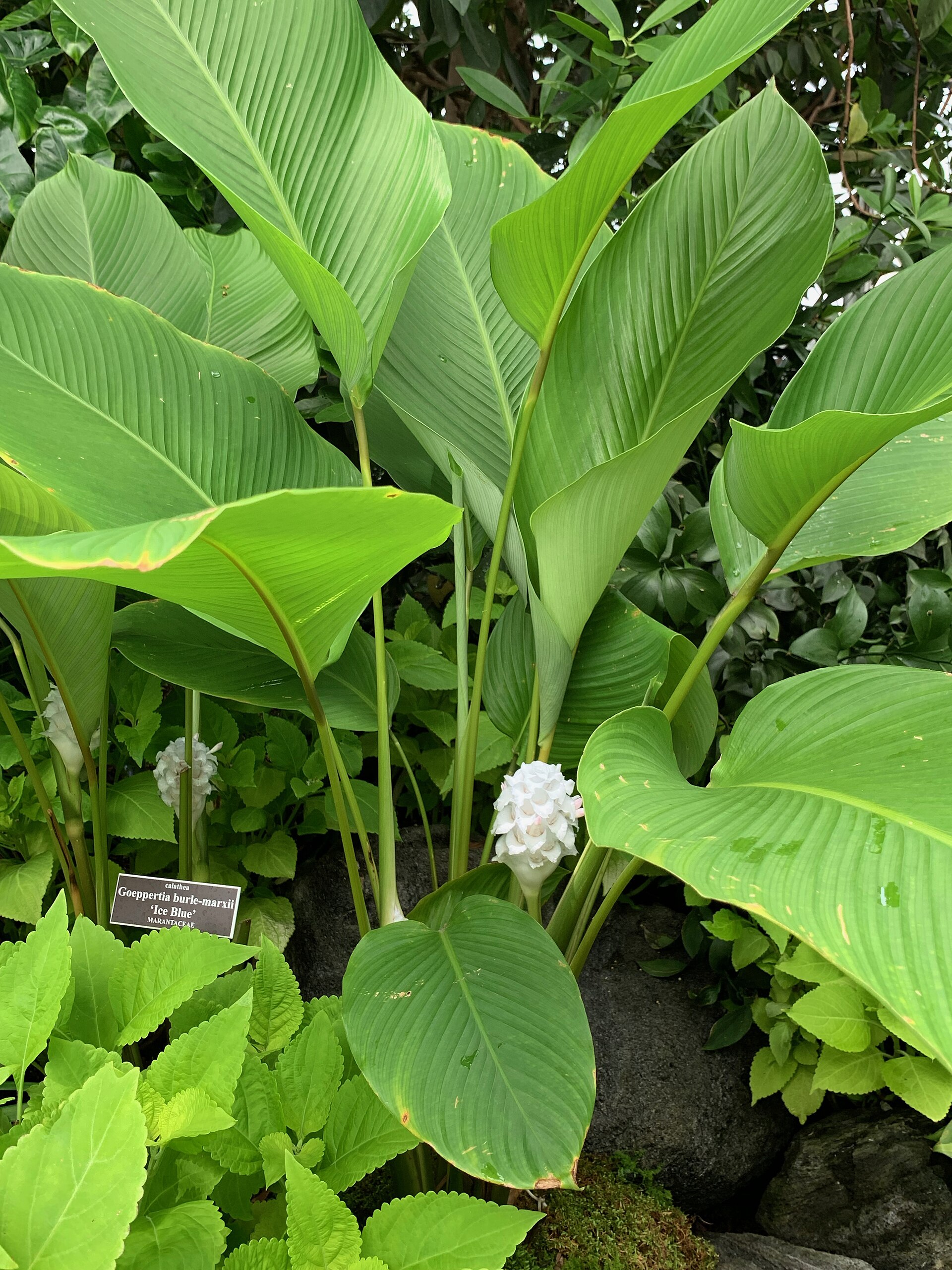
Calathea Leaf
Goeppertia (syn. Calathea)
Calathea leaf is a striking patterned foliage whose oval blades carry feathered stripes, spots or veins in deep greens, often with a dramatic burgundy underside. Native to the tropical Americas, it is a favourite for adding graphic texture and colour to modern and tropical arrangements. Florists use it both face-up for its peacock-like markings and reversed to show the wine-red back. More resilient as a cut than many exotic leaves, it holds its beauty for one to two weeks when kept warm and hydrated.
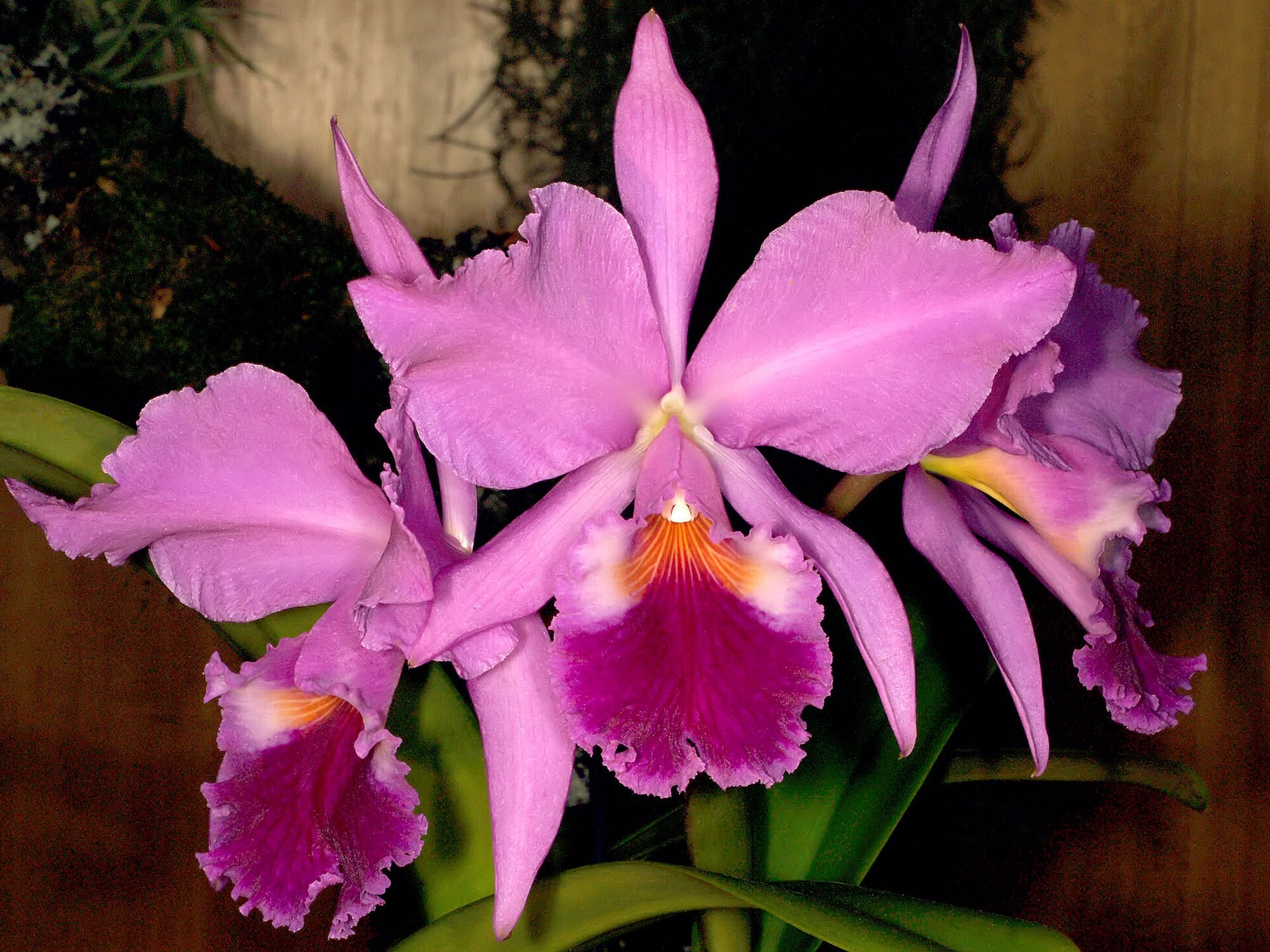
Cattleya Orchid
Cattleya
Cattleya is the classic 'corsage orchid' — large, ruffled and richly fragrant, with a flamboyant frilled lip that made it the emblem of old-fashioned glamour. Blooms come in lavender, white, pink, coral and yellow, often with a contrasting throat, and their heady perfume sets them apart from most orchids. More delicate and shorter-lived than dendrobium or vanda, cattleya is used where it can be shown off: corsages, boutonnieres and luxury focal work. It remains a traditional Mother's Day flower and a byword for refined, showy beauty.
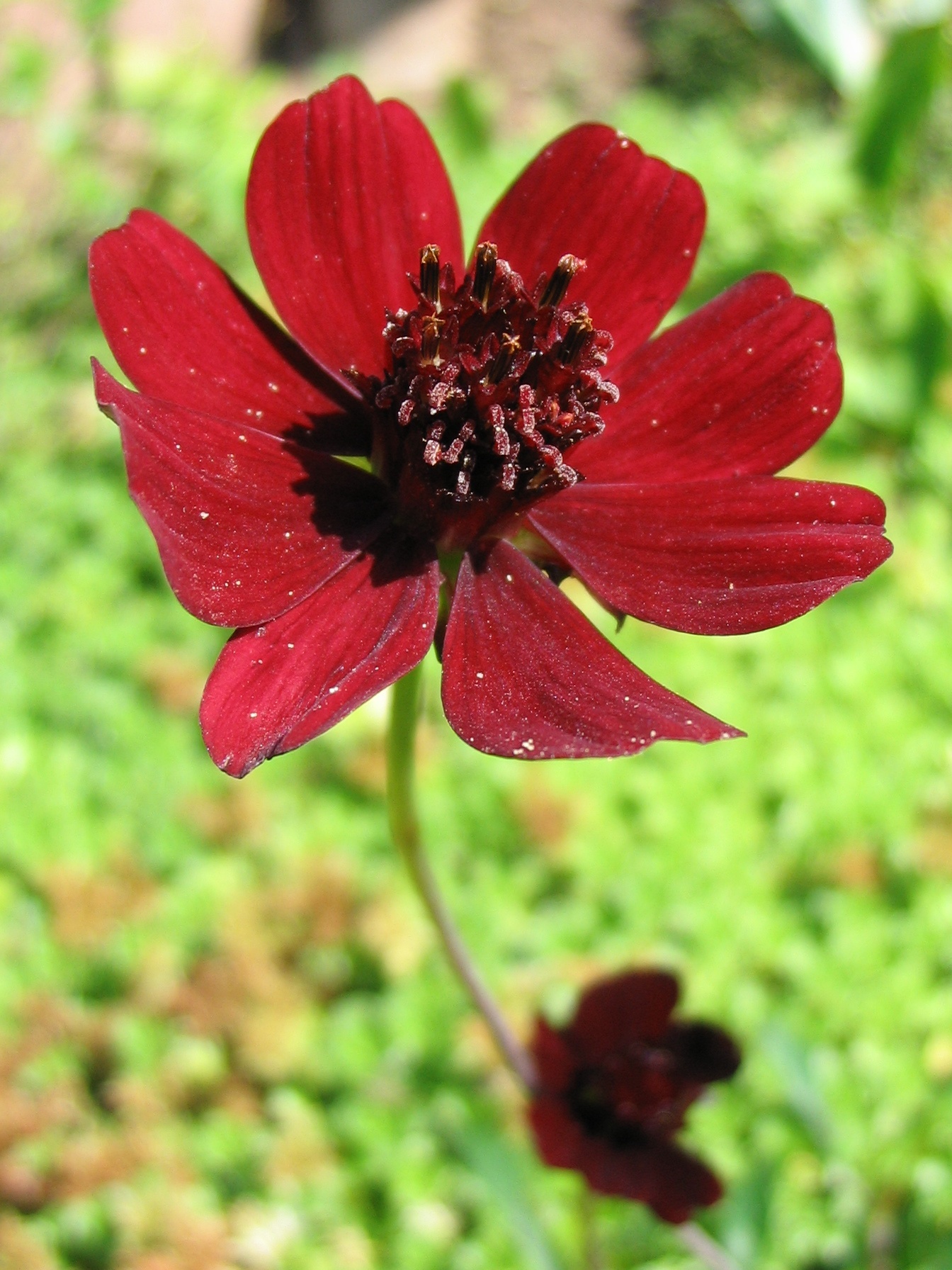
Chocolate Cosmos
Cosmos atrosanguineus
Chocolate cosmos is a coveted rarity: small, velvety daisy flowers in deep maroon-brown that carry a genuine scent of chocolate and vanilla. Florists treasure it for luxury and editorial work where its moody, near-black tone and unique fragrance set an arrangement apart. The blooms sit on fine, dark stems and read as jewel-like accents rather than mass flowers. Delicate, seasonal and premium-priced, it is a designer's flower for intimate, sophisticated palettes.
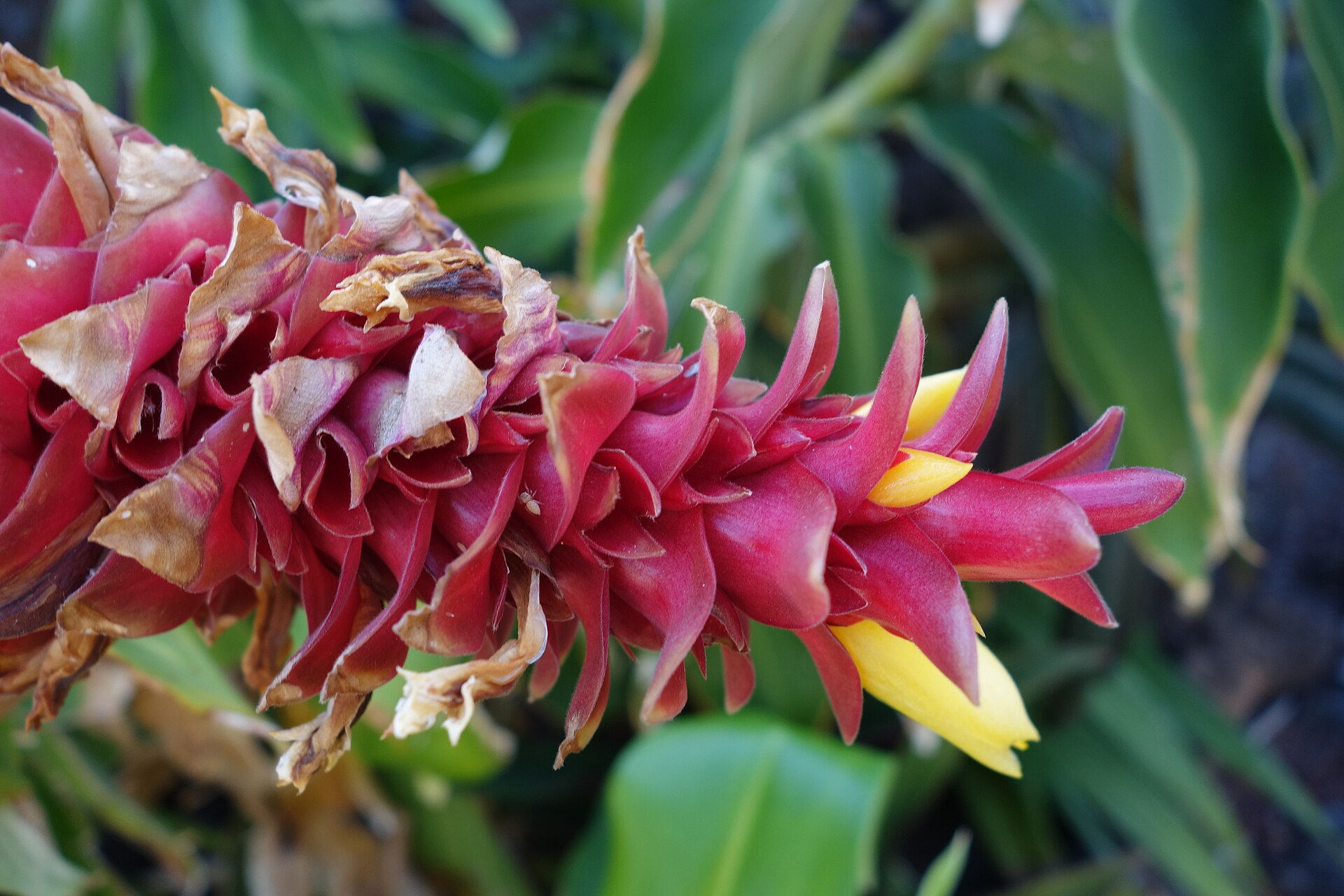
Costus
Costus barbatus
Costus, the spiral ginger, forms a striking cone of waxy crimson bracts arranged in an overlapping spiral, from which small tubular yellow flowers peek. A member of the spiral-ginger family Costaceae and native to Central America, it delivers the same tropical drama as true ginger with a distinctive geometric twist. Florists use it as a sculptural focal in tropical event work, tall arrangements and installations, where its bold red tower holds attention. Sturdy and long-lasting, it is an easygoing exotic that keeps its colour for well over a week.
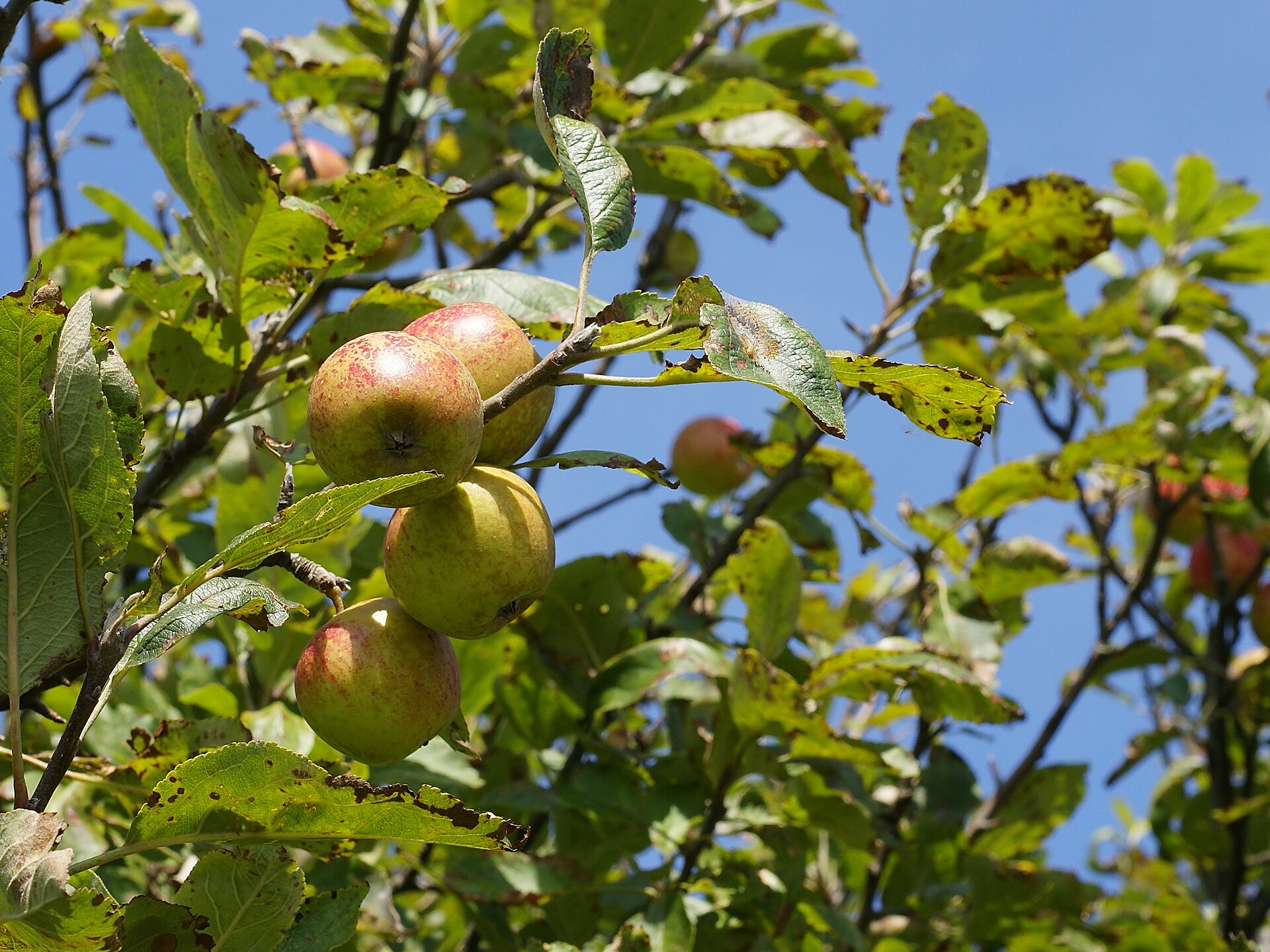
Crab Apple
Malus sylvestris
Crab apple branches carry clusters of glossy miniature apples in shades of red, gold and burgundy, often still clothed in autumn leaves. Their weight and orchard character make them a natural focal texture for large-scale seasonal and editorial designs. Florists use them to add depth, movement and a sense of ripe abundance to autumn arch installations and tall arrangements. Firm and long-lasting, the fruit holds its colour well when kept cool.
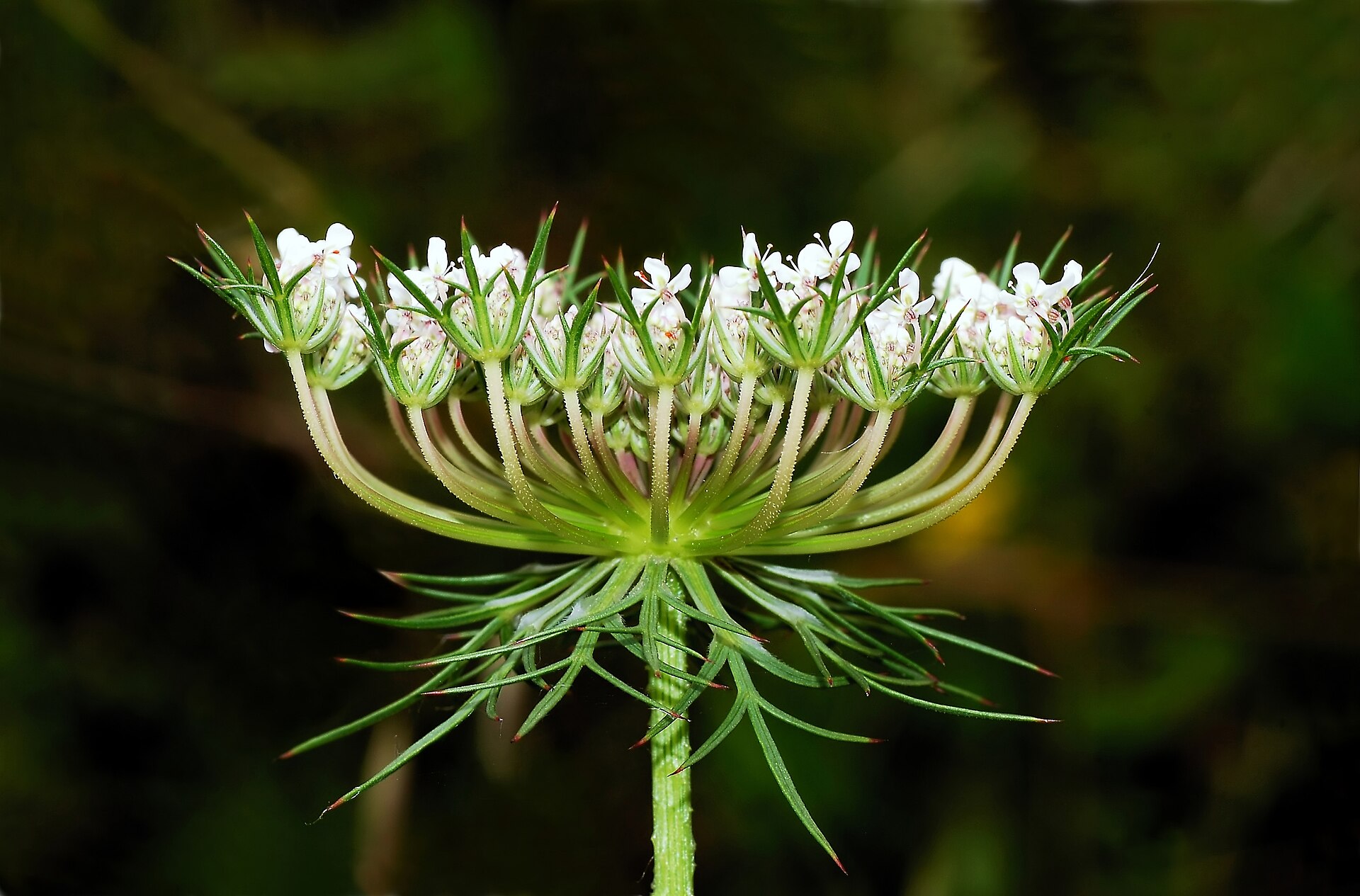
Daucus (False Queen Anne's Lace)
Daucus carota
Daucus is cultivated wild carrot — the florist's refined take on Queen Anne's lace, with lacy flat umbels of tiny florets. The smoky-plum 'Dara' and dusky-pink forms are wedding favourites, threading airy texture and cottage-garden softness through bouquets and centrepieces. It reads as a cloud of fine lace, pairing effortlessly with roses, dahlias and grasses. Choose stems with their umbels well open for the best vase performance.
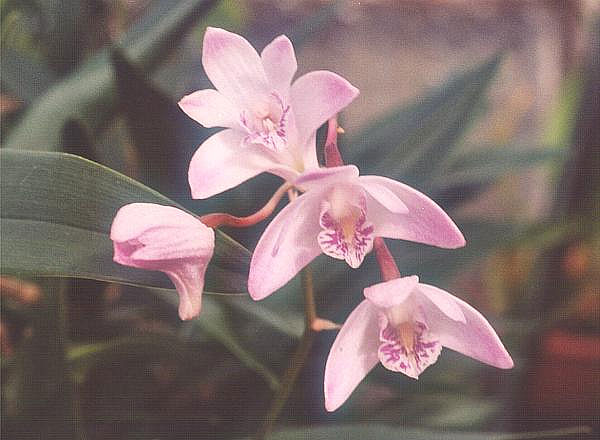
Dendrobium Orchid
Dendrobium
Dendrobium is one of the largest orchid genera, and its long, arching sprays of waxy florets are a florist staple grown year-round in Southeast Asia. Prized for exceptional vase life and a clean, architectural line, each stem carries anywhere from a handful to a dozen blooms in white, purple, pink, green and lime. Florists reach for it in bridal work, corsages and tropical designs, while single florets are ideal for cake work and boutonnieres. Sturdy yet elegant, it delivers exotic polish at a friendlier price than most orchids.
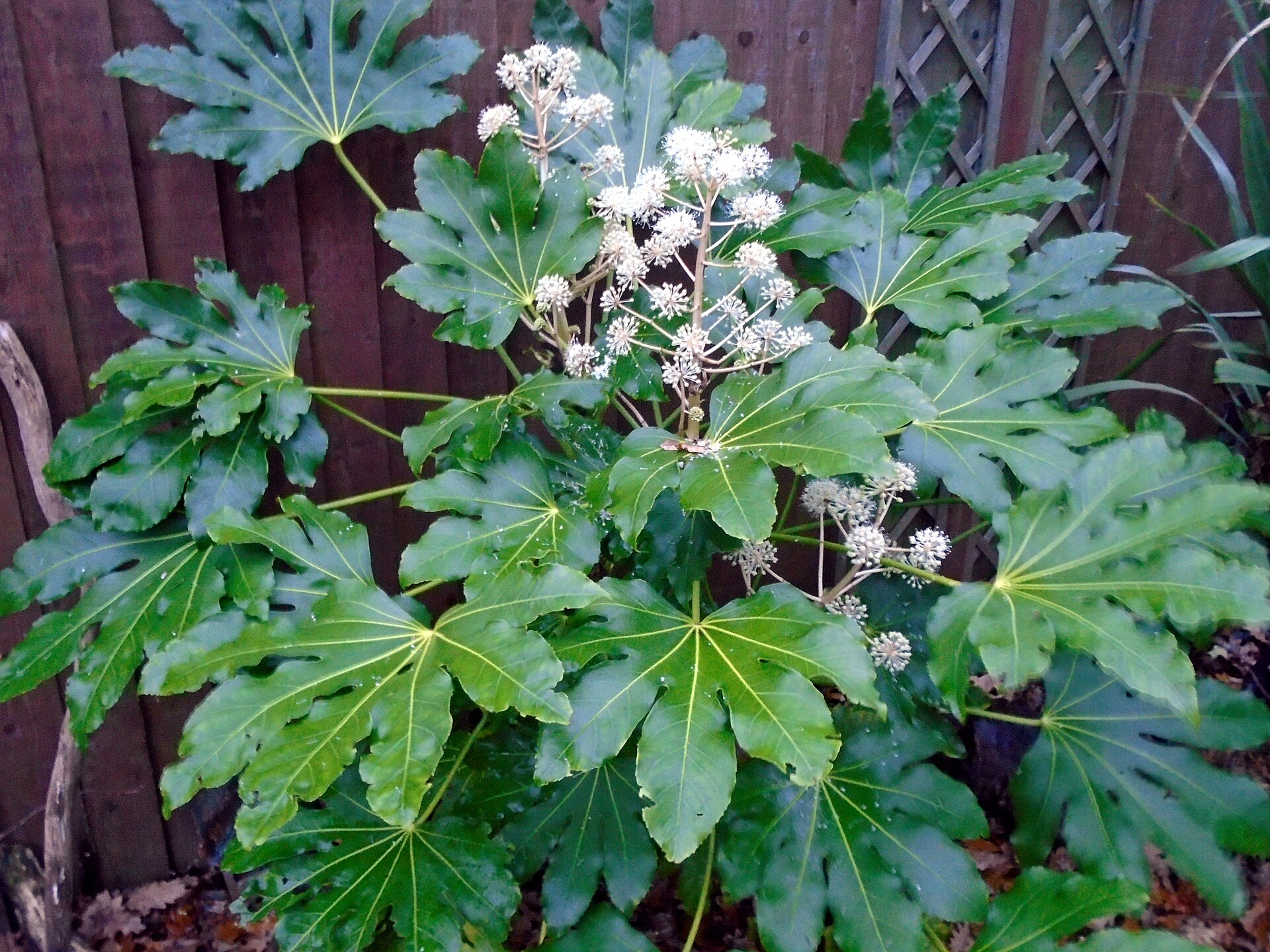
Fatsia Leaf
Fatsia japonica
Fatsia japonica supplies large, glossy, deeply lobed leaves shaped like an open hand, bringing bold tropical structure to designs. Its architectural foliage anchors modern arrangements, large-scale installations and statement bouquets with a single dramatic leaf. Rich green and hard-wearing, it also appears in cream-variegated forms for extra impact. Florists prize its clean lines, sculptural silhouette and long-lasting durability.
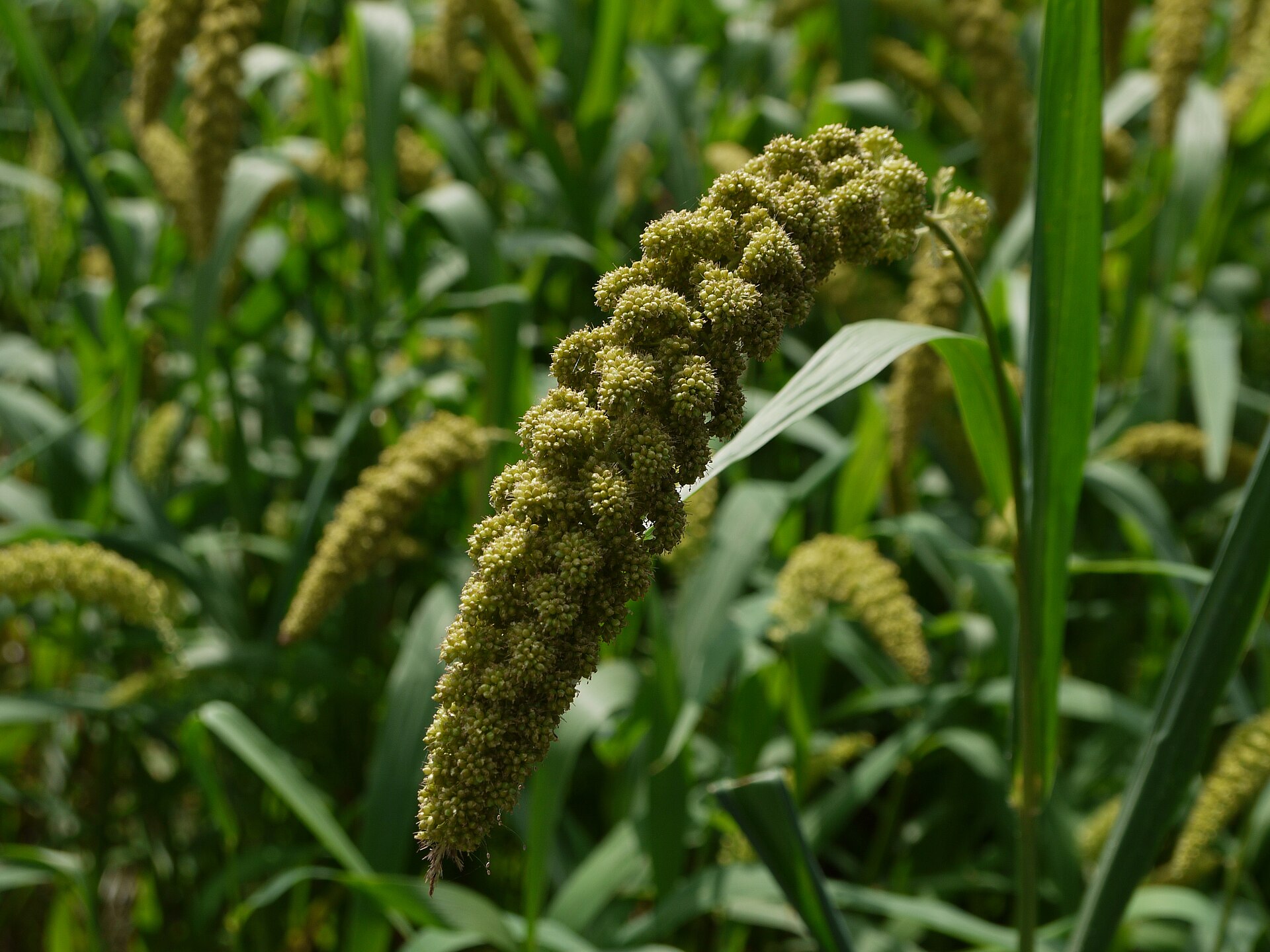
Foxtail Millet
Setaria italica
Setaria, foxtail millet, is a cultivated grass grown for its plump, nodding, bottlebrush seed heads that arch over on slender stems. Its soft, tactile foxtails read as playful and abundant, adding weight and a harvest feel to autumnal and boho designs. Heads range from fresh green through gold to bronze as they ripen, and they dry well while keeping their curved, drooping silhouette. Florists use it as a textural line-and-filler element that brings gentle movement to bouquets and installations.
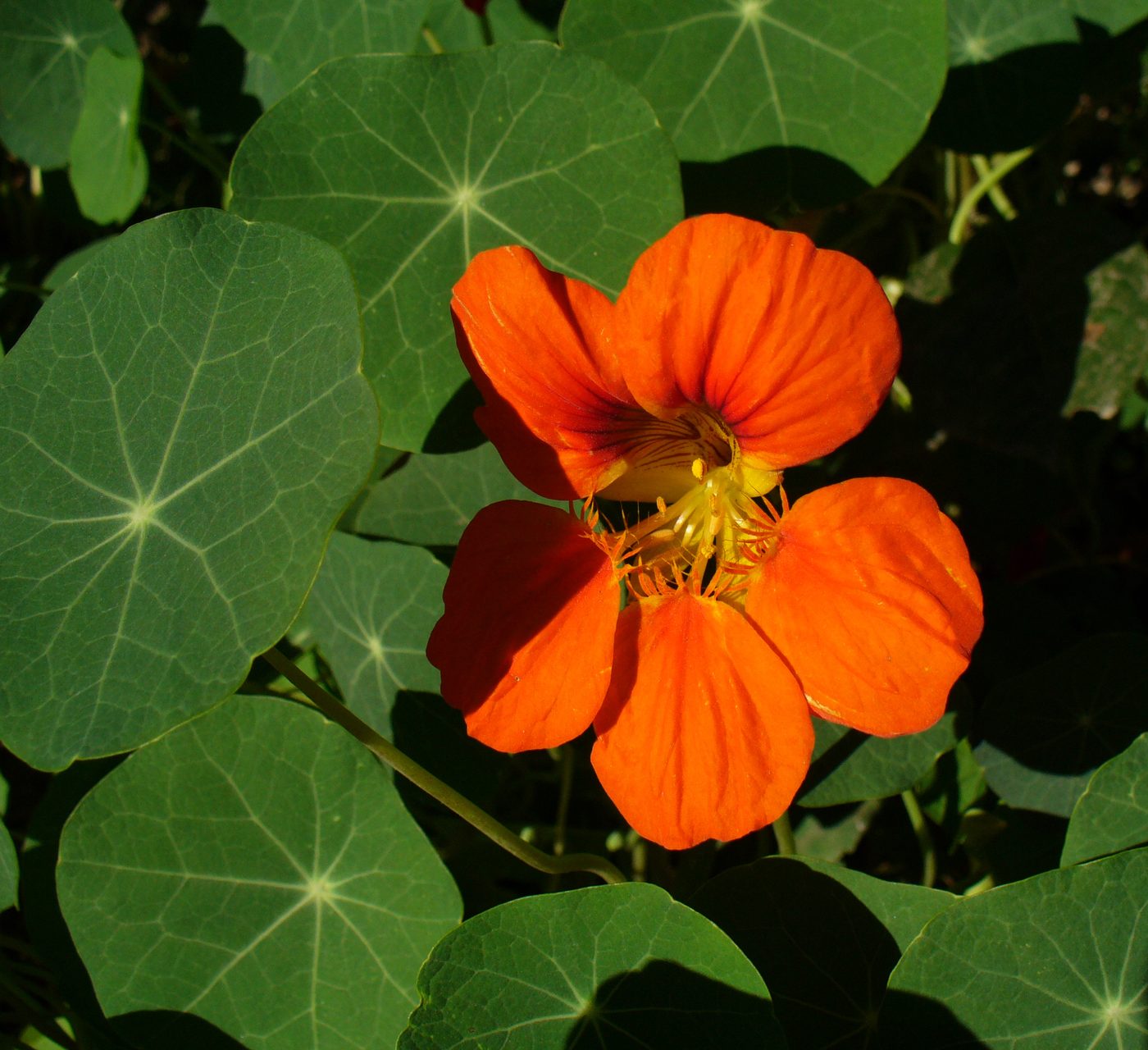
Garden nasturtium
Tropaeolum majus
Nasturtium is the vining, edible flower of the garden-to-cake movement — peppery petals used in salads and on wedding cakes, round shield-leaves as textural interest, trailing stems that cascade over bouquet edges. Fragile and hyper-seasonal; buy from local farms during summer only.
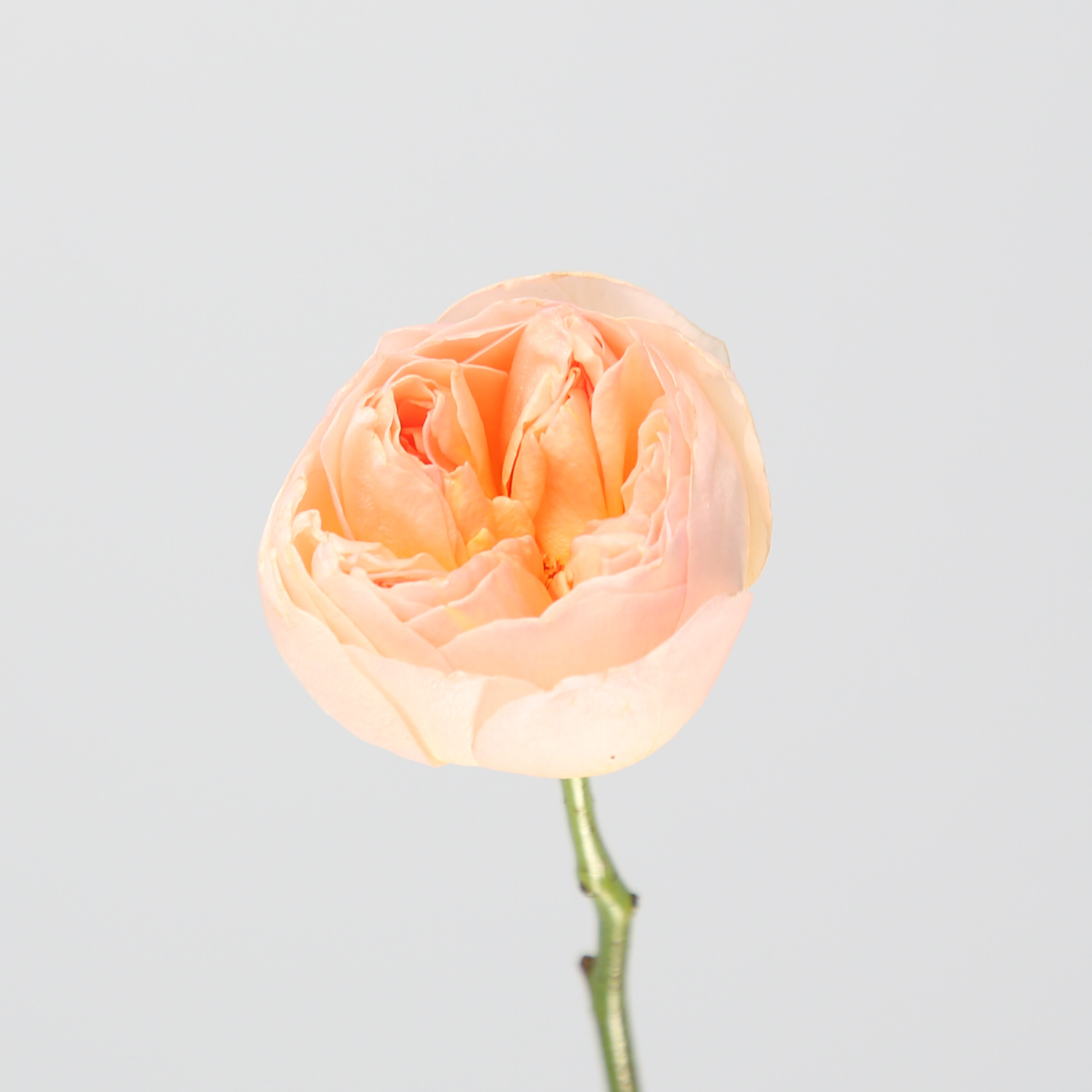
Garden rose
Rosa (David Austin & similar)
Garden roses combine the fullness of old European varieties (60–120 petals) with the disease resistance and vase life of modern cut roses. David Austin's cut collection dominates the wedding market: Juliet (peach), Keira (blush), Patience (cream). Compared to standard commercial roses, garden roses have a larger, cupped head, subtle fragrance, and a shorter vase life. In a bouquet they play the role of the focal centre — the flower the eye lands on first.
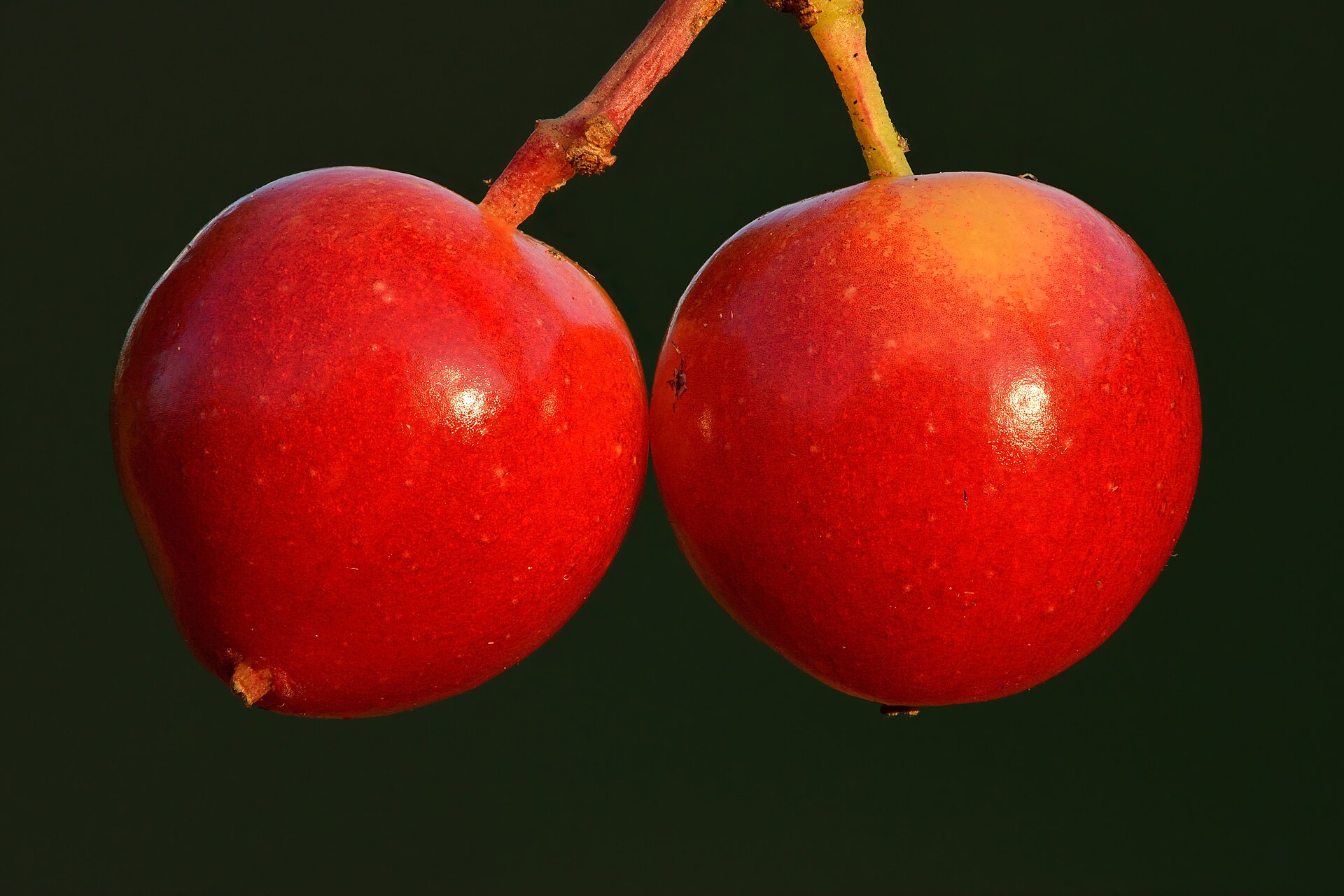
Guelder Rose Berries
Viburnum opulus
Guelder rose is the berried form of Viburnum opulus, prized in autumn for its heavy clusters of glossy, near-translucent scarlet berries that catch the light like glass beads. Where the spring 'snowball' viburnum offers creamy flower globes, the autumn stem is all about jewel-toned fruit and rich seasonal colour. Florists reach for it to add ripe, orchard-like abundance to rustic and editorial autumn work. It is best used fresh and kept cool, as the soft berries drop once past their peak.
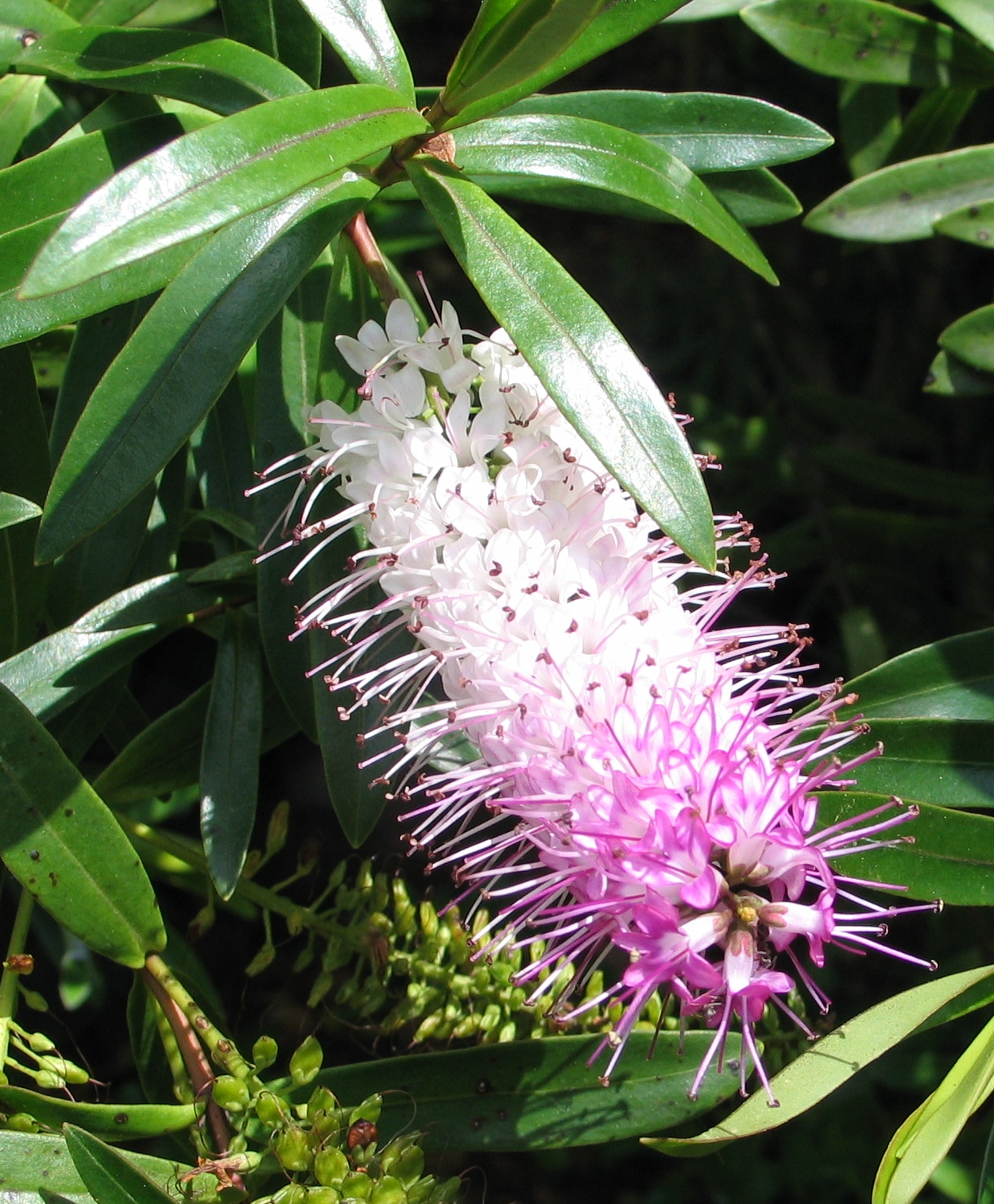
Hebe
Hebe speciosa
Hebe is a compact evergreen shrub, once classed within Veronica, prized for its tidy rosettes of small, symmetrical leaves. Green and variegated forms alike bring a clean, structured texture to bouquets and buttonholes, while flowering stems add slender spikes of purple or white. Its uniform, architectural growth makes it an easy, reliable filler that holds shape without dominating a design. Florists reach for hebe when they want neat, modern greenery with year-round availability.
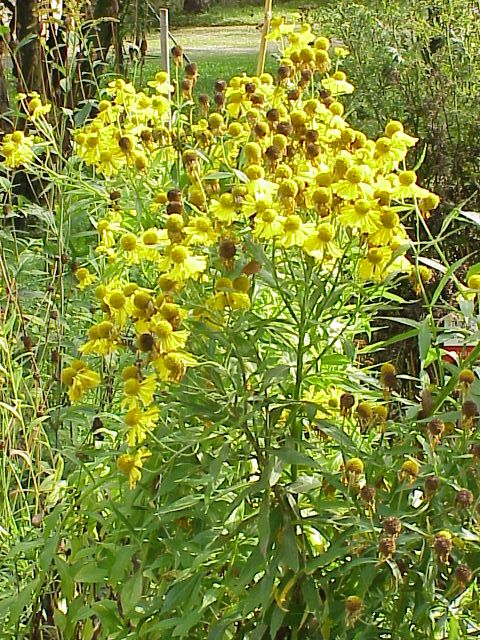
Helenium
Helenium autumnale
Helenium brings the burnished reds, coppers and golds of late summer to the vase, its small daisy heads clustering on branching, wiry stems. Florists reach for it to inject fiery warmth and movement into autumn and prairie-style work. The petals fold back slightly around a prominent central boss, giving each bloom a lively, spinning look. Best used fresh and kept well watered, it is one of the defining flowers of the September garden.
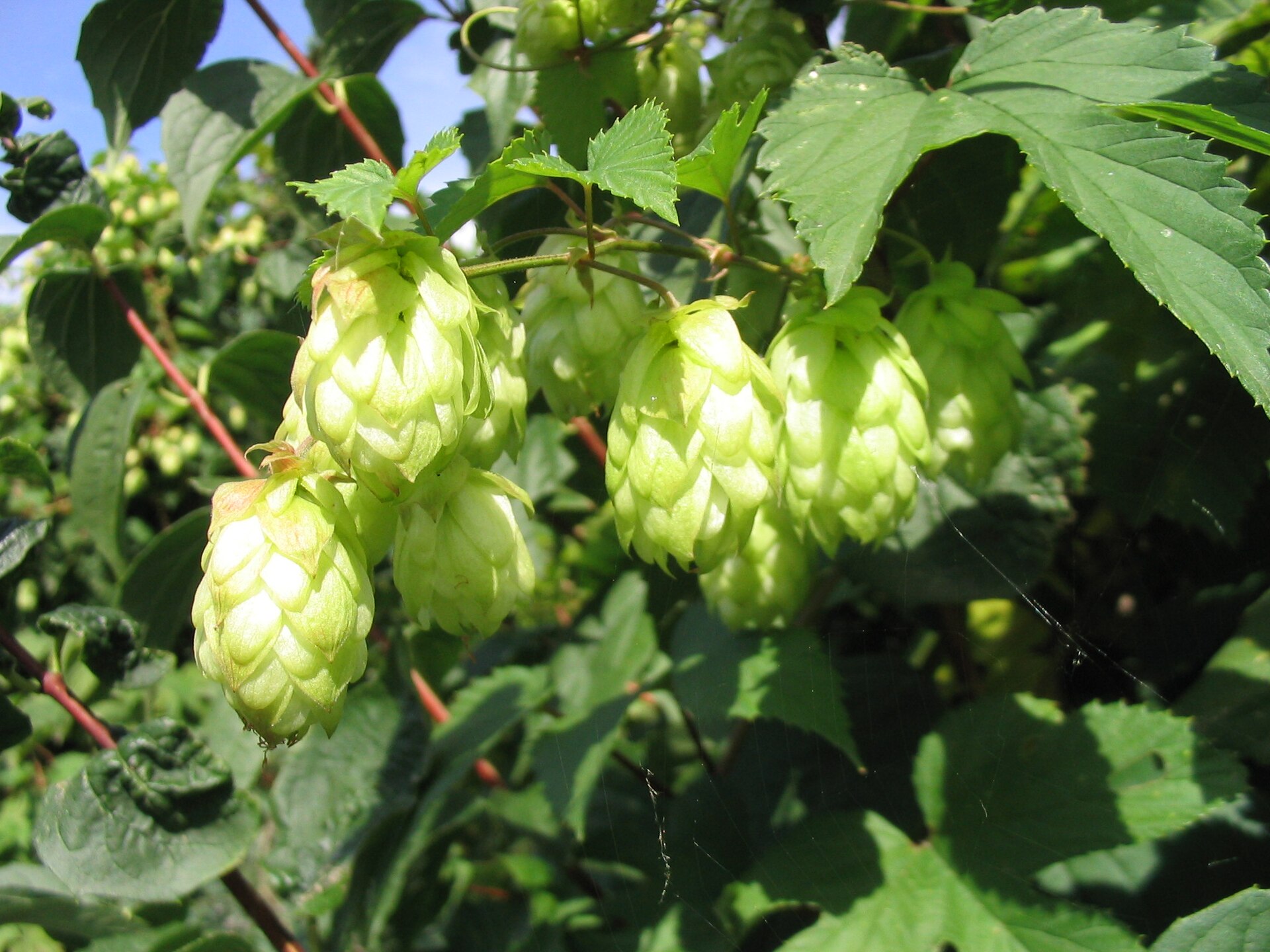
Hops
Humulus lupulus
Hops are the papery, cone-like flowers of Humulus lupulus, the climbing vine grown for brewing. In floristry the fresh green cones bring a soft, textural, cottage-garden feel to garlands, arches and autumn arrangements, and they dry beautifully for lasting work. Their trailing bines add gentle movement and a rustic, harvest-season character. They are a seasonal favourite for late-summer and autumn weddings.
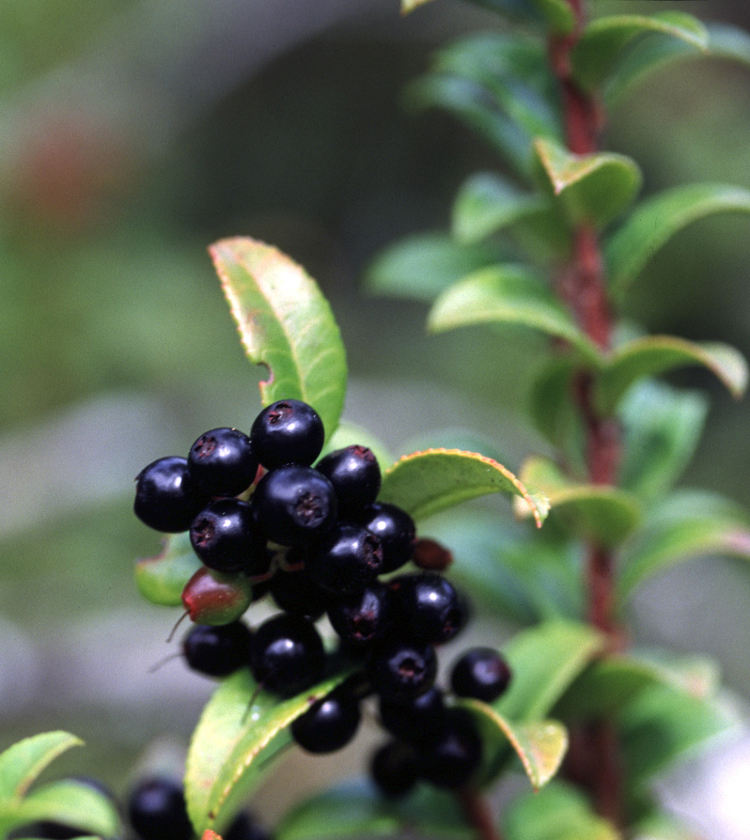
Huckleberry
Vaccinium ovatum
Evergreen huckleberry offers slender, arching branches lined with small, glossy, dark-green leaves that flush bronze-red on new growth. Sustainably wild-harvested in the Pacific Northwest, it is a beloved cut green for its graceful movement and fine texture. Florists use it to add length, airiness and a natural, woodland feel to bouquets and arrangements. Its delicate, tapering stems soften formal designs and lend rustic charm.
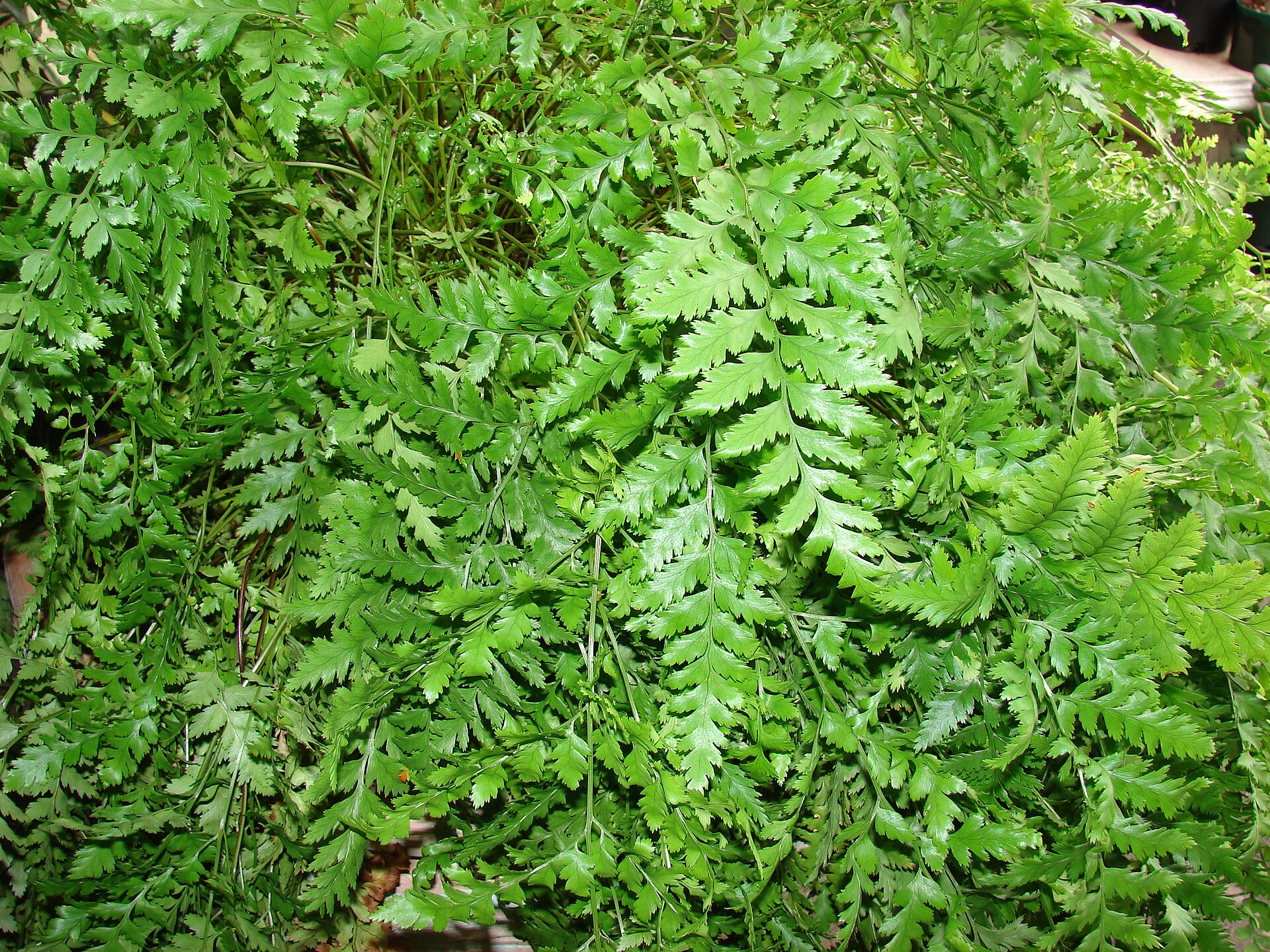
Leatherleaf Fern
Rumohra adiantiformis
Leatherleaf fern (Rumohra adiantiformis) is the florist's default fern — a tough, triangular frond with a firm, almost plasticky texture that holds up far better than most ferns out of water. Deep glossy green and finely divided, it adds airy depth and a woodland feel without wilting. It is grown commercially on a huge scale and is one of the cheapest, most available cut greens worldwide. Florists use it to back corsages, line hand-tied bouquets and soften funeral and everyday designs.
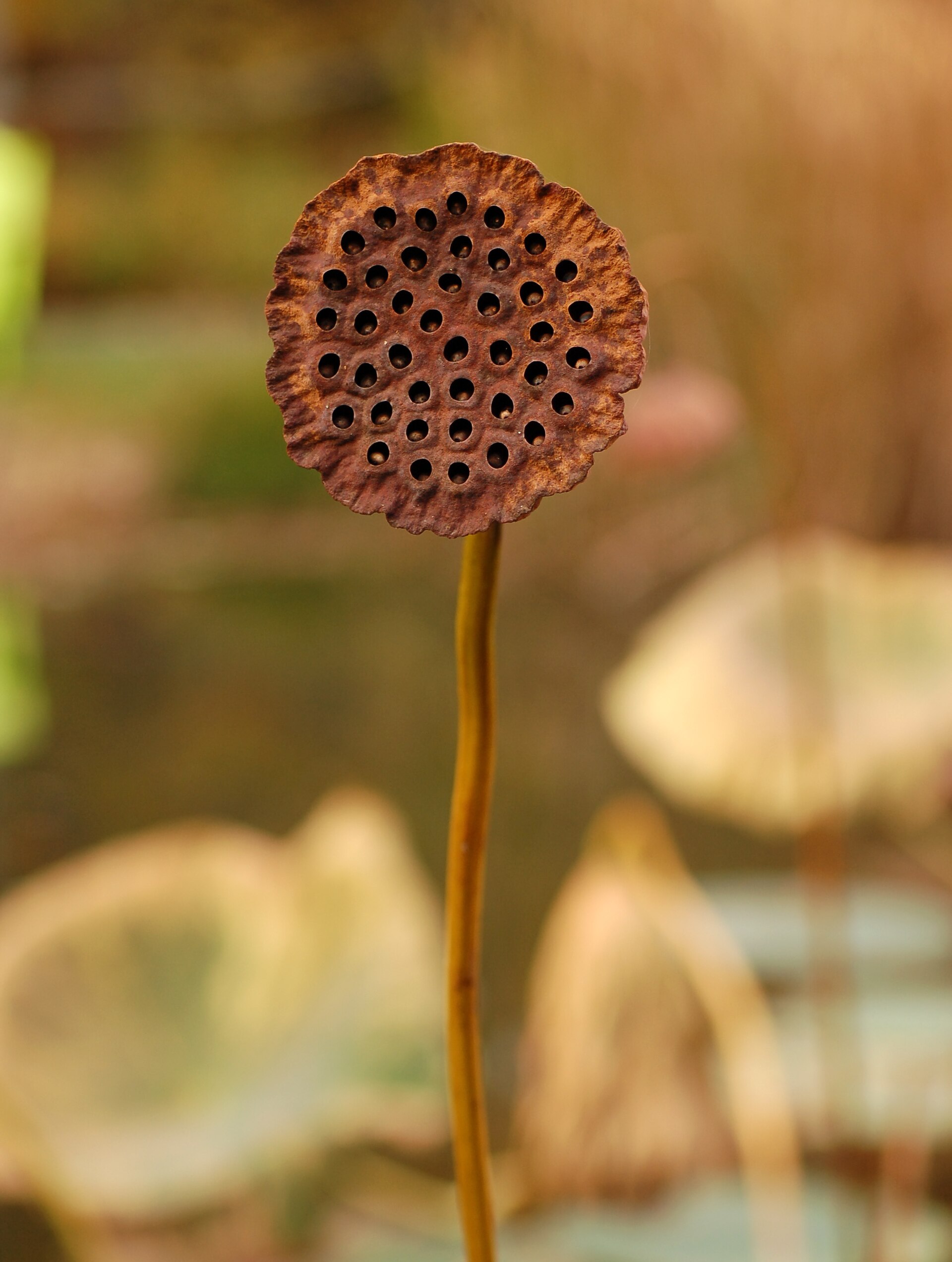
Lotus Pod
Nelumbo nucifera
The lotus pod is the woody seed head of the sacred lotus, a sculptural, honeycombed disc that brings bold, architectural texture to modern and dried design. Fresh pods read cool green and gradually cure to a rich woody brown that lasts indefinitely once dried. Florists use them as arresting focal accents in installations, autumn arrangements and editorial work, where their graphic form contrasts beautifully with softer blooms. Long-lasting and endlessly reusable, they are a staple of the dried and textural palette.
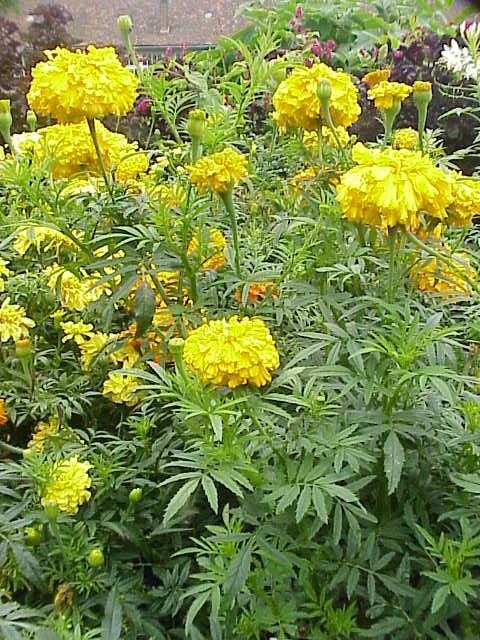
Marigold
Tagetes erecta
Marigold (Tagetes erecta) is the bold, pungent annual behind dense pompoms of yellow, orange and bronze, and the sacred cempasúchil of the Mexican Day of the Dead. Its ruffled, ball-shaped heads and long stems make cheerful, long-lasting focals for autumn, rustic and celebration work. The whole plant is strongly aromatic, and its foliage will foul vase water if left submerged. Inexpensive, hardy and richly coloured, it brings warmth and the glow of late-season sun to any arrangement.
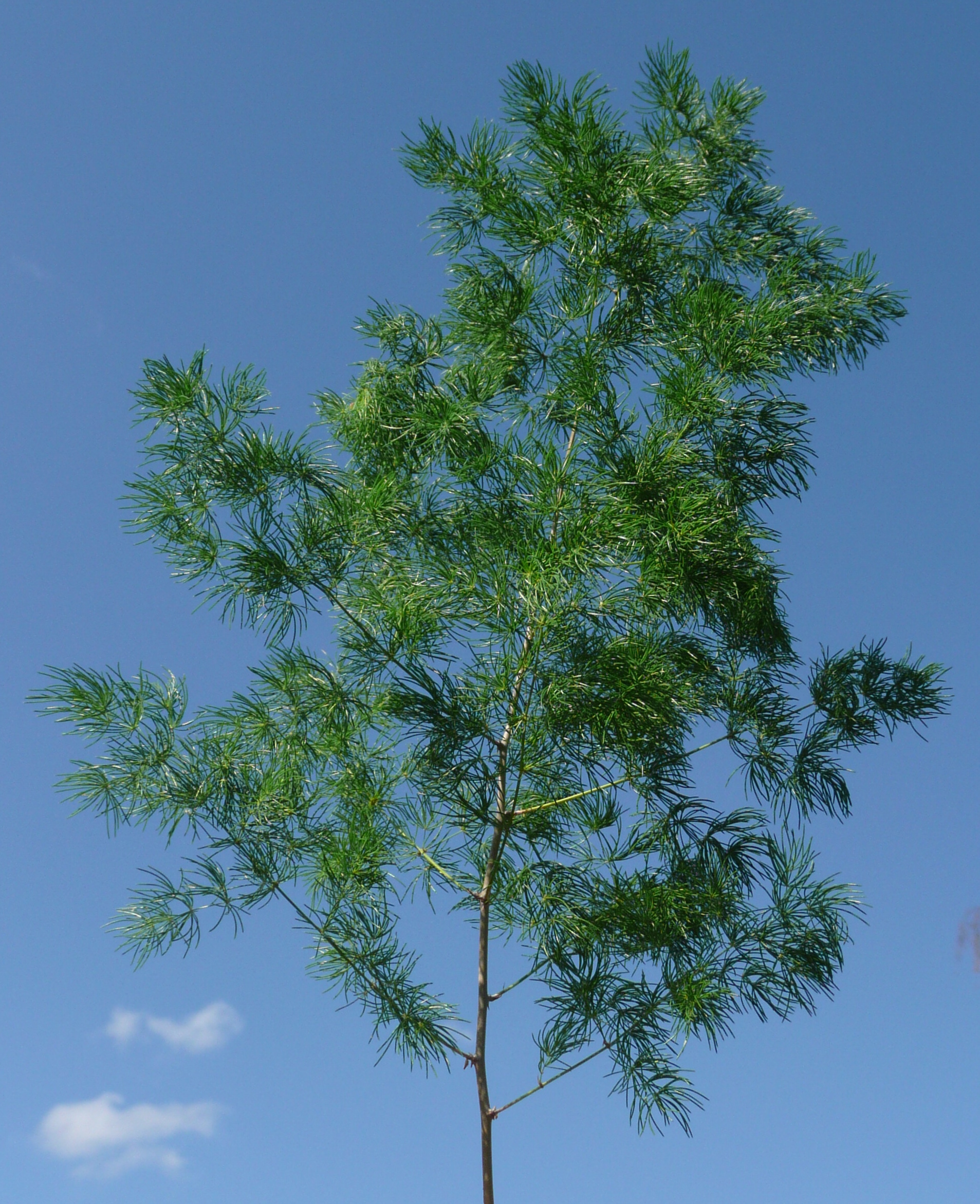
Ming Fern
Asparagus retrofractus
Ming fern is another ornamental asparagus rather than a true fern, recognised by its stiff, zig-zagging stems topped with fluffy pompom tufts of fine green needles. The clustered, cloud-like texture adds depth and structure to arrangements, and its long, strong stems suit large-scale and architectural work. It is notably durable, holding well in and out of water, which makes it a dependable choice for events and installations. Florists prize its distinctive sculptural silhouette.
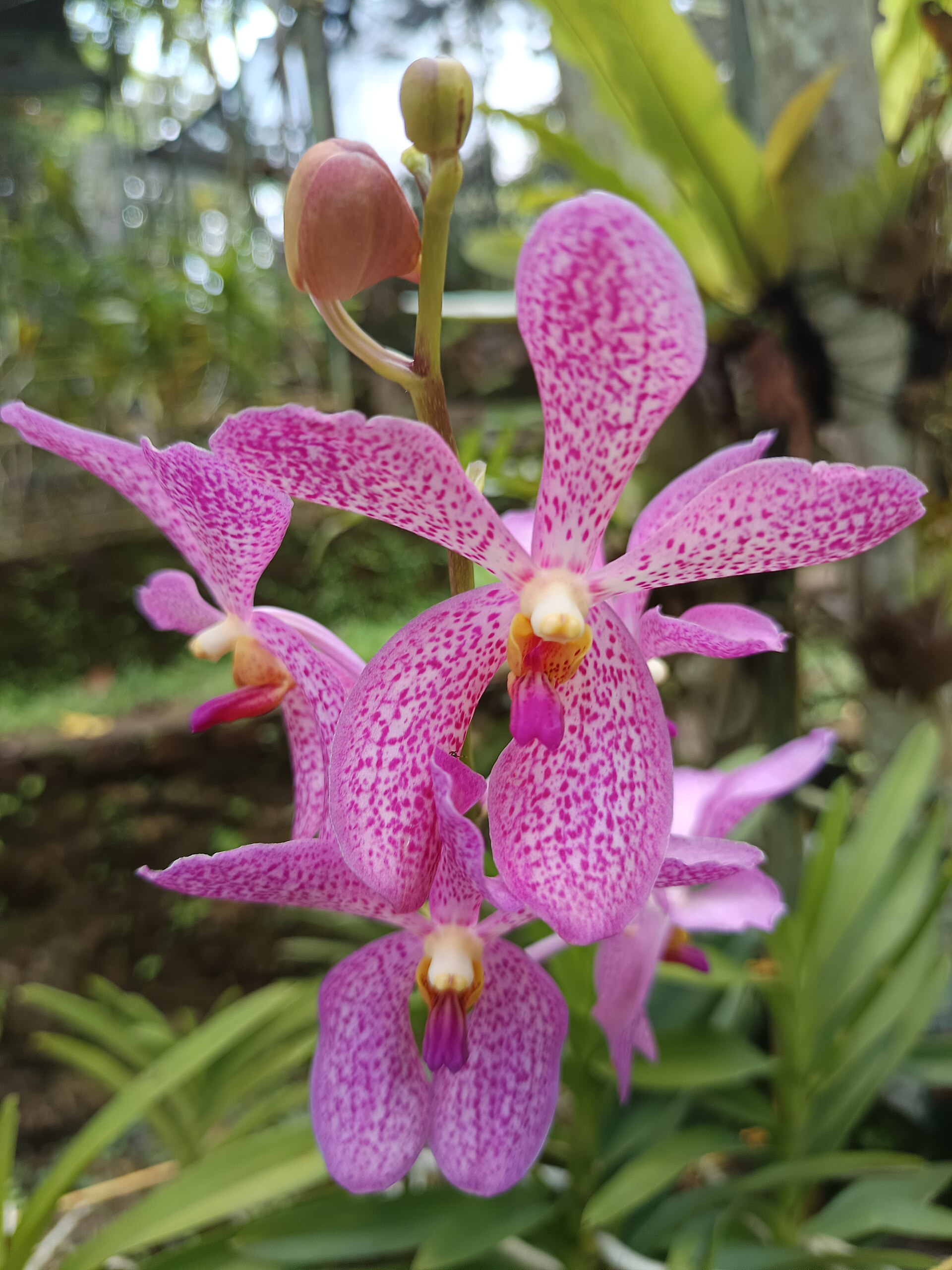
Mokara Orchid
Mokara (Arachnis × Ascocentrum × Vanda)
Mokara is a vibrant, single-flowered spray orchid bred from Arachnis, Ascocentrum and Vanda, giving it saturated colour and a flat, open face on a slender upright stem. Cultivated year-round in Southeast Asia, it is a florist staple for adding jewel-toned tropical punch to bouquets, buttonholes and event work. Each stem carries several evenly spaced blooms that last well out of water, making it a favourite for corsages and boutonnieres. Its clean geometry and long vase life earn it a place in both modern and tropical designs.
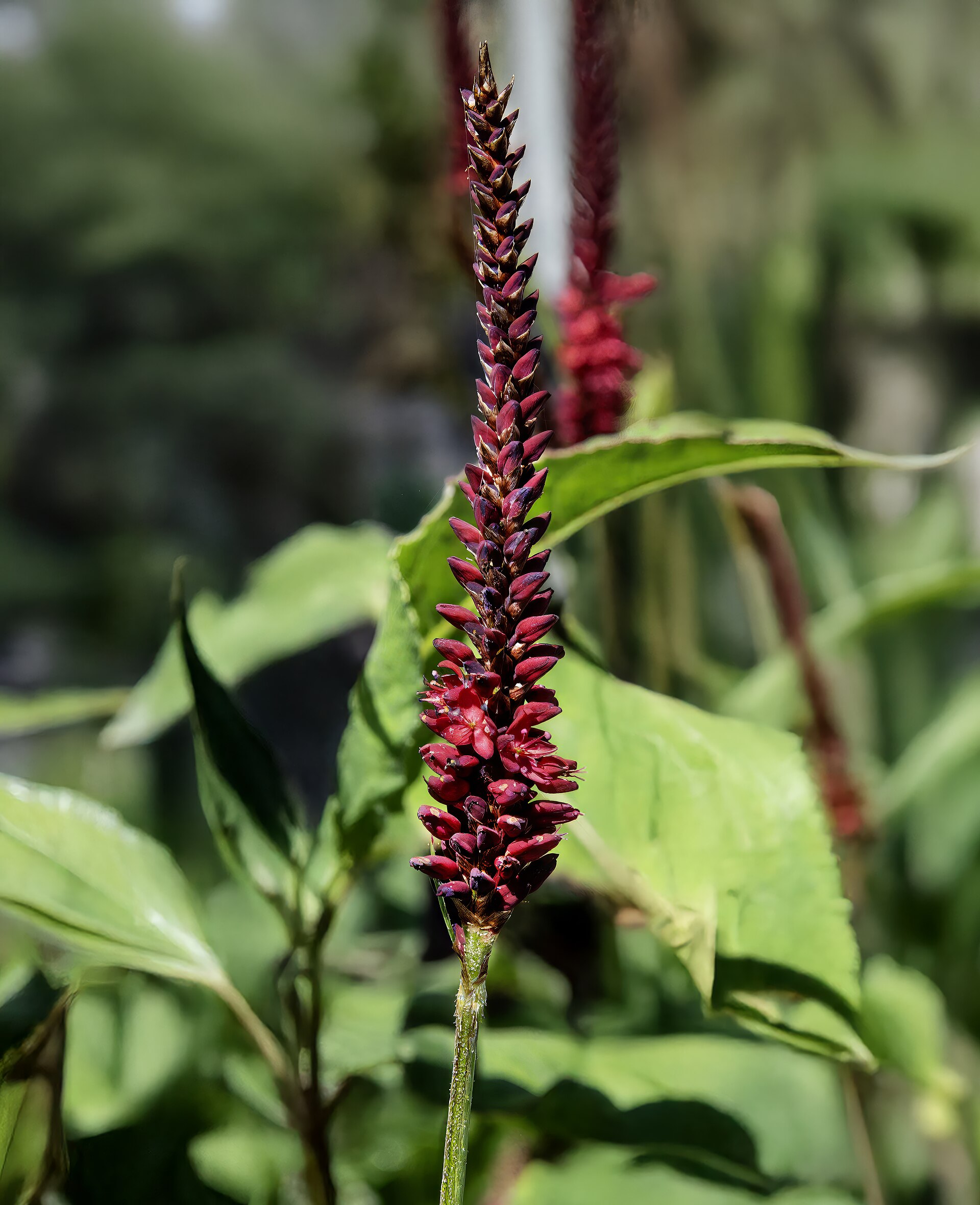
Mountain Fleece
Persicaria amplexicaulis
Persicaria sends up slender, tapering spikes of tiny red or pink florets on wiry stems, bringing vertical rhythm and a wild, meadow texture to arrangements. A staple of naturalistic and garden-style design, it threads colour and movement between rounder focal flowers through late summer and autumn. The bottlebrush spires read as soft line work, echoing grasses and veronica. Buy stems well coloured with the lowest florets still fresh.
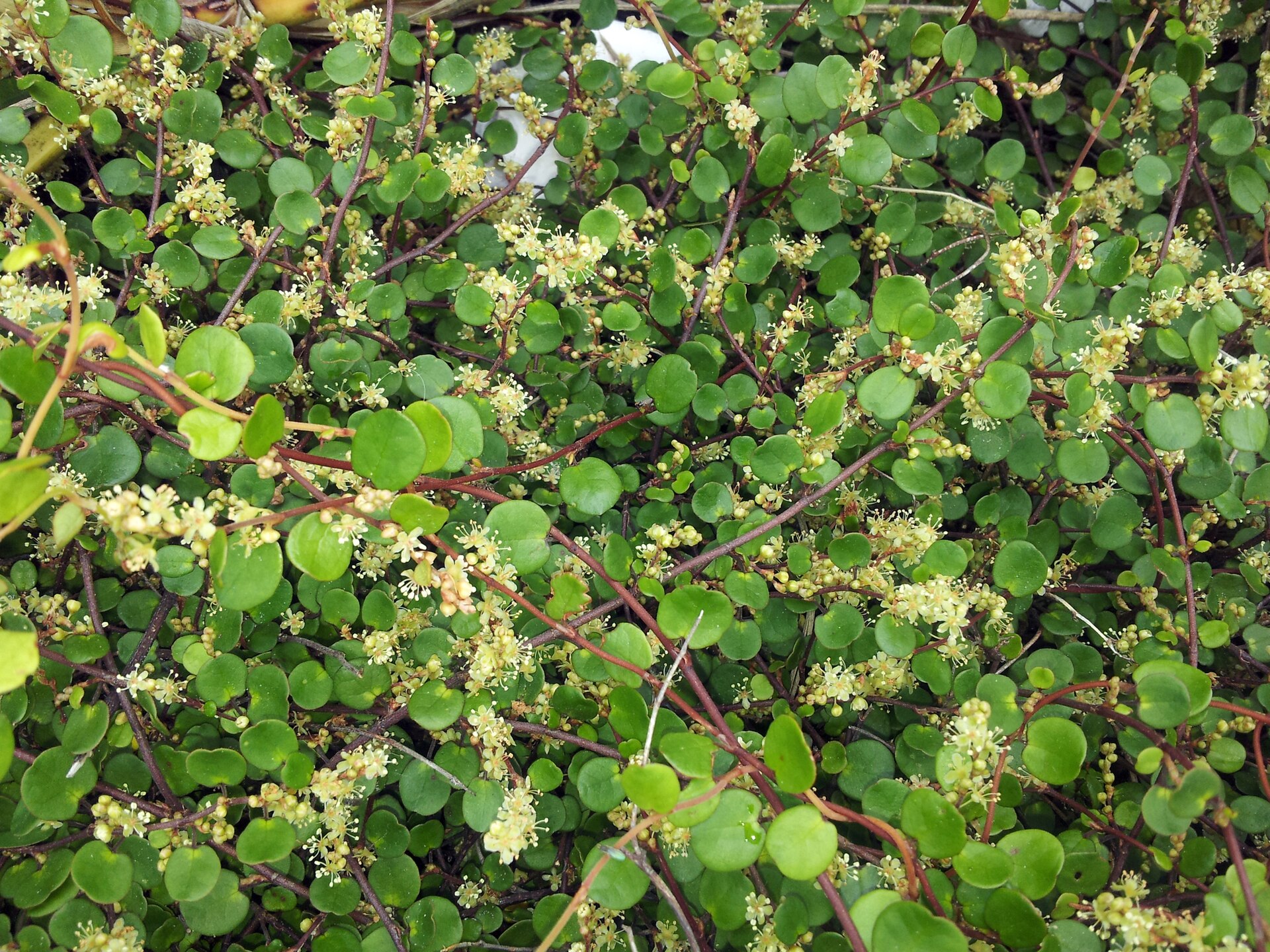
Muehlenbeckia
Muehlenbeckia complexa
Muehlenbeckia, often sold as wire vine or angel vine, is a New Zealand climber with fine, dark, wiry stems set with tiny round leaves. Its delicate, tangling texture makes it a favourite for wiring into crowns, garlands and intricate installations. It is durable, forgiving to handle and dries well, so it earns its place year-round. Florists reach for it whenever they want a light, airy green line with movement.
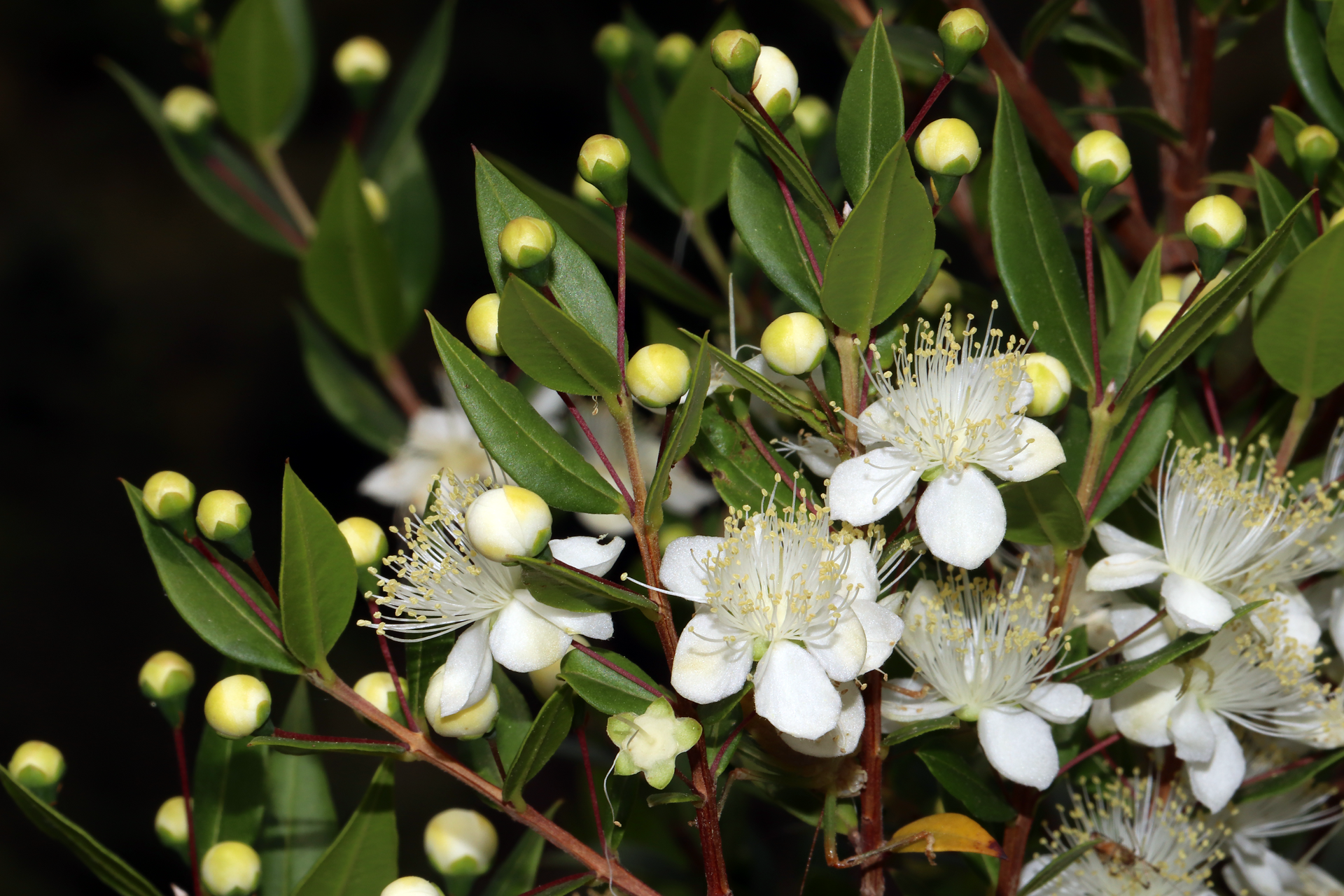
Myrtle
Myrtus communis
Myrtle is a small-leaved evergreen shrub whose glossy, aromatic foliage has scented bridal work for centuries. Its dense, fine texture makes it a favourite for bouquet edging, boutonnieres and delicate garland detail, and a sprig is traditionally woven into royal wedding bouquets. Crushed leaves release a clean, herbal fragrance, and mature stems may carry tiny white flowers or dark blue-black berries. Florists value it for its neat form, symbolism of love and long history in ceremonial design.
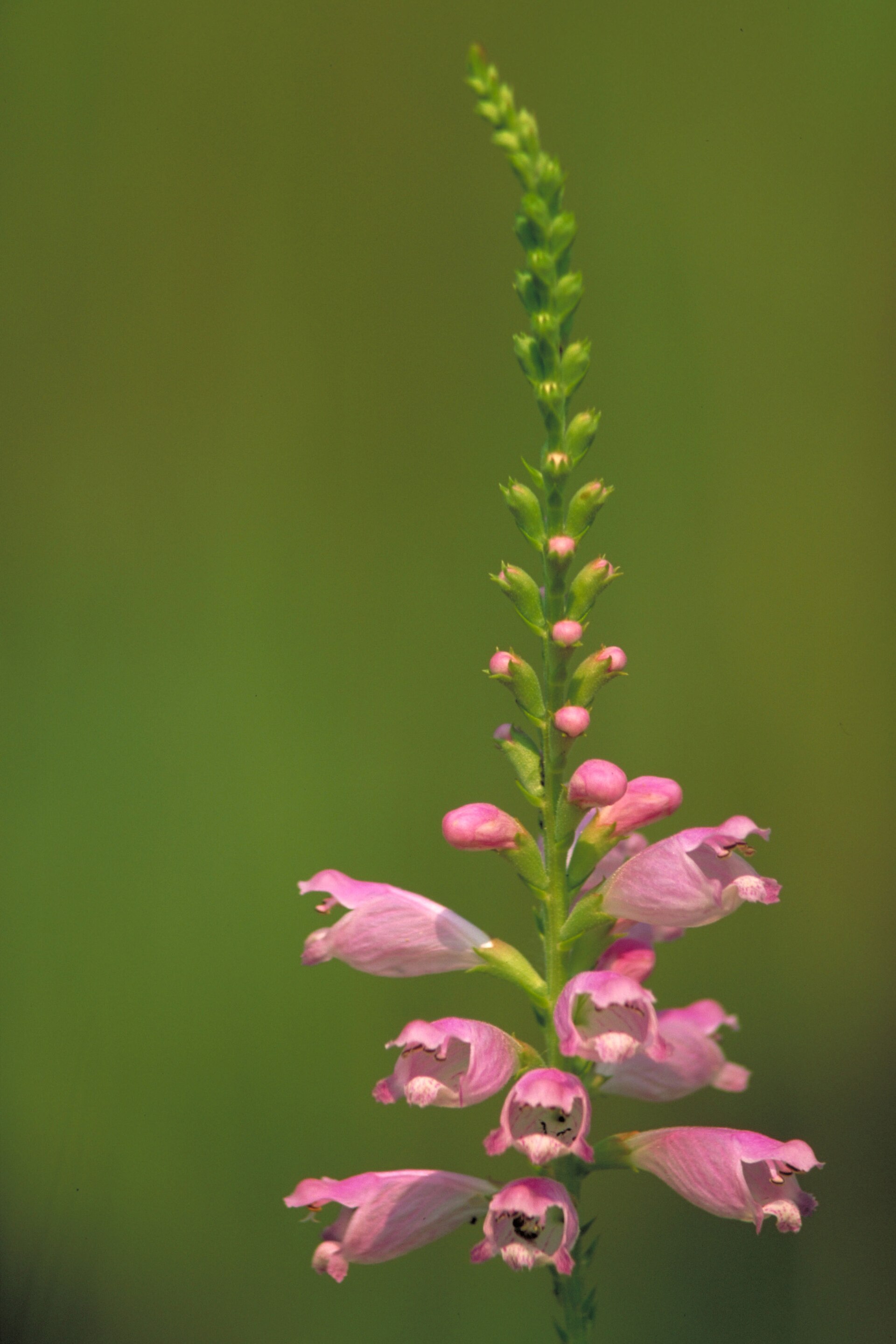
Obedient Plant
Physostegia virginiana
Physostegia, the obedient plant, bears neat spikes of tubular, snapdragon-like flowers in pink, white, lavender and purple, named for the way each bloom stays put when nudged along the stem. Florists use it as an easy, versatile line flower that brings soft vertical structure to garden-style bouquets and seasonal arrangements. Its cottage-garden charm suits relaxed late-summer and autumn palettes. Reliable and long in the vase, it is a dependable filler-to-line stem for everyday and wedding work alike.
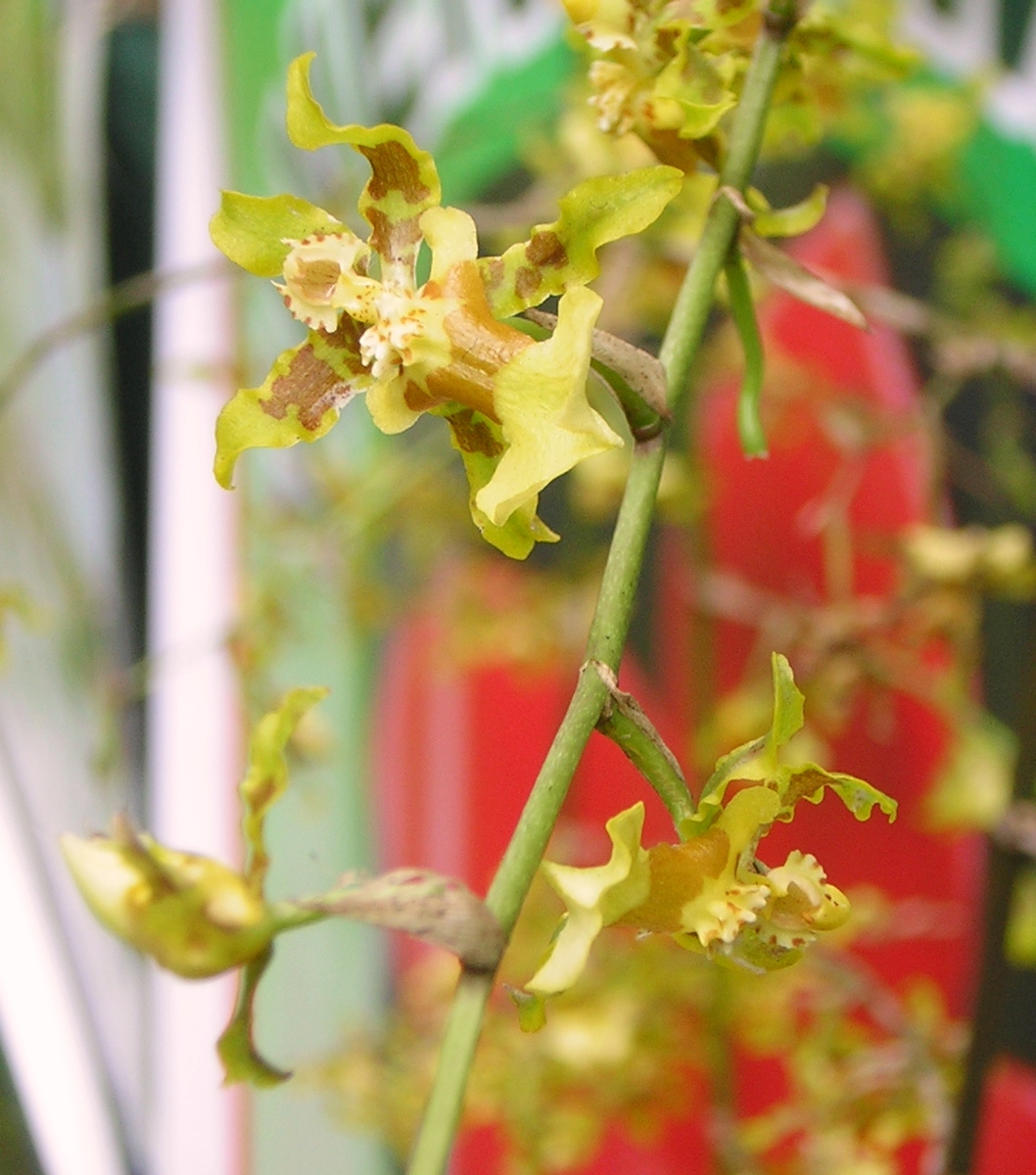
Oncidium Orchid
Oncidium
Oncidium, the 'dancing lady' orchid, produces airy, branching sprays scattered with dozens of small ruffled florets — most often in cheerful golden yellow marked with mahogany. Its cloud-like form adds movement and a fine, filler-like texture that softens tropical and modern arrangements alike. Long-lasting and playful, it reads as luxurious without the weight of a large focal orchid. Florists use it to add rhythm, spill and a sense of joy to bouquets and installations.
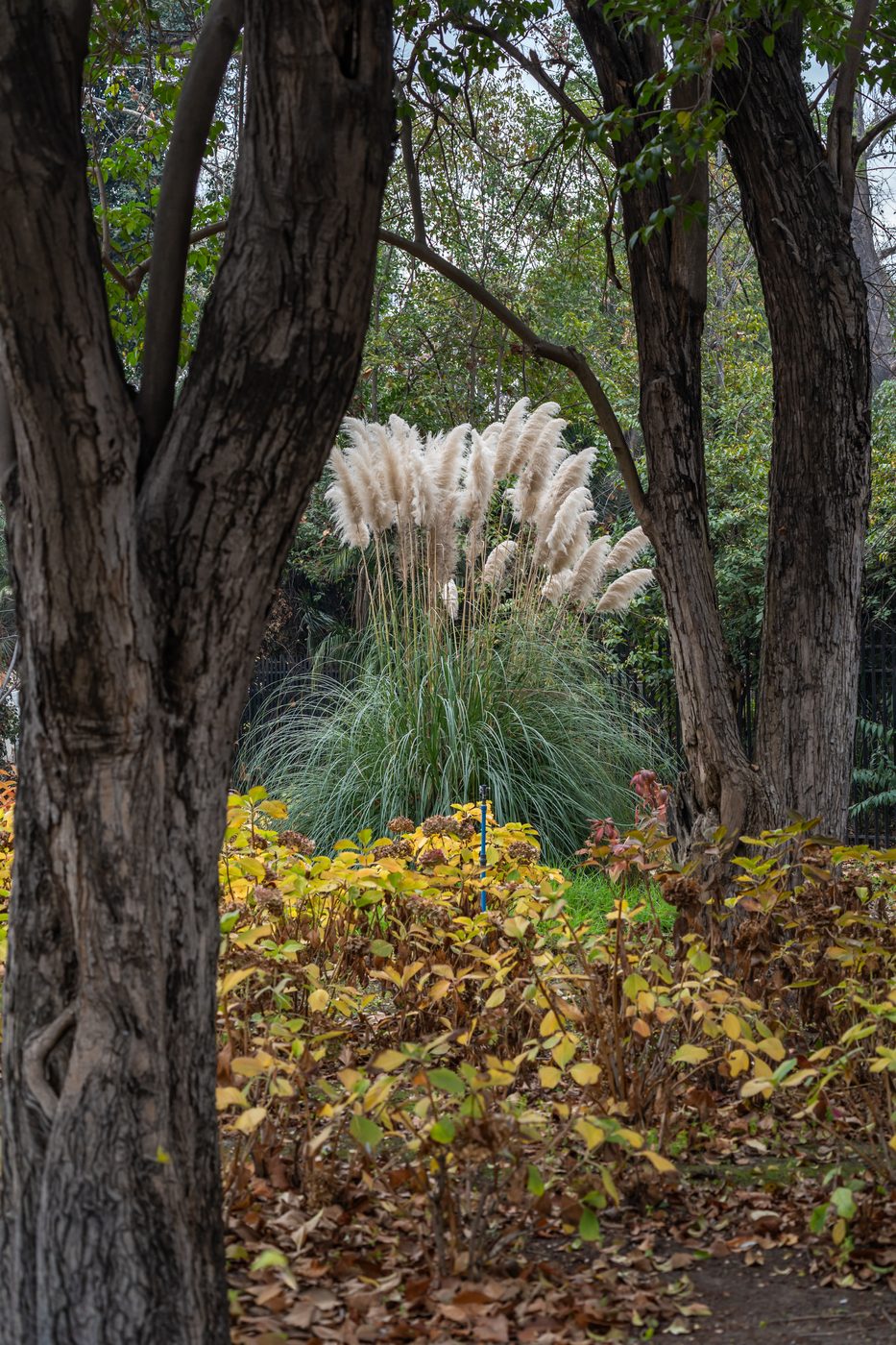
Pampas grass
Cortaderia selloana
Pampas grass is the defining installation material of the 2020s boho-wedding aesthetic — soft, cloud-like plumes on tall stems, sold pre-dried and lasting years. Used for arches, floor installations, and oversized fireplace arrangements. Environmental note: pampas is invasive in California and the Mediterranean; sustainable buyers seek US or European commercial crops.
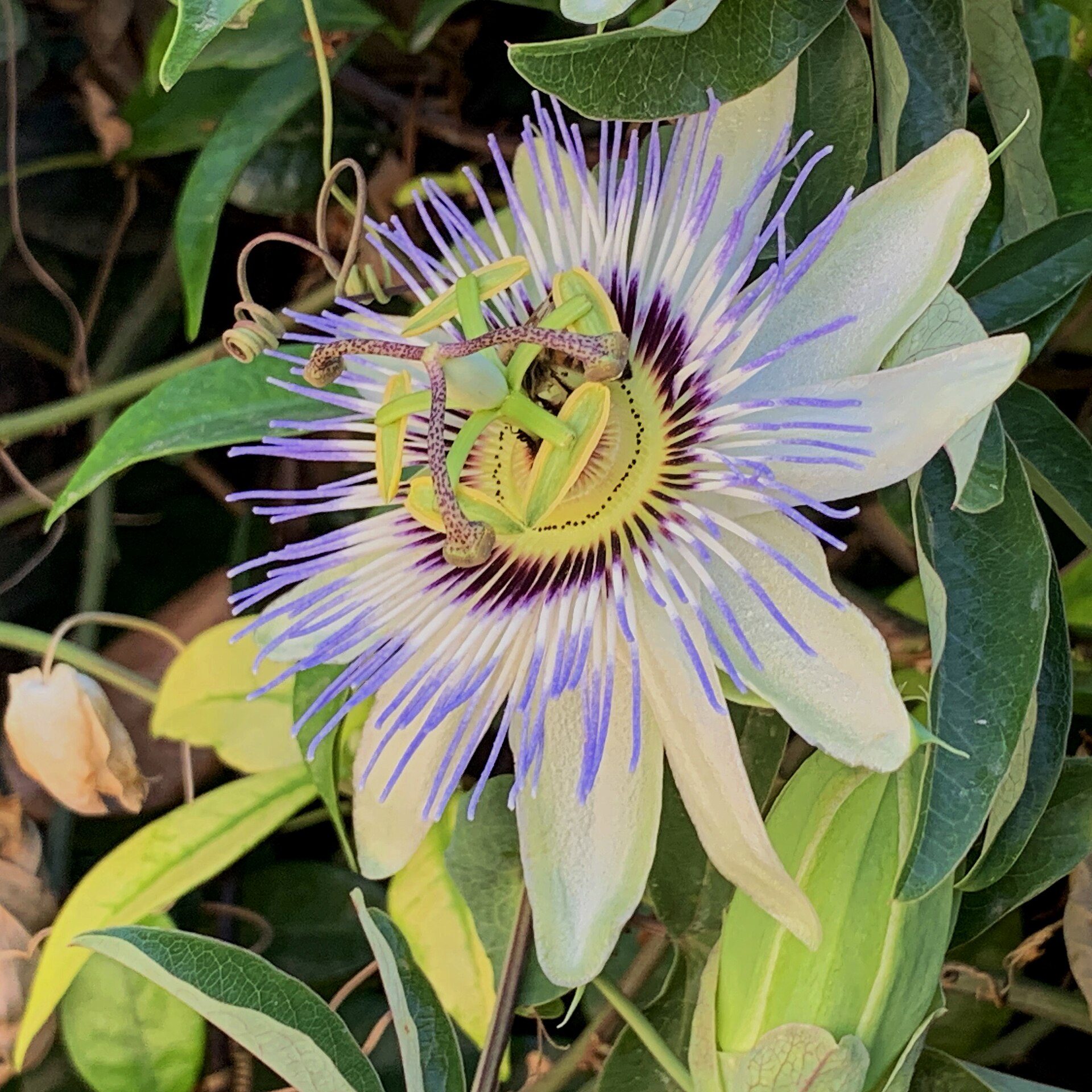
Passionflower Vine
Passiflora caerulea
The passionflower vine (Passiflora caerulea) is grown for its intricate, otherworldly blooms and curling tendrils. Florists use its foliage and tendrils for exotic movement in editorial and garden-style work, with the striking purple-and-white flowers as a fleeting focal accent. Each flower lasts only a day, so it is a specialist, high-impact material rather than a workhorse. Its symbolism of faith and passion adds meaning to romantic designs.
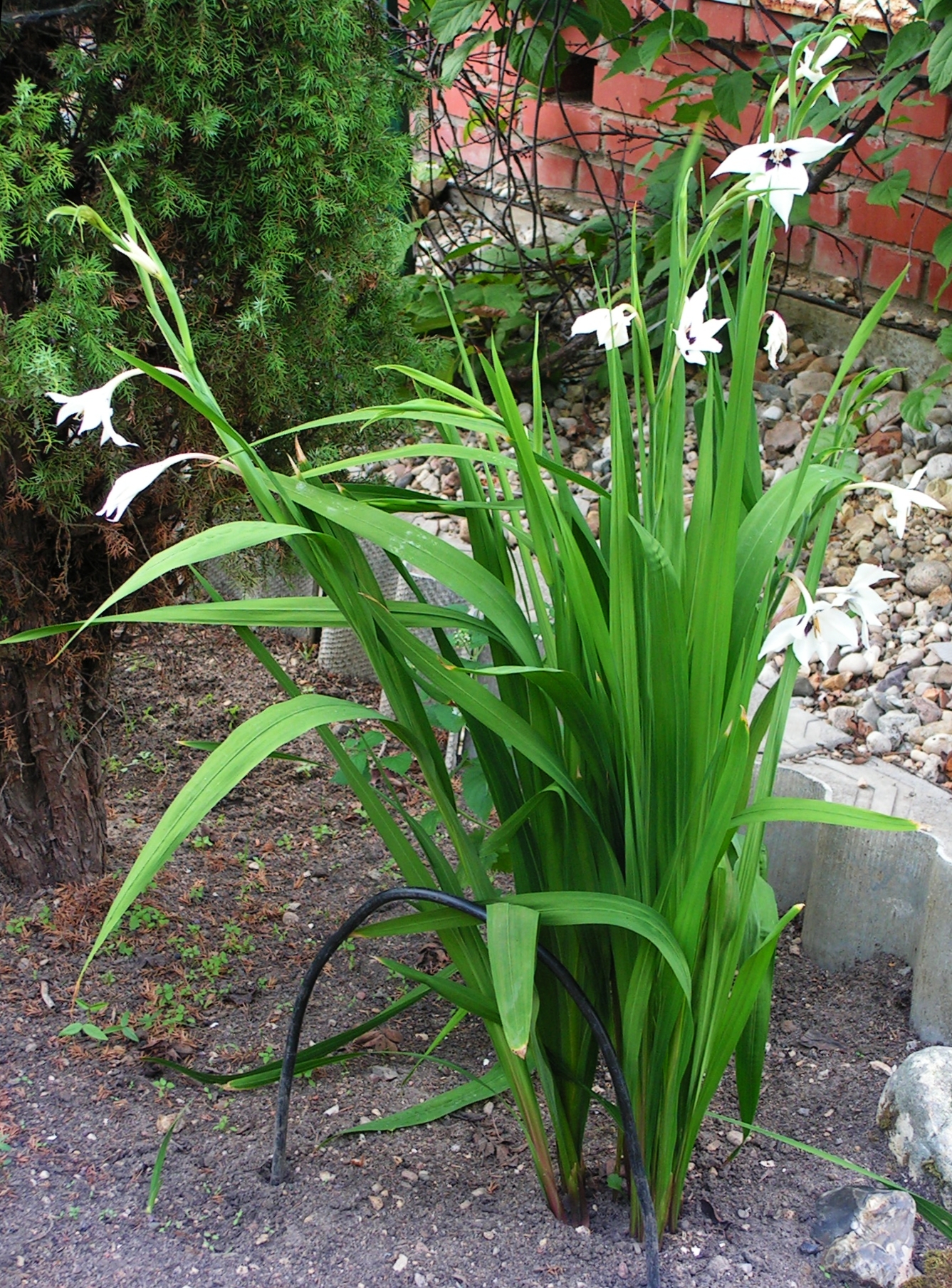
Peacock Orchid
Gladiolus murielae
Peacock orchid is a graceful late-summer relative of the gladiolus, bearing nodding white stars marked with a deep maroon central blotch. Native to the Ethiopian highlands, it is treasured above all for its sweet, jasmine-like evening fragrance. Its slender, arching spikes bring an airy elegance that feels far more delicate than a standard gladiolus. Florists reach for it in romantic, garden-style and luxury wedding work where perfume and refinement count.
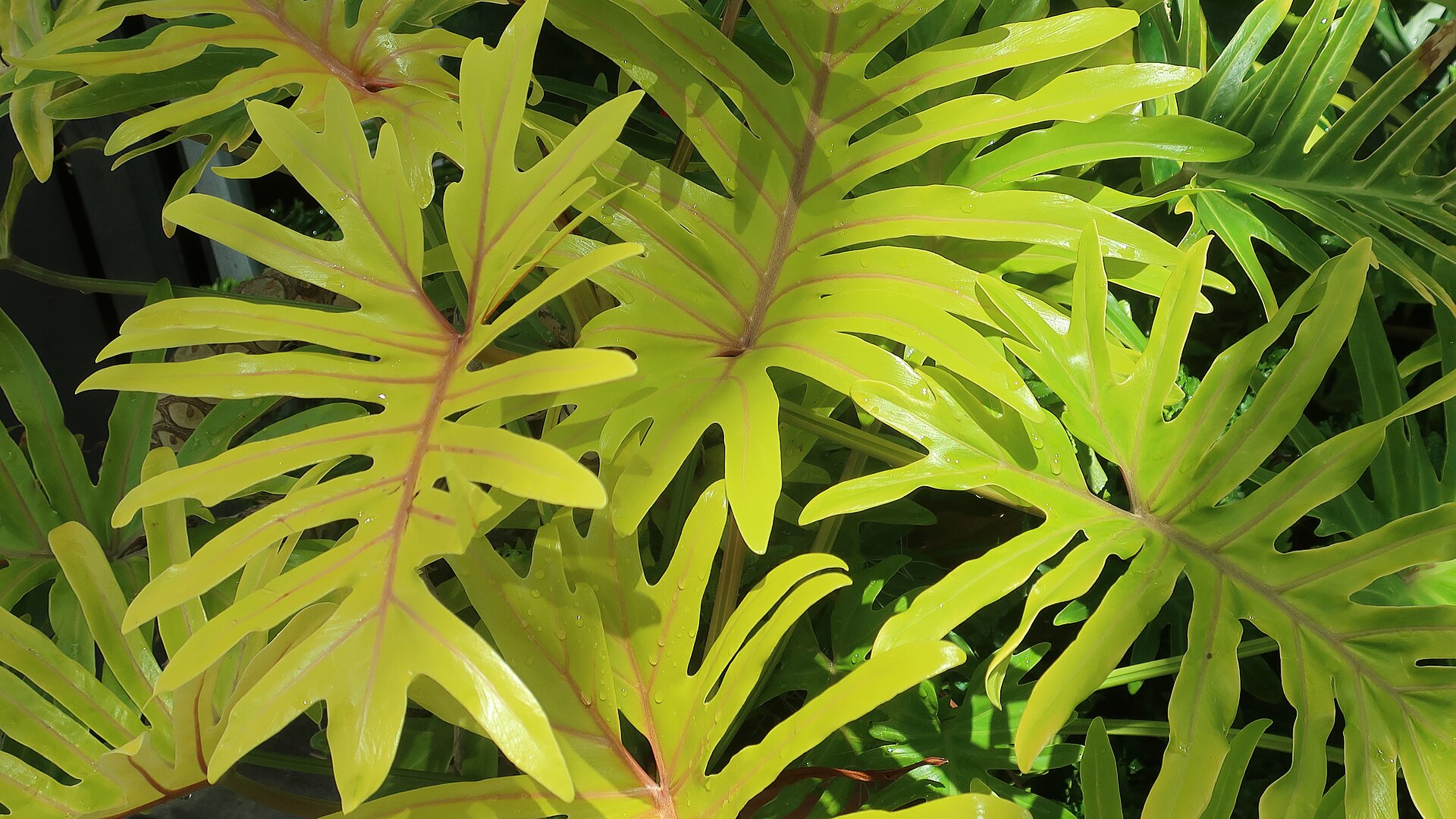
Philodendron Leaf
Philodendron bipinnatifidum
Philodendron leaf is a large, deeply lobed tropical foliage that brings instant scale and drama to bold arrangements. Its glossy, split blades read as sculptural greenery, ideal for tropical bouquets, corporate pieces and large-format installations. A single leaf can anchor a design or line a tall vase, and the foliage lasts for weeks with basic care. Florists reach for it whenever they want architectural, jungle-lush structure with minimal fuss.
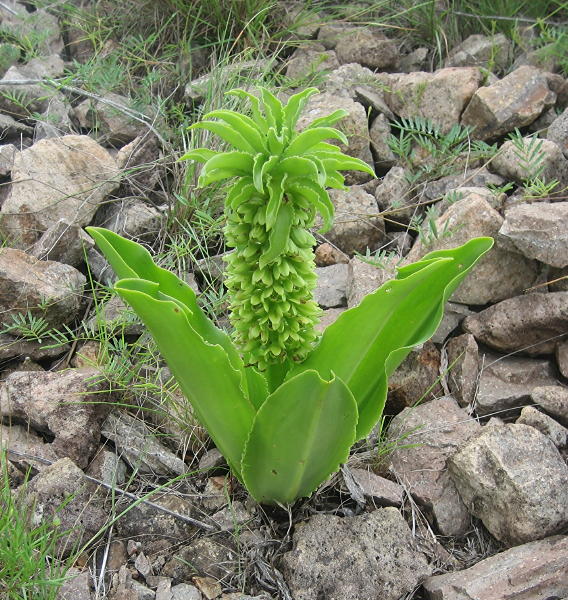
Pineapple Lily
Eucomis comosa
Pineapple lily is a striking summer bulb whose star-packed flower spike is crowned by a leafy tuft that mimics a pineapple top. Florists prize it for its bold, sculptural silhouette and remarkable vase life, which easily outlasts most soft summer flowers. The blooms shade from lime green through cream to dusky burgundy, giving arrangements a fresh, slightly tropical edge. It anchors tall modern designs and adds unexpected texture to summer wedding work.
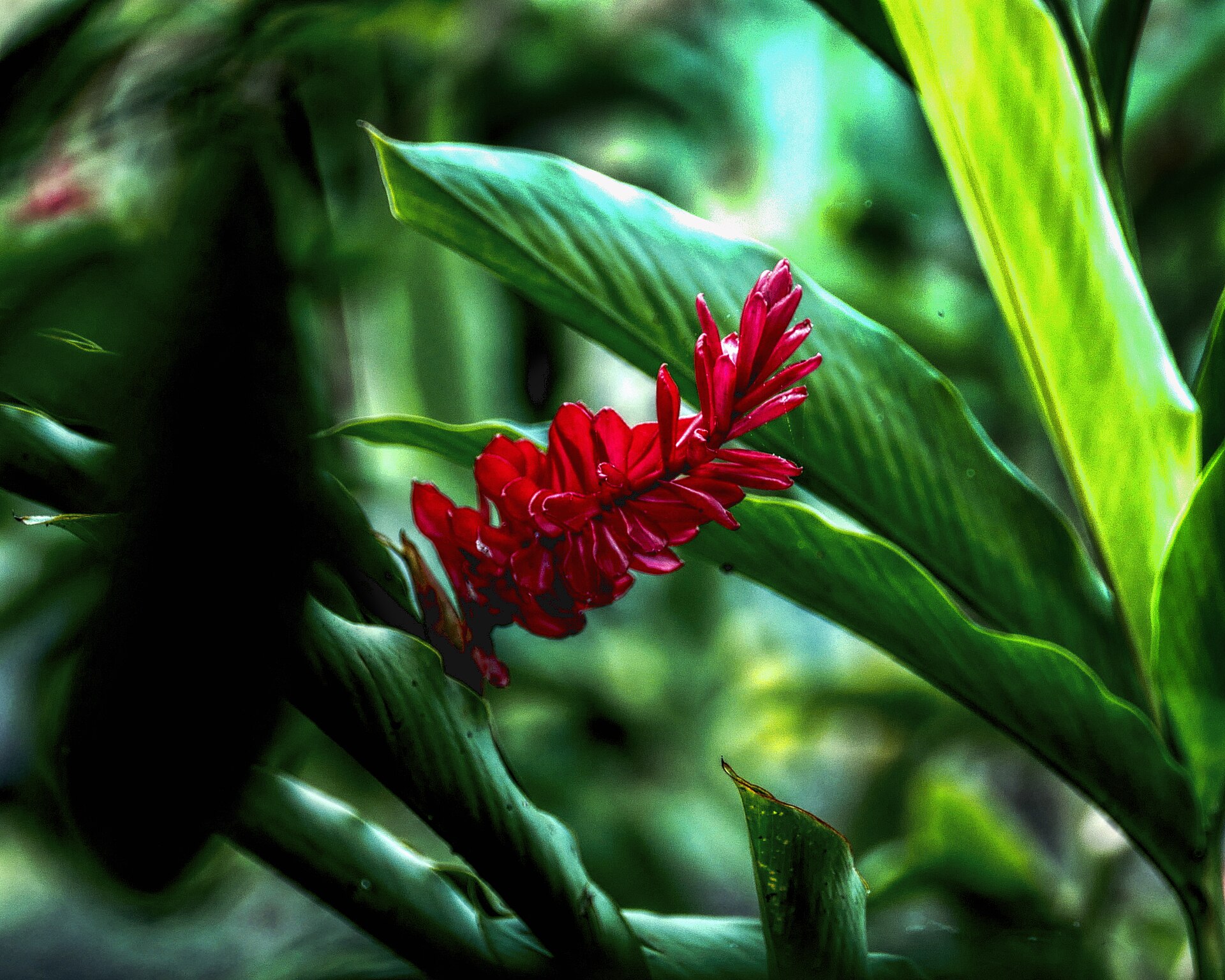
Red Ginger
Alpinia purpurata
Red ginger is an iconic tropical focal formed from a dense cone of glossy, waxy bracts in vivid scarlet or hot pink, held upright on a tall leafy stem. Native to Malaysia and naturalised across the Pacific, it is a workhorse of tropical floristry thanks to an exceptional vase life that can reach three weeks. Its bold, sculptural form anchors large event arrangements, tropical bridal work and hotel installations. Sturdy and forgiving to handle, it delivers maximum drama for a moderate price.
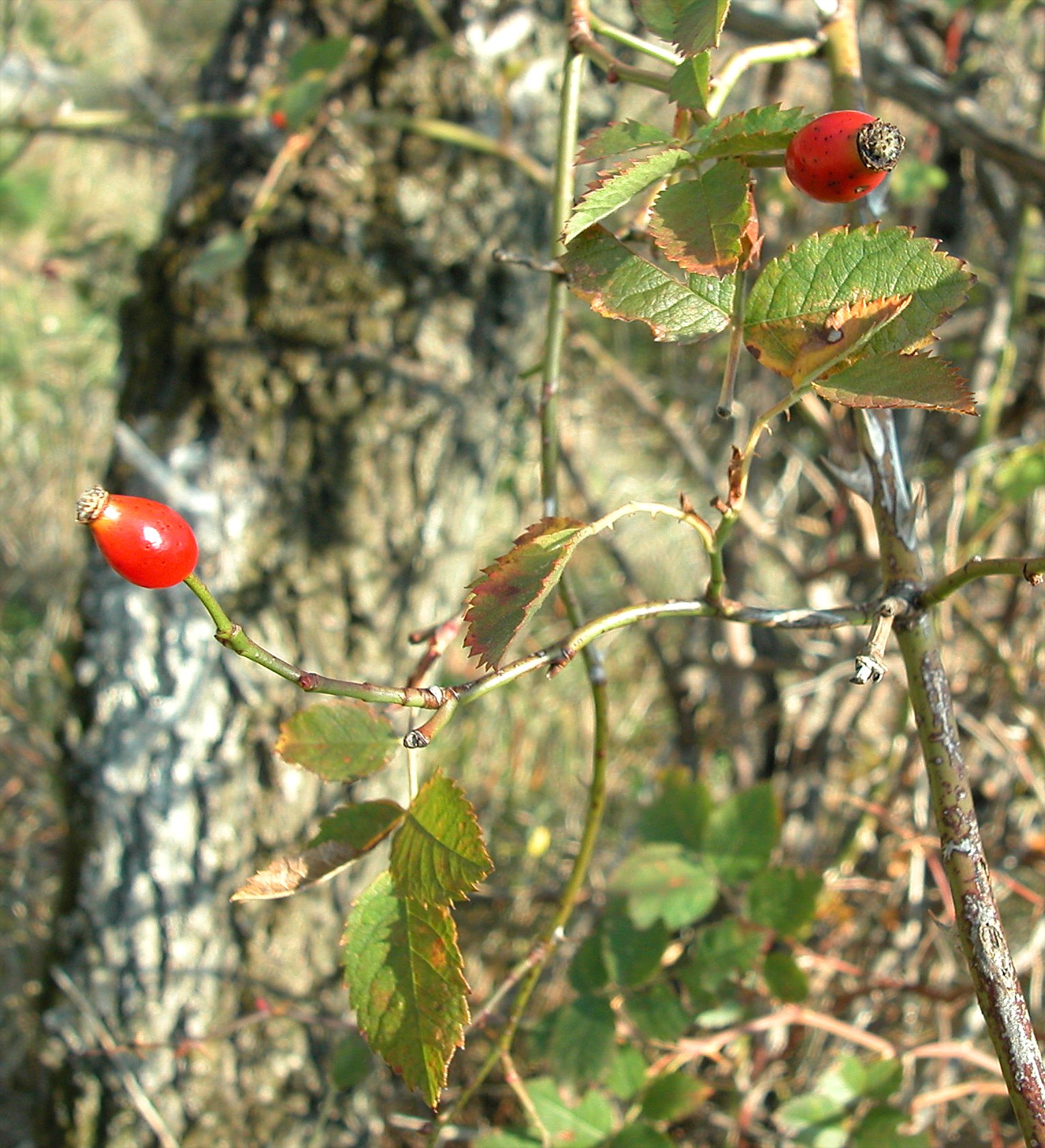
Rosehip
Rosa canina
Rosehip is the ripened fruit of the wild dog rose, valued by florists for the glossy scarlet berries that follow the summer bloom. Borne in loose clusters along arching, sometimes thorny stems, the hips bring an unmistakably seasonal, foraged feel to autumn work. They mix beautifully into rustic bouquets, garlands and harvest-table designs, adding warm colour and a natural, hedgerow texture. Long-lasting and inexpensive, rosehip is a florist staple from late summer through the festive season.
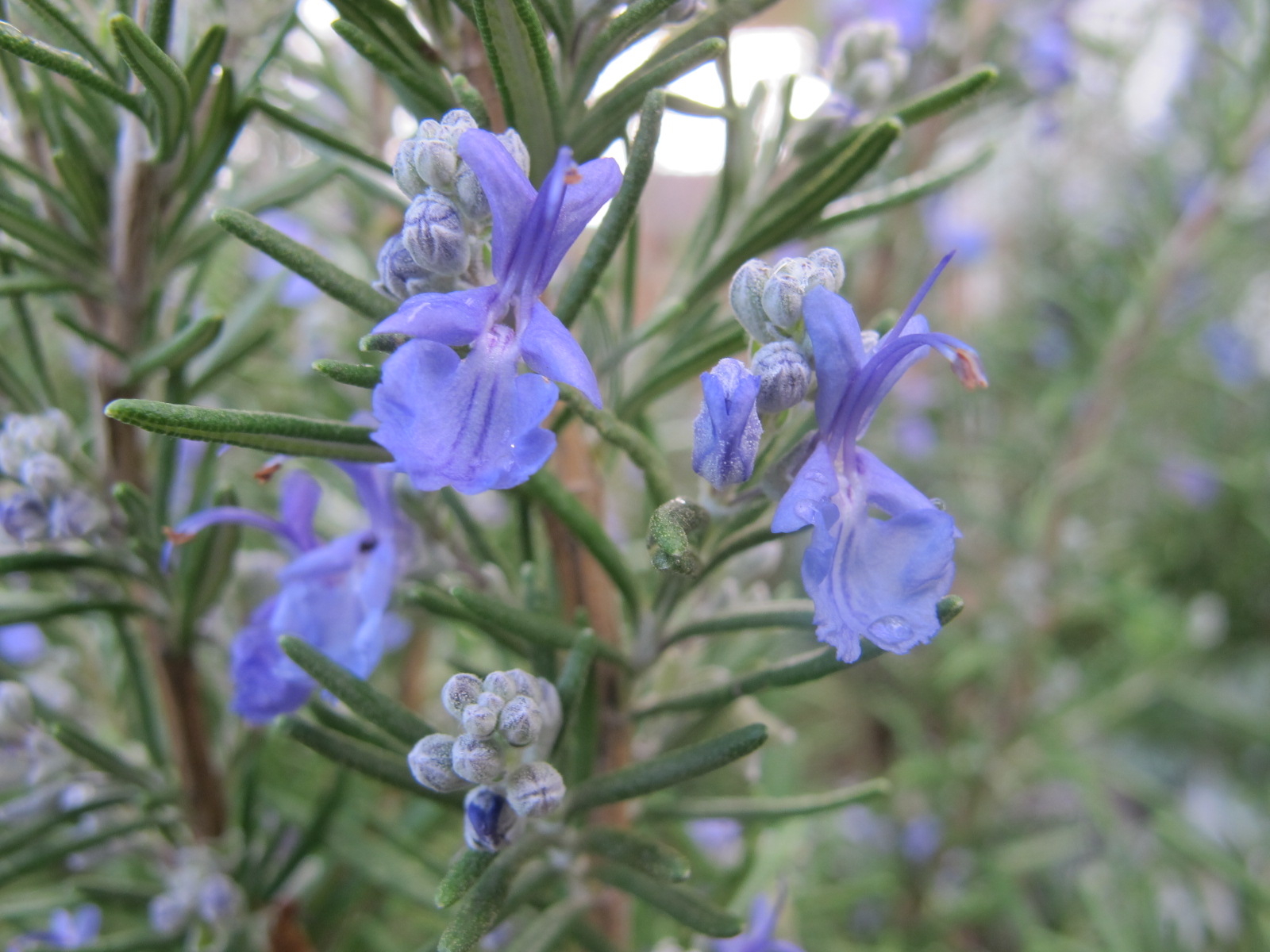
Rosemary
Salvia rosmarinus
Rosemary (Salvia rosmarinus) is the fragrant Mediterranean herb whose needle-like grey-green leaves release a fresh, resinous scent when brushed. Florists tuck short sprigs into bridal bouquets, boutonnieres and wedding favours as a scented, meaningful accent. Its slender, upright habit and aromatic foliage suit rustic, garden and herb-inspired designs. Long associated with remembrance and fidelity, it carries sentiment as well as texture.
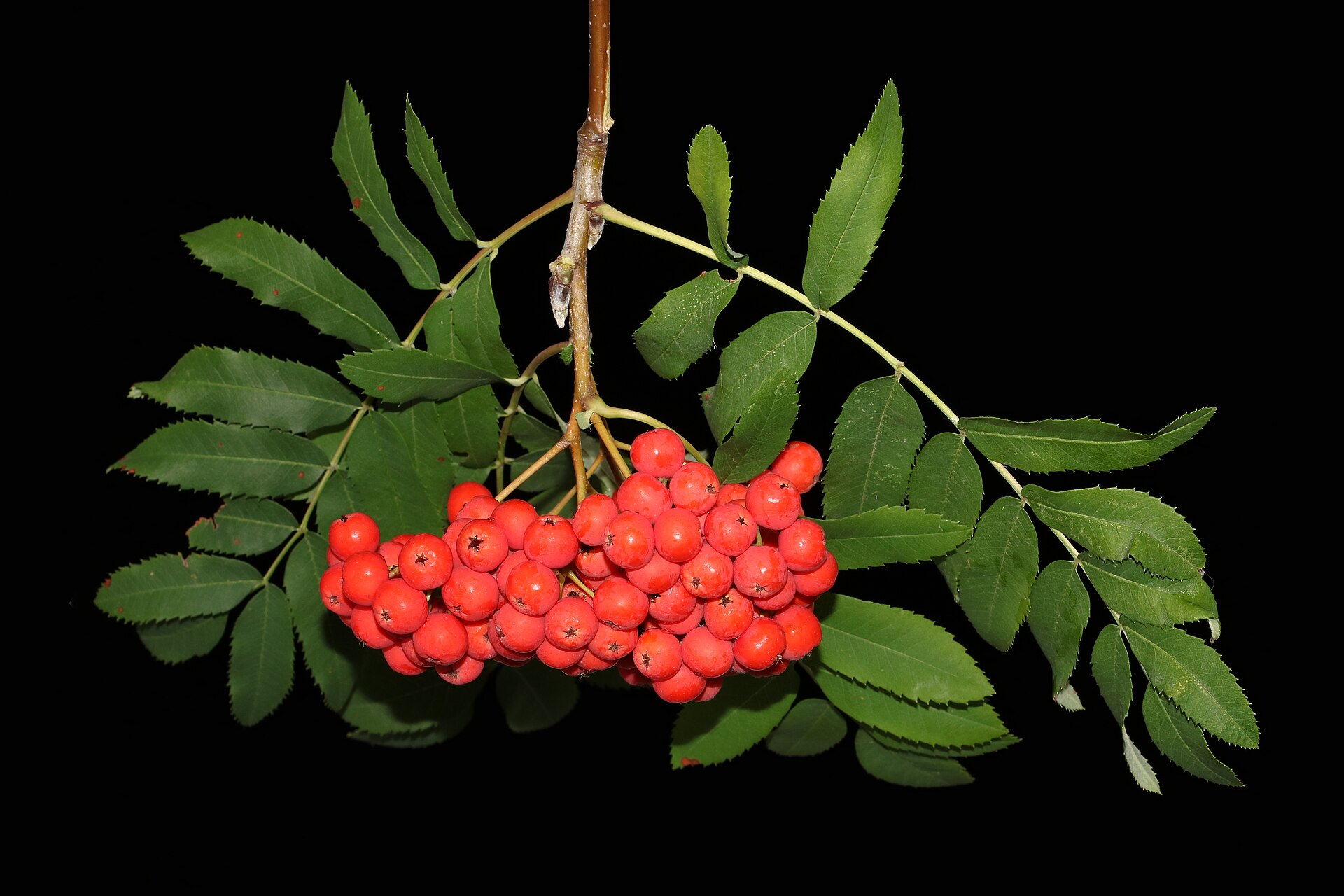
Rowan
Sorbus aucuparia
Rowan, or mountain ash, produces generous drooping clusters of vivid orange-red berries above feathery pinnate leaves, a classic signal of early autumn. Steeped in northern European folklore as a tree of protection, it brings both colour and a wild, hedgerow storytelling quality to seasonal designs. Florists use it for warm autumnal texture in rustic and editorial arrangements. The bright berries are eye-catching but drop with age, so rowan is best conditioned cool and used fresh.
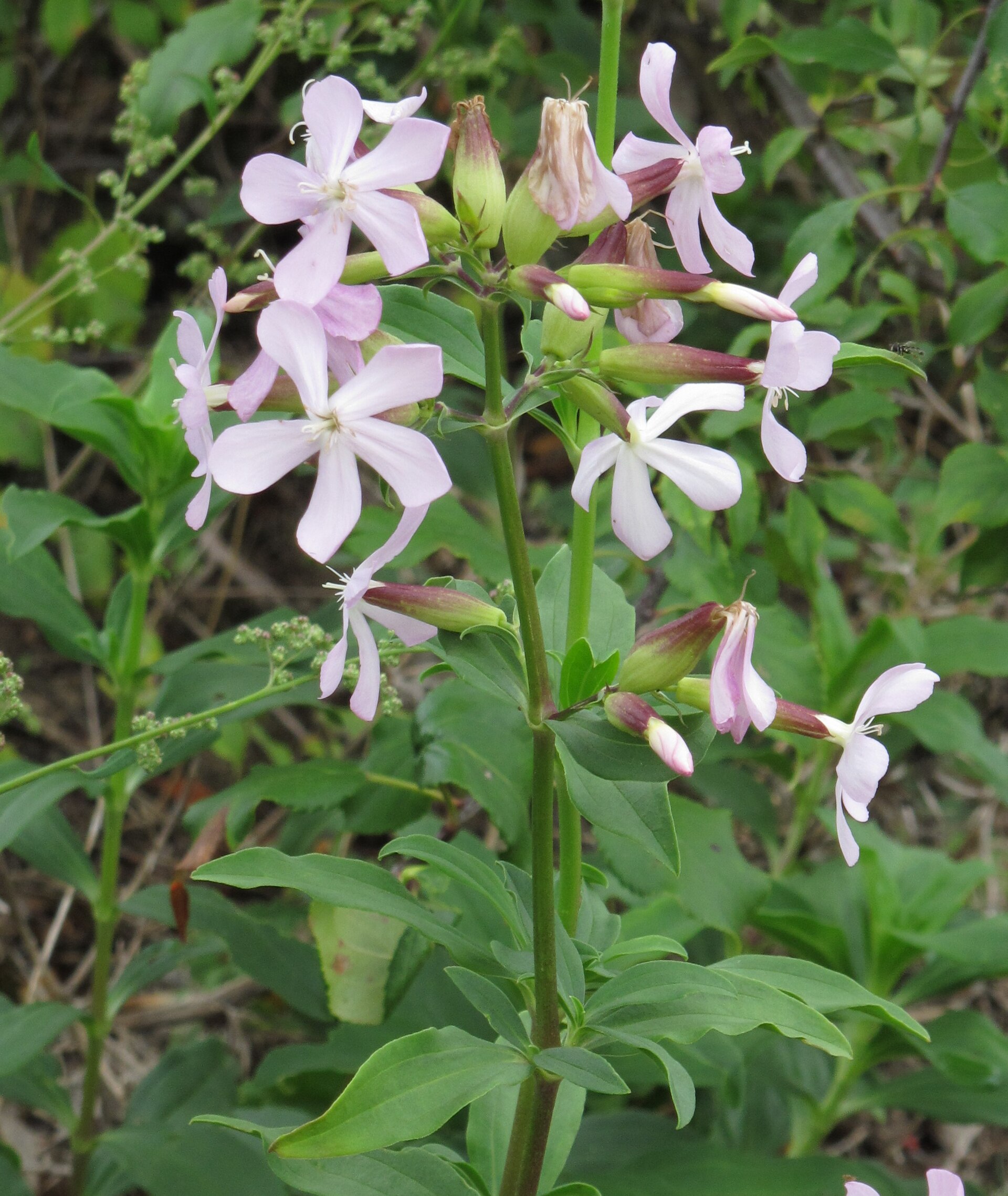
Saponaria
Saponaria officinalis
Saponaria, better known as soapwort or bouncing bet, is a classic cottage-garden perennial whose sprays of small five-petalled flowers glow in soft pink and white. Florists use it as a delicate, cloud-like filler, a charming alternative to gypsophila that adds airy softness to hand-tieds and jam-jar arrangements. Its historic name comes from the plant's sap, which lathers gently in water. Easygoing and abundant in high summer, it is a budget-friendly workhorse for rustic and garden-style designs.
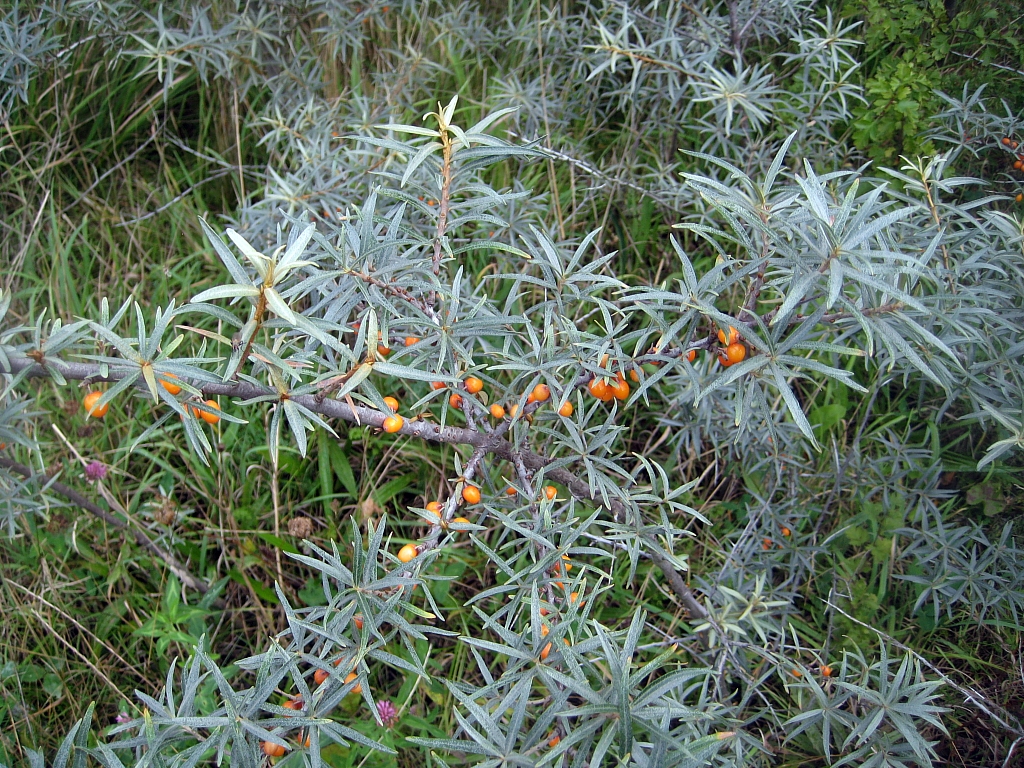
Sea Buckthorn
Hippophae rhamnoides
Sea buckthorn is a thorny coastal branch densely studded with vivid orange berries running the full length of the stem, framed by narrow silvery-green leaves. Its striking, almost graphic colour and long arching line make it a standout for architectural and editorial autumn work. Florists prize how firmly the berries cling, giving one of the longest-lasting fruit displays available. The berries are an edible superfood but ferociously sour, and the vicious thorns mean gloves are essential.
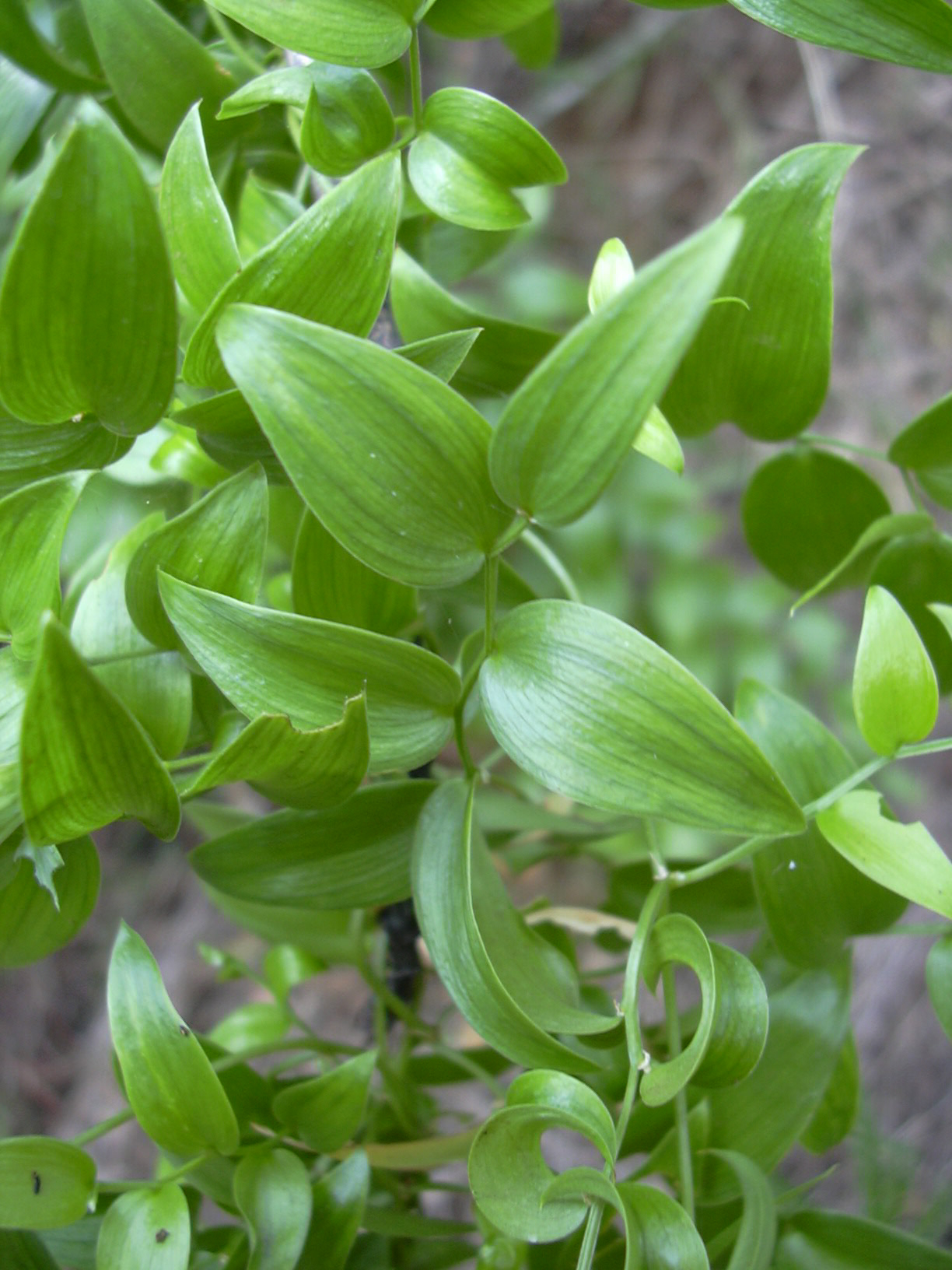
Smilax
Asparagus asparagoides
Smilax is the florist's classic bridal vine — long, slender strands of small, glossy green leaves that drape and swag with effortless grace. Though sold as 'smilax', the material used today is usually Asparagus asparagoides rather than true Smilax. Florists prize it for garlands, table runners, arches and cascading installations where a fine, natural green line is needed. It dehydrates quickly once cut, so it rewards careful conditioning and last-minute placement.
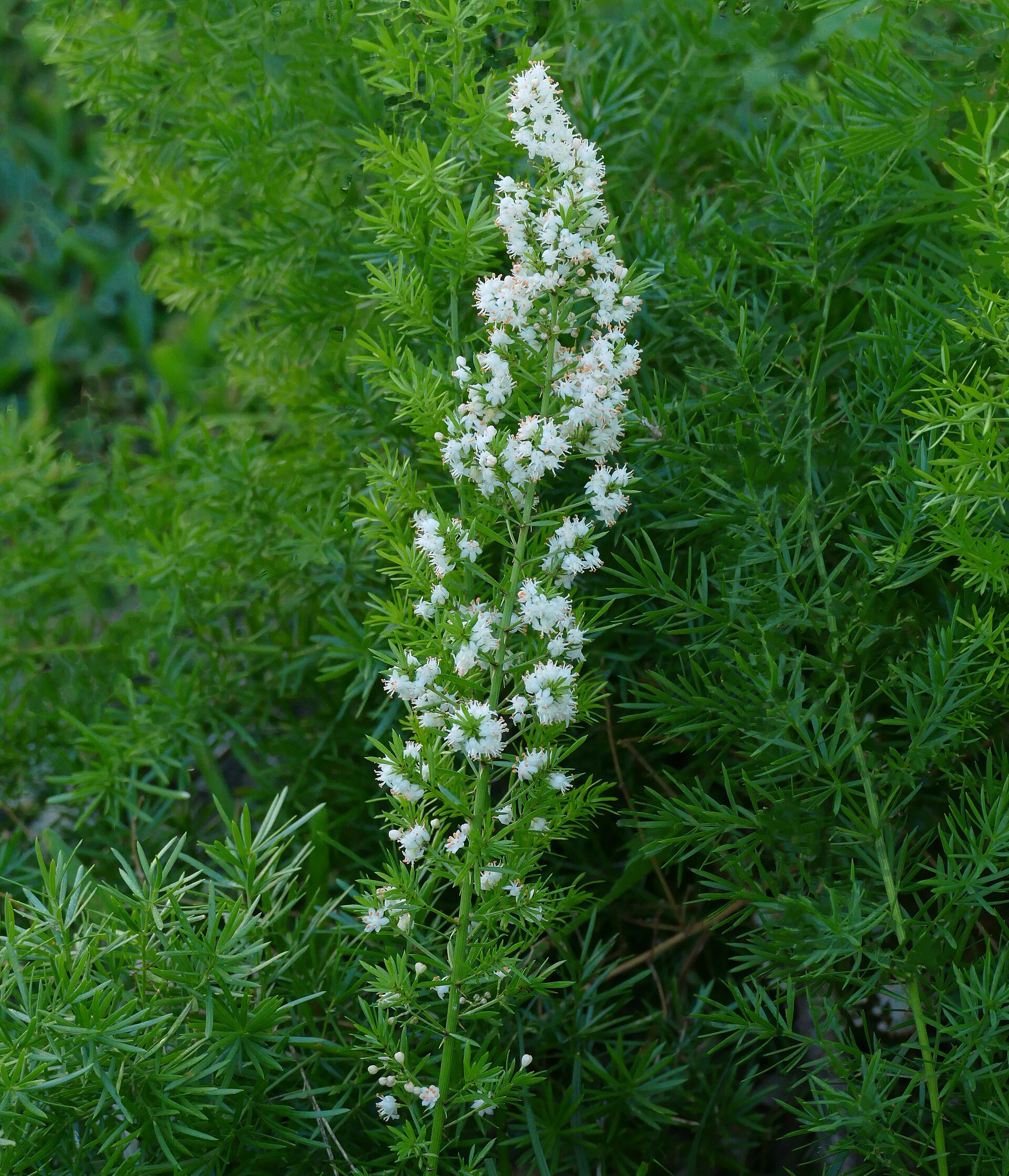
Sprengeri Fern
Asparagus densiflorus 'Sprengeri'
Sprengeri fern is not a true fern but a trailing form of ornamental asparagus, valued for its soft, feathery sprays of bright emerald needles. Its arching, cascading habit makes it a favourite for loose garden-style bouquets, table runners and anywhere a light, airy trail of green is needed. The fine foliage softens edges and fills gaps without adding visual weight. Cheap, plentiful and easy to work with, it is a reliable everyday greenery, though fine thorns mean careful handling.
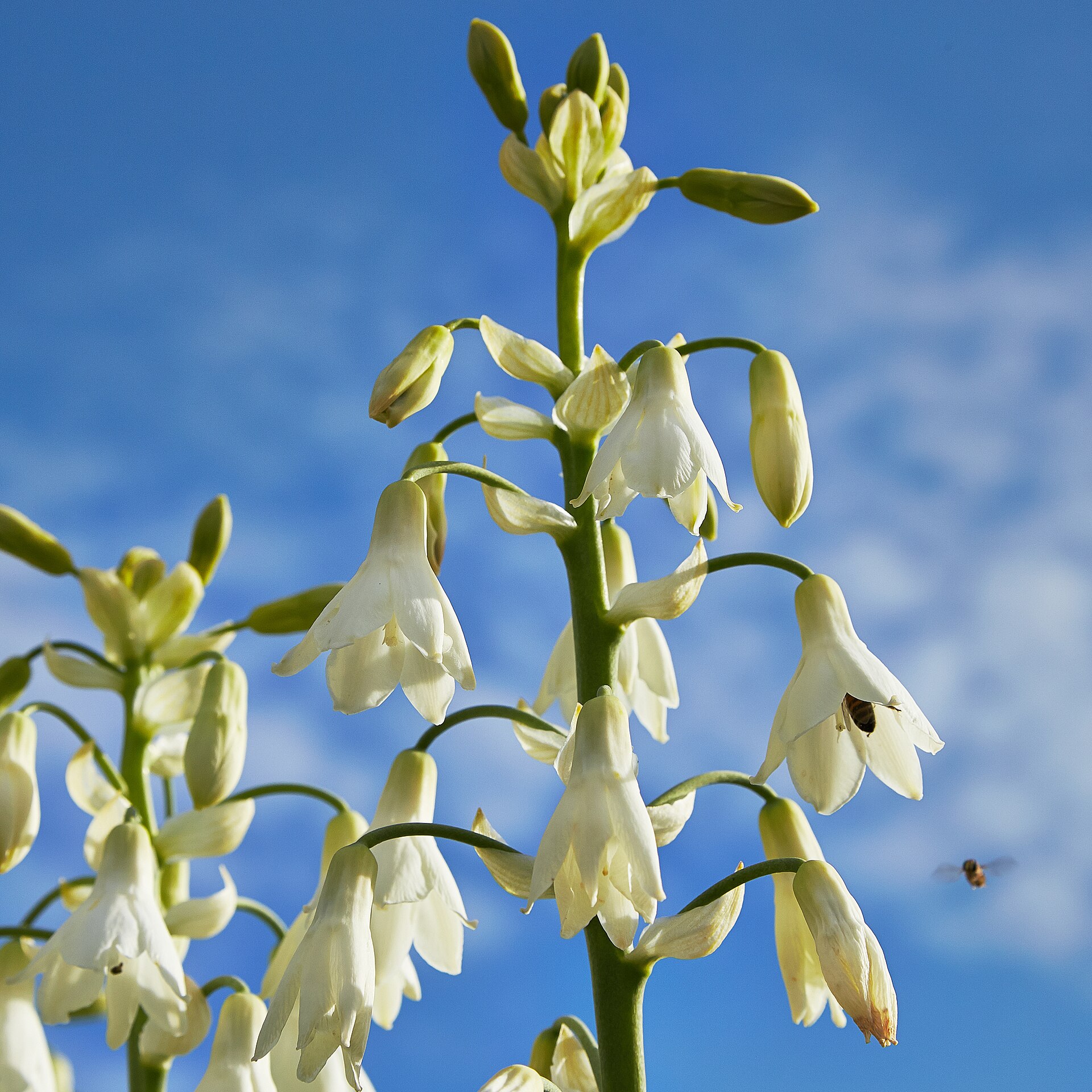
Summer Hyacinth
Galtonia candicans
Summer hyacinth carries a tall spire of pendulous, waxy white bells that lend height and a soft, green-throated glow to summer designs. Unrelated to spring hyacinth despite the name, it blooms in late summer and brings a gentle, honeyed fragrance. Florists reach for its clean architecture in garden-style and luxury wedding work, where its pale bells cool down warmer palettes. The elegant, nodding form suits both airy bouquets and stately tall arrangements.
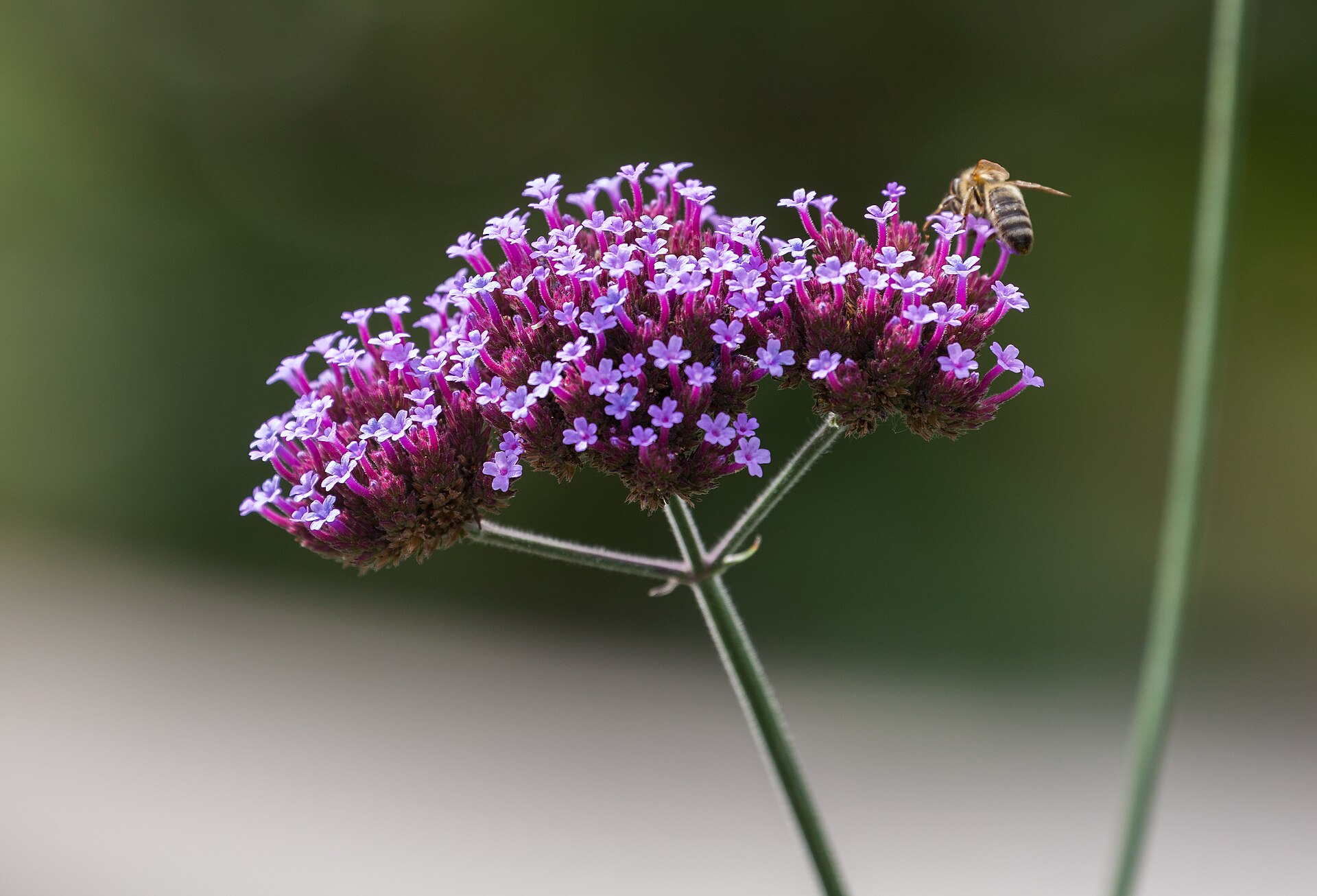
Tall Verbena
Verbena bonariensis
Verbena bonariensis carries small clusters of violet-purple florets atop tall, wiry, near-leafless stems, creating a see-through veil of colour that floats above a bouquet. Beloved in naturalistic and boho design, it adds height, haze and pollinator-garden charm without weight. Its airy branching structure lets it drift among focal flowers and grasses for a wild, just-gathered look. The clear purple is a useful accent wherever soft violet tones are wanted.
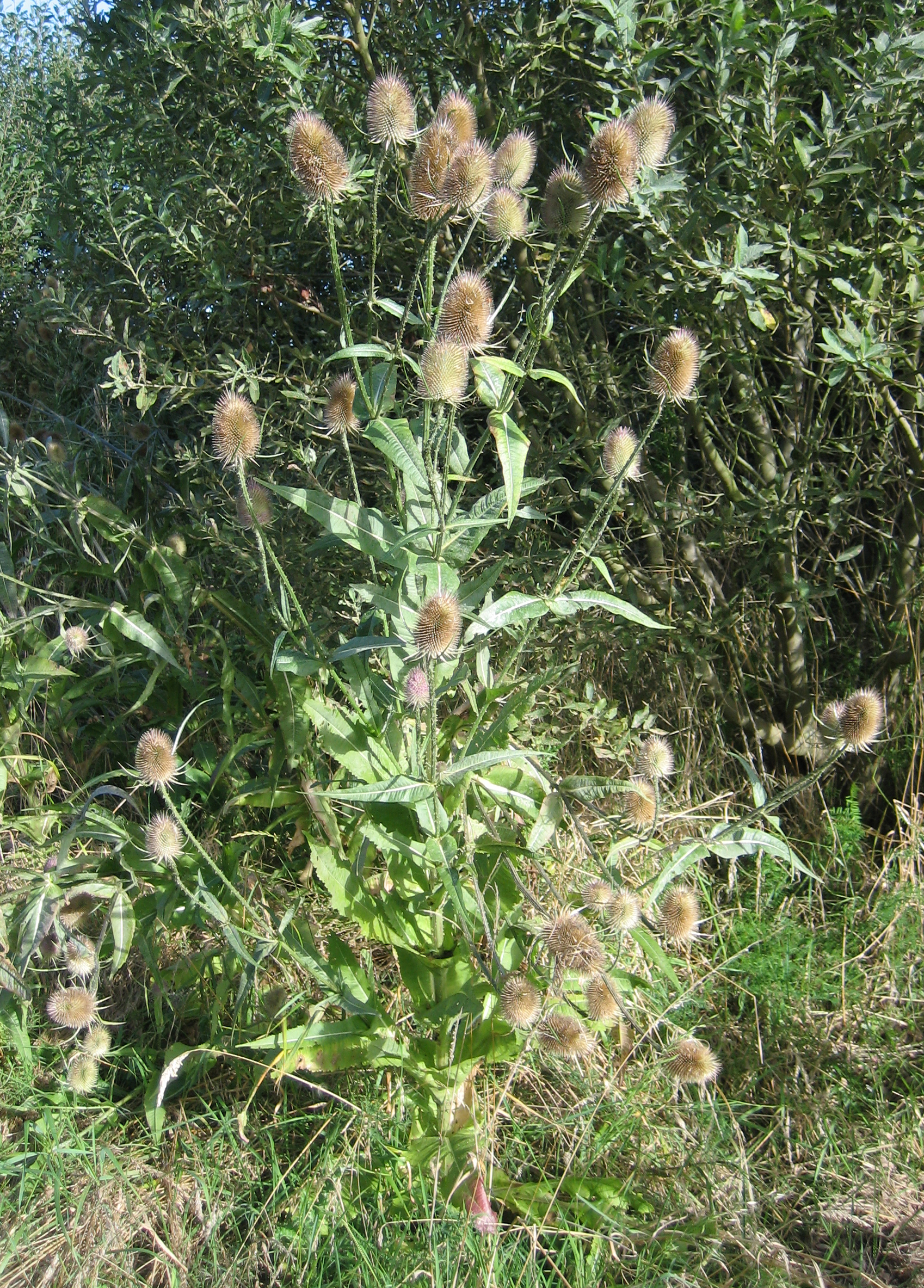
Teasel
Dipsacus fullonum
Teasel is a tall wild biennial whose egg-shaped, densely spined seed heads sit atop rigid, prickly stems. Instantly recognisable for their bristling texture, the heads shift from green in summer to a warm architectural brown as they dry. Florists reach for teasel to add height, structure and a spiky, foraged edge to rustic and contemporary dried work. It is inexpensive, robust and lasts for months, though its sharp spines call for careful handling.
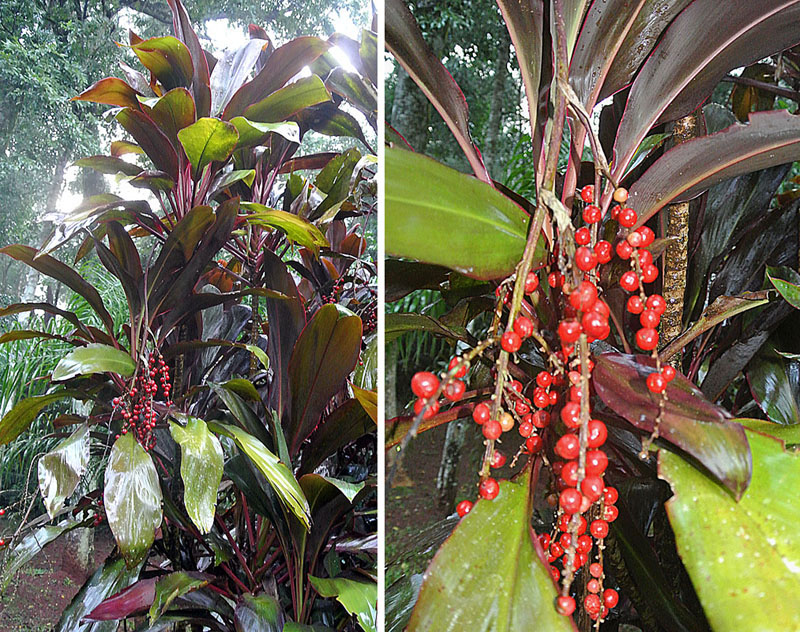
Ti Leaf
Cordyline fruticosa
Ti leaf comes from the tropical cordyline, a plant long grown across the Pacific for luck and protection. Its long, glossy blades range from deep green to vivid burgundy, red and pink, giving florists sleek, colourful lines for modern and tropical design. The flexible leaves are often rolled, folded or looped inside vases as a decorative liner, and they last for weeks with minimal care. Bold, durable and dramatic, ti leaf is a mainstay of contemporary and event floristry.
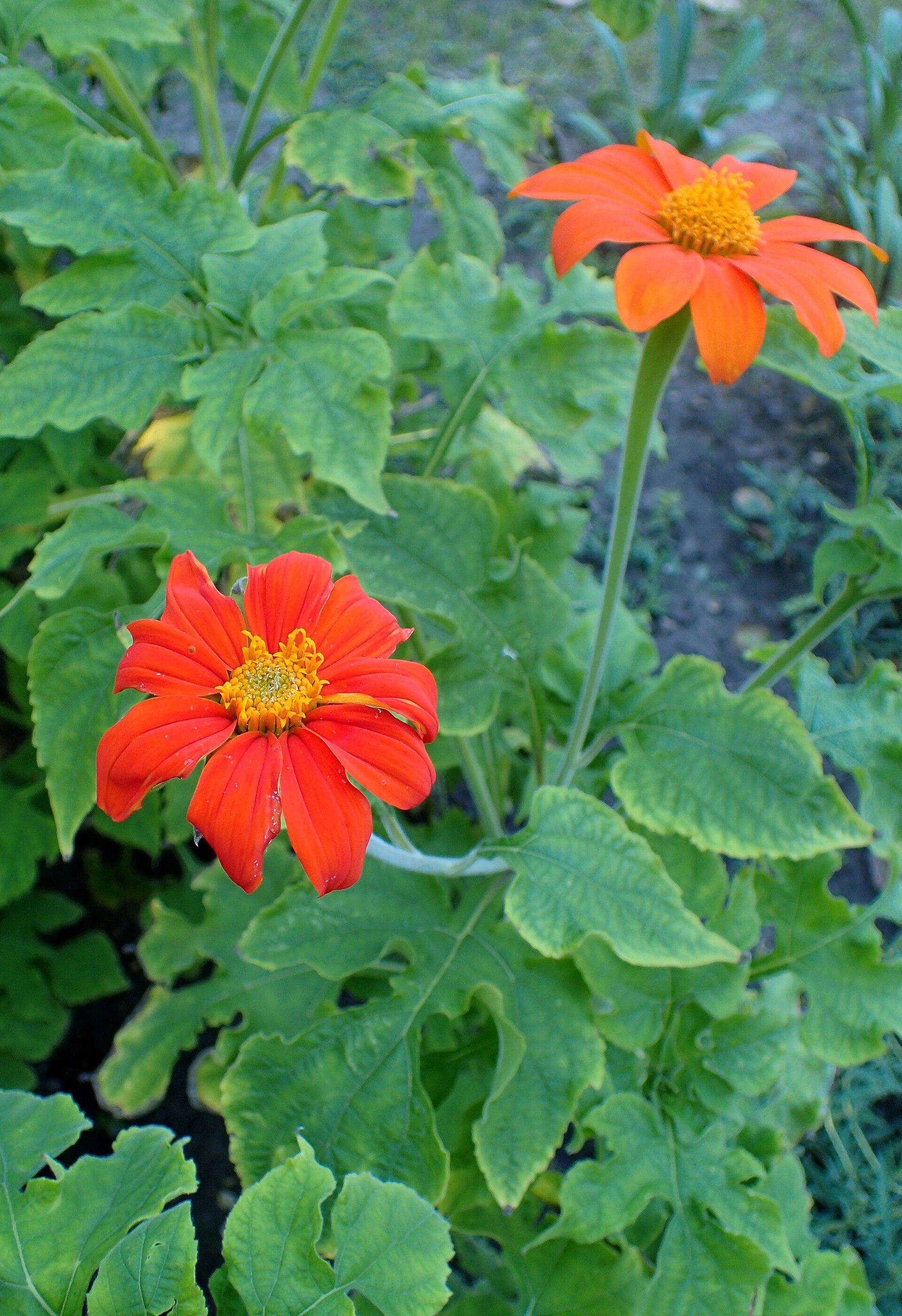
Tithonia
Tithonia rotundifolia
Tithonia, the Mexican sunflower, produces vivid orange-scarlet daisy blooms on tall, branching stems that bring tropical heat to late-summer designs. Florists love its saturated colour and generous stem length for larger, garden-style and installation work. Each velvety flower has a neat central disc and slightly reflexed rays, glowing like a small sun. Its hollow stems need careful handling and plenty of water, but the payoff is one of the most intense oranges in the seasonal palette.
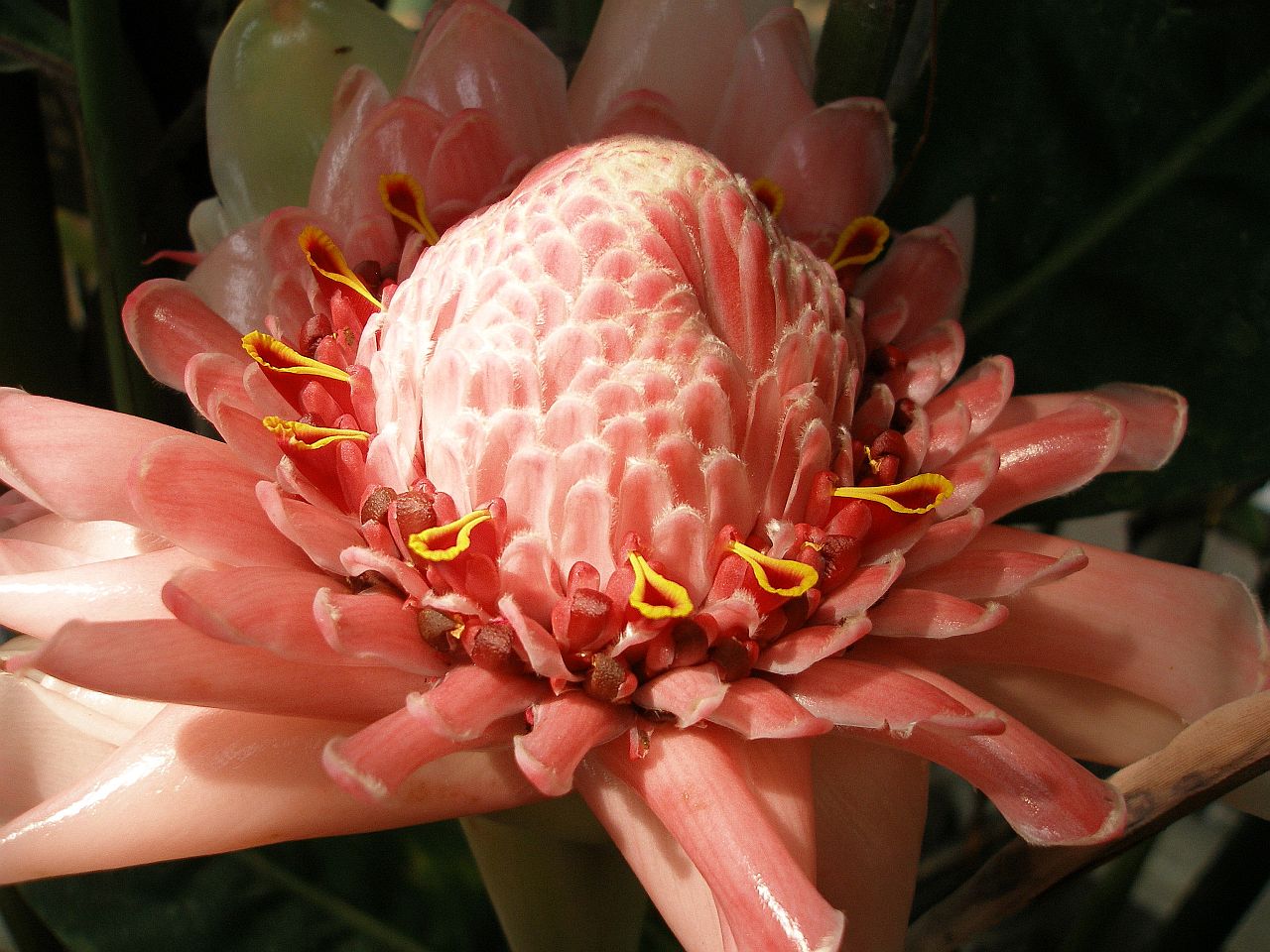
Torch Ginger
Etlingera elatior
Torch ginger sends up a tall, sturdy stalk topped by a glossy, waxy inflorescence of tightly overlapped bracts, most often in vivid red or pink — hence its other name, porcelain rose. A member of the ginger family from Southeast Asia, it is a dramatic tropical focal with excellent vase life and real presence in large designs. Florists use it for tropical weddings, installations and statement arrangements where scale and saturated colour are wanted. Its sculptural, torch-like head reads as exotic and luxurious in equal measure.
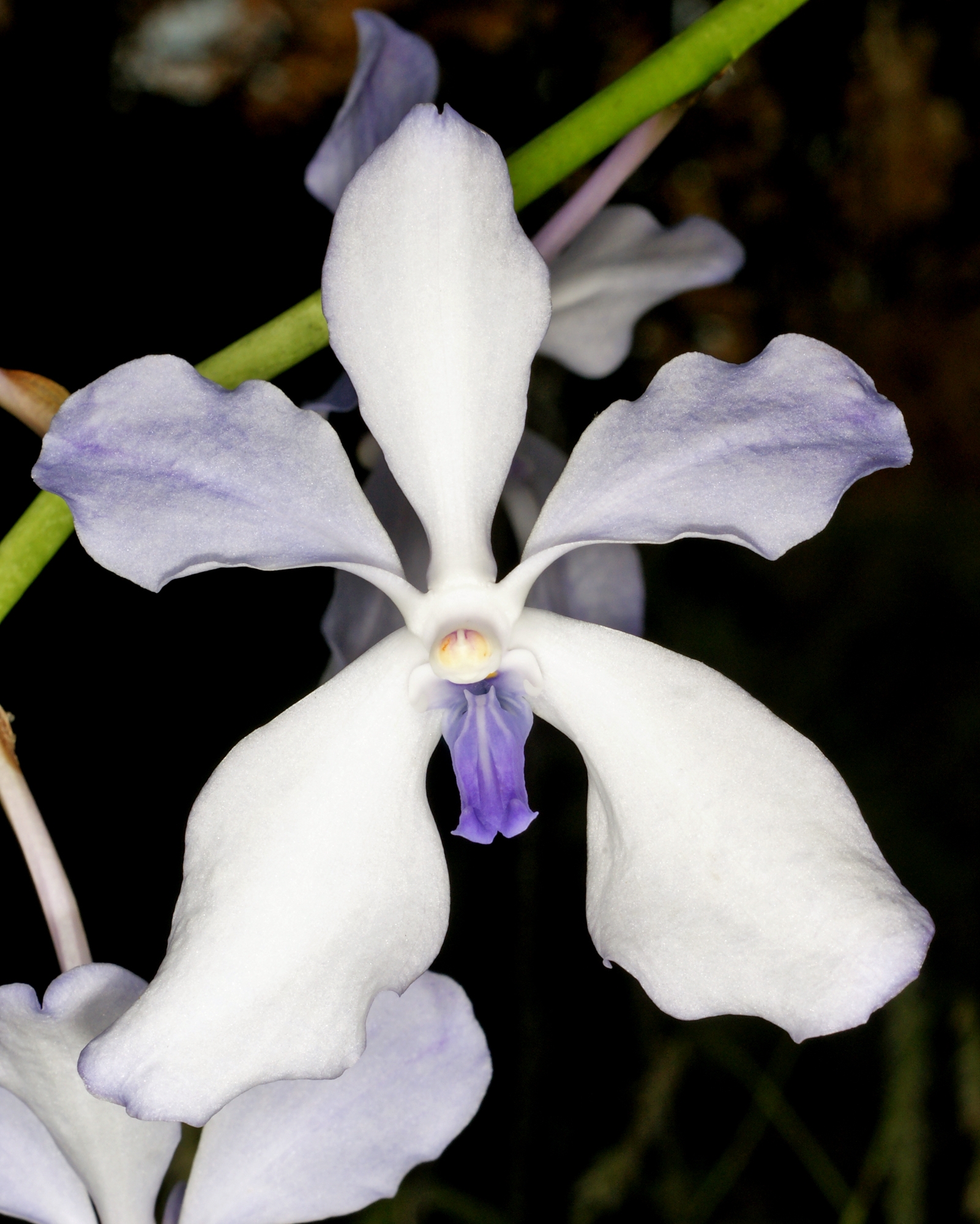
Vanda Orchid
Vanda
Vanda orchids are among the most coveted of all cut orchids, famous for the electric blue and violet lattice of Vanda coerulea and its hybrids — colours almost unheard of elsewhere in the flower world. Each thick stem carries a row of large, flat, jewel-toned blooms with remarkable substance and vase life. A true statement flower, vanda anchors luxury and editorial designs and dazzles in modern, minimal work. Its rarity and saturated colour place it firmly at the premium end of the orchid spectrum.
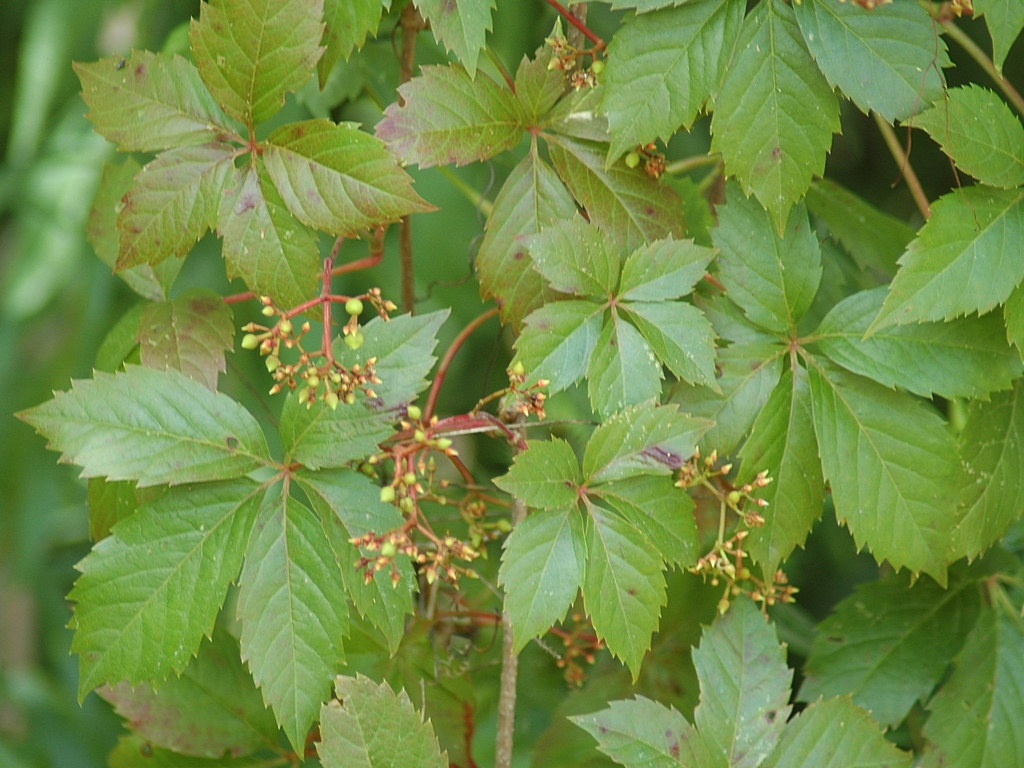
Virginia Creeper
Parthenocissus quinquefolia
Virginia creeper (Parthenocissus quinquefolia) is a vigorous North-American climbing vine best known for the fiery red, bronze and burgundy tones its five-part leaves take on in autumn. Florists cut it for seasonal installations, garlands and tablescapes where its trailing habit and rich colour bring drama. The foliage is fleeting and prone to dropping, so it is used fresh for short, high-impact autumn work. In summer its green leaves offer a softer, garden-style line.